If you’re looking up how to learn Japanese fast, you’re probably just trying to stop feeling stuck. Not to jump ahead or do anything drastic — just to make some progress without Japanese feeling so heavy right from the beginning.
Japanese often feels overwhelming early on. Not because people aren’t motivated, but because there’s a lot to deal with at once — writing systems, unfamiliar sentence structures, and the constant question of what you should focus on next. For many learners, that friction slows things down before the language ever starts to feel usable.
I noticed this myself when I first tried learning Japanese. I would open a textbook, feel overwhelmed, and close it again — but seeing short pieces of Japanese regularly made it feel less heavy and easier to return to.
That’s where Jolii fits in.
Jolii is a Japanese language learning app that focuses on short, everyday exposure to real Japanese. Instead of sitting down for long study sessions, you open it for a few minutes, see some Japanese, hear how it sounds, and move on.
That difference matters more than it sounds.
Ready to learn through entertainment?
Download the app now and start improving your skills!
7 Days FREE TrialLearning Japanese fast usually isn’t about pushing harder. It’s about removing the points where people tend to stop. Jolii helps with that by keeping Japanese present in small, manageable moments that are easy to return to. In this article, you’ll see how to learn Japanese fast with Jolii by reducing early friction, creating daily Japanese exposure, and moving toward real usage sooner — without burning out or relying on rigid study routines
Why Jolii Changes How to Learn Japanese Fast
A lot of advice about how to learn Japanese fast tends to focus on what you should add next. Another grammar point. More words to remember. Another system to follow. It often feels like progress is supposed to come from stacking more things on top.
The problem is that speed rarely breaks down because of missing information. It breaks down because the learning process asks for too much effort before Japanese ever feels usable.
That’s the part Jolii changes.
Instead of putting study first, Jolii puts exposure first. Japanese shows up before you have to decide what to focus on or how long you should spend. You open the app, see real Japanese, hear how it sounds, and move on. There’s no setup, and nothing to complete.
That shift matters early on, especially with reading Japanese.
Why Early Reading Feels Less Heavy
For many learners, written Japanese becomes a barrier long before it becomes useful. When every sentence requires stopping to decode characters, progress slows quickly. Jolii reduces that friction by keeping reading short and repeatable, which works especially well alongside focusing on Hiragana early.
That’s why mastering Hiragana before anything else in Japanese makes such a difference at the beginning — it removes one of the main points where learners usually stall.
Exposure Comes Before Study

Instead of saving “real Japanese” for later, Jolii keeps it present from the start.You start to see how sentences are actually put together.
Common phrasing comes up again and again.
And you don’t need to understand everything for it to feel useful.
This is similar to watching short, beginner-friendly Japanese content — like videos from Japanese Ammo with Misa on YouTube — where Japanese keeps moving even if you only catch parts of what’s being said.
After a while, that kind of repeated exposure starts to carry some of the weight. Things don’t feel new every time. Patterns show up again. You’re not trying to memorise anything — you’re just recognising more than before.
This idea is also reflected in beginner explanations on sites like Tofugu, where repeated, low-pressure exposure is often emphasised over isolated study.
By changing what comes first — exposure instead of study — Jolii makes it easier to stay with Japanese long enough for progress to actually happen.
That shift becomes even more noticeable once you look at where most learners slow down early on.
How to Learn Japanese Fast by Removing Early Friction
One of the biggest reasons Japanese feels slow at the beginning has nothing to do with difficulty.
It’s the friction that shows up before you even start.
Before you ever open a book or app, there’s usually a lot to decide:
- what to study first (numbers in Japanese, greetings, good morning in Japanese, useful expressions, etc.. )
- how long you should study
- whether today should be reading, listening, or grammar
By the time you’ve figured that out, the moment often passes.
Jolii removes a lot of that friction upfront.
You don’t open it to plan a session or choose a topic. Japanese is already there. A short piece of text. A bit of audio. Something small enough to engage with without committing to anything else.
When starting feels easier, Japanese shows up more often.
And that naturally leads to the next problem most learners face — daily exposure.
How Jolii Creates Daily Japanese Exposure Without Burnout
Daily exposure comes up a lot when people talk about how to learn Japanese fast. What’s mentioned less often is how quickly that idea turns into pressure.
Why “Daily” Often Turns Into Pressure

For many learners, “every day” starts to feel heavy. There’s a sense that you’re supposed to complete something or stay for a certain amount of time. Miss a day, and it feels like you’ve fallen behind.
Jolii doesn’t really work like that.
There’s no expectation to show up in a specific way. You open the app, Japanese is there, and that’s it. Some days it’s only a minute. Other days you stay a bit longer. Either way, nothing feels unfinished when you stop.
Letting Japanese Fit Into the Day
Because the interaction stays light, it doesn’t compete with the rest of your day. Japanese fits into moments that would normally go unused, instead of demanding your full attention.
Over time, that kind of exposure starts to matter. Sounds feel less sharp. Sentence patterns look more familiar. You notice yourself recognising things without trying to.
When exposure stays light, it doesn’t drain energy.
And that’s what makes the next shift possible — moving from memorising Japanese to actually using it.
How to Learn Japanese Fast Through Real Usage, Not Memorisation
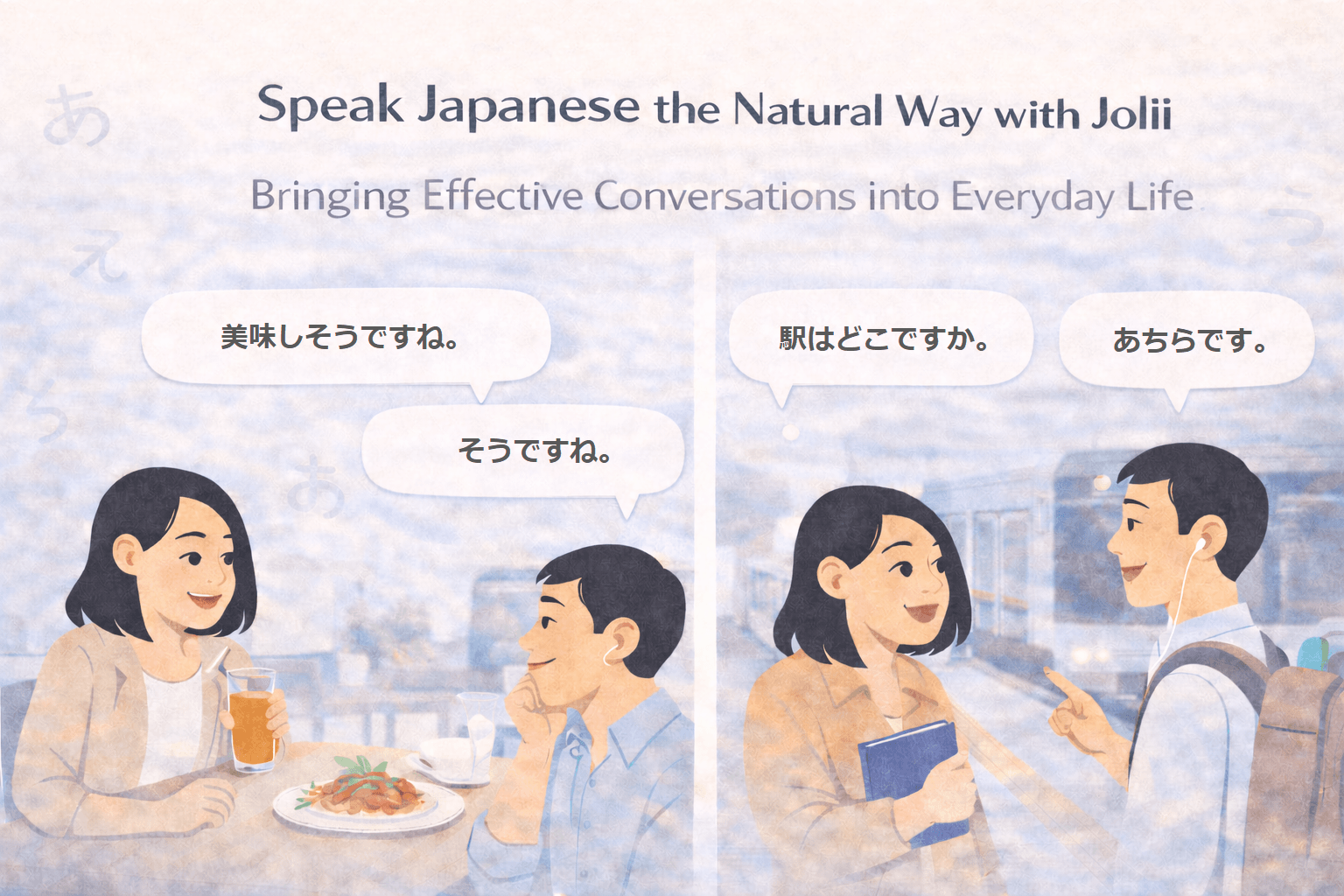
Memorisation often feels like the obvious starting point.
Words go on a list. Grammar gets explained. You study first, and you assume usage will come later. In theory, that makes sense. In practice, it’s where a lot of people slow down.
Memorisation isn’t the enemy.
The problem is when memorisation becomes a gate you feel you have to pass before you’re allowed to use the language.
Jolii shifts that order.
Instead of asking you to remember things before you use them, it puts Japanese in front of you early and often. You see sentences in context.
You hear how phrases actually sound.
Over time, you start recognising how things fit together without having to label them first.
When usage comes first, interaction feels less intimidating. You don’t need to feel “ready.” You can recognise parts of a sentence, catch familiar phrasing, and keep going without breaking the flow.
Once usage feels normal, conversation stops feeling like a separate skill.
It becomes the natural next step.
From Beginner Input to Real Japanese Conversations
Conversation doesn’t arrive all at once.
It shows up through small moments:
- a short reply that comes out without much thought
- a familiar phrase you recognise before you realise why
- an exchange where you keep going instead of stopping to translate everything
Those moments don’t feel dramatic.
But they’re what turn beginner input into real interaction.
Because Jolii keeps common sentence patterns and everyday expressions appearing regularly, those moments don’t come out of nowhere. Simple Japanese greetings and short exchanges start to feel familiar instead of intimidating.

Learning Japanese fast isn’t about jumping straight into long conversations. It’s about reaching a point where interaction feels possible sooner than expected.
Once that gap narrows, conversation stops feeling like a distant goal.
It becomes something you ease into, one small exchange at a time.
FAQs About How to Learn Japanese Fast with Jolii
How does Jolii actually help you learn Japanese fast?
Jolii lets you spend time around Japanese before asking you to understand everything. That removes a lot of the hesitation that slows people down early.
Do you still need textbooks or grammar study?
Yes — but they don’t have to come first. Jolii makes later study easier to connect to something familiar.
How much time do you need to use Jolii each day?
There’s no target number. What matters is that Japanese shows up often and that you follow a well-defined Japanese learning schedule.
Can beginners use Jolii from zero?
Yes. In many cases, beginners benefit the most because exposure stays light and repeatable.
Does Jolii help with conversation?
Not by forcing you to speak, but by making speaking feel less distant.
Conclusion
How to Learn Japanese Fast Is About Using Japanese Earlier
Learning Japanese fast isn’t about doing more in less time. It’s about removing the things that slow you down before the language ever feels usable.
Jolii works because it keeps Japanese present, simple, and easy to return to. By bringing real usage earlier into the process, it helps Japanese stop feeling distant and start feeling workable.
When the language shows up often enough, progress stops feeling forced.
And that’s usually when things finally start to move.