Quick Answer: What Is the Japanese Alphabet?
The Japanese “alphabet” isn’t a single alphabet like A–Z. Japanese uses three writing systems together: Hiragana, Katakana, and Kanji. Hiragana represents basic syllables and is used for grammar and native words. Katakana is used mainly for foreign words and emphasis. Kanji are characters borrowed from Chinese that carry meaning and form the core of written vocabulary. Beginners usually start with Hiragana, then Katakana, and gradually learn Kanji. Romaji (Japanese written with Latin letters) is only a temporary learning aid.
When I first started learning Japanese, I thought the Japanese alphabet would be, you know, just another alphabet.
Like A to Z, but… squiggly.
How hard could it be?
Well, turns out — pretty hard.
Because here’s the thing: the Japanese writing system isn’t just one alphabet. It’s actually three. Three.
Hiragana, Katakana, and Kanji.
Each one with its own rules, shapes, and personality.
And honestly, at first, I kind of hated it.
But then something shifted.
Somewhere between confusing characters and late-night practice sessions, I realized that these three scripts — together — make Japanese what it is.
Layered, subtle, and somehow… beautiful.
So, let’s walk through this puzzle. The Japanese alphabet, explained in plain human terms — confusion, mistakes, tiny victories, and all.
So What Exactly Is the Japanese Alphabet?
Okay, confession time: calling it an “alphabet” isn’t even accurate.
English builds words with letters — A, B, C — each one a single sound.
Japanese doesn’t do that.
Instead, it uses syllabaries — systems where each symbol stands for a syllable, like ka, ki, ku, ke, ko.
It’s like painting with blocks of sound rather than spelling one letter at a time.
So when people say “the Japanese alphabet,” what they’re really talking about are three writing systems working side by side:
- Hiragana (ひらがな) – soft, curved, and native to Japan.
- Katakana (カタカナ) – sharp, bold, often used for foreign words.
- Kanji (漢字) – complex, meaningful symbols borrowed from Chinese.
Oh, and sometimes there’s Romaji — Japanese words written in the Roman alphabet — but that’s mostly for beginners, tourists, or labels that want to look cool.
1. Hiragana: Where Japanese Begins
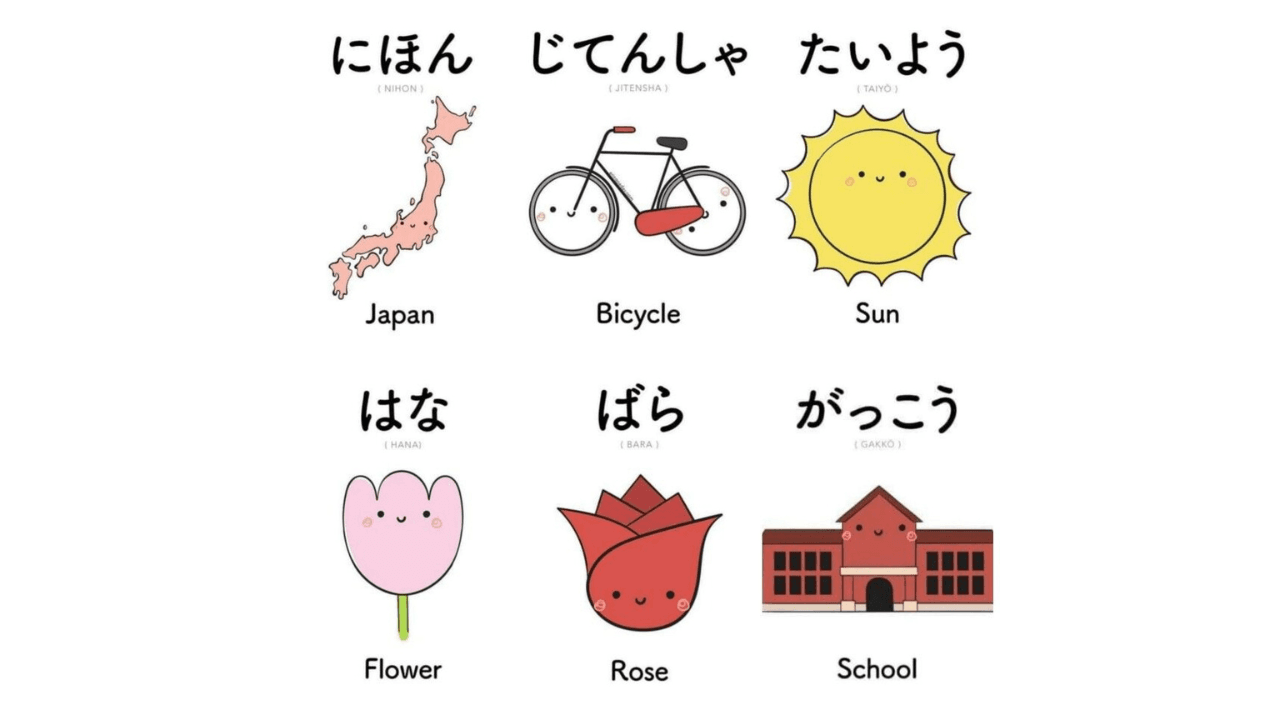
If the Japanese alphabet had a heartbeat, it would be Hiragana.
It’s where most learners start — and where every Japanese child begins too.
There are 46 basic characters. Each one represents a sound:
あ (a), い (i), う (u), え (e), お (o).
When I first learned them, I thought, “Alright, this isn’t too bad.”
But then I realized — you can write an entire sentence in Hiragana and still sound like a five-year-old.
It’s cute, but not ideal.
Hiragana is used for native words, grammar particles, and verb endings.
Basically, it’s the glue that holds Japanese together.
For example:
わたしはりんごをたべます。 (Watashi wa ringo o tabemasu.)
I eat apples.
Every part except ringo (apple) is Hiragana.
It’s soft, round, and rhythmic — kind of like handwriting that breathes.
To me, Hiragana feels like the quiet part of the language — the melody under all the noise.
2. Katakana: The Bold Twin of the Hiragana
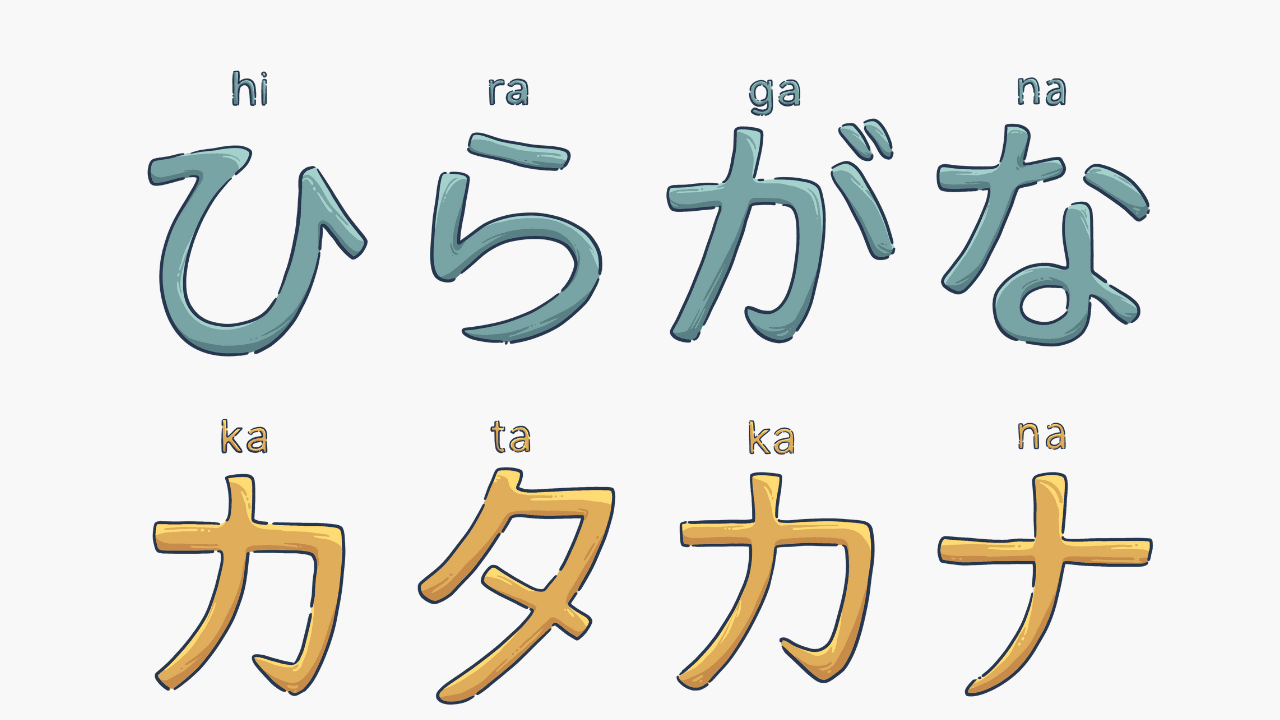
Then there’s Katakana.
If Hiragana is soft brushstrokes, Katakana is written with a ruler.
Straight lines. Sharp corners.
The cool twin of the Japanese alphabet.
You use it for foreign words — anything Japan borrowed and made its own.
Things like:
- コンピューター (computer)
- パン (bread)
- コーヒー (coffee)
And sound effects. Oh, the sound effects.
Japanese loves them — ドキドキ (dokidoki) for a heartbeat, ワクワク (wakuwaku) for excitement.
At first, Katakana felt… awkward. Kind of loud, even.
But the more I saw it on signs and packaging, the more it made sense.
It’s the voice of modern Japan — fast, direct, and unafraid of borrowing from the world.
Now, seeing my own name written in Katakana still makes me smile.
It feels like being temporarily adopted by another language.
3. Kanji: Meaning, Memory, and the Long Climb
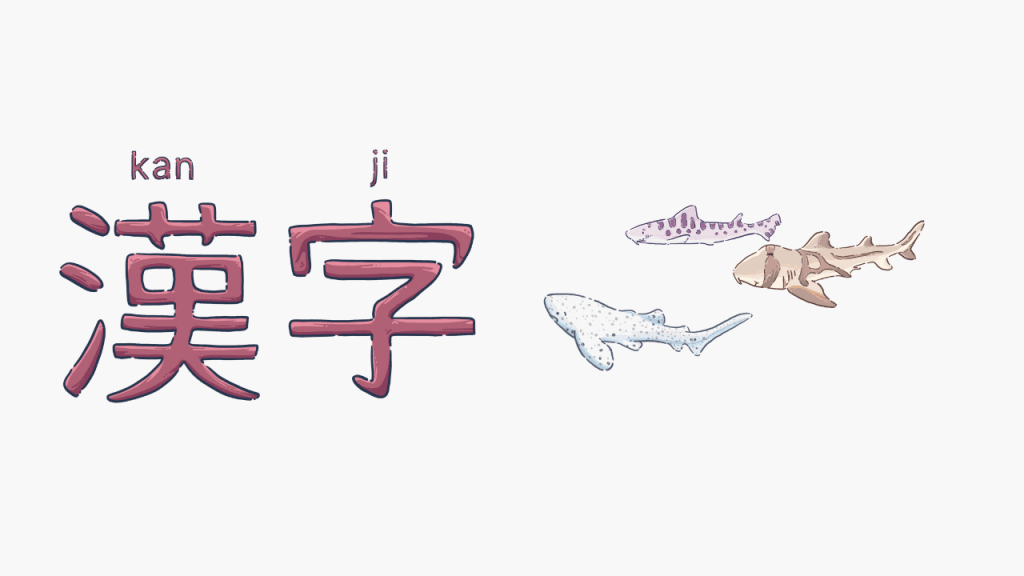
Ah, Kanji. The dramatic one.
The part of the Japanese alphabet that terrifies learners — and fascinates them too.
Each Kanji character represents meaning, not just sound.
And that’s what makes it both maddening and poetic.
A few examples:
- 木 (ki) – tree
- 水 (mizu) – water
- 人 (hito) – person
- 火 (hi) – fire
Combine them, and you get whole new ideas:
- 学生 (gakusei) – student (“study” + “life”)
- 火山 (kazan) – volcano (“fire” + “mountain”)
There are more than 2,000 common Kanji used in everyday life.
It’s a lot. But not impossible.
At first, I tried memorizing them like flashcards. It didn’t work.
They only started to stick when I slowed down — when I learned to look at each one as a story.
Because that’s what Kanji really is: stories carved into strokes.
You start to see patterns. Radicals. Hidden meanings.
And one day, you read a street sign or a menu — and something clicks.
That’s a good day.
4. Romaji: The Bridge to the Japanese Alphabet
Technically, Romaji isn’t part of the Japanese alphabet.
It’s more like a translation trick — writing Japanese sounds with English letters.
Words like konnichiwa, arigatou, Tokyo.
Romaji is helpful at first — especially when you can’t tell こ from カ yet — but it fades fast.
The truth is, Japanese rhythm doesn’t really fit into Roman letters.
It’s like trying to play a shamisen tune on a guitar — the notes fit, but the feeling’s off. So yes, use Romaji to get started. But don’t stay there too long.
How It All Comes Together
What’s wild about the Japanese alphabet is how the three systems blend so naturally.
You’ll often see all of them in a single sentence — and it somehow feels perfectly balanced.
明日(あした)はコンビニでパンを買います。
Ashita wa konbini de pan o kaimasu.
“Tomorrow, I’ll buy bread at the convenience store.”
Here’s what’s happening:
- 明日 (ashita) – Kanji for “tomorrow.”
- コンビニ (konbini) – Katakana for “convenience store.”
- パン (pan) – Katakana for “bread.”
- 買います (kaimasu) – a mix of Kanji (“buy”) and Hiragana (the polite ending).
It’s like a visual symphony — each script carrying its own tune, and together, they make meaning sing.
Pro Insight: How Japanese Writing Actually Feels
Here’s something I didn’t expect when I moved to Japan — people don’t think about the Japanese alphabet as three separate systems.
They just… write.
Menus, signs, emails — they mix kanji, hiragana, and katakana without hesitation.
You’ll see a store sign that says パン屋 (panya) — literally “bread shop” — where パン is Katakana and 屋 is Kanji.
Or you’ll open a kid’s picture book and find everything in Hiragana, smooth and rounded like soft brushstrokes.
Then there’s social media, where people bend the rules completely — throwing in English words in Romaji, using Katakana for emphasis, or skipping Kanji to sound more casual.
Like: 今日はサボった lol (“Took the day off today lol”).
At first, it looks chaotic. But there’s a rhythm to it — a visual rhythm that matches how people actually speak.
Politeness, tone, age — even emotion — can shift with the script you choose.
So when you think of the Japanese alphabet, don’t imagine three boxes.
Think of it like three paintbrushes — each one meant for a different stroke, but all creating the same picture.
Why the Japanese Alphabet Feels So… Japanese
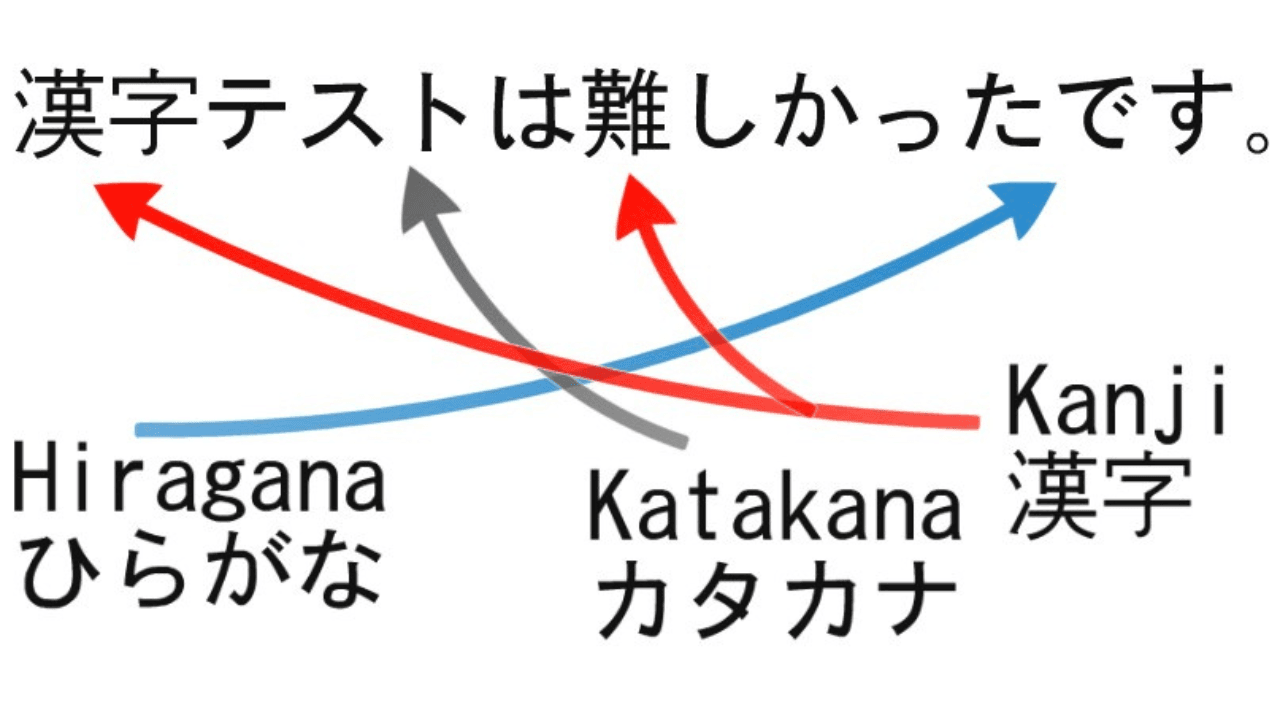
The Japanese alphabet doesn’t just write words — it mirrors how Japan thinks.
Hiragana is grace.
Katakana is curiosity.
Kanji is memory.
Together, they capture the balance between modern and ancient, soft and sharp, spoken and felt.
Reading Japanese sometimes feels like walking through Kyoto — you’ll pass a thousand-year-old temple, then a vending machine glowing with neon.
Different worlds, somehow in perfect harmony.
Tips for Learning (from Someone Who Struggled)
If you’re just starting out, here’s what I wish someone had told me:
- Start small. Hiragana first. Then Katakana. Kanji later.
- Don’t rush it. You’ll forget things. It’s fine.
- Write by hand. Your brain remembers motion better than shape.
- Mix it up. Read signs, menus, subtitles — real stuff, not just textbooks.
- Be okay with confusion. It’s part of the process.
Learning the Japanese alphabet isn’t a straight line.
It’s more like learning to surf. You’ll fall a lot — but every time you stand up again, you realize you’re staying up longer.
Finding Beauty in the Japanese Alphabet
At first, the Japanese alphabet feels like three storms colliding. But once you learn to listen, there’s rhythm in the noise.
One day you’ll read something — maybe a shop sign or a short text — and you’ll understand it without thinking. And you’ll smile. Because you’ve just unlocked a tiny piece of another world.
That’s when Japanese stops being a subject you’re studying, and starts becoming a language you live in.
If you’re still struggling with Hiragana, getting tripped up by Katakana, or feeling overwhelmed by Kanji, that’s normal. Progress rarely looks neat.
Tools like Jolii can help keep Japanese present in your daily routine — short, focused practice, real examples, and just enough structure to move forward without pressure. Sometimes, consistency matters more than intensity.