First published: November 2024. Last updated: June 2026.
Florence, 1478. Lorenzo de’ Medici stands before a crowd and delivers one of the most grammatically rich sentences in Italian television — a speech so loaded with the subjunctive mood that it could double as a grammar lesson.
That scene from Medici: Masters of Florence is what this article is built around. The Netflix series — an English-Italian production set in fifteenth-century Florence — is one of the most culturally and linguistically dense Italian shows available, and one specific moment from it demonstrates the Italian subjunctive better than most textbooks manage.
Before the scene analysis, it’s worth understanding the historical world the show inhabits — because in Italian, language and history are inseparable.
Are you learning Italian and want to learn more about Italian history? What better way than watching a series set in Italy in Italian? One perfect choice is Medici: Masters of Florence. This English-Italian production is set in Florence in the fifteenth century and is full of cultural insights and historical references that will not only teach you history but also the Italian language. Andiamo!
A note on availability: As of June 2026, Medici: Masters of Florence is no longer available on Netflix in most regions. Full episodes can be found on YouTube, and Italian viewers can watch it on RaiPlay. The language and grammar lessons in this article apply regardless of where you watch — the scene analysis and subjunctive lesson work with any version of the show.
The Historical and Cultural Insights: Deepening Your Beginner-Level Italian Language Skills
What’s fascinating about language learning is that while learning a new language, you inevitably come into contact with the culture, traditions and history of the people who speak it. With the series Medici, you will be exposed to many historical facts, so before getting into the story, let’s first explore a bit of the historical context in which the series is set.
Modern Italy
Italy, as we know it today, is a relatively new country with a history of less than two centuries. Its unification began in 1861, making it one of the youngest nations in Europe. Despite this, Italy is well-known worldwide for its rich and ancient history.
Ancient Italy
We have all heard about the Roman Empire and the Gladiators, right? Then, what happened between the fall of the Roman Empire and 1861? And if there was no unified Italy, what about the Italian language?
For a long period, Italy was divided into many different regions, city-states, and kingdoms. Among these, Florence was a particularly important cultural hub. It is exactly in Florence where the story of the Italian language began to take shape.
Who was Dante Alighieri?
Dante Alighieri, often called the “father of the Italian language,” was born there. With his Divina Commedia (Divine Comedy), Dante set the foundation for what we recognize today as standard Italian, establishing Florence as the motherland of the Italian language.
Why Is Florence So Important?
Florence was the birthplace not only of Dante but also of several famous artists, including Michelangelo, Leonardo da Vinci, and Botticelli, as well as of the most famous Florentine family, the Medici. The series we are going to analyze in this blog post is set in fifteenth-century Florence and is inspired by the real story of the Medici family.
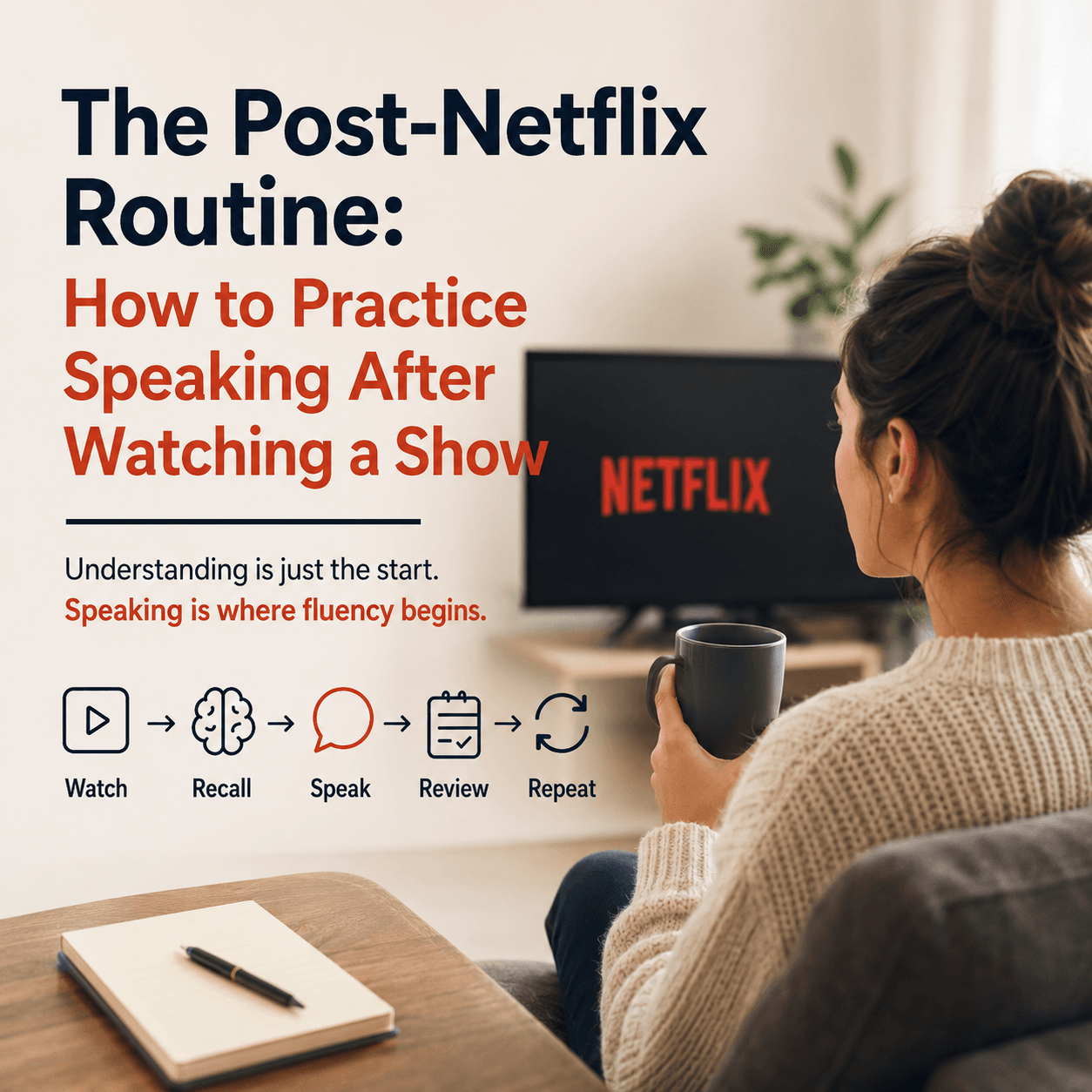
How to Learn Italian with Netflix For Beginners.
Before watching, one practical note: use Italian subtitles rather than English ones wherever possible. Listening and reading in two different languages simultaneously is counterproductive — you want your ear and eye processing the same language. Focus on following the story rather than understanding every word. The subjunctive lesson below will make more sense after you’ve watched the scene once without stopping.
Scene analysis: Learn Beginner Italian Subjunctive with I Medici.
When the patriarch Giovanni de’ Medici died, his sons Cosimo and Lorenzo found themselves at the head of an authentic financial empire, but at the same time surrounded by enemies such as Rinaldo degli Albizzi and Palla Strozzi, members of the most powerful Florentine families. In the scene we are going to watch, Lorenzo delivers a speech in front of the public in Florence, inciting them to rise against the Pazzi family.
Watch the scene before reading the analysis. Lorenzo’s delivery — the controlled fury, the rhythm of the repeated voglio che — adds a layer that the text alone can’t carry.

The scene opens with the crowd screaming:
Viva Lorenzo! (Long live Lorenzo!)
Lunga vita a Lorenzo De’ Medici! (Long life to Lorenzo De’ Medici!)
Afterwards, Lorenzo starts his short but intense speech. Let’s break down what Lorenzo says in two parts.
The scene opens with the crowd chanting Lorenzo’s name. When he speaks, the tone shifts immediately — controlled, precise, and building in intensity. In the first part of his speech, Lorenzo establishes the historical grievance: the Pazzi family’s long history of betrayal and unpunished crimes. The language here is straightforward past tense — crimini del passato sono rimasti impuniti (crimes of the past have gone unpunished).
The second part is where the grammar becomes interesting. Lorenzo shifts from describing the past to declaring his intentions — and Italian requires a completely different verb form for that shift. He uses voglio che (I want that) followed by the subjunctive for every demand he makes.
One line captures the structure perfectly: “Voglio che il nome dei Pazzi sia cancellato per sempre dalla storia” — I want the name of the Pazzis to be erased forever from history.
Voglio che — I want that. Sia cancellato — be erased. The subjunctive (sia) appears because the action exists in the realm of desire rather than fact. This is the core logic of the Italian subjunctive, and Lorenzo’s speech is one of the most memorable demonstrations of it available in Italian drama.
The first part of Lorenzo’s speech
In the first part of the speech, Lorenzo focuses on the past and explains why the Pazzi family is a long-dated enemy for the de’ Medici family.
| Italian text | English Translation |
| La famiglia Pazzi ha una lunga, lunga storia di tradimenti e assassinii. | The Pazzi family has a long, long history of betrayal and murder. |
| Crimini del passato sono rimasti impuniti perché ne mancavano le prove. | Crimes of the past have gone unpunished because there was a lack of evidence. |
| Ma adesso… | But now.. |
Second part of Lorenzo’s speech
The second part of Lorenzo’s speech is what is interesting to improve your Italian speaking skills. Lorenzo says a series of desires using congiuntivo (subjunctive mood).
| Italian text | English Translation |
| Ma adesso.. adesso voglio che tutta la famiglia Pazzi sia perseguitata e sia sterminata. | But now… now I want the entire Pazzi family to be persecuted and exterminated. |
| E voglio che tutti i loro beni siano confiscati e siano dati al popolo e voglio che il loro stemma sia rimosso da ogni Palazzo, da ogni documento, da ogni moneta e da ogni luogo di questa nostra città. | And I want all their property confiscated and given to the people and I want their coat of arms removed from every palace, every document, every coin and every place in this city of ours. |
| Io voglio che il nome dei Pazzi sia cancellato per sempre dalla storia. | I want the name of the Pazzis to be erased forever from history. |
Lorenzo’s words against the Pazzi family are quite harsh, but we can learn a lesson from them. Wishes, uncertainties and emotions are often expressed in Italian through the subjunctive mood (congiuntivo ).
You can imagine congiuntivo as a kind of “parallel world” for verbs: each verb has its normal conjugation in present tense and it also has its unique conjugation in congiuntivo . It is generally introduced by certain words, such as:
- Voglio che.. (I want that)
- Spero che.. (I hope that)
- Temo che.. (I fear that)
- Credo che.. (I believe that)
- È importante che.. (It is important that)
- Sono felice che.. (I am happy that)
For example, in the series I Medici, when Lorenzo says, “Voglio che tutta la famiglia Pazzi sia perseguitata ,” he uses the congiuntivo (“sia “) to express his desire for the Pazzi family to be persecuted. This construction helps convey his strong emotions and intentions, highlighting the power of language in expressing complex feelings and commands.
How To Practice Italian Conjugation Of Verbs
The table below covers essere (to be) as a starting point — the most common verb in the subjunctive constructions you’ll encounter in the show. For other verbs, Jolii builds conjugation practice around the specific content you’re watching, so you’re drilling the forms you’ve actually encountered rather than abstract grammar tables.
| Essere (to be) | ||
| Present | Present Congiuntivo | English translation |
| Io sono | Io sia | I am |
| Tu sei | Tu sia | You are |
| Lui / lei è | Lui / lei sia | He / she is |
| Noi siamo | Noi siamo | We are |
| Voi siete | Voi siate | You are (plural) |
| Loro sono | Loro siano | They are |
Let’s see some examples in practice.
| Normal sentence | Subjunctive sentence | |
| Wishes | Tu sei felice (you are happy) | Voglio che tu sia felice (I want you to be happy) |
| Lui è contento (he is glad) | Voglio che lui sia contento (I want him to be glad) | |
| Loro sono a casa (they are home) | Voglio che loro siano a casa (I want them to be home) | |
| Uncertainty | Sei qui (you are here) | Spero che tu sia qui (I hope you are here) |
| Lui è d’accordo (he agrees) | Credo che lui sia d’accordo (I believe that he agrees) | |
| Noi siamo pronti (we are ready) | Penso che noi siamo pronti (I think we are ready) | |
| Emotions | Tu sei sposato (you are married) | Sono felice che tu sia sposato (I am happy that you are married) |
| Lei è con me (she is with me) | Sono contento che lei sia con me (I am glad that she is with me) | |
| Voi siete in salute (you are healthy) | Lui è felice che voi siate in salute (He is happy that you are healthy) |
Using congiuntivo to express wishes, uncertainty and emotions will improve your Italian speaking skills and confidence and make you sound more like a native Italian speaker.
Best Italian Shows For Language Learning
Apart from Medici, you can learn beginner Italian through many other TV shows. Here’s a selection of some great Italian series for beginners:
- Baby: Set in Rome, Baby follows the lives of teenage girls in a private school who get involved in the city’s underground world. The show features contemporary dialogue and is great for learning slang, making it a perfect choice for learners looking to pick up expressions commonly used by young Italians.
- Odio il Natale : This comedy series, which translates to I Hate Christmas, revolves around a woman who is looking for a boyfriend to introduce to her family for Christmas. With its easy-to-follow storyline, you will be learning about Italian Christmas traditions as well as common everyday expressions and interactions.
- L’Amica Geniale : Based on the best-selling novels by Elena Ferrante, L’Amica Geniale follows the deep, complex friendship between two girls from Naples. Set in the 1950s and 60s, this series offers a window into Italian history, culture, and dialects. The dialogue is rich with regional expressions from Naples, which may be challenging for beginners, but provides a rewarding experience for intermediate and advanced learners willing to give it a try.
Conclusion
Lorenzo’s speech is a two-minute masterclass in Italian subjunctive — and the fact that it arrives wrapped in Renaissance drama, political fury, and one of the most famous families in Italian history makes it genuinely difficult to forget. That’s the advantage of learning through authentic content: the grammar arrives with emotional anchoring rather than as an abstract rule on a page.
Medici is one starting point. The three shows recommended above — Baby, Odio il Natale, and L’Amica Geniale — each offer different registers and difficulty levels for continuing beyond this lesson. The subjunctive constructions you’ve learned here (voglio che, spero che, credo che) will appear in all of them.
If you want to practice the congiuntivo forms from this analysis interactively — drilling the essere conjugation and building toward other verbs — Jolii turns Italian video content into structured grammar and speaking practice, so the lesson continues beyond the scene.
Buona visione — and buona fortuna!
BONUS: Practising Italian with I Medici.
Now it’s time for you to practise! Here are 8 sentences with the verb essere (to be) in Italian. Transform the sentences to include the subjunctive mood. You can use words such as:
credo che , temo che , ho paura che, voglio che , sono felice che ..
Example: Voi siete studenti → Credo che voi siate studenti.
- Tu sei tedesco.
- John e Bill sono stranieri.
- Voi siete simpatici.
- Noi siamo in Italia.
- Lui è arrabbiato.
- Io e Paolo siamo felici.
- Questo libro è interessante.
- Loro sono con me.
FAQs
Q: Is there any series on Netflix that can help you learn Italian?
A: On Netflix, there are many series that can help you learn the Italian language. The key is finding the series that is right for you. While considering which series to watch, it’s crucial that you look for something you truly enjoy and that is appropriate for your level. Jolii can help you practise and retain what you have learned by creating custom exercises that align with your Italian level and your learning style.
Q: Is Netflix ‘Medici’ a true story?
A: Yes. The series focuses on key figures like Cosimo de’ Medici and Lorenzo de’ Medici, who played a key role in transforming Florence into a cultural and economic power during the Renaissance. Though the story is fictionalized, the majority of the characters are real and many events are historically accurate. By combining watching the series with practicing with Jolii you will not only improve your language skills but also learn a lot about Italian history.
Q: Why was ‘Medici’ Masters of Florence removed from Netflix?
A: Streaming services like Netflix often acquire shows for a limited time, and when the agreement expires, they may be temporarily or permanently removed from the platform. As of June 2026, the series is currently not available for viewing on Netflix. However, full episodes can be found on other platforms such as YouTube, and if you are in Italy, you can watch it on RaiPlay.