First published: February 2026. Last updated: June 2026
Most learners improve speaking fastest with short, frequent sessions. 10–30 minutes, 4–6 times per week beats long, infrequent practice. Speaking improves through regular retrieval, not long or occasional conversations.
Consistency, feedback, and task quality matter more than total hours. The cognitive benefits of distributed practice also prove this.
Why Does Speaking Still Not Improve Even When You “Practice a Lot”?
Speaking fails to improve when output is rare, stressful, or unstructured.
Common patterns:
- You understand podcasts and videos.
- You freeze when you speak.
- You rely on listening and reading.
- You only speak during “important” moments.
This happens because understanding and speaking are different skills. Comprehension uses recognition. Speaking requires fast retrieval and motor control.
That gap does not close on its own.
How Often Do You Actually Need to Practice Speaking?
Most learners need speaking practice every 48–72 hours to avoid decay.
Speaking is a motor skill, and patterns of language attrition show that productive skills fade significantly faster than passive understanding.
Merrill Swain’s Output Hypothesis argues that production — not just input — is what forces learners to notice gaps in their language knowledge. Each speaking attempt is an opportunity to identify and close those gaps. Frequency matters because more attempts mean more opportunities to notice and correct.
Practical ranges are:
- Light learners: 3–4 times per week
- Intermediate learners: 4–6 times per week
- Fluency-focused learners: Daily, short sessions
Why frequency matters:
- Speaking is a motor skill.
- Motor skills decay quickly.
- Long gaps increase warm-up time.
- Short sessions preserve automaticity.
Missing days hurts more than shortening sessions.
Is Daily Speaking Practice Necessary?
No. But long gaps will slow you down.
Daily speaking helps when:
- Sessions are short.
- Tasks are simple.
- Pressure is low.
Daily speaking hurts when:
- You force performance.
- You chase streaks.
- You speak only in high-stakes settings.
Key distinction:
- Practice builds skill.
- Performance tests skill.
How Long Should Each Speaking Session Be?
Short sessions outperform long ones for most learners.
Recommended lengths:
- 10–15 minutes: activation and confidence
- 20–30 minutes: real improvement
- 45+ minutes: advanced learners only
Why shorter works:
- Less fatigue.
- Lower anxiety
- More repetitions.
- Better retention.
Speaking Session Length vs Outcome
| Session Length | Best For | Typical activities | Risk if overused |
| 10-15min | Daily Consistency | Self-Talk, Shadowing | Too Shallow Alone |
| 20-30min | Skill Building | Prompts, Summaries | Fatigue if Forced |
| 45+ min | Advanced Work | Debates, presentations | Burnout |
Why Listening More Will Not Fix a Speaking Plateau?
Listening improves understanding. It does not train recall.
Many learners respond to a speaking plateau by increasing listening time. This reaction is especially common during the A2 to B1 transition, where comprehension feels high but speaking hasn’t become automatic yet, causing many learners to feel stuck despite continued effort.
You consume podcasts, videos, and native content all day. Your comprehension may be improving, but your speaking skills are not.
Listening relies on recognition. Your brain matches sounds to meaning with context support.
Speaking works differently. It requires pulling words out of memory without help. That retrieval skill is not trained by input alone.
Recognition vs Retrieval
You can recognize hundreds of words you cannot produce. Recognition is passive. Retrieval is active. Speaking fails when retrieval pathways are weak, not when knowledge is missing.
Why the Plateau Persists
More listening feels productive because it is easy. It avoids failure. But it delays the moment when gaps become visible. Without output, those gaps stay hidden and untrained. Listening supports speaking. It does not replace it.
What Happens If You Speak Too Infrequently?
Speaking ability fades faster than listening or reading.
Observed effects:
- Words disappear first
- Pauses increase
- Confidence drops early
- Sessions start with re-learning.
After short breaks:
- Part of the session is spent warming up.
- Flow feels fragile.
- Errors increase.
Regular speaking slows this loss. Even short daily output helps.
What Counts as “Real” Speaking Practice?
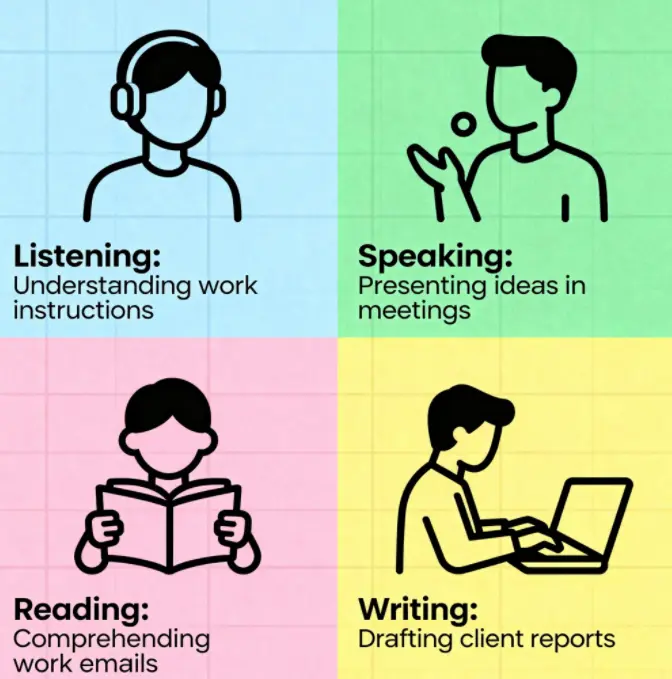
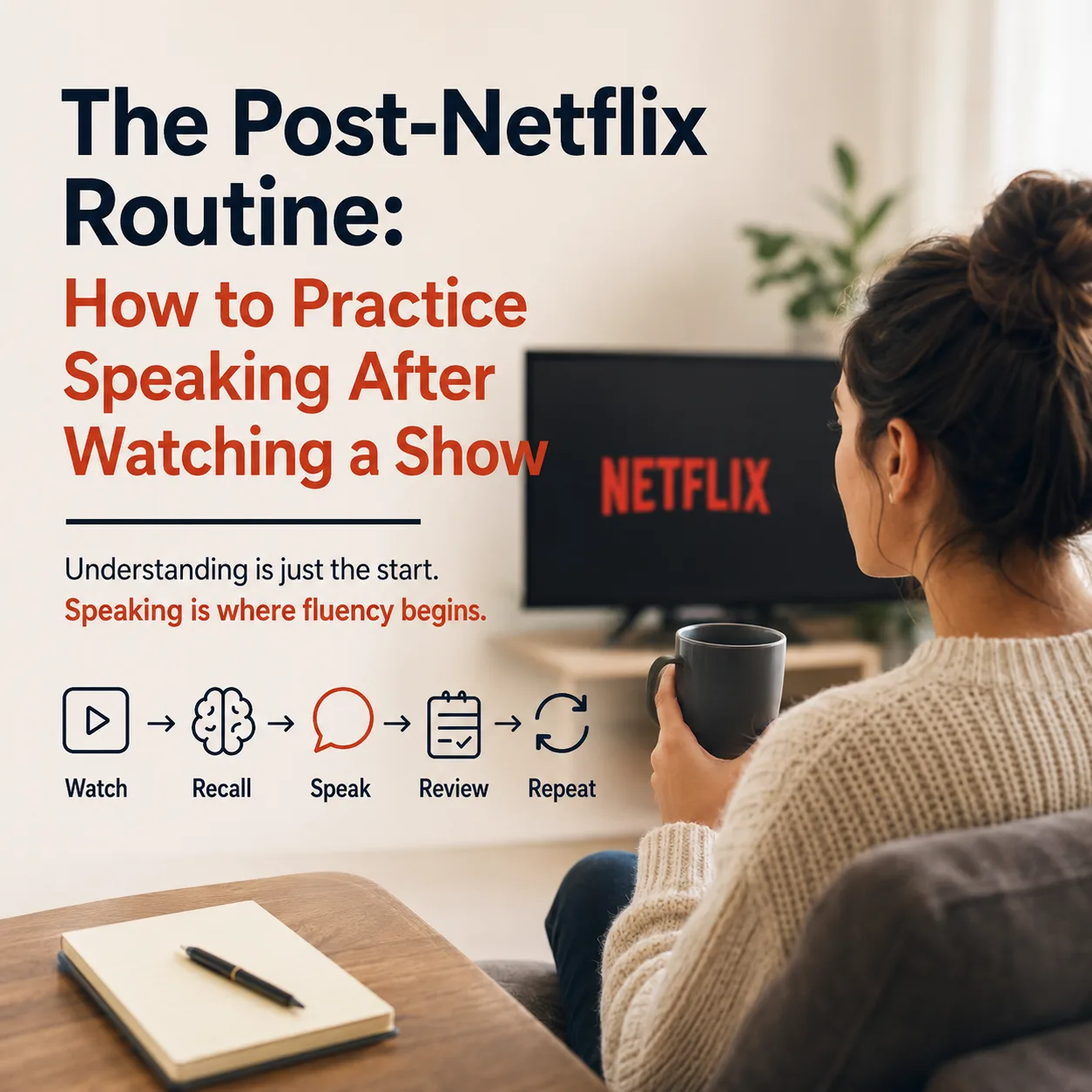
Speaking practice is any activity that forces you to retrieve and assemble language.
Many learners assume only conversations count. That belief limits frequency and raises pressure. In reality, several forms of output train the same core skill.
Speaking That Counts
Activities that involve deliberate output:
- Saying sentences aloud from prompts
- Shadowing audio in real time
- Summarizing content out loud
- Self-talk with structure
- Repeating and reformulating sentences
These activate speech planning and articulation. That is the key requirement.
What Does Not Count on Its Own
Some activities help, but do not train speaking by themselves:
- Silent reading
- Passive listening
- Watching with subtitles only
They build input. They do not build output.
Partial Credit Activities
Internal monologue and mental rehearsal help with planning. They reduce friction later. But they should support, not replace, spoken output.
What Type of Speaking Practice Matters More Than Frequency?
Structured speaking beats “just talking.”
Three useful types are:
- Controlled output: sentence building, imitation
- Semi-guided output: prompts, summaries
- Free speaking: conversation
How frequency fits:
- Controlled output works daily.
- Semi-guided output works 4–6 times per week.
- Free speaking works 1–3 times per week.
Structure reduces mental load. Lower load allows more repetition.
How Anxiety Dictates Speaking Frequency?
Anxiety controls how often you speak more than motivation does.
Most learners do not avoid speaking because they are lazy. They avoid it because each attempt feels costly. Anxiety raises that cost.
When pressure is high, learners speak less often. Fewer attempts mean fewer repetitions. Fewer repetitions slow improvement.
High-Stakes Speaking Reduces Frequency
Formal conversations, evaluations, or “serious” situations feel risky. Learners delay speaking until conditions feel perfect. Days pass. Sometimes weeks.
This reduces total speaking volume, even if sessions are long.
Low-Stakes Speaking Increases Attempts
Private or judgment-free speaking lowers the emotional barrier. Learners try more. They repeat more. Frequency rises naturally.
Speaking improves faster when anxiety is removed, not when confidence is forced.
Maintenance vs Improvement: How Frequency Changes Over Time
Maintaining speaking ability requires less frequency than improving it.
This distinction is often missed. Learners assume that once they reach a level, practice becomes optional. That is partly true, but only for maintenance.
Frequency for Improvement
To grow speaking ability:
- Output must be frequent.
- Gaps must be short.
- Retrieval must be repeated.
Pro-Tip: Intermediate learners benefit most from near-daily speaking because decay is fastest at this stage.
Frequency for Maintenance
Once fluency is stable:
- Speaking less frequently can maintain one’s ability.
- Long gaps still cause drift.
- Precision fades before basic fluency.
Even advanced speakers rely on regular use to stay sharp.
Speaking is not a one-time skill. It responds continuously to frequency.
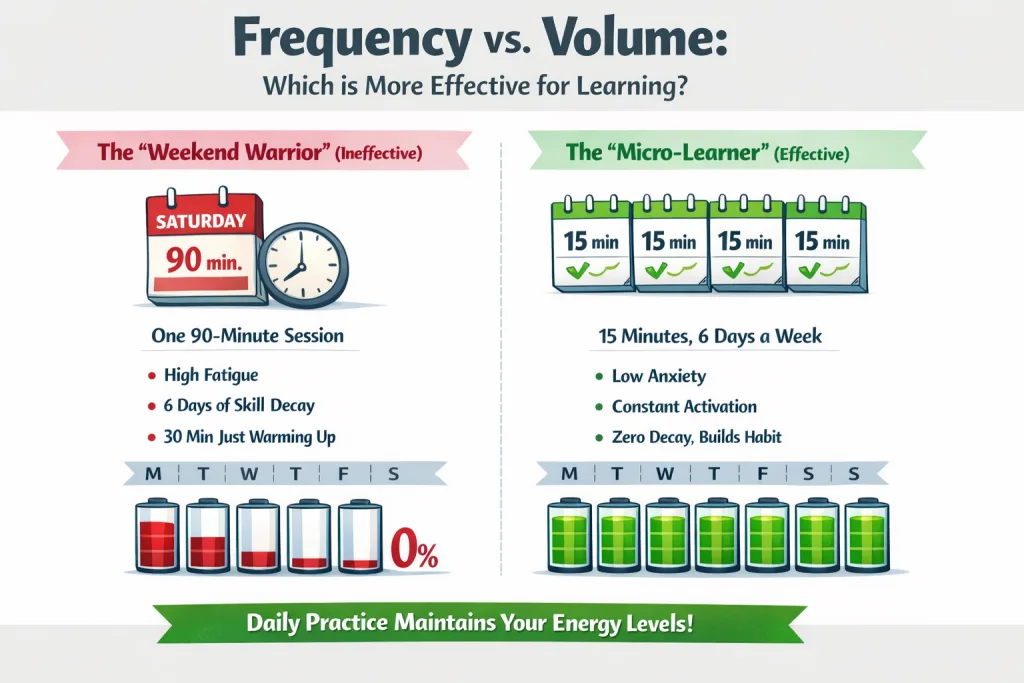
Real Learner Example: What Actually Changes Results?
Small, frequent speaking beats weekend conversations.
Scenario:
An intermediate learner understands nearly everything in videos and podcasts. They schedule one conversation per week, hoping intensity will compensate for frequency, but avoids speaking during the rest of the week. In my teaching work and personal learning, I see this pattern constantly.
Change:
- Switches to 15-minute guided speaking.
- Practices 5 days per week.
- Uses prompts instead of open talk.
Result:
- Faster recall.
- Less freezing.
- Steady confidence growth.
Nothing else changed. Only frequency and structure.
How Do AI Tools Change Speaking Frequency Rules?
AI lowers the cost of speaking often.
Why this matters:
- No scheduling.
- No judgment.
- Unlimited retries.
- Immediate correction.
Tools like Jolii help by:
- Giving structured speaking prompts.
- Providing pronunciation feedback.
- Turning real content into output tasks.
Lower pressure increases repetitions. Repetitions drive fluency.
Pro-Insight: What’s Changing Now and What Comes Next?
Speaking practice is shifting from “sessions” to continuous use.
What’s happening now (2025–2026)
- Micro-practice dominates.
- 5–15 minute blocks are standard.
- AI is used as a rehearsal, not a replacement.
- Intelligibility matters more than accent.
This lowers the bar to speak. Learners speak more often.
What’s coming next (2027–2030)
The broader trend is clear: speaking practice is shifting from scheduled sessions toward shorter, more frequent bursts integrated into daily routines — a pattern that AI tools are making increasingly practical. In the future, AI tools will probably improve and get closer to human-like interactions, which, however, cannot be completely replaced.
FAQ:
Q: Can you improve your speaking without a conversation partner? Yes — and for most learners this is the more realistic option. Self-talk, shadowing, prompted summaries, and AI conversation tools all activate the same retrieval pathways as human conversation. A partner adds unpredictability and social accountability, which helps at intermediate level, but the core skill — retrieving and assembling language under time pressure — can be trained alone.
Q: Does shadowing count as speaking practice? Yes, with one qualification. Shadowing trains pronunciation, rhythm, and articulation — the motor side of speaking. It’s less effective for retrieval practice, since you’re repeating rather than producing independently. Use shadowing alongside prompted speaking rather than instead of it.
Q: What if I feel anxious every time I speak? Lower the stakes before increasing the frequency. Anxiety blocks output more reliably than lack of vocabulary does. Start with zero-audience speaking — self-talk, voice memos, narrating your day — before moving to conversations. Confidence follows repetition, not the other way around.
Q: Does pronunciation practice count as speaking? Yes — it trains the mouth muscles and articulatory patterns that make spontaneous speech feel automatic rather than effortful. Even isolated pronunciation drills contribute to the motor memory that speaking draws on.
Final Verdict
Speaking improves through frequent, low-pressure output, not occasional performance.
Tools like ChatGPT and Jolii reduce friction, increase repetitions, and make consistency realistic.