First published: November 2024 · Last updated: May 2026
Quick Answer (TL;DR)
The best way to learn Italian for a trip is not memorizing grammar, it’s preparing for the situations you’ll actually experience.
Focus on:
- high-frequency travel phrases
- listening to real Italian daily
- practicing simple speaking early
- and learning through context (restaurants, trains, cafés, hotels)
Most travelers don’t need fluency.
They need confidence, comprehension, and fast recognition in real situations.
Even 15–30 minutes per day of focused immersion can dramatically improve your experience in Italy.

Planning a trip to Italy? Then it’s the perfect time to learn some Italian! Nowadays you can get by quite well with English in most tourist areas, but speaking even a little Italian can make your trip much more enjoyable and immersive. Engaging with locals, finding your way around and savoring authentic Italian experiences are all easier with a basic understanding of the language.
In this guide, we’ll explore the most effective ways to learn Italian specifically for travel. No matter if you’re preparing months in advance or just have a few weeks, here are the best tips, apps, courses and resources to get you started. Andiamo!
Why Studying Italian Often Doesn’t Prepare You for Real Conversations
Many travelers arrive in Italy knowing a good number of words and phrases and very motivated to engage with the locals in Italian. Often, that’s enough to order a coffee or ask for directions. But the moment they hesitate, pause too long, or look unsure, Italians immediately switch to English and the chance to speak Italian in gone. As a language teacher, I often hear my students complaining about that!
But why does it happen?
Because real conversation happens fast, unpredictably, and with no time to mentally translate word by word. Native speakers naturally switch to English to keep the conversation going, they mostly just want to be kind to foreign travelers.
Many learners understand Italian when they read it slowly or hear isolated phrases. But processing speed and confidence under pressure make the real difference when facing real situations!
That’s why travel preparation shouldn’t focus only on memorizing phrases. It should also train your ear to natural Italian and help you become comfortable responding imperfectly in real situations.
1. Begin with Essential Italian Phrases for Travelers
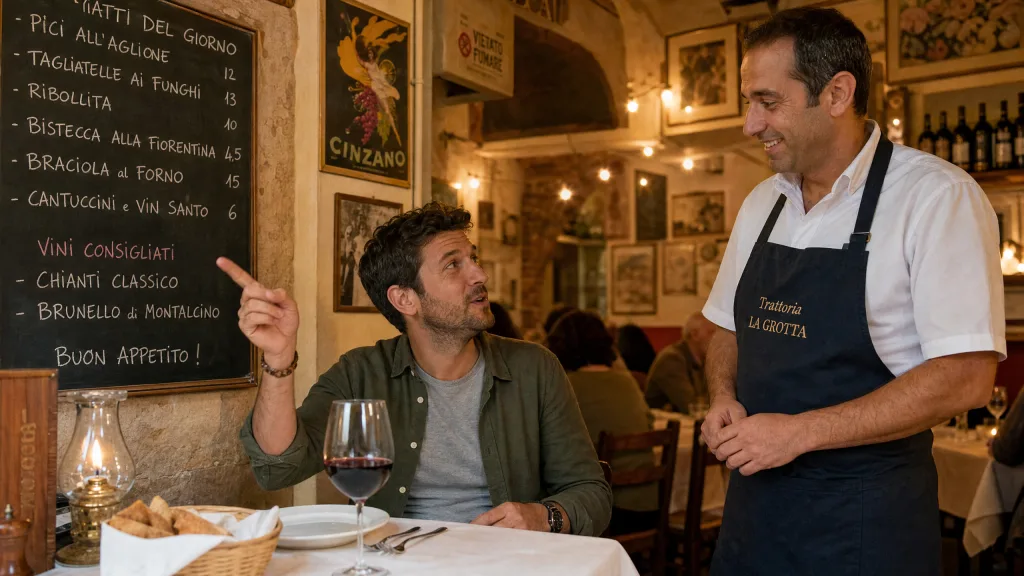
For a short trip, learning essential phrases for everyday interactions is certainly important. Focus on memorizing entire sentences and questions instead of isolated words. Here are some very basic common Italian phrases that will help you navigate, order food and communicate politely:
- Greetings: “Ciao” (Hi/Bye), “Buongiorno” (Good morning), “Buonasera” (Good evening).
- Polite expressions: “Per favore” (Please), “Grazie” (Thank you), “Mi scusi” (Excuse me).
- Ordering food: “Vorrei…” (I would like…), “Il conto, per favore” (The bill, please)
- Asking for directions: “Dov’è…?” (Where is…?), “Quanto costa?” (How much does it cost?).
- Common questions: “Parla inglese?” (Do you speak English?), “Non capisco” (I don’t understand).
For a more complete list of basics for traveling to Italy, take a look at our dedicated guide about 88 Useful Italian Phrases for Travelers.
Phrases are helpful for polite conversations, navigating the city and handling basic transactions. You might also consider carrying a phrasebook or downloading an Italian learning language app with offline capabilities so you can review these words and phrases on the go. Repeating phrases frequently helps with memorization and pronunciation.
Tip: Write down these phrases on flashcards and practice them daily to make the words stick. A small phrasebook is also a great resource to carry along.
2. Leverage Language Learning Apps for Daily Practice
Traditional language learning apps are a great option to build vocabulary and understanding on the go. They are good for getting started with the basics, but consider them a learning game, rather than a proper studying method. Here are some of the best apps for beginners to get started:
- Duolingo: Known for its short, game-like lessons, Duolingo helps beginners pick up vocabulary, grammar basics and pronunciation. This app is free and the practice exercises are perfect for daily use.
- Babbel: Babbel’s lessons are tailored toward real-life situations, focusing on conversational phrases and cultural context. Babbel offers Italian lessons for all levels and helps you retain vocabulary with frequent review.
- Memrise: Memrise is ideal for visual learners, using videos of native speakers and spaced repetition to reinforce vocabulary and pronunciation.
- Pimsleur: Designed for audio learners, Pimsleur’s lessons focus on speaking and listening. Each lesson is around 30 minutes, making it easy to listen while commuting or exercising.
Tip: Choose an app based on your learning style and try to dedicate 15-30 minutes each day to practice. Daily exposure, even in short bursts, is highly effective for language retention.
3. Immerse Yourself in Italian Media for a Natural Feel
Engaging with Italian media can accelerate your understanding of pronunciation, rhythm and slang. Here’s some recommended media:
- Podcasts: “Coffee Break Italian” and “ItalianPod101” are excellent podcasts for beginners and travelers. They cover basic vocabulary, grammar and travel-specific phrases. Listening to native speakers will help you get used to the pace and intonation of Italian.
- Italian Movies and TV Shows: Watching Italian movies or series with subtitles can improve your listening skills. Netflix has a selection of Italian content like L’Amica Geniale (My Brilliant Friend) and Suburra. Watching with subtitles can help you pick up on words and phrases and hearing them in context reinforces your learning.
- Italian Music: Music can be a fun way to improve pronunciation and learn casual expressions. Popular Italian artists like Andrea Bocelli, Laura Pausini and the rock-band Måneskin provide a wide range of styles to explore. You can find Italian playlists on Spotify or many Italian YouTubers and listen during your daily routine.
One challenge with immersion is that native Italian can quickly become overwhelming for beginners. Native speakers talk fast, interrupt each other, use slang, and rarely speak like textbook dialogues..like in real situations you will face in Italy!
On one side, exposure to real Italian is essential for developing listening and speaking skills. On the other, completely raw native content is often too difficult for beginners and quickly becomes frustrating.
Tools like Jolii help bridge this gap by turning Netflix and YouTube content into structured learning experiences. Instead of overwhelming you with content that is too advanced, the app helps you stay in material that feels understandable but still challenging enough to push your Italian forward.
With interactive subtitles, vocabulary review, and speaking practice built directly around real media, you can gradually become comfortable with authentic Italian while still having enough support to keep learning effectively.
Tip: Make a playlist of Italian music or save a few shows for your trip prep. Repetition through songs that you like or frequently watching certain shows can help you internalize phrases and improve listening skills.
4. Practice Speaking with a Language Partner
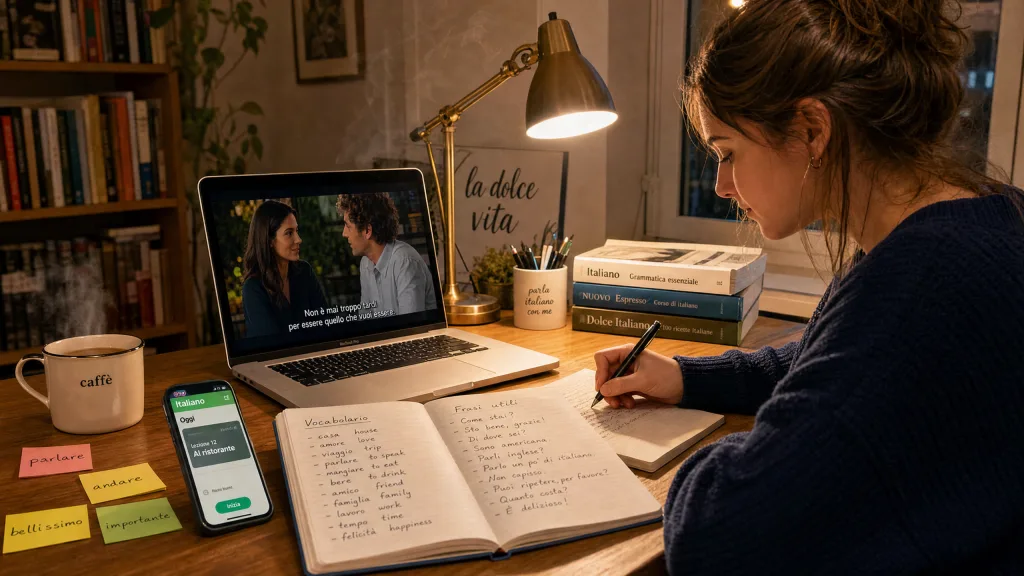
One of the most effective ways to prepare for real-life conversations in Italy is to practice with a language partner. In the end, the final goal is speaking and it’s a skill you should train as much as possible! Language exchange apps connect you with native Italian speakers, allowing you to practice Italian while helping them with English.
- HelloTalk: This app pairs you with Italian speakers who are interested in learning English. You can send messages, audio clips, or even do voice calls, making it easy to practice speaking and listening.
- Tandem: Tandem is similar to HelloTalk but offers more customization options for your language exchange partner, including skill level, location and conversation preferences.
- italki or Preply: These platforms offer one-on-one lessons with professional Italian tutors. Many tutors offer lessons focused on travel vocabulary, conversation practice and cultural insights.
Tip: Practice using simple sentences and travel-focused phrases with your language partner. This practice will improve your confidence and help you overcome the initial nervousness of speaking Italian. For some extra practice, you could consider an AI language tutor.
5. Focus on Vocabulary and Phrases Relevant to Travel
Instead of studying complex grammar, focus on the words and phrases you’re likely to use while traveling. Here are some useful categories:
- Dining: “Vorrei un tavolo per due” (I’d like a table for two), “Posso avere il menù, per favore?” (Can I have the menu, please?).
- Shopping: “Quanto costa?” (How much does it cost?), “Accettate carte di credito?” (Do you accept credit cards?).
- Getting Around: “Un biglietto per Firenze, per favore” (A ticket to Florence, please), “A che ora parte il treno?” (What time does the train leave?).
These phrases will make common interactions, like ordering food or buying tickets, much easier. Focusing on travel-specific language allows you to prepare for scenarios you’ll likely encounter.
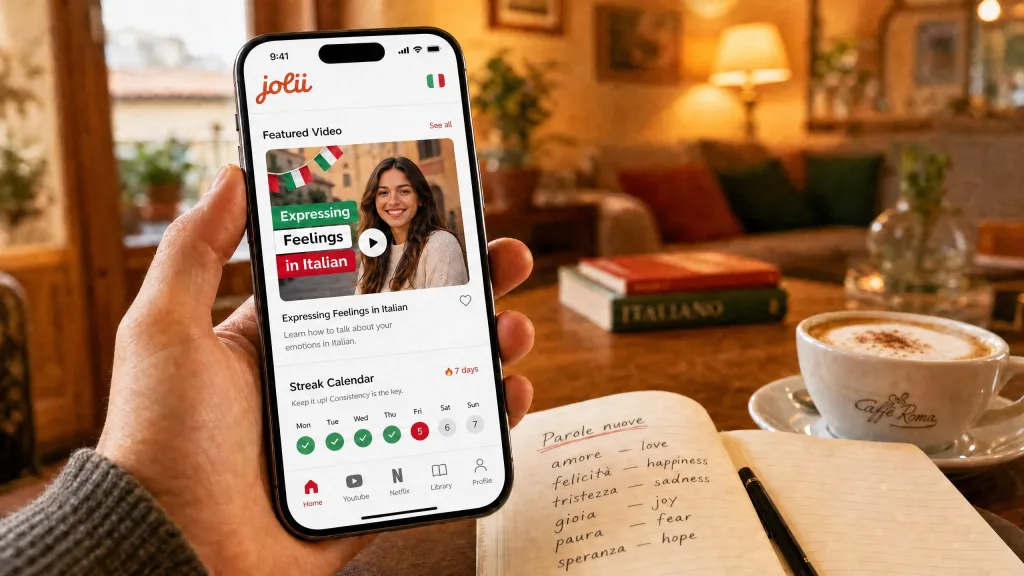
For learners preparing for a trip, Jolii AI includes curated YouTube playlists focused specifically on travel Italian, including common phrases, restaurant vocabulary, transportation, hotel check-ins, and real-life situations travelers are likely to face in Italy. Instead of learning isolated vocabulary lists, you practice these expressions directly through authentic videos and conversations.
Tip: Write down phrases you want to remember on index cards and practice them regularly. You could also try practicing with Italian friends or language exchange partners.
6. Attend Italian Language Meetups or Classes in Your Area
Italian speakers are everywhere! If you have time before your trip, look for local Italian language meetups or classes. Meetup.com and Eventbrite often have listings for Italian conversation groups, where you can practice speaking in a relaxed environment. Community centers and cultural organizations may also offer Italian courses designed for travelers.
Practicing with a group is fun and motivating, especially if you’re preparing for an upcoming trip. You’ll meet other Italian learners and conversation practice will help reinforce your vocabulary.
Tip: Attending a few sessions can help with confidence. These groups are usually beginner-friendly and provide a chance to ask questions about Italian culture and customs as well.
7. Improve Pronunciation with YouTube Tutorials
Italian pronunciation is straightforward but essential to get right. YouTube offers numerous free resources to help you practice:
- Learn Italian with Lucrezia: Lucrezia’s videos cover Italian vocabulary, grammar and pronunciation in a conversational and beginner-friendly way.
- ItalianPod101: In addition to vocabulary and phrases, ItalianPod101 offers pronunciation guides and accent tips, which are especially useful for beginners.
Tip: Focus on commonly mispronounced sounds, like the Italian “c” (which is pronounced differently in words like ciao and casa.). Practicing these sounds regularly will make your Italian sound more natural.
8. Set Small, Achievable Goals and Stick to a Routine
Don’t set fluency as the final goal. Learning a language takes time, so break down your goals into manageable steps. For example, aim to learn five phrases per day or practice speaking for 10 minutes. Consistent practice, even if it’s brief, is more effective than cramming all at once.
Make Italian learning part of your routine, try to immerse yourself as often as possible, and results will follow!
9. Enjoy the Process and Be Open to Mistakes
Learning Italian for travel doesn’t have to be stressful. Even if you only remember a few phrases, locals will appreciate your efforts and you’ll have a more memorable experience. Embrace mistakes as part of the learning process. Italians are often warm and forgiving of travelers trying to speak their language, so don’t worry about perfection.
Conclusion
Learning Italian for a trip is not about perfection. It is about building enough confidence to enjoy real interactions once you arrive in Italy.
The best approach combines essential phrases, real Italian media, listening practice, and gradual speaking exposure. Many travelers know vocabulary but still freeze in real conversations because native Italian moves much faster than textbook dialogues.
That’s where tools like Jolii can help. By combining authentic Italian content with interactive subtitles, speaking practice, and travel-focused playlists, learners can prepare for real situations before their trip, not just memorize phrases. Enjoy your Italian learning journey and buon viaggio!