First published: October 2025. Last updated: June 2026
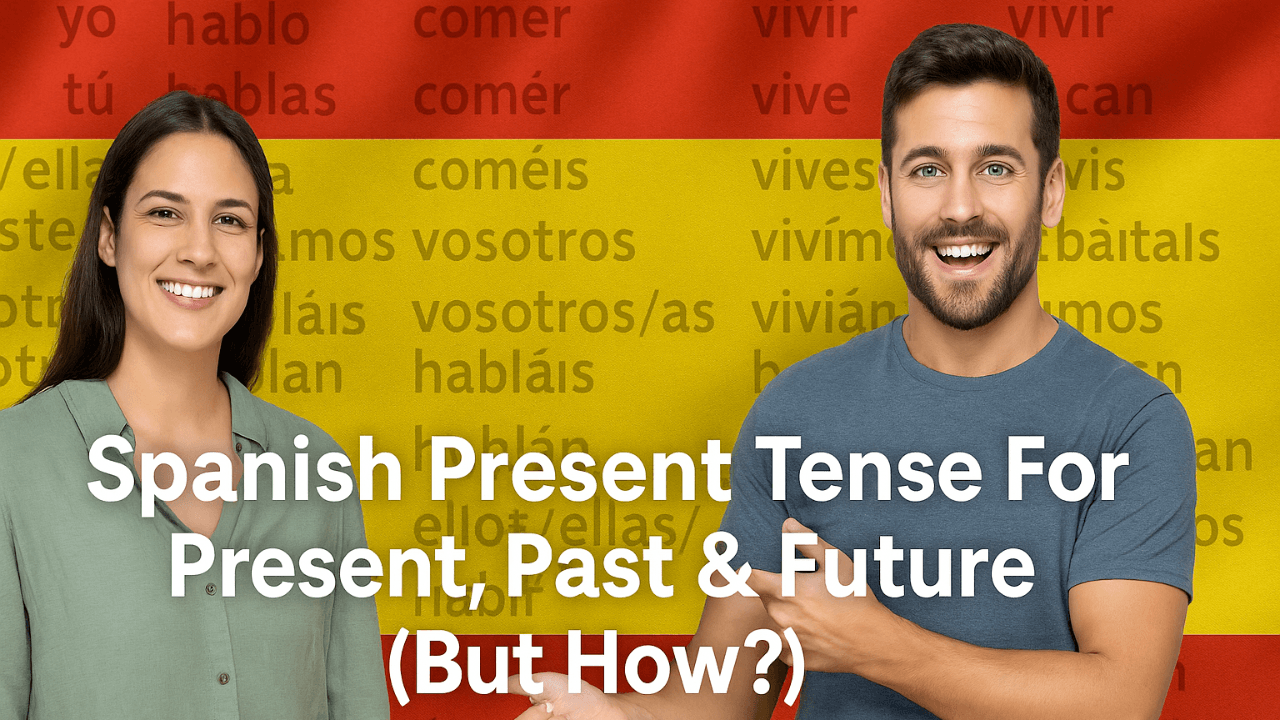
Spanish verb endings change depending on who is speaking, who is being spoken to, and what the speaker wants to express. That single shift — from Te amo to ¿Me amas? — captures the whole system in two words.
The present tense is the foundation of all of it. It covers habitual actions, general truths, future plans, and even past events in informal speech — and it’s more learnable than most beginners expect.
Here we have good news for you, learning Present Tense in Spanish is not as hard as it seems if you avoid some common mistakes every learner makes.
In this article, we will show you the following:
How can you use the Spanish present tense like a native?
Learn regular and irregular Spanish verb conjugations with clear tables and real examples
Why the present Tense can be used for the present, past, and future?
And how you can use the present tense to speak in normal conversations (no textbook drills).
By the end of the article, you will not only learn about the Spanish present tense but also have the confidence to speak Spanish with the correct present tense. Let’s go!
What Is the Spanish Present Tense?
Spanish present tense is used to talk about events that happened presently or might be a fact happening now.
Spanish Present Tense (Presente de indicativo) is used in several places, here are a few situations when the present tense is used.
When to Use the Spanish Present Tense
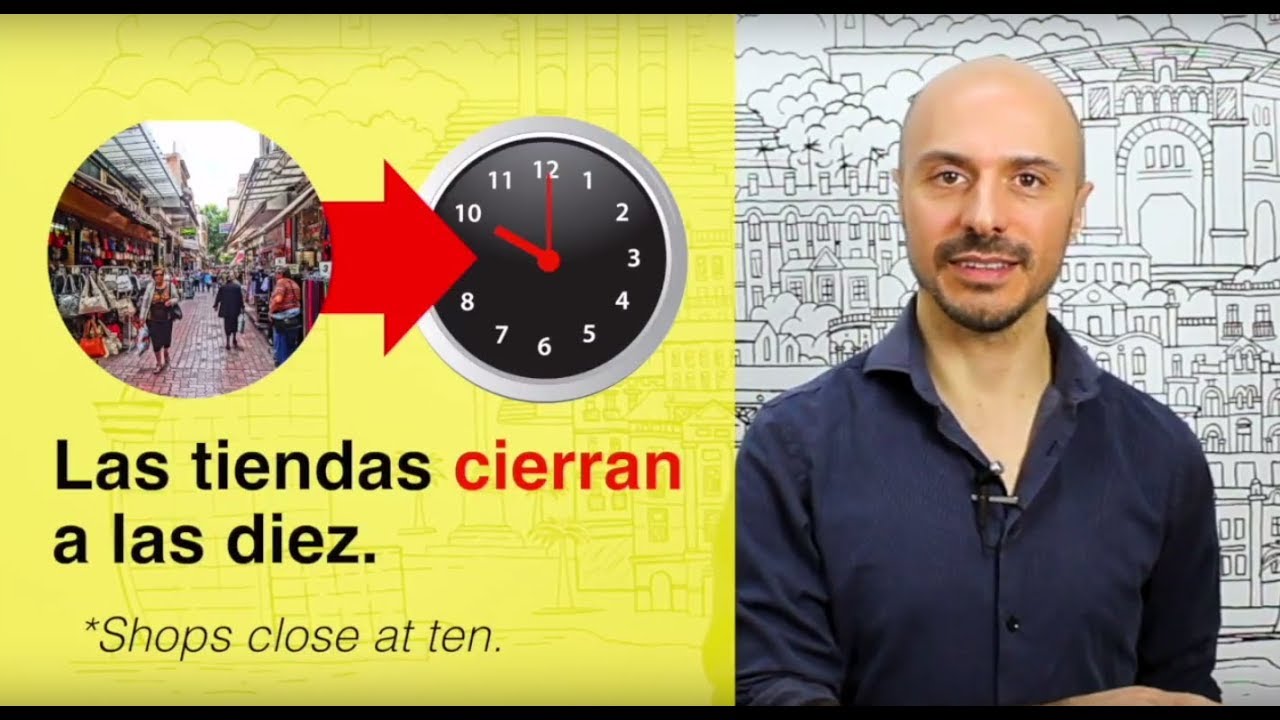
Habitual Actions & Routines
We use the present tense to tell habitual actions which are more likely the routines for anyone.
We go to school. (Nosotros vamos a la escuela)
Sherry uses his bike to go office.(Sherry usa su bicicleta para ir a la oficina)
I study Spanish every day.(Yo estudio español todos los días.)
Facts & General Truths
General truths and facts are always told in the present tense.
Two and two make four.(Dos y dos son cuatro.)
Honesty never goes unpaid or unrewarded.(La honestidad nunca deja de ser remunerada o recompensada.)
The sun rises in the East.(El sol sale por el este.)
Set Schedules & Future Events
When we have to set a schedule or a routine, we always do it in the present tense.
Our class ends in an hour.(Nuestra clase termina en una hora.)
The whole ride will end in the evening.(Todo el recorrido finalizará por la tarde.)
The train arrives at 5.(El tren llega a las 5.)
Actions Happening Right Now
The events and actions of anyone that happen right now also fall in the present tense.
I am reading a book.(Leo un libro.)
The wind is blowing. (El viento sopla.)
We are walking back home.(Nosotros estamos caminando de vuelta a casa.)
Using Present Tense to Describe Past Events in Informal Speech
This is the most important part of the present tense, which is used in the past tense to portray any event happening in the past. Here are a few case scenarios in which you can see how the present is used in describing past events.
I went to the store yesterday, and I see this thing lying open.(Fui a la tienda ayer y aquí veo esta cosa abierta.)
We go to this restaurant last night and volia! What an interesting place it is.(¡Fuimos a este restaurante anoche y listo! Qué lugar tan interesante es.)
Then he tells me he can’t come.(Entonces, él me dice que no puede venir.)
“If” Clauses & Hypothetical Situations
We also use the Spanish Present Tense when we describe the if situations and some hypothetical situations.
If you have time we can talk.(Si tienes tiempo, podemos hablar.)
What if I win the lottery?(¿Qué pasa si gano la lotería?)
If I study, I can get good marks.(Si estudio puedo sacar buenas notas.)
Ordering Food & Making Requests (e.g., “Quiero un café, por favor.”)
I want a coffee, please.(Quiero un café, por favor.)
I need a taxi now.(Necesito un taxi ahora.)
I desire a room wit a view.(Deseo una habitación con vista.)
Why you can use the present tense for the past and the future as well
The present is definitely your starting point in learning Spanish conjugations. It is the most common tense for everyday conversation, and you will need it to introduce yourself, ask questions, and talk about your habits. Apart from that, the present tense is also used to speak about future plans and even about the past. Let’s see how.
Present Tense for the Future
Even though there is a proper future tense conjugation, it is perfectly normal in Spanish to use the present to speak about future events, so we definitely encourage you to do so while speaking Spanish. It will be easier and more natural!
For example:
Mañana tengo una reunión. (Tomorrow I have a meeting.)
El tren sale a las 5. (The train leaves at 5.)
Nos vemos luego. (We’ll see each other later.)
Spanish Present Tense for the Past
Even native speakers sometimes use the present tense to talk about the past, especially in storytelling or historical narration.
For example:
Colón llega a América en 1492. (Columbus arrives in America in 1492.)
Entonces entra el jefe y dice… (Then the boss walks in and says…)
And you can do it too! As a beginner, using the present tense all the time while speaking is perfectly fine. Just use time markers such as ayer (yesterday), la semana pasada (last week), antes (before). This way, you can express past events even if you haven’t learned past tense conjugations yet.
Incorrect but understandable:
Ayer voy al supermercado. (Yesterday I go to the supermarket.)
Correct past tense version:
Ayer fui al supermercado. (Yesterday I went to the supermarket.)
While native speakers wouldn’t phrase it this way, they will still understand you. The goal is to get your message across and communicate effectively, perfection will come with practice! And if you are looking to practice the present tense and more, we have what you need!
With Jolii, you can learn Spanish while watching videos with real content. This way, you will learn grammar without even realizing. Ready to give it a try? Download Jolii today and give your Spanish a boost!
How to Conjugate Present Tense Verbs in Spanish
Regular Verbs: AR, ER, IR Conjugations
Spanish verbs are categorized into three different conjugation groups: AR, ER, IR, with AR being the most common one. Here are a few examples for each category.
| Verb Type | Examples |
| -AR Verbs | hablar (to speak), bailar (to dance), estudiar (to study), trabajar (to work), escuchar (to listen) |
| -ER Verbs | comer (to eat), leer (to read), correr (to run), beber (to drink), vender (to sell) |
| -IR Verbs | vivir (to live), escribir (to write), abrir (to open), recibir (to receive), decidir (to decide) |
To conjugate Spanish verbs, you need to combine a stem (the base of the verb) with specific endings.
STEP 1: Find the stem.
To find the stem of the verb, you simply need to remove AR, ER, and IR.
For example:
Hablar → Habl-
Comer → Com-
Vivir → Viv-
STEP 2: Add the correct endings.
| Pronoun | -AR Endings | -ER Endings | -IR Endings |
| Yo | -o | -o | -o |
| Tú | -as | -es | -es |
| Él/Ella/Usted | -a | -e | -e |
| Nosotros/Nosotras | -amos | -emos | -imos |
| Vosotros/Vosotras | -áis | -éis | -ís |
| Ellos/Ellas/Ustedes | -an | -en | -en |
Example conjugation.
| Pronoun | Hablar (to speak) | Comer (to eat) | Vivir (to live) |
| Yo | hablo | como | vivo |
| Tú | hablas | comes | vives |
| Él/Ella/Usted | habla | come | vive |
| Nosotros | hablamos | comemos | vivimos |
| Vosotros | habláis | coméis | vivís |
| Ellos/Ellas/Ustedes | hablan | comen | viven |
Examples:
- Yo hablo español. (I speak Spanish.)
- Tú comes mucha fruta. (You eat a lot of fruit.)
- Ella vive en Barcelona. (She lives in Barcelona.)
Practice:
- Nosotros ________ (estudiar) mucho. (We study a lot)
- ¿Tú ________ (comprender) la lección? (Do you understand the lesson?)
- Ellos ________ (escribir) correos electrónicos. (They write emails)
Irregular Verbs & Special Cases
Unfortunately, not every verb follows regular conjugations as above, so here the irregularities that we are going to cover:
- Verbs that don’t follow standard patterns.
- Irregular Yo Forms
- Stem-Changing Verbs
- Special Cases
- Reflexive Verbs
- Verbs that don’t follow standard patterns.
These verbs are very irregular and you will need to learn their conjugations by heart.
| Pronoun | Ser (to be) | Estar (to be) | Ir (to go) | Oír (to hear) | Haber (to have – auxiliary) |
| Yo | soy | estoy | voy | oigo | he |
| Tú | eres | estás | vas | oyes | has |
| Él/Ella/Usted | es | está | va | oye | ha/hay |
| Nosotros | somos | estamos | vamos | oímos | hemos |
| Vosotros | sois | estáis | vais | oís | habéis |
| Ellos/Ellas/Ustedes | son | están | van | oyen | han |
Examples:
- Yo soy estudiante. (I am a student.)
- Él está en casa. (He is at home.)
- Nosotros vamos al cine. (We go to the cinema.)
Practice: Complete the sentences with the correct form of the verb in parentheses:
- Yo ________ (ir) al gimnasio todos los días.
- ¿Dónde ________ (estar) tú?
- Ellos ________ (ser) mis amigos
2. Irregular First-Person Singular (Yo) Forms.
These verbs are irregular only in their yo form.
| Infinitire | Yo Form | Meaning |
| Ver | veo | to see |
| Dar | doy | to give |
| Saber | sé | to know (facts) |
| Hacer | hago | to do, to make |
| Salir | salgo | to leave, to go out |
| Poner | pongo | to put, to place |
| Traer | traigo | to bring |
| Caer | caigo | to fall |
| Conocer | conozco | to know (a person) |
| Traducir | traduzco | to translate |
| Conducir | conduzco | to drive |
Examples:
- Yo sé la respuesta. (I know the answer.)
- Yo hago la tarea. (I do the homework.)
- Yo traigo el vino. (I bring the wine.)
Practice: Complete the sentences with the correct form of the verb in parentheses:
- Yo ________ (conocer) a Juan. (I know Juan.)
- Yo ________ (traer) los libros. (I bring the books.)
- Yo ________ (ver) la televisión. (I watch TV.)
Stem-Changing Verbs
Some verbs change their stem vowels in the yo, tú, él/ella/usted, and ellos/ellas/ustedes forms. Nosotros and vosotros always remain unchanged. For a detailed overview of stem-changing verbs, check our article.
| Pronoun | Querer (e → ie) (to want) | Poder (o → ue) (to be able to) | Pedir (e → i) (to ask) |
| Yo | quiero | puedo | pido |
| Tú | quieres | puedes | pides |
| Él/Ella/Usted | quiere | puede | pide |
| Nosotros/as | queremos | podemos | pedimos |
| Vosotros/as | queréis | podéis | pedís |
| Ellos/Ellas/Ustedes | quieren | pueden | piden |
Examples:
- Yo quiero un café. (I want a coffee.)
- Tú puedes hablar español. (You can speak Spanish.)
- Ella pide ayuda. (She asks for help.)
Other common stem-changing verbs:
| E → IE | O → UE | E → I | U → UE |
| Cerrar (to close)Comenzar (to begin)Preferir (to prefer)Sentir (to feel) | Contar (to count/tell)Encontrar (to find)Volver (to return)Mover (to move) | Servir (to serve)Repetir (to repeat)Seguir (to follow/continue) | Jugar (to play) |
Practice: Complete the sentences with the correct form of the verb in parentheses:
- Yo ________ (preferir) el té al café. (I prefer tea to coffee.)
- ¿Tú ________ (poder) ayudarme? (Can you help me?)
- Ellos ________ (pensar) ir de vacaciones. (They think about their holidays.)
Exceptions & Special Cases
Some verbs have irregular yo forms and at the same time they are also stem-changing.
| Pronoun | Tener | Venir | Decir | Elegir | Corregir |
| Yo | tengo | vengo | digo | elijo | corrijo |
| Tú | tienes | vienes | dices | eliges | corriges |
| Él/Ella/Ud. | tiene | viene | dice | elige | corrige |
| Nosotros | tenemos | venimos | decimos | elegimos | corregimos |
| Vosotros | tenéis | venís | decís | elegís | corregís |
| Ellos/Ellas/Uds. | tienen | vienen | dicen | eligen | corrigen |
Examples:
- Yo tengo un libro. (I have a book.)
- Ella viene a la fiesta. (She comes to the party.)
- Nosotros decimos la verdad. (We tell the truth.)
Practice:
- ¿A qué hora ________ (venir) tú? (At what time do you come?)
- Ellos ________ (decir) que están cansados. (They say that they are tired.)
- Yo ________ (elegir) el color azul. (I ________ the color blue.)
Reflexive Verbs
Probably the first thing you learned in Spanish was a reflexive verb. The most basic example is llamarse, which is used to introduce yourself. Unlike English, where we simply say “My name is…”, in Spanish, you say Me llamo…, which literally means “I call myself.”.
Reflexive verbs are used to describe actions that reflect back on the subject and are often used in daily conversations to describe routine actions. Adding the pronouns (me, te, se, nos, os, se) is essential because they change the meaning of the verb. For example, the verb llamar (to call someone) is very different in meaning from llamarse (to call oneself, to be named)
- Llamo a María. (I call María.)
- Me llamo María. (I call myself María. / My name is María.).
| Pronoun | Llamarse (to be named) |
| Yo | me llamo |
| Tú | te llamas |
| Él/Ella/Usted | se llama |
| Nosotros/as | nos llamamos |
| Vosotros/as | os llamáis |
| Ellos/Ellas/Ustedes | se llaman |
Other common reflexive verbs.
- Lavarse (to wash oneself)
- Levantarse (to get up)
- Secarse (to dry oneself)
- Sentirse (to feel)
- Divertirse (to have fun)
- Quejarse (to complain)
- Vestirse (to get dressed)
Examples:
- Yo me llamo Juan. (My name is Juan.)
- Ella se lava las manos. (She washes her hands.)
- Nosotros nos vestimos rápidamente. (We get dressed quickly.)
Practice: Complete the sentences with the correct form of the reflexive verb in parentheses:
- Yo ________ (levantarse) a las 7 de la mañana. (I get up at 7am.)
- Tú ________ (lavarse) la cara. (You wash your face)
- Ellos ________ (quejarse). (They complain.)
What is the Present Progressive in Spanish
The present progressive is used to describe actions happening right now.
Formula:
Estar (present) + Gerund (-ando / -iendo)
How to form the gerund:
- -AR verbs → -ando (hablando)
- -ER / -IR verbs → -iendo (comiendo, viviendo)
| Pronoun | Estar (to be) | Present Progressive |
| Yo | estoy | estoy hablando / comiendo / viviendo |
| Tú | estás | estás hablando / comiendo / viviendo |
| Él/Ella/Usted | está | está hablando / comiendo / viviendo |
| Nosotros/as | estamos | estamos hablando / comiendo / viviendo |
| Vosotros/as | estáis | estáis hablando / comiendo / viviendo |
| Ellos/Ellas/Ustedes | están | están hablando / comiendo / viviendo |
Examples:
- Yo estoy hablando español. (I am speaking Spanish.)
- Tú estás comiendo una manzana. (You are eating an apple.)
- Ellos están viajando en España. (They are traveling in Spain.)
Practice: Complete the sentences with the correct gerund form:
- Yo _____________ (trabajar). (I am working)
- Tú estás ________ (escribir) una carta. (You are writing a letter)
- Nosotros estamos ________ (bailar) en la fiesta. (We are dancing at the party)
Irregular Verbs
| Verb Infinitive | Gerund Form | Example Sentence | English Translation |
| Leer (to read) | leyendo | Estoy leyendo un libro. | I am reading a book. |
| Dormir (to sleep) | durmiendo | Ellos están durmiendo. | They are sleeping. |
| Decir (to say) | diciendo | ¿Qué estás diciendo? | What are you saying? |
| Pedir (to ask) | pidiendo | Estoy pidiendo ayuda. | I am asking for help. |
| Ir (to go) | yendo | Estamos yendo al cine. | We are going to the cinema. |
Be careful!
The present progressive is used to describe only what is happening right now and not for future plans as in English. Many Spanish learners overuse the present progressive as they use it to speak about the near future. A sentence like Mañana estoy trabajando en la oficina doesn’t make any sense in Spanish Instead when describing what you are going to do in the near future use either:
- The simple present: Mañana trabajo en la oficina. (Tomorrow I work at the office.)
- The “ir + a + infinitive” structure: Mañana voy a trabajar en la oficina. (Tomorrow I’m going to work in the office.)
Conclusion
In this article you have learned all about using the Spanish Present Tense. Jolii lets you encounter these conjugations in authentic Spanish content — so the present tense patterns you’ve studied here appear in real conversations rather than isolated exercises.