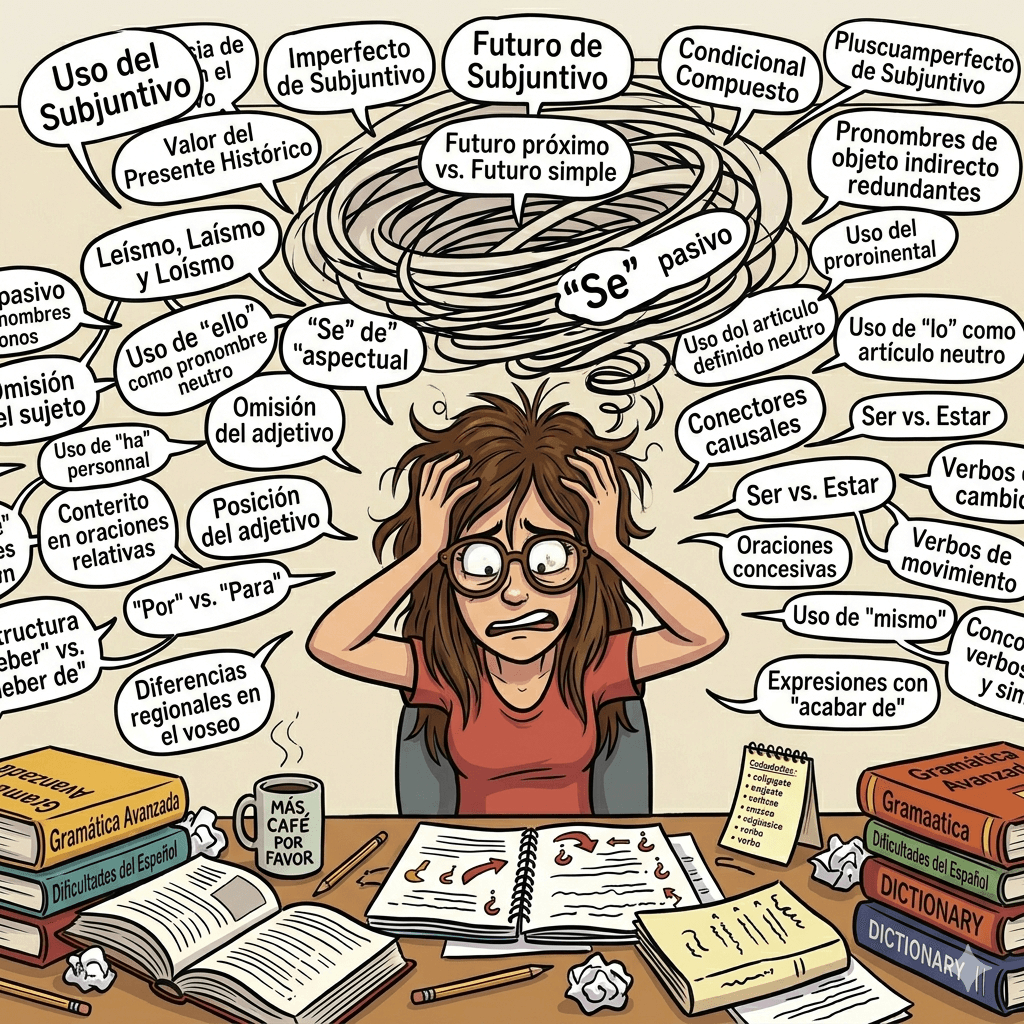
Speaking Spanish used to require long courses and a lot of memorization. Now, there are better ways to improve faster, all thanks to the AI revolution.
Today’s AI language learning tools don’t just drill vocabulary. They listen and analyze your speech. They help you correct mistakes immediately.
Traditional apps still matter. They build grammar and foundation. But AI technology now plays a major role in helping people speak Spanish much sooner.
In this guide, you will see how AI tools and structured apps each help you learn Spanish fast. You will also learn the best way to combine them for faster fluency.
How can you Learn Spanish Fast?
Spanish is one of the fastest languages to learn for English speakers.
Research shows that 600–750 hours of guided learning are needed to reach B1/B2 conversational fluency.
This can mean:
- 3 hours/day → 6–7 months
- 1 hour/day → 1.5 years
- 3.5 hours/week → 3–4 years
The learning tool you choose affects which end of that timeline you follow.
Pro-Insight: Apps that help you speak earlier shorten the learning curve. Apps with only passive study slow progress.
Traditional Language Learning Apps: What They Offer
Traditional language apps focus on structure.
They provide:
- Step-by-step grammar
- Vocabulary building
- Exercises like matching and reading
- Spaced Repetition Systems for memory (SRS)
Strengths:
- Strong grammar foundation
- Better sentence accuracy
- Good for absolute beginners
Weaknesses:
- Limited speaking practice
- Delayed feedback
- Fluency may feel slow in real situations
To sum it up:
Traditional tools help you understand Spanish. But they do not always help you use Spanish confidently.
AI-Based Learning Tools: How They Work
AI tools personalize content automatically. They use:
- Machine learning to adjust difficulty
- Speech recognition for pronunciation feedback
- Interactive conversation simulations
- Lessons based on the topics you care about
They identify your weak points and correct mistakes before they become habits. Active speaking builds fluency faster than passive exercises.
Pro insight:
Studies show that real-time correction leads to faster gains in speaking skills, especially for beginners and intermediate learners.
Head-to-Head Comparison
| Feature | AI Tools | Traditional Apps |
| Personalization | Learner-Specific | Fixed path |
| Speaking Practice | Simulated Conversation | Minimal |
| Grammer & Structure | Less Formal | Strong |
| Adaptability | Real-Time Adjustments | Static lessons |
| Cost | Varies | Often Free or low-cost |
Which Is Faster for Real Results?
Research shows that immersion and active usage accelerate fluency.
AI tools allow:
- More speaking hours
- More feedback moments
- Lower anxiety when practicing
This leads to faster growth in:
- Listening
- Pronunciation
- Natural sentence formation
Traditional apps improve accuracy, but active fluency often progresses more slowly.
Speaking Fluency:
Speaking is the biggest challenge for most learners.
AI tools:
- Listen to your voice
- Detect mistakes in stress and rhythm
- Suggest corrections immediately
Your tongue and brain learn together. Output makes knowledge stick. This quickly closes the gap between “knowing Spanish” and speaking Spanish.
Engagement & Retention
Traditional apps rely on repetition rewards. Motivation drops once lessons feel repetitive.
AI tools:
- Track progress more closely
- Keep learning relevant to your goals
- Sustain motivation through personalization
This means better engagement, more study sessions, ultimately leading to faster progress.
Are AI Tools Worth the Investment?
AI apps cost more than simple vocabulary apps. But the value comes from time saved.
A few months of improved speaking confidence can be more affordable than years of slow progress.
Unlimited AI practice also costs less than human tutoring, while offering more hours of real usage.
Best Strategy? Combine Both!
The fastest learners use two systems together. A traditional app provides structure, grammar, and accuracy. An AI tool helps with speaking, listening, and real conversation.
This combination:
- Strengthens foundations
- Improves fluency speed
- Reduces forgetting and errors
- Helps reach conversational level sooner
Pro insight:
Blending grammar input and AI output together can reduce fluency time below 12 months for consistent Spanish learners.
AI Trends in Language Learning (2025):
In 2025, AI has made language learning easier than ever. It has made learning faster and more immersive. Research shows that this can lead to a nearly 9% boost in retention compared to traditional methods due to engaging multiple senses
- Personalization: Lessons now adapt to your pace and weaknesses.
- Conversational AI: Tutors instantly correct grammar and simulate real chats.
- Pronunciation: Speech tools give instant, native-like feedback.
- Immersion: VR/AR turns real spaces into live language labs.
- Microlearning: Quick, gamified sessions keep practice consistent.
Best Apps to Learn Spanish Fast
Combining AI apps gives big boost to your Spanish learning journey. Here are the top apps to learn Spanish fast:
- Jolii: Uses videos and AI chat for natural vocabulary and beginner conversation.
- Fluently: Gives professional feedback on grammar and speaking style.
- ELSA Speak: Instantly corrects and perfects your pronunciation.
- LingQ: Builds advanced vocabulary by using authentic reading and listening content.
FAQs:
Q. Can I learn Spanish fast with only AI tools?
Yes. Speaking and listening will grow fast. Add grammar support for better accuracy.
Q. Are traditional apps outdated?
No. They are strong for beginners and foundations.
Q. What’s the quickest way to learn Spanish fast as a beginner?
Short daily sessions using Jolii + an AI speaking app are the best way to learn Spanish faster.
Q. How long does it take to learn Spanish fast with these tools?
6–12 months of consistent learning can reach a conversational level.
Final Thoughts
AI and traditional apps both help you learn Spanish fast in different ways.
You gain accuracy from the traditional app, and fluency from the AI tool. This results in faster, more balanced mastery.
Recap:
- Use traditional apps for grammar and memory
- Use AI tools for speaking and confidence
- Practice daily in short lessons
- Correct mistakes quickly using real-time feedback
To speed up results, start learning Spanish with Jolii.ai app. It blends real media, instant feedback, and interactive learning for rapid learning.