TL;DR
Måneskin’s Eurovision-winning song Zitti e Buoni is an excellent resource for intermediate Italian learners thanks to its slang, dialect features, and expressive vocabulary. By analyzing key lyrics and expressions, learners can improve listening skills, understand informal Italian, and connect with contemporary Italian culture.
Many Italian learners find songs difficult to understand because of slang, fast pronunciation, and regional dialects. Zitti e Buoni captures all three, making it challenging — but also incredibly rewarding — for intermediate learners who want to move beyond textbook Italian.
In this guide, we’ll break down the meaning of the song, explore key vocabulary, and explain the expressions that give the lyrics their unique character.
If you want to understand how songs accelerate language learning, read our complete guide to learning Italian through songs.
Måneskin: From Rome to Eurovision
Måneskin’s journey to Eurovision began with their triumph at the Sanremo Music Festival in March 2021, Italy’s most prestigious and important music competition. Their Sanremo victory paved the way for their Eurovision performance, which was met with overwhelming support from viewers, leading to a significant public vote that secured their win. They not only won the contest but also made history as the first Italian-language song to enter the UK Top 20 in over 30 years. “Zitti e Buoni” quickly gained millions of streams on platforms like Spotify. By mid-2021, they had surpassed 1 billion Spotify streams, topping global charts and Måneskin have achieved global fame, completing a worldwide tour that included major sold-out stops in the U.S.
Let’s break down the language of this powerful song so you can not only rock out but also understand exactly what’s being said!
Why “Zitti e Buoni” is great for learning Italian
This song helps learners develop:
- Exposure to authentic slang
- Awareness of regional pronunciation
- Emotional vocabulary recall
- Listening tolerance for fast speech
Music strengthens memory because rhythm and emotion reinforce vocabulary retention.
Italian & English Lyrical Analysis: Zitti e Buoni
Before we dive into the lyrics, let’s take a moment to listen to the song. Keep in mind, this track is best suited for intermediate learners, as the lyrics can be quite challenging to grasp.
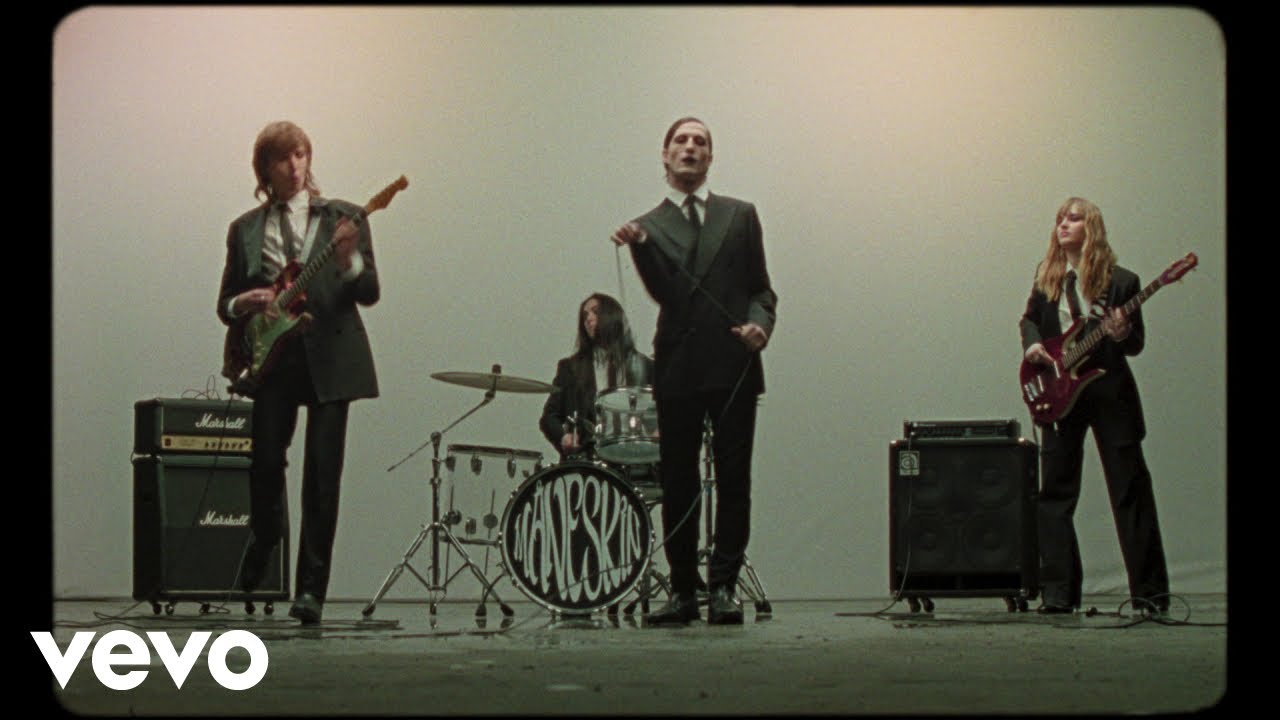
Listening tip
Listen once for rhythm and emotion, then again while focusing on specific words or expressions. A third listen with lyrics helps bridge the gap between recognition and comprehension.
The Title: The Meaning Behind “Zitti e buoni”
The title “Zitti e Buoni” translates to “Shut up and behave,” a phrase often said to children to make them quiet and well-behaved. In this context, the command is aimed at those who challenge societal norms.
Vocabulary Breakdown:
● Zitti: Plural of “zitto,” meaning “quiet” or “shut up.”
● Buoni: Plural of “buono,” meaning “good” or “well-behaved.”
The title reflects a command rather than a polite request. It is often used to impose conformity. Måneskin’s lyrics express frustration with these expectations and celebrate individuality, encouraging listeners to reject pressures to fit in.
Unpacking the Lyrics: Italian Expressions and Slang
To fully appreciate “Zitti e buoni,” it’s helpful to understand some of the Italian vocabulary used throughout the song. These expressions not only enhance your vocabulary but also provide insight into Italian slang and colloquial speech. Let’s dive into some useful Italian vocabulary and phrases that can help you better grasp the lyrics:
1. “Fra’” e “Siga”
| Italian Lyrics | English Translation |
| Loro non sanno di che parlo Vestiti sporchi, fra’, di fango Giallo di siga’ fra le dita Io con la siga’ camminando | They don’t know what I’m talking about Clothes are dirty, bro, of mud Cig’s yellow in between the fingersI ’m walking with a cig |
Analysis: The term “fra ‘” is a casual abbreviation of “fratello ,” meaning “brother.” This informal term is akin to saying “bro” in English and reflects the camaraderie and rebellious spirit of the song.
It showcases how Italian speakers often drop syllables in casual conversation, making the language feel more fluid and informal. Similarly, “siga ‘” is a shortened form of “sigaretta ,” meaning “cigarette.” These informal abbreviations enrich conversational Italian, making it more relatable and engaging while providing insights into cultural attitudes and social dynamics.
Other Examples:
“Raga“: Short for “ragazzi ,” meaning “guys” or “kids.”
“Lune “: Shortened from “lunedì ,” meaning “Monday.”
“Tranqui “: A casual form of “tranquillo ,” meaning “calm” or “chill.”
2. “Ci credo”
| Italian Lyrics | English Translation |
| “Scusami, ma ci credo tanto “ | “Sorry, but I really believe in it” |
Analysis: The phrase “ci credo ” translates to “I believe (in it)” or “I’m sure.” It can be used sincerely to express confidence or sarcastically to mock someone else’s belief. In the song, it conveys a strong sense of conviction and reinforces the idea that the speaker stands firm in their beliefs despite external pressures.
Other Examples:
“Ci credo che possiamo farcela!” : “I believe we can do it!”
“Non ci credo, è impossibile!” “I don’t believe it; it’s impossible!”
“Sei sicuro? Ci credo solo se lo vedo. “ “Are you sure? I’ll only believe it if I see it.”
3. “Vi conviene”
| Italian Lyrics | English Translation |
| “Vi conviene stare zitti e buoni” | “You’d better keep quiet and behave” |
Analysis: This translates to “you’d better,” urging others to behave in a particular way, echoing the rebellious command in the title.
“Vi conviene” suggests that the speaker is advising others on what they should do, emphasizing the importance of making wise choices.
Other Examples:
“Vi conviene studiare per l’esame.”: “You’d better study for the exam.”
“Se non volete problemi, vi conviene stare lontani.”: “If you don’t want problems, you’d better stay away.”
“Vi conviene arrivare in tempo per non perdere l’inizio.”: “You’d better arrive on time so you don’t miss the beginning.”
4. “Toccarsi i coglioni”
| Italian Lyrics | English Translation |
| “Vi conviene toccarvi i coglioni” | “You’d better touch your balls” |
Analysis: The phrase “toccarsi i coglioni, ” literally meaning “to touch your balls,” is a crude expression often used in Italy as a superstitious gesture for good luck. In this context, it adds a layer of edginess and authenticity to the lyrics, emphasizing the rawness of emotion and rebellion against societal norms, including a typical Italian gesture.
5. Roman Dialect: “Mo” e “‘Sti”
| Italian Lyrics | English Translation |
| “Mo li prendo a calci ‘sti portoni” | “Now I kick these doors” |
Analysis: The word “mo,” meaning “now” or “well,” is a Roman dialect term that reflects Måneskin’s roots. This casual expression adds immediacy and a regional touch to the song, grounding it in the band’s hometown culture. The use of “‘sti” from “questi ” (“these”) is also a common feature of spoken Italian, particularly in Roman dialect. The use of dialect words like “mo” and “‘sti” enriches the lyrics with authenticity, giving the song a raw, street-level connection to Rome.
For instance, the line in standard Italian, “Adesso prendo a calcio questi portoni” (“Now I kick these doors”) would sound far less expressive than the original version, where the Roman dialect sharpens the intensity and attitude. The dialect helps convey a rebellious tone to the song.
Other Examples of Roman Dialect
- “Daje!” – Meaning: “Come on!” or “Hurry up!”
- “Bella!”– Meaning: “Hey bro!” or “Cool!”
- “Mortacci!” – A strong expression of surprise or amazement. Can be offensive outside of Rome but is used affectionately within the city.
6. “Fuori di testa”
| Italian Lyrics | English Translation |
| “Sono fuori di testa, ma diverso da loro” | “I’m out of my mind, but different from them” |
Analysis: The expression “fuori di testa” means “out of your mind” or “crazy,” capturing the essence of feeling different and embracing that difference. You can also just say “fuori “, which means “outside” or “out,” to convey a sense of being unconventional or not fitting in.
7. “Cazzo”
| Italian Lyrics | English Translation |
| “La gente non sa di che cazzo parla.” | “People don’t know what the fuck they’re talking about.” |
Analysis: The word “cazzo”, which is vulgar slang for “dick,” is used here as an interjection to express frustration or disbelief. Its inclusion reinforces the song’s no-nonsense attitude and raw emotion. In more polite company, one could substitute “cazzo” with “cavolo,”, meaning “cabbage,” but used similarly to “darn” or “heck” in English.
Conclusion
Structured listening tools like Jolii can make song-based learning more effective by allowing learners to replay lines, focus on difficult expressions, and practice speaking using authentic audio. This transforms passive listening into active language practice.
Whether you’re belting out the chorus or closely studying the lyrics, “Zitti e Buoni“ is a fantastic way to engage with the Italian language and culture. Måneskin’s Eurovision victory wasn’t just about their music—it was about embracing their individuality and inspiring others to do the same. So, the next time you rock out to ‘Zitti e Buoni,’ you’ll be picking up on the rebellious Italian slang and expressions that add depth to the song. Remember, every beat is an opportunity to embrace the Italian language and culture.. Ti conviene go give it another listen, now with a deeper understanding!
FAQs
How did Måneskin’s win at Eurovision impact the music scene?
Måneskin’s victory marked a significant moment in the music scene, showcasing a revival of glam rock and encouraging a wider acceptance of diverse musical styles and themes. Their success has inspired many artists to explore bold, unique sounds in a traditionally pop-dominated contest.
Is Zitti e Buoni suitable for beginners?
The song is best suited for intermediate learners due to its slang and fast delivery, but beginners can still benefit from repeated listening.
Can songs improve Italian pronunciation?
Yes, songs are a great way to learn any language and singing along helps learners internalize rhythm, stress patterns, and connected speech.