First published: November 2025. Last updated: June 2026
English speakers learning Spanish hit the imperfect vs preterite wall at some point without exception. Both tenses refer to the past. Both translate to English past tenses. But they work differently — and choosing the wrong one changes meaning in ways that confuse native speakers.
The good news: the logic is consistent. Once you understand what each tense is actually doing, the choice becomes instinctive.
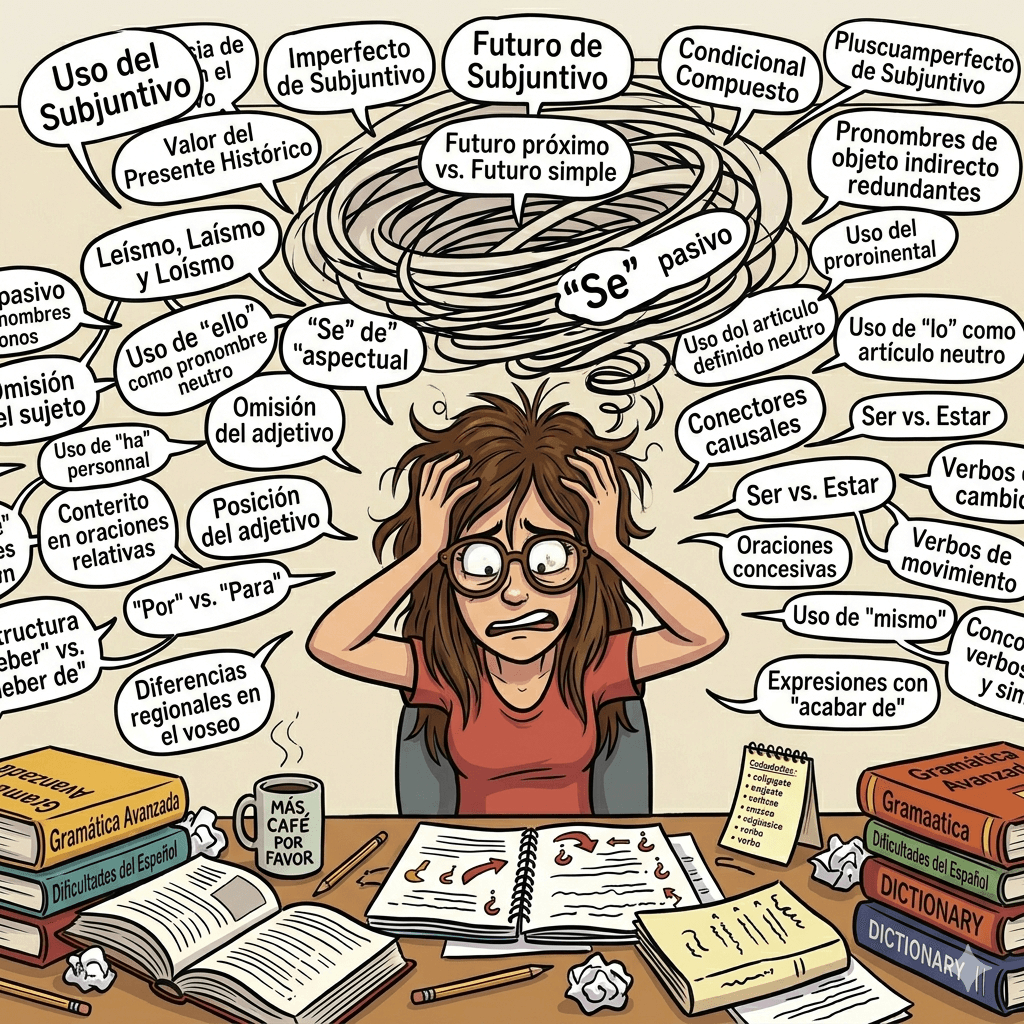
The dilemma of choosing between the Spanish imperfect and preterite.
Let’s disclose it.
Why Spanish Splits the Past Into Two Tenses
English actually has a similar distinction — it just expresses it differently.
- I worked — simple past, completed action
- I was working — past progressive, ongoing action
- I used to work — habitual past, repeated action
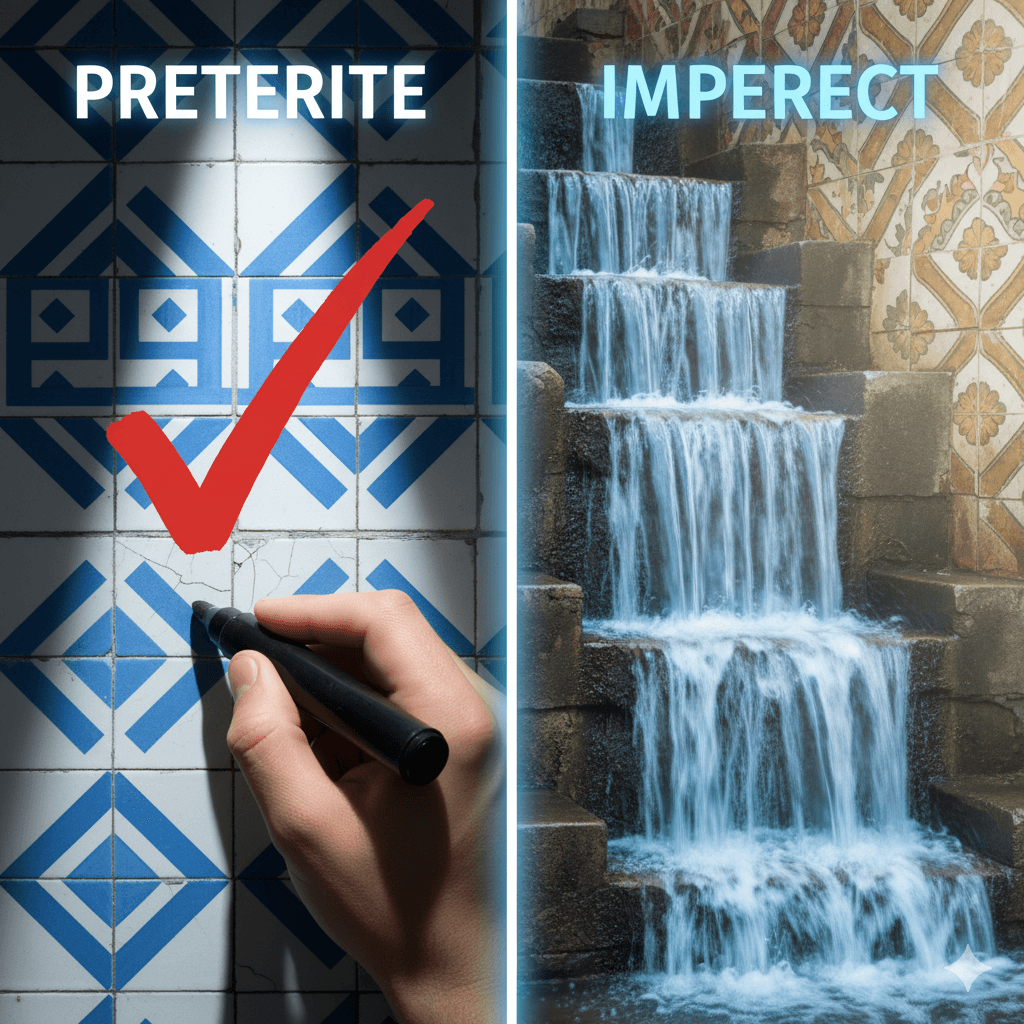
Spanish uses two tenses to cover all three. The preterite handles completed actions. The imperfect handles ongoing, habitual, and background actions.
The confusion isn’t the number of tenses — it’s knowing which English meaning maps to which Spanish tense. That’s what this guide clarifies.
What is the Literal Difference Between Preterite and Imperfect in Spanish?
To say it in literal terms, the difference between the Spanish imperfect and the Preterite is,
“Preterite tells you what happened.
The Imperfect tense tells you what was happening or what used to happen.
Think of it this way:
preterite = completed or finished actions; imperfect = continuous or habitual actions.
Imperfect or Preterite: Rule of Thumb You’ll Actually Remember
You need to focus on the functions of both the Preterite and the Imperfect tense.
Preterite = completed actions
- Example: Comí pizza ayer. → I ate pizza yesterday.
- Example: Fui al cine. → I went to the cinema.
Imperfect = ongoing, habitual, or background actions
- Example: Comía pizza todos los viernes. → I used to eat pizza every Friday.
- Example: Llovía cuando salí. → It was raining when I left.
How To Spot The Difference Between Imperfect & Preterite
Time cues help you spot them instantly:
- Preterite triggers: ayer, anoche, una vez, el año pasado
- Imperfect triggers: siempre, cada día, mientras, a menudo
The Interruption Rule
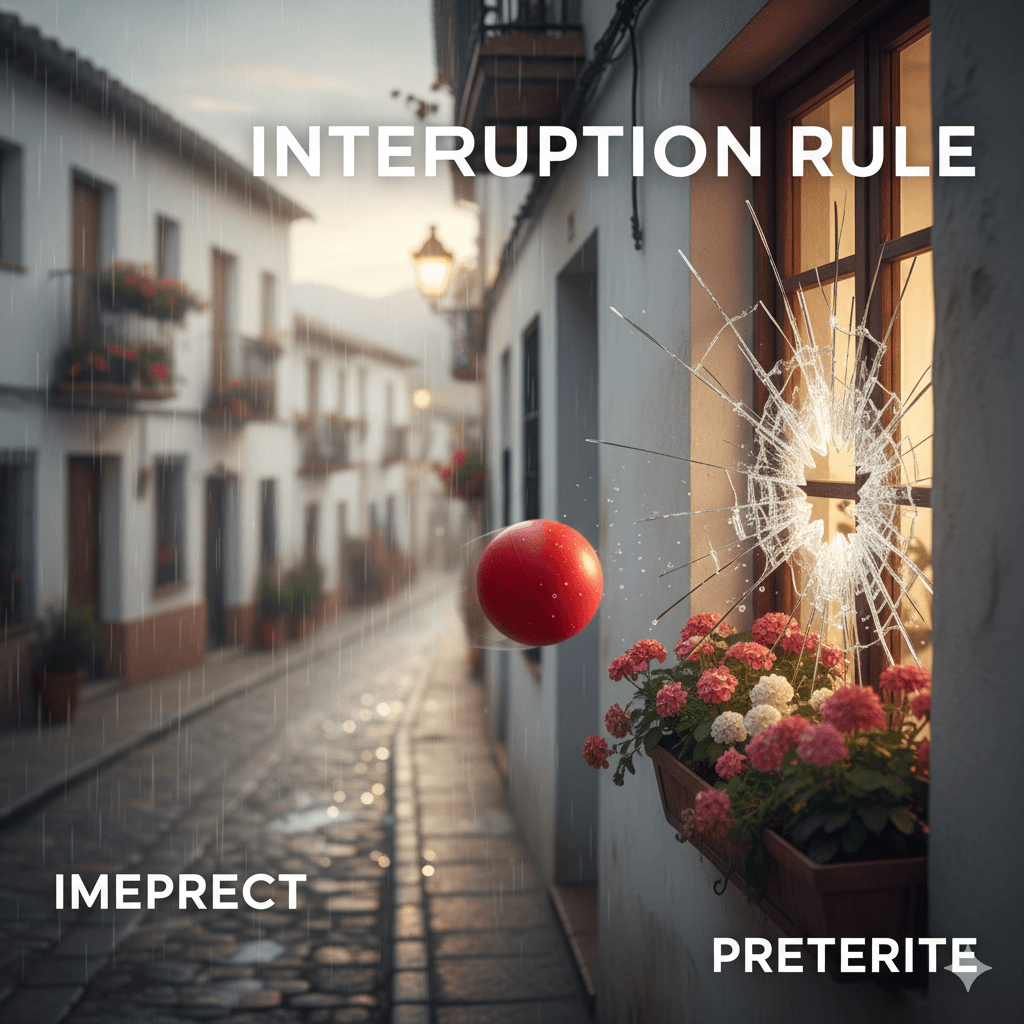
The interruption rule is the most useful framework for understanding why both tenses may appear in the same sentence. The imperfect sets the scene — describing what was ongoing or habitual. The preterite interrupts it — describing what happened at a specific moment. Here is the rule in action:
Spanish Paragraph
English Translation
It was a quiet afternoon, and it was very hot. While my sister was reading a Spanish book on the couch, I was cleaning the kitchen. Suddenly, the dog entered running, jumped onto the table, and ate my sandwich. We started to laugh a lot.
Tense Breakdown: Why Each Tense Was Used
This paragraph beautifully illustrates the Imperfect setting the scene, which is then interrupted by the Preterite.
| Spanish Verb | Tense Used | English Translation | Reason for Tense Choice |
| Era (Ser) | Imperfect | It was | Used for setting the time and descriptive background. |
| Hacía (Hacer) | Imperfect | It was hot | Used for description (weather). |
| Leía (Leer) | Imperfect | Was reading | Used for an ongoing, continuous action in the background. |
| Limpiaba (Limpiar) | Imperfect | Was cleaning | Used for a parallel, ongoing action. |
| Entró (Entrar) | Preterite | Entered | Used for a single, specific, completed action (the start of the interruption). |
| Saltó (Saltar) | Preterite | Jumped | Used for the next specific, completed action in a sequence. |
| Se comió (Comer) | Preterite | Ate | Used for the final, specific, completed action in the sequence. |
| Empezamos (Empezar) | Preterite | Started | Used for a specific action that began and ended (the laughing started at a point). |
Side-by-Side Comparison of Preterite and Imperfect
| Feature | Preterite | Imperfect |
| Meaning | Completed, one-time action | Ongoing, repeated, background action |
| English equivalent | I worked | I was working / I used to work |
| Example | Trabajé ayer. | Trabajaba todos los días. |
| Signal words | ayer, una vez, anoche | siempre, mientras, a menudo |
For more on how grammar appears in authentic Spanish speech, the Valle Salvaje scene analysis breaks down ir + a + infinitive and the Spanish simple future in a similar format — grammar explained through a real dramatic scene rather than isolated examples.
Common Mistakes Spanish Learners Make With Preterite and Imperfect
- Overusing imperfect because it “sounds safer.”
- Translating English directly, “was” ≠ always imperfect.
- Mixing tenses randomly in one story.
Pro tip: Ask yourself, One-time event → preterite; habit or scene → imperfect.
Mini Practice Exercise
Try these! Which tense fits?
1. Yo ______ (ir) a la playa cada verano. (P) fui o (I) iba.
2. Ella ______ (terminar) su tarea anoche. (P) terminó o (I) terminaba
3. ______ (Llover) mientras caminábamos a casa. (P) Llovió o (I) Llovía
Conclusion
A completed action takes the Preterite while a repeated action uses the imperfect tense in Spanish.
Jolii lets you practice these tenses in context — importing Spanish YouTube or Netflix content and building exercises around the specific grammar patterns you encounter. Seeing imperfect and preterite in real dramatic scenes, then producing them in guided speaking practice, closes the gap between knowing the rule and using it automatically.
Read more: How AI is changing the way we learn Spanish in 2025
FAQs
Q: Can I mix preterite and imperfect in one sentence?
Definitely, you can mix both preterite and imperfect in one sentence. The preterite indicates what happened, while the imperfect describes what was happening at the time it occurred.
Q: Does imperfect always mean “used to”?
No, imperfect does not always mean “used to”. It describes events that are habitual or were repeated in the past.
Q: What’s the easiest trick to remember the difference between the imperfect and preterite?
The most reliable trick is the interruption test. Ask yourself: did this action interrupt something else that was already happening? If yes, the interrupting action takes preterite and the background action takes imperfect. “It was raining (imperfect) when I left (preterite)” — the leaving interrupted the rain. If both actions are sequential and completed, both take preterite. If both are habitual or descriptive background, both take imperfect. When in doubt, ask: is this a snapshot or a scene? Snapshots take preterite. Scenes take imperfect.