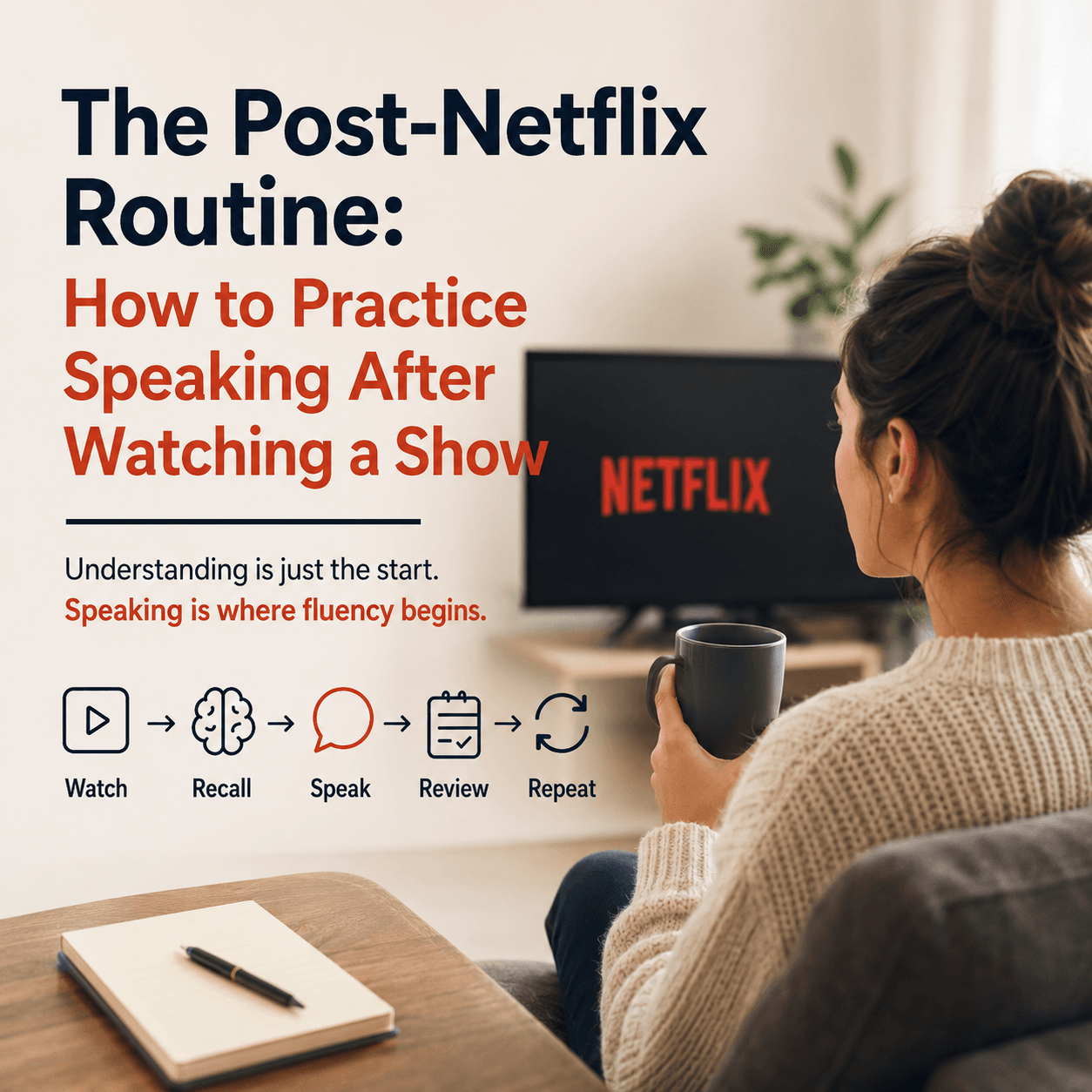
You’re binge-watching a Korean drama, nodding along without subtitles. You get the plot twists, the jokes, even the cultural references. Then your language exchange partner asks you a simple question in Korean, and your mind goes blank.
Yes, you know the words, but they refuse to come out.
Does this sound familiar?
You’re experiencing what linguists call the input-output gap. The input-output gap refers to a common stage in language learning where comprehension (listening and reading) develops faster than speaking and writing.
And guess what? Language teachers often see this scenario. Tons of language learners fall into this trap; where they understand but can’t speak the language fluently. This struggle becomes especially common at the A2 to B1 stage, which is often the first real fluency barrier for adult learners
But here’s the good news. You’re not failing. It’s actually a completely normal stage of language acquisition, and it has a scientific explanation. Let’s break down why this happens and, more importantly, what you can actually do about it.
Why Do You Understand a Language But Can’t Speak It?

Understanding = input, and speaking = output. These are two different skills.
When you understand a language but can’t speak it, it simply means that your receptive skills (listening and reading) have outpaced your productive skills (speaking and writing).
- Is that normal? Absolutely. Your brain has developed passive knowledge.
- Does it mean I’m bad at the language? No. It often means your output practice hasn’t caught up yet.
- Will speaking just “unlock” eventually? Not on its own. You need targeted output practice to build active knowledge.
The Input–Output Gap: What’s Going On in Your Brain
Here’s what science says:
Years of research have concluded that both linguistic input and output are critical for anyone learning a second language. You need both to build vocabulary and fluency.
But in reality, it doesn’t always work like that.
AI language apps? Podcasts? TV shows? YouTube channels? All of them focus on input. So, it’s only fair that your brain recognizes words, patterns, and their meanings before you pronounce any word.
A 2025 study on how language input and output relate to vocabulary and usage found that increased oral output helped learners form recall and produce language more accurately, while rich input helped with meaning recall and comprehension.
So, yes, input is important. But comprehensible output? It pushes your brain to notice gaps in what you actually know and can produce
Here’s a clear breakdown:
| Skill Type | Input, Receptive Skills (Understanding) | Output, Productive Skills (Speaking) | Balanced practice |
| What it Involves | Understanding meaning | Producing language | Input + output |
| What Improves | Vocabulary recognition, listening accuracy | Fluency, recall, and confidence | Real-world communication |
| Common Activities | Watching shows, listening to podcasts, and reading | Speaking, writing, and explaining ideas | Shadowing, roleplay, and conversational practice |
| Outcome | Low pressure, no need to respond | High pressure, fear of mistakes | Trains understanding and speaking |
4 Reasons Why You Can Understand a Language But Can’t Speak
Here’s why you freeze when trying to speak:
Different Brain Processes are at Work
You may not know this. But as you learn, you’re matching sounds or words to meanings already stored in your brain.
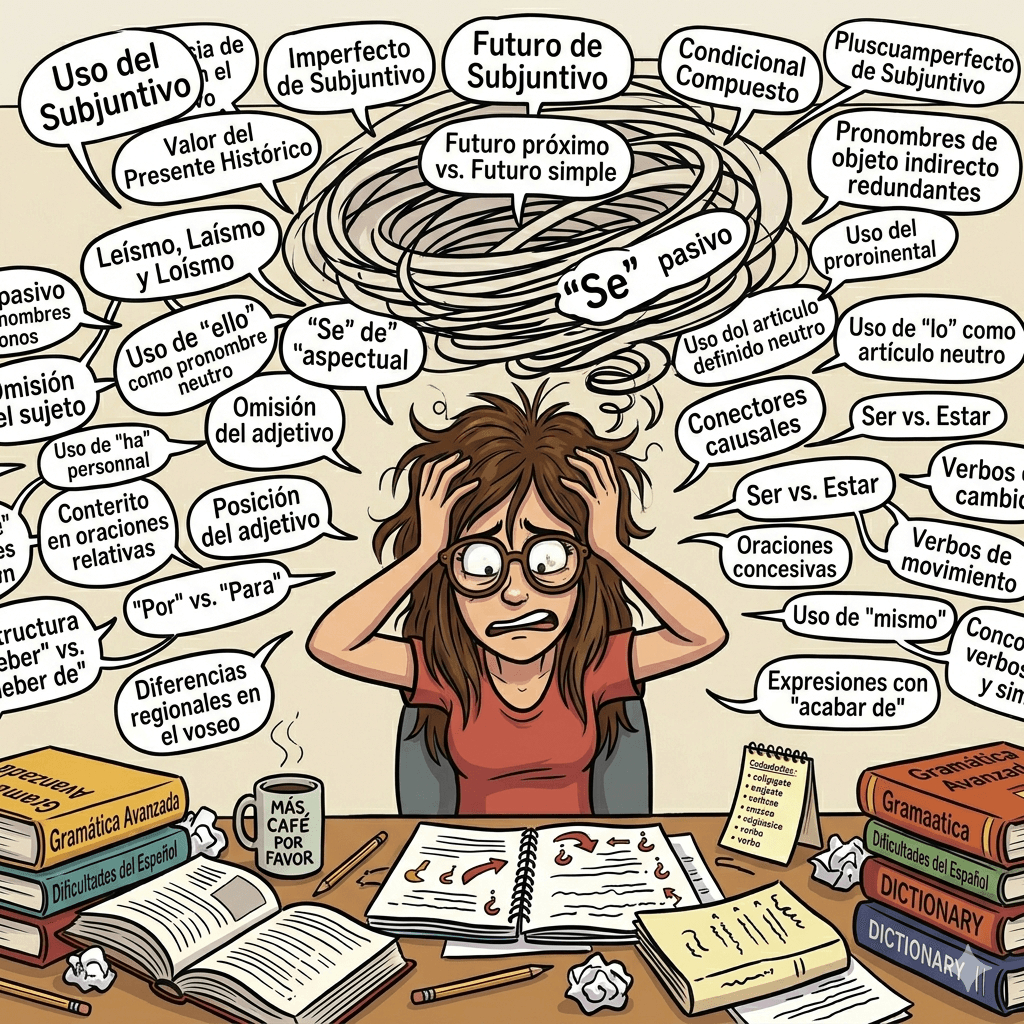
Speaking, however, requires active retrieval. You must pull vocabulary from memory, arrange it with correct grammar, coordinate your mouth and tongue, and do all of this in real-time. That’s the tricky part.
You Fear Mistakes
Psychological barriers are a big problem.
Your fear of making mistakes and perfectionism can block language production. Even when the knowledge exists in your brain.
This is why you might blank out in conversation, only to remember the perfect word five minutes later when the pressure’s off.
Your Memory is Overwhelmed
Think about it. When you’re listening, you can take your time to process the meaning.
But when speaking, you’re juggling vocabulary selection, grammar rules, pronunciation, and meaning simultaneously. The quickest way for your working memory to be overwhelmed.
You Haven’t Practiced Speaking
It’s easy to get into the comfort zone trap.
Why? Listening to a podcast is low-stakes and private. Speaking feels vulnerable. You might make mistakes. So you keep putting it off, telling yourself you’ll start speaking “when you’re ready.”
How to Turn Understanding Into Speaking

Let’s close the gap:
- Talk to yourself daily: No judgment, no audience, no pressure. Narrate your morning routine in your target language. Describe what you see out the window. Complain about traffic. It comes in handy when learning by yourself.
- Practice output from day one: Don’t wait until you feel ready. Repeating basic phrases builds your production muscle.
- Shadow native speakers. Watching a movie? Repeat exactly what you hear, matching the rhythm and pronunciation. This bridges the gap between passive listening and active speaking.
- Use language apps: Remember the fear and anxiety? What if you had a conversational app like Jolii to practice output? Ten minutes of conversation per day will improve your skills.
- Record yourself speaking: When is the last time you heard yourself pronouncing new words? Answer questions out loud or summarize articles you’ve read and record them. Soon, you can review your progress.
Pro tip: Embrace imperfection. Your goal is communication, so keep practicing.
Final Takeaway
Understanding a language but not being able to speak it isn’t a flaw. It’s a temporary stage that exists because you’ve practiced one skill more than the other.
The good news? You can fix that. You just need speaking practice that pushes your brain to absorb and also produce.
The gap closes faster than you think once you start prioritizing output. Now you just need to teach your mouth to access those words. Start today, even if it’s just narrating your breakfast in broken sentences, and you’ll see the gap shrink.
To build your confidence, you can incorporate apps like Jolii.ai into your daily routine. Real 24/7 conversational practice? Check. Video-based language learning? Check
FAQs
Is it normal to understand a language but not speak it fluently?
Yes, extremely normal! Most learners develop listening and reading faster than speaking and writing. This input-output gap is a natural part of language acquisition, not a sign of failure or inability.
How long does it take to go from understanding to speaking?
It varies. With consistent output practice (speaking 10-15 minutes daily), many learners notice significant improvement within 4-8 weeks. The timeline varies based on the language, your starting level, and practice frequency. But the key is regular speaking practice.
Can you become fluent by just listening and reading?
No. Listening and reading build comprehension, but fluency requires production practice.