Want to learn English fast? It’s a common goal for language students learning English for jobs, fun, or travel. The trick? Learn the right way. There are two main approaches: active and passive. Understanding each, their pros, and when to use them can help you learn English faster and better.
What’s the Difference Between Active and Passive Learning?
Active learning involves practicing speaking, writing, doing grammar exercises, answering questions, and chatting with others. This helps you spot and correct mistakes quickly, improving your learning. Passive learning is learning English by listening, reading, or watching. This helps you get familiar with English sounds, grammar, and new words almost without effort. It also enhances active learning.
Why Active Learning Helps You Learn English Fast
Active learning helps you learn faster because:
- You think harder: When you use English actively, it makes stronger paths in your brain for remembering things.
- You fix mistakes right away: When you speak or write, you see your mistakes fast and can fix them.
- You work on what’s hard: You can do exercises that help you with the things you’re not good at, so you get better.
- You feel sure of yourself: You start to speak more smoothly early on.
A 2024 study of students in Thailand showed that when they actively learn English, they improve their skills but also become more motivated to learn and participate—which is key for rapid progress.
Cambridge University studies in 2024 had similar results, suggesting active learning is helpful for various groups.

Active Learning Builds Your Speaking Confidence
Here’s another reason to try it: speaking English actively gets you excited to learn. When you say what you think clearly and fix your mistakes, you speak more smoothly and feel less nervous.
- Practice speaking with people: Talk to people in person or online. This helps you get ready for real-life talks and makes you less nervous.
- Try AI tutor platforms: Websites can help you do exercises with help. You get told right away if you say something wrong in how you pronounce it, the grammar, or the words you use.
- Record yourself speaking: Then listen and see where you can get better. You can also see how much you’ve improved.
- Think out loud in English every day: This will help you get used to saying what you think without stopping to think about it first.
The Benefits of Passive Learning
You think you’re decided on active learning? Wait a minute. Passive learning is also great. It lets you hear English being used naturally all around you. It helps you with:
- Hearing how things are said, the tone, and the beat of the language.
- Learning new words without even trying.
- Getting ready to use what you learn more actively.
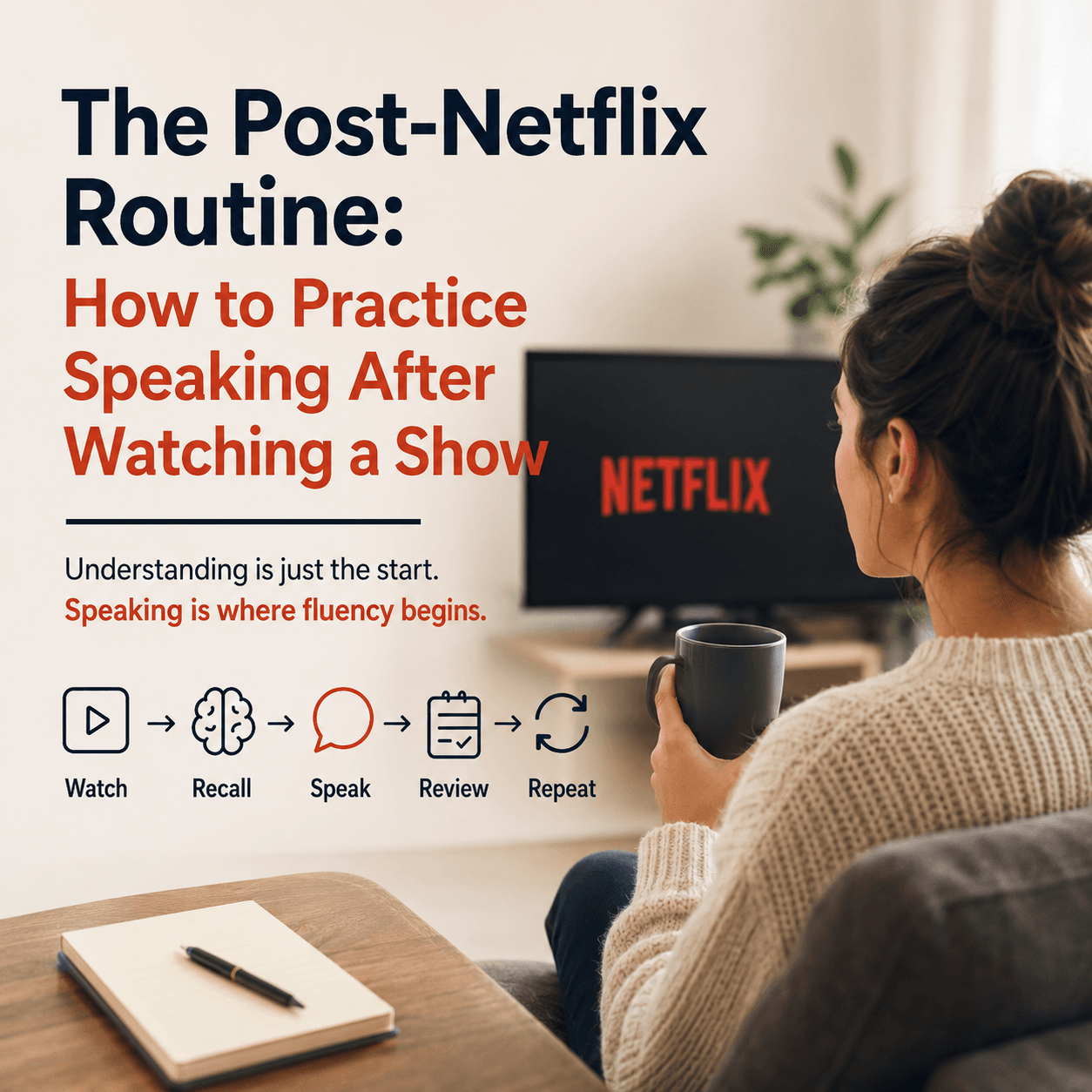
Watching movies, shows, or your favorite YouTubers, listening to podcasts, music, or audiobooks while you do other things, lets you hear a lot of English without trying hard. This helps you learn and remember words and get better at listening.
Pro Tip: Mixing passive learning with active practice helps you learn faster, so try to do both!

Sound Smarter: Master Pronunciation Through Listening
When you listen to how native speakers talk, you get used to how they say things naturally. This helps you say things better over time.
- Start by watching shows with subtitles: Once you’re familiar with shows like “Friends” or “The Office”, try watching them without subtitles. This will train your ears to pick up natural speech.
- Find apps that teach expressions used by native speakers: Listen to these repeatedly, and don’t stress about understanding every single word. Focus on the sounds, how people say things, and then what they probably mean.
- Copy native speakers by saying what they say right after they say it: This will help you say things like them.
- Play songs in English and try to sing along: This way, you can practice how to say things with the right tone while having fun. Try it with the new Taylor Swift album!
- Check out YouTube channels to help with your English pronunciation: It’s a great way to train your ear and practice speaking. The videos can show you how natives move their mouths, their rhythm, and how they use intonation, which can be hard to learn just by listening.
Pro Tip: Once you’re good at pronunciation, try listening to radio stations from all over the world to hear different accents.
AI Tutors: The Secret to Supercharged Learning
Need more help? New AI tutoring systems can change how fast you learn by giving you personal learning that adjusts to you. A big study in 2025 has showed that AI tutors, which change exercises to fit you and tell you how you’re doing right away, make students want to learn more and do better.
Reports show that AI tutoring can be better than active learning in classrooms because it tells you how you’re doing in a more exciting way. Also, AI platforms add games to make students want to learn and join in more.
Active + Passive Learning: What You’re Doing Wrong (and How to Fix It)
Learning English faster isn’t just about working harder—it’s about working smarter. Many learners combine active and passive methods but end up slowing their progress without realizing it, so make sure you’re not falling into these common traps that can hold your fluency back.
- Lots of learners do too much of one thing: This makes it hard to remember things and learn to speak smoothly.
- Do both things on purpose: After watching an English show, you should say or write what it was about to help you remember and understand it better.
- Think about what you’re doing: Recording yourself or getting feedback helps you learn and improve.

FAQs
- What’s a good plan to learn English fast? Do active practice and passive learning every day. Be consistent.
- What’s the best way to learn English fast? Do active things like speaking, writing, and getting feedback. Then, do passive things to get better at listening and learning new words.
- Can AI tutors help me learn English faster? Yes! AI tutors make lessons for you and tell you how you’re doing immediately.
- What are the most common problems when learning English fast? Not having chances to practice, being scared of making mistakes, not doing it regularly, and not getting feedback.
- Should I focus more on speaking or listening to learn fast? Speaking actively helps you speak smoothly faster, but you need to listen well to understand and answer correctly.
- How does talking to people help me learn English quickly? Talking to others gets you ready speak the language in real life, makes you feel sure of yourself, and gives you feedback and help.
- How can I stay excited about learning English? Set goals, see how you’re improving, use apps with games, and do different things to learn.
To learn English fast, do active learning with passive learning and use AI tools like Jolii.AI. This plan will help you learn to speak English more smoothly than just doing one thing. Good luck!