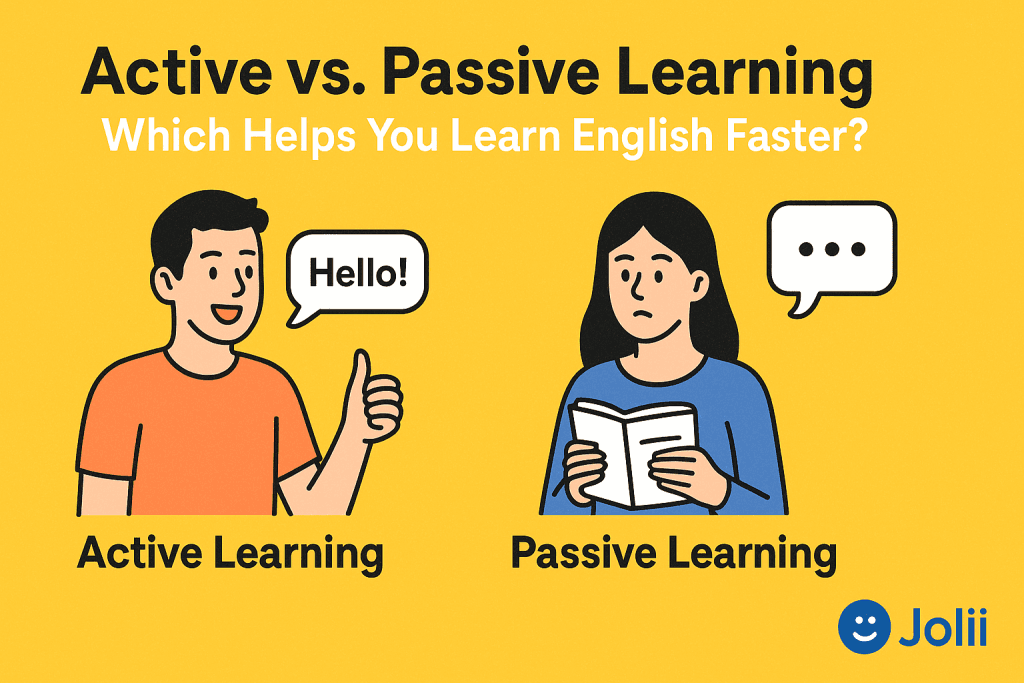
Active vs. Passive learning is not just a theory — It can make or break how fast you can speak English.
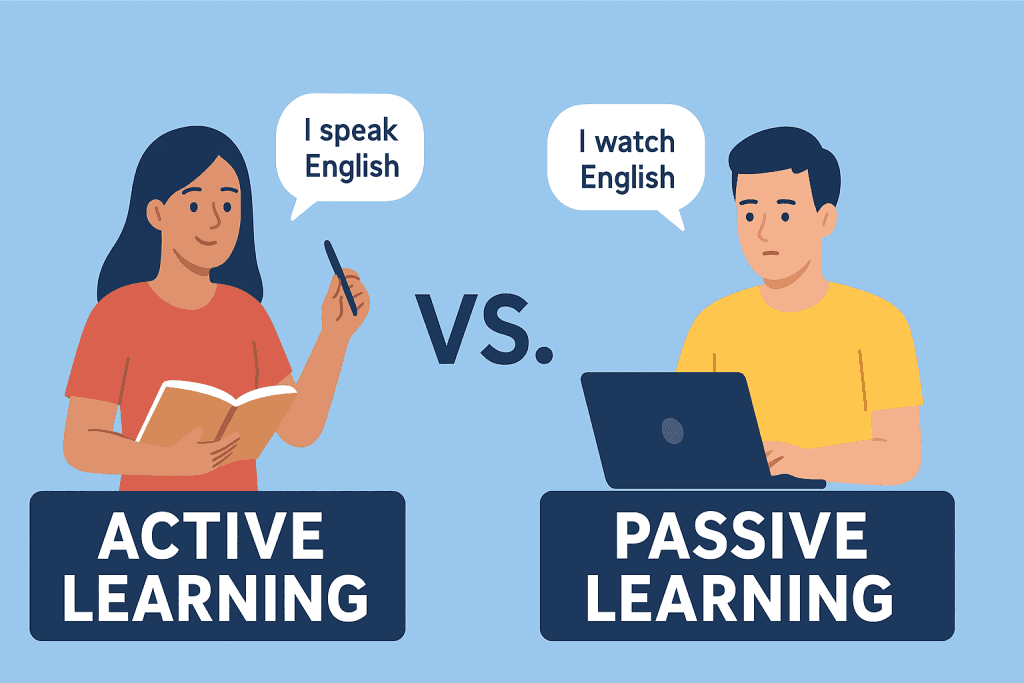
Active learning means doing something with whatever you learn; passive learning is completely the opposite, you keep on consuming without any practice.
“I watch English shows every night… so why can’t I still speak properly?”
“Maybe I’m just bad at languages.”
“I study English, but I don’t use it.”
Frustrated, aren’t you?
Don’t be; instead, focus on just one thing.
Your learning method:
Are you using an Active or a Passive approach to learn English?
What’s the Difference Between Active and Passive Learning?
The key difference between active and passive learning is like learning to drive while sitting in the driving seat vs. sitting on the passenger seat.
Passive learning is when you just receive information.
Nothing practical.
Examples:
- Watching English YouTube videos without repeating anything
- Reading grammar notes
- Listening to podcasts while scrolling through your phone
- Memorizing words without using them
Active learning means you are doing something with whatever you are inputting.
Examples:
- Speaking English with others
- Writing short daily journals
- Using new words in sentences
- Pausing a video and repeating after the speaker
Simply saying,
Passive learning fills your brain.
Active learning trains your brain.
Why Passive Learning Alone Doesn’t Work To Improve English
Passive learning alone means you spend most of your time watching English movies.
You have read a lot of grammar books and listened to hundreds of podcasts.
The ICAP framework shows that passive learning alone yields lower engagement and slower progress (Chi & Wylie, 2014, Educational Psychologist).
Still, you struggle with speaking English fluently.
You might be making some common mistakes that are slowing down your English learning without even realizing it.
Why?
Because you can’t learn to swim by watching someone else swim.
Let that sink in.
Passive Learning is Like Storing Data in Cache Memory
Heard the word cache memory?
It is the short-term memory in the computer that erases after some time.
When you only consume content passively, your brain stores words in short-term memory.
So, your brain is storing content in the cache memory, which can be erased later if not stored in the Hard Drive( the permanent memory).
How Can I Actually Benefit From Passive Learning?
By making it a permanent part of your memory through
- actively participating in speaking English,
- writing your thoughts in English,
- and recording your own voice, you can hear your mistakes and work on them.
You use the words you listened to to transfer them to long-term memory.
So if you have been passively “learning English” for months, but can not recall words when needed!
It is not your fault. You just need to switch your learning method.
How Active Learning Helps You Learn English Faster
Active learning leads you to engage with the language.
Want to know how?
Because,
Active Learning Builds Real-life Fluency
In active learning, you speak English while watching the videos and train your brain to think in the same way.
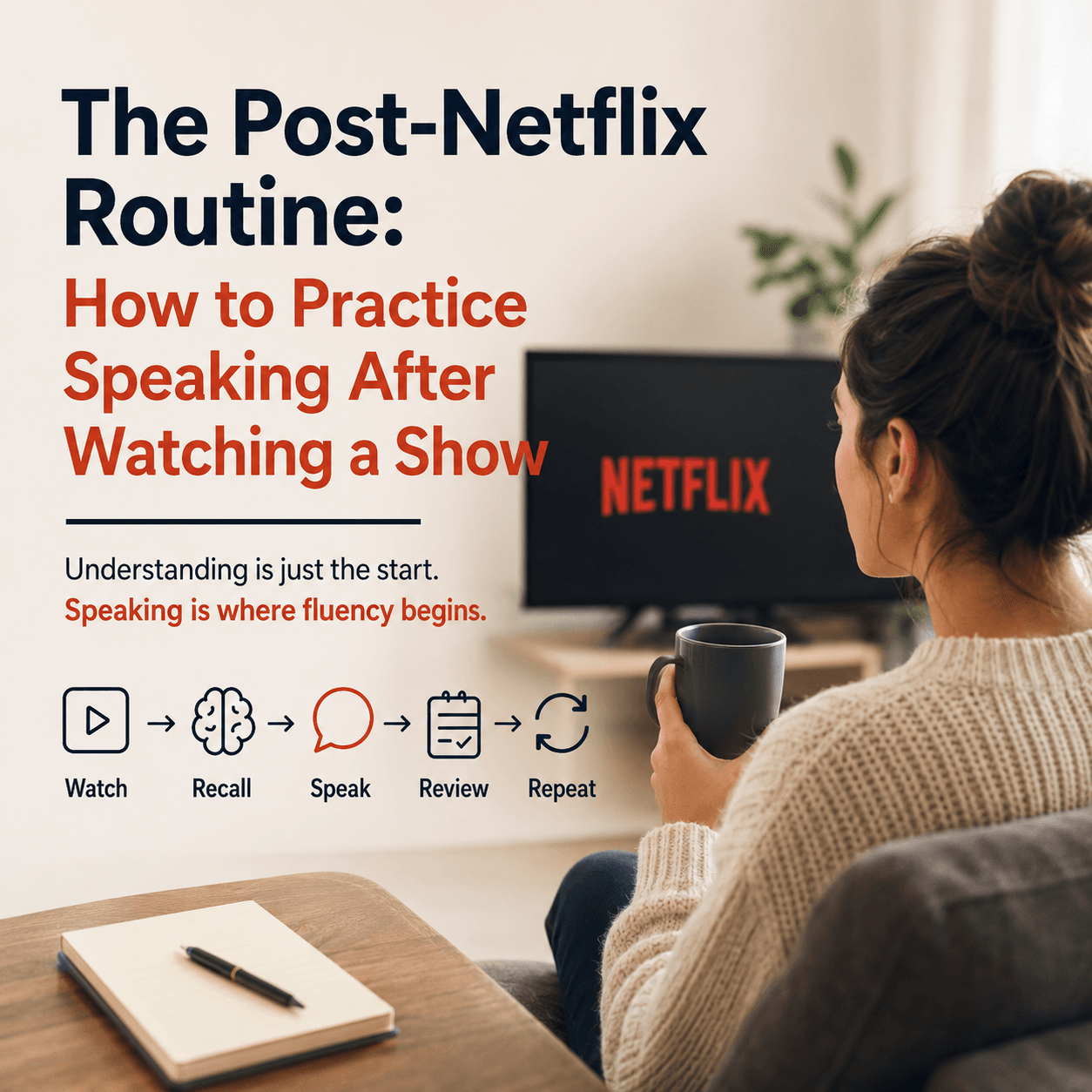
You can try to describe the movie/scene you just watched to maybe your partner, or you can use any AI chatbots that turn your passive learning into an active speaking skill.
If you’re not sure which tools actually help with this, we compared the best AI apps to learn English and broke down which ones work best for speaking, pronunciation, and turning passive input into real practice.
Your Vocabulary Builds Because You Actively Use It
When you use a word in a sentence or a conversation, your brain hints, “Oh, that is important.” So it keeps it in the permanent memory.
Daily speaking and writing improve your English vocabulary naturally and are a big step in overcoming the challenges you face in building vocabulary.
Your Speaking Fixes Naturally
The more you speak, the more chances you have to notice how words sound. If it seems wrong to your ears, you will try fixing it next time.
The rule of thumb is, “Speak English As Much As You Can.”
Speaking of grammar, you feel it getting right or wrong and will improve it over time.
Active Learning Keeps You Motivated
Passive learning becomes boring because you don’t see the results instantly.
Active learning feels rewarding as you see results when someone else understands your conversation you feel you have communicated correctly.
Especially if you’re learning English for work, these tips for professionals can help you stay consistent and confident.
Active vs. Passive Learning in Action
Let us look at a quick comparison between active and passive learning that you actually relate to:
| Scenario | Passive Learning | Active Learning |
| Watching a movie | Just watching with subtitles | Pausing to repeat sentences, mimicking tone |
| Learning vocabulary | Memorizing word lists | Writing short stories using those words |
| Listening to podcasts | Playing them in the background | Shadowing the speaker or taking notes |
| Studying grammar | Reading a grammar book | Writing example sentences & checking them |
| Using apps | Clicking through lessons | Speaking or recording your own sentences |
The right approach?
➡ Mix both — but focus more on the active side.
Read more: How To Learn English With AI
Real-Life Active Learning Ideas to Try Today
How can you add active learning to your routines?
Here’s how.
- Talk to yourself in English. Describe what you are doing (“Now I’m making coffee”). It sounds silly, but it works brilliantly.
- Record your voice. Listen back, notice pronunciation patterns, and improve naturally.
- Ask AI questions. Use apps like Jolii.ai to practice real conversations anytime.
- Rewrite your favorite songs or movie quotes. A creative way to learn expressions and sentence flow.
- Join online language challenges. Commit to one small daily task (like writing 3 new sentences every morning). Join online language learning communities.
Remember: learning English is not about studying more, but it is about engaging more.
What People Search for (and You Should Know)
Many learners ask:
- What’s the fastest way to learn English?
- How can I learn English effectively at home?
- What is the best method to improve English speaking skills?
- Is passive learning effective for language learning?
The short answer:
Combine both—but give 70% energy to active learning and 30% to passive.
Because the fastest learners are not the ones who study more, they are the ones who practice more.
So, Which Helps You Learn English Faster? (Active Or Passive Learning)
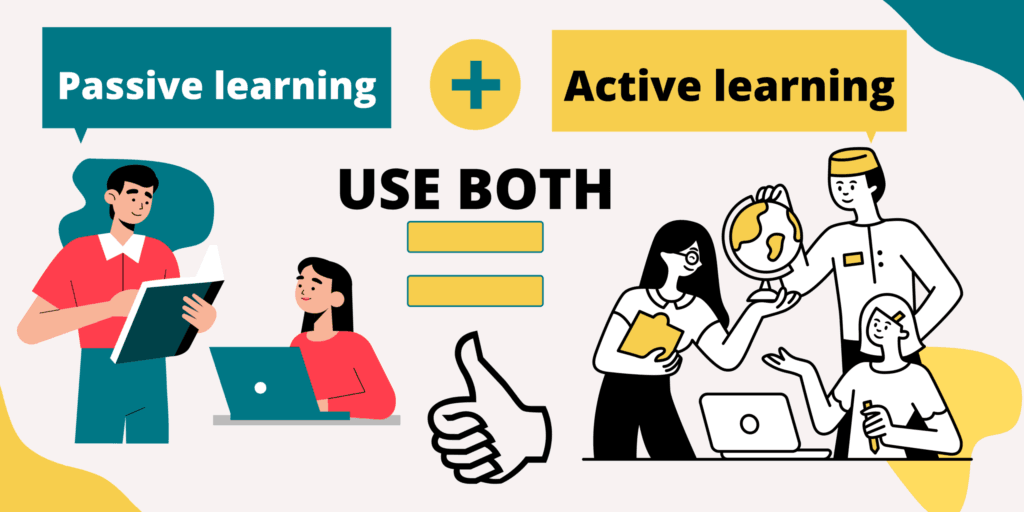
You will learn English faster if you combine both active and passive approaches in learning English strategically.
If we think of English learning as a gym, passive learning is “watching workout videos.”
Active learning is “lifting actual weights.”
Which will get you fit?
Everyone knows, right?
When you start using English daily( actively participating), no matter how imperfect, you will notice:
- You understand native speakers more easily
- You recall words naturally
- You start thinking in English
That is when real progress happens.
Take the Next Step with Jolii.ai
A recent June 2025 study on ResearchGate found something fascinating: AI tutoring outperforms traditional active learning.
Turns out, the robots are winning (in a good way).
Tools like Jolii.ai bring that power to your English practice, helping you learn through natural, human-like conversations without the “classroom” feel.
And the good thing is: It stays in your pocket and is always ready to speak, think, and even listen to you, practicing your English.
Now you got to switch from passive to active learning.
Recap
- You don’t need more lessons — you need more action.
- The fastest way to learn English is not about studying harder.
- It’s about practicing and living the language every day.
FAQs
Q: Is Passive or Active learning better for learning the English language?
You need to use both methods. Listen passively while actively practicing speaking/writing English.
Q: Can I improve my English by just listening to podcasts and watching Netflix in English?
You can only improve your English listening or comprehension skills when you watch Netflix or listen to an English podcast. Speaking and writing improve only when you actively participate in talking to someone or writing a piece in English.
Q: Does Passive learning improve language learning?
Passive learning is an important step to grasp any language, but it takes more time (months or years, maybe). If you, however, use a hybrid approach (passive and active learning), you improve your learning faster.