First published: February 2026. Last updated: May 2026
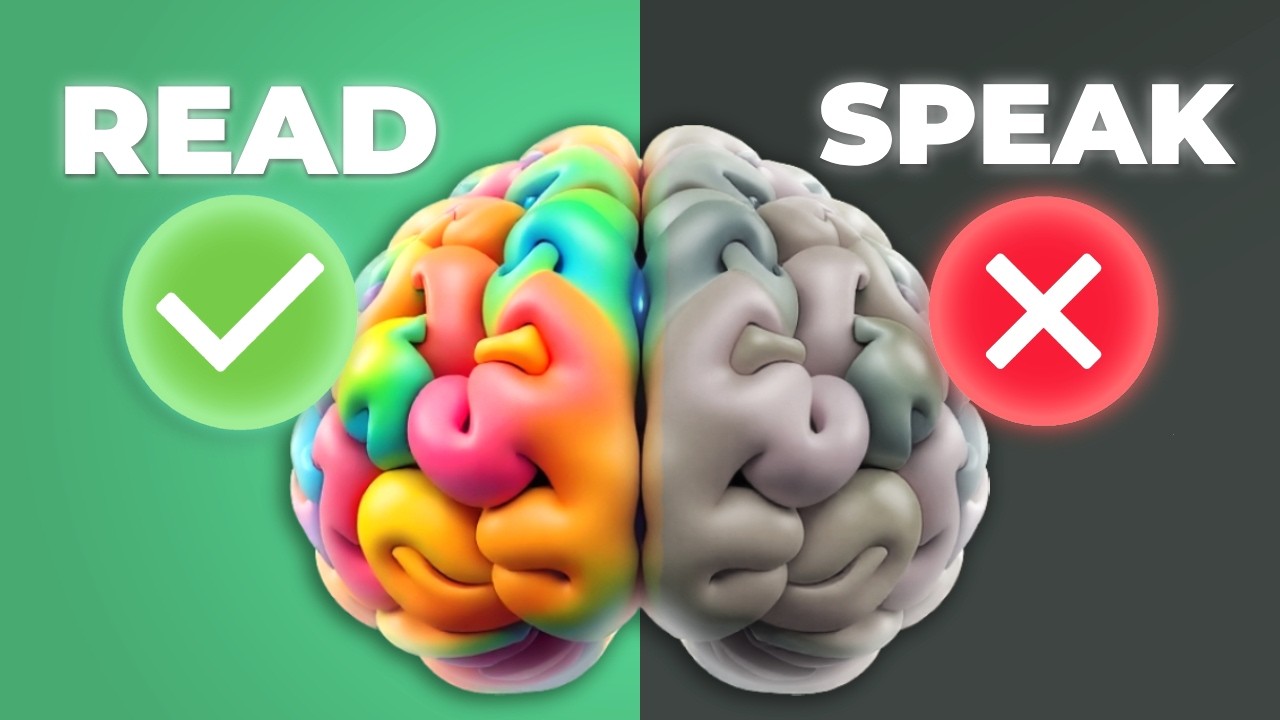
Just watching YouTube, Netflix or movies (even with subtitles) hardly enhances your speaking level. Subtitles boost understanding, but they don’t assist your brain or mouth in creating language.
Passive watching doesn’t improve speaking because it develops understanding, not active language production, which requires deliberate practice, feedback, and repetition.
It’s what explains a well-known frustration for language learners: you understand what you hear, but speaking feels unnatural. Speaking is a distinct skill to be intentionally practiced, not absorbed.
The Source of Your Frustration
Many adult learners feel stuck when learning a new language. You’ve watched hundreds of videos, you’ve put on the subtitles, and still, when it finally comes down to speaking, words just don’t come out. Naturally, that generates frustration: you comprehend large portions of what you hear, yet expressing yourself is slow and hesitant, or just plain awkward.
It’s not that you can’t listen, it’s that you’re not actively producing. This is the main reason why passive watching doesn’t lead to better speaking, even if comprehension appears to be high. Passive exposure can create a false sense of fluency, which often leads learners to delay speaking — a pattern that explains why Netflix alone doesn’t make you fluent and is explored further in Why I Could Read Spanish Fluently but Still Avoided Speaking.
I noticed this pattern myself when I was learning Korean. I spent weeks watching YouTube videos and Netflix clips with subtitles and felt confident because I understood almost everything. But the first time I tried to explain a scene out loud, I stalled. I knew what had been said, but I couldn’t produce it. That was the moment I realized understanding had improved — speaking hadn’t.
What Is Passive Watching?
Passive watching is when you consume content without engaging actively. You might:
- Watch movies or YouTube videos with subtitles
- Follow along with transcripts or captions
- Rely on comprehension alone
Why it fails: The brain learns language best through output-based practice. Understanding a sentence does not automatically translate to producing it. The mouth and vocal memory need to be trained separately from listening.
In short:
- Passive watching provides input but does not produce output.
- Subtitles support comprehension but do not train speaking.
- Speaking exercises strengthen production skills that passive watching cannot replace.
If you want a quick explanation of this “I understand but I can’t speak” gap, there’s a helpful YouTube video by Till Musshoff, which breaks down why this happens, how speaking anxiety plays into it, and what to do to bridge the gap.
How Subtitles Help, and Why They’re Not Enough
Subtitles can be valuable: they improve reading comprehension, clarify pronunciation, and help you catch unknown vocabulary. However, relying solely on subtitles leads to illusion of progress:
- You recognize words when reading or hearing them
- You may even repeat them silently
- But spontaneous speech remains weak
A Real-Life Example
Imagine this: A student is watching a Netflix series in Spanish with subtitles. By Episode 20, they can understand almost every line. They’re enthusiastic because they feel like they’ve progressed by leaps and bounds in their target language. But when a friend asks them to tell them about the season finale, the student trips over their words, has trouble coming up with the right ones, and pauses frequently between sentences.
The worst? They feel they’ve come right back to the start, with a sense that somehow they’ve never spoken Spanish. Sounds familiar? Well, you’re not alone.
Why Speaking Requires Active Production
Research in second language acquisition consistently shows that comprehension and speaking rely on different cognitive and motor processes — which is why one doesn’t automatically develop the other. Input and output are not the same skill.
Passive input alone cannot:
- Train mouth muscles for unfamiliar sounds
- Strengthen working memory for sentence construction
- Develop spontaneous retrieval of words and grammar
The comparison table below shows exactly where the gap appears
How Passive Input vs Active Output Affect Speaking Skills
| Learning Aspect | Passive Input (Watching & Listening) | Active Output (Speaking Practice) |
| Mouth muscle training | Does not activate speaking muscles | Actively trains pronunciation and articulation |
| Sentence construction | Recognizes structures but doesn’t build them | Forces real-time sentence creation |
| Word retrieval | Recognizes vocabulary when heard | Retrieves words independently and spontaneously |
| Pronunciation accuracy | Improves awareness only | Improves control and clarity |
| Fluency development | Minimal improvement | Rapid improvement with repetition |
| Confidence when speaking | Low | Increases with feedback and use |

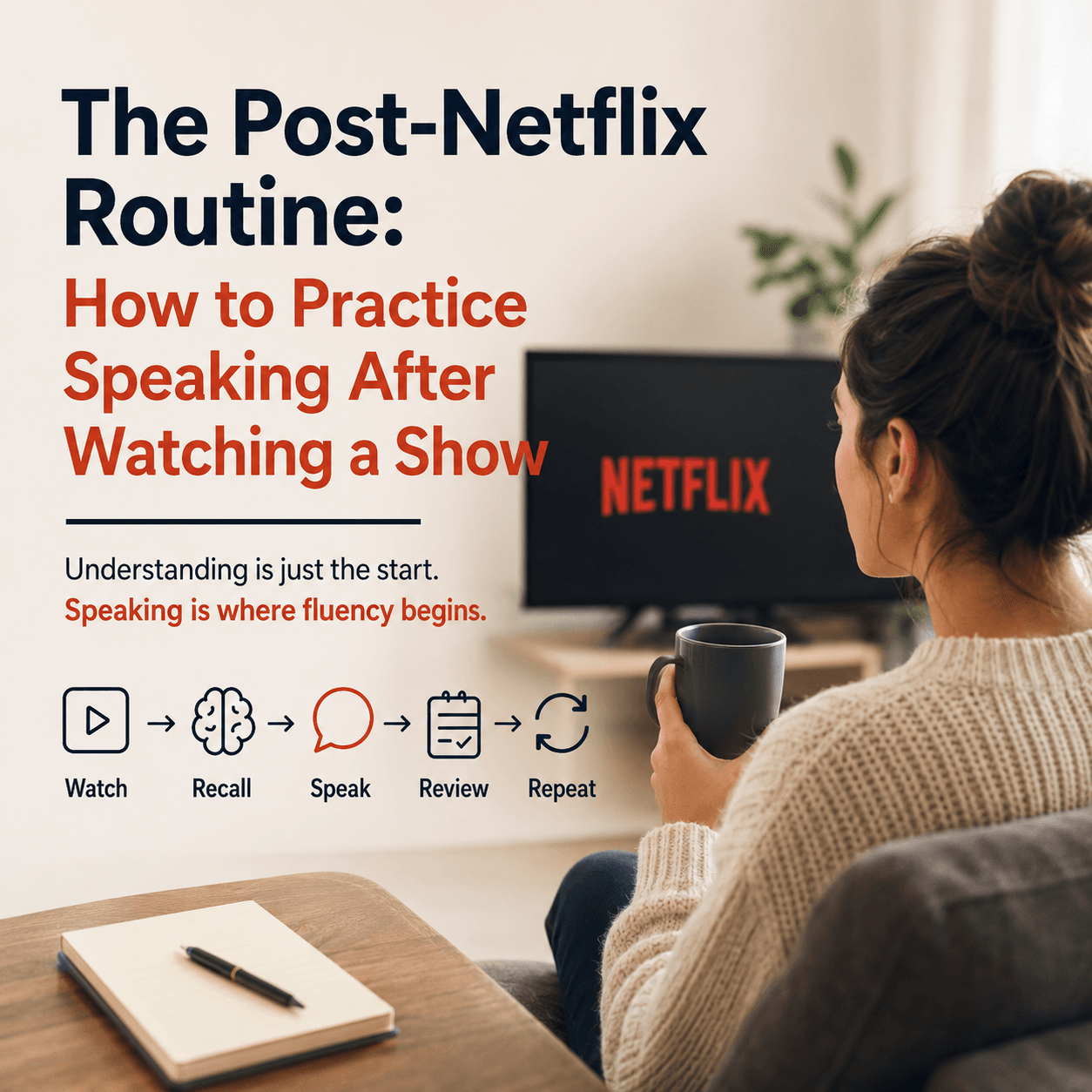
Speaking improves only when learners move from recognising language to actively producing it. Practical steps to start:
- Shadowing — repeat audio immediately after hearing it
- Speaking aloud — describe what you just watched in your own words
- Role-play or dialogues — practise real-life conversations
- Recording yourself — compare pronunciation and fluency over time
This is where tools that bridge input and output become useful. Jolii takes content you already understand and turns it into speaking practice through short dialogues, guided repetition, and active recall — so watching becomes a starting point for speaking rather than a dead end.
FAQs
Can passive viewing help with listening?
Yes, and it’s genuinely useful for that. Regular exposure to native-speed audio sharpens your ear, builds vocabulary recognition, and helps you get comfortable with natural rhythm and intonation. The problem is that many learners mistake improved listening for improved fluency: they’re related but not the same skill. To turn listening into speaking, it’s recommended to use tools like Jolii AI that help you practice based on the content you actually watch.
Can I practice speaking while watching with subtitles?
Yes, but you have to make it active. The most effective method is shadowing: pausing after each line and repeating it out loud, mimicking the speaker’s pace, tone, and rhythm. Simply reading subtitles while listening doesn’t count. Your mouth needs to be involved, not just your eyes. Tools like Jolii or Lingopie can you help you practice shadowing while watching any show.
How often should I practice speaking?
Frequency beats duration. Fifteen minutes of daily speaking practice will outperform a two-hour session once a week. Short, consistent sessions keep the neural pathways active and build the kind of automatic retrieval that makes conversation feel natural rather than effortful.
What’s the fastest way to turn watching into speaking practice?
Watch a short clip, then close the screen and describe what happened out loud in your target language. Don’t worry about accuracy, just produce. Then rewatch and notice the gaps between what you said and what was actually said. That gap is where your real learning happens. Add shadowing and an app like Jolii AI and you have a complete speaking workout built around content you already enjoy.
What mistakes should I avoid?
Three big ones: treating subtitle reading as active practice, repeating words silently in your head instead of saying them aloud, and never getting feedback on your output. Comprehension without production is a comfortable trap — it feels like progress because understanding improves, but speaking stays stuck.