Why can you understand Spanish but not speak it?
Because comprehension and speaking are different skills. Many learners train input (reading and listening) but avoid output (speaking), which creates a gap. This article explains why that happens and what actually helps bridge it.
If you understand Spanish but can’t speak, then you’ll relate to my story. I have had quite an interesting language learning experience. I learned Spanish for about a year, and I could read the language fluently. I started reading Spanish short novels, articles, and all sorts of written content, and I understood them easily without needing translation.
Yet, I never spoke Spanish. If I got caught in a bind and was asked to speak, the most I would say was “Como Estas?” and “Estoy bien” before quickly switching to English for the rest of the conversation.
My friends were always quick to point out the weirdness of my situation. How are you fluent in a language but refuse to speak it? My answer was simple. I know the language is in my head, but whenever I wanted to use it, the flow just got blocked. Speaking Spanish just felt daunting for some reason that I couldn’t figure out.
Until I realized that I struggled to speak Spanish because I misunderstood how the language skill developed and was going about it the wrong way.
If this feels familiar, it’s completely normal — we explain why in more detail in Why You Understand a Language But Can’t Speak.
If you understand Spanish but can’t speak, don’t worry. There’s a pattern to it that works once you get the hang of it.
This article focuses on the speaking gap — for a step-by-step method to practice with real content, see our guides below.
The Perfectionist Struggle and How it Holds You Back
One reason it took so long to speak Spanish was the perfectionist within me who didn’t want to make mistakes and embarrass myself. Reading was safe because everything happened within my head. There was no pressure to get it right the first time.
With speaking, there was a risk. My imperfection would get exposed. I worried about mixing up verb tenses, making pronunciation errors, and sounding unintelligent. The fear of getting it wrong was strong.
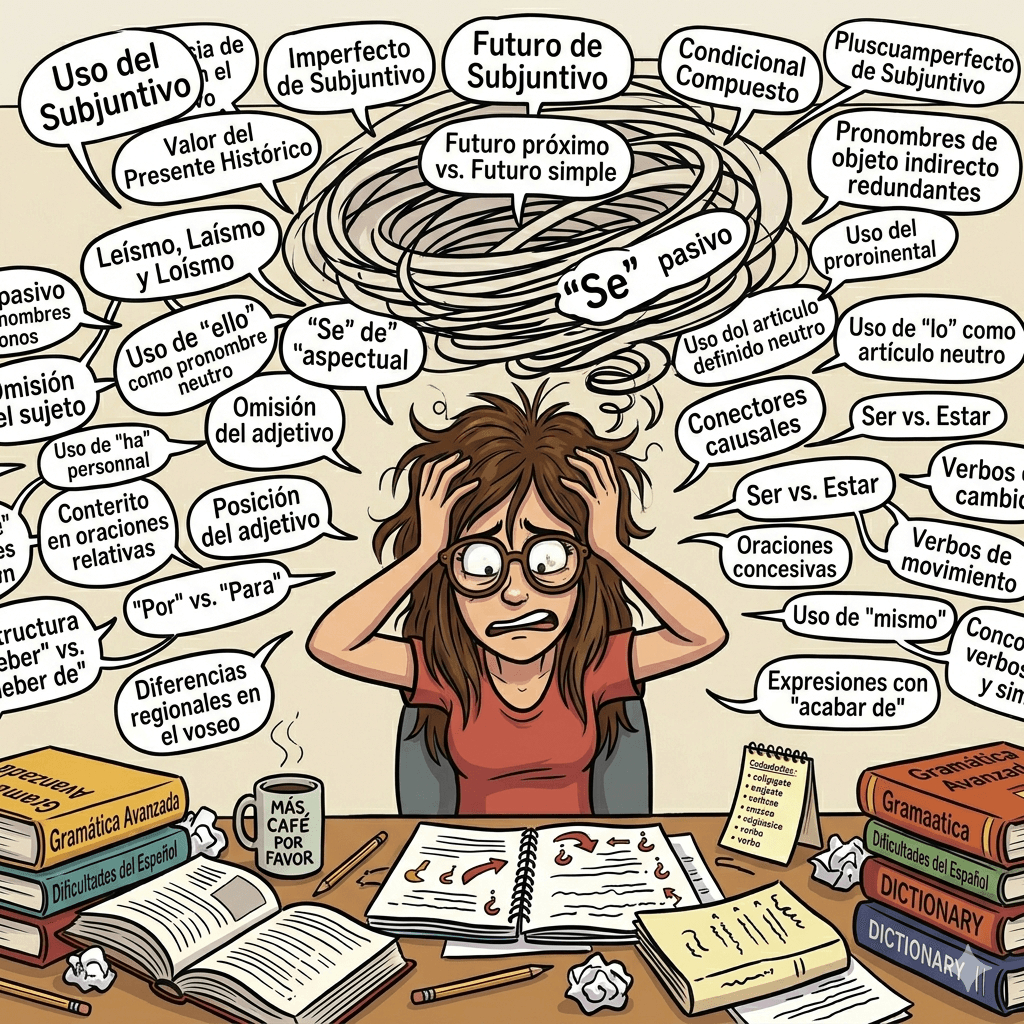
When I decided to speak, I wasn’t prepared for the brain freeze I experienced. The pressure to speak well only worsened things for me. I understood the question immediately, but I struggled to produce the answer.
That mental block has a name — and a cause — which we break down in Why You Freeze When You Try to Speak a Foreign Language.
If you’ve been in this situation, it happened because your brain was trained for input, not output. You need to train your brain for output instead of avoiding speaking. Avoiding speaking will only make it difficult to ever speak Spanish and speak it well.
Everything changed for me when I realized one thing ‘Speaking was a skill I didn’t learn, as much as I learned reading.’ Speaking doesn’t happen just because you can understand Spanish. You need to practice it actively to become good at it.
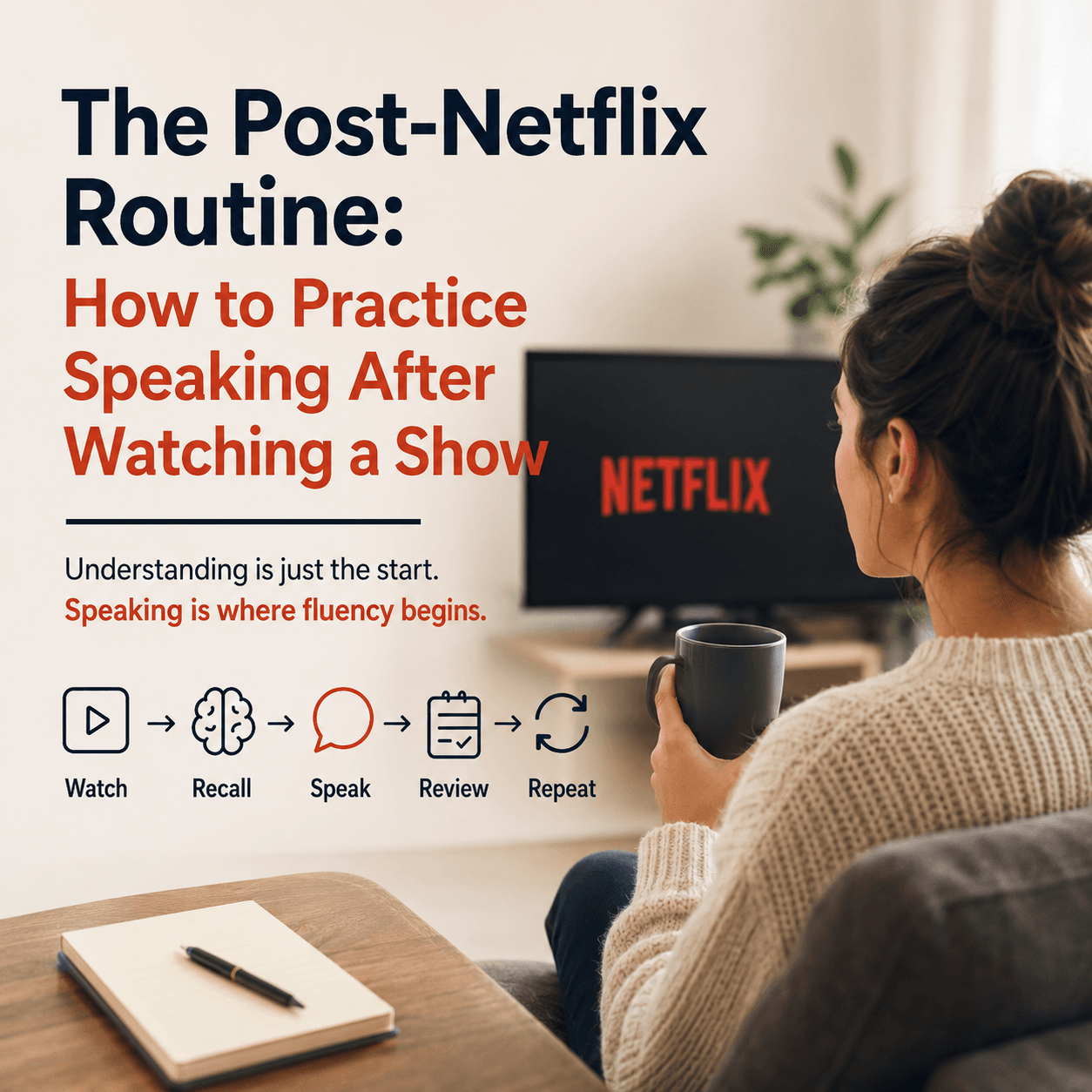
This is also why passive exposure alone doesn’t lead to speaking — even when subtitles are involved, as explained in Why Passive Watching Doesn’t Build Speaking Skills (Even with Subtitles).
Understanding the Difference Between Reading and Speaking Skills
When I learned to read Spanish, I was so excited. My hard work had paid off. I could easily understand ideas, conversations, and stories. So, I believed that speaking could come next.
What I failed to realize is that reading and speaking skills aren’t the same. Reading is recognizing the words in front of you and what they mean. Speaking, on the other hand, is producing the words from your memory, putting them in the right structure, and delivering them, all in real time.
With reading, you have time to go over a sentence multiple times until you understand it. With speaking, everything happens immediately.
Many language learners find themselves in the same situation as I because a lot of the modern language learning methods are designed to build comprehension first and postpone speaking.
So, when learners struggle with speaking after building comprehension, they blame themselves. But the problem isn’t you; it’s the imbalance in learning. What you need to do is start practicing deliberately.
The goal isn’t accuracy; it’s confidence. That confidence is built from months of practice. This is what worked for me, and what I hope works for you.
What to Do if You Understand Spanish But Can’t Speak
Immediately, I established that my reading and comprehension skills were good, but my speaking skills were next to zero, so I began practicing speaking.
These six tips summarize what I did to improve my Spanish speaking skills:
1. Start Speaking Before You Feel Ready
Many people wait to be confident before speaking Spanish, but speaking should come before confidence.
There’ll never be a moment when the words flow freely. If you wait for that perfect moment, you might wait forever. The right time is to speak while you still feel uncomfortable.
When I was contemplating speaking, I didn’t ask myself: Can I say this perfectly? I asked, Can I say this simply? That was what I needed.
2. Practice Speaking Alone
Another thing that makes speaking Spanish seem daunting is starting conversations. You worry about how the other person will react and whether they will judge you for sounding the way you do.
When I started speaking, I began by talking to myself. I did three things every day:
· Narrate my day in Spanish every evening.
· Read out loud and respond to whatever I’m reading.
· Ask myself questions and answer them out loud.
Speaking alone helps you to practice without pressure because nobody is listening. When you start having conversations, you’ll feel more confident.
3. Limit Your Vocabulary
When you start speaking, give up on the idea of trying to speak heavy vocabulary, as it could overwhelm you.
For me, I chose to start with:
· Small, familiar verbs.
· Easy, daily phrases.
· Basic Spanish connectors (entonces, pero, porque)
Start speaking with only simple words. This approach helps to reduce anxiety and improve response times.
4. Avoid Excessive Self-correction
You’ll be tempted to criticize yourself for every mistake, but self-correction can tense your brain when done too often. When I noticed it, I decided to focus on saying the sentences without fixing my errors, and only correcting myself when I’m done.
When practicing alone, avoid:
· Restarting your sentences due to mistakes
· Pausing to fix your grammar
· Translating words internally before speaking.
Instead of doing any of these, focus on establishing flow. Once the flow is there, you can build on accuracy later.
5. Embrace Low-Pressure Learning
Don’t be quick to put yourself on the spot with high-pressure learning in experiences like real-life conversations with Spanish speakers. That’s what reinforces fear when you don’t feel prepared. Instead, embrace low-pressure learning until you’re confident enough to put yourself on the spot.
Low-pressure learning platforms like Jolii.ai will help you to transition smoothly from understanding Spanish to speaking it. You’ll learn at your own pace and without judgment. When you have a safe environment, speaking will become easier for you.
6. Track Your Progress with the Right Metrics
Many times, we set unrealistic expectations for ourselves and then wonder why we fail to meet them.
I wanted to be fluent and speak fast, but that wasn’t the right goal to set from the beginning. So, instead of setting a goal to speak fast, my goal was to speak in a way that could be understood.
Rather than checking how many complex words I could use, I aimed to communicate simply and meaningfully. Instead of wanting to sound like a native speaker, I just wanted to speak well enough.
Once you redefine what speaking Spanish means to you, it becomes more comfortable and less frightening.
Here’s what you should track:
· Number of minutes you speak per day.
· Number of responses to text or conversation per day.
· Days you spoke every week, despite discomfort.
· Days of speaking got easier.
Speaking improves when output is practiced deliberately — not when comprehension is perfect.
If you’re unsure how often you should practice, we break it down realistically in How Often Should You Practice Speaking to Improve?
Final Thoughts: You’re Not Behind
If you understand Spanish but still avoid speaking, you haven’t failed — you’ve simply trained one skill more than the other. Comprehension and speaking develop differently, and speaking only improves when you practice producing language, not when understanding feels “perfect.”
Start speaking before you feel ready, keep the pressure low, and measure progress by consistency, not accuracy. With deliberate practice, the gap between understanding and speaking does close — and often faster than you expect.