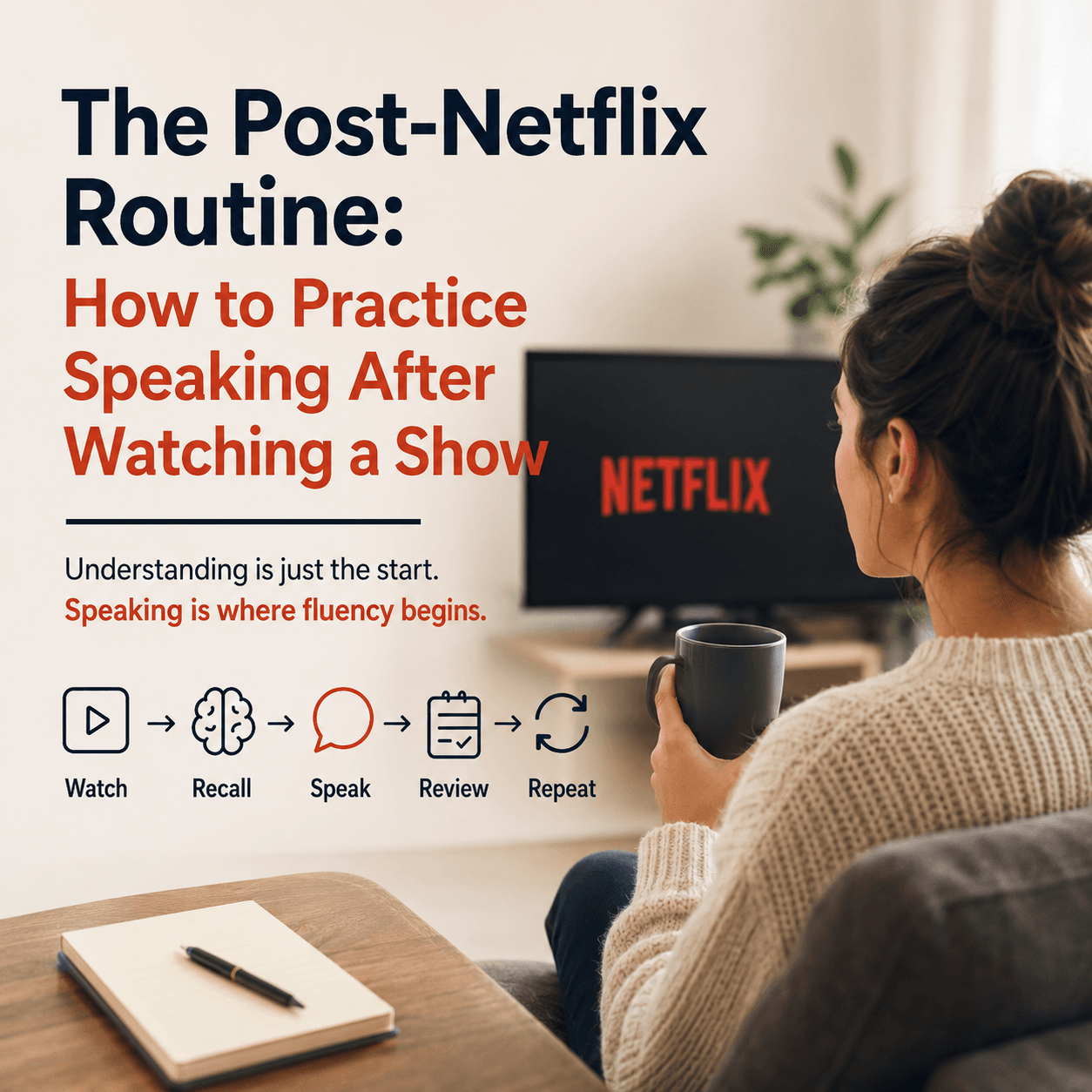
Learning Italian used to mean long courses and slow progress. Most learners stalled because they memorized more than they practiced. In working with Italian learners, I see this pattern repeatedly.
In 2025, video-based apps and AI feedback change that by turning real content into active listening and speaking practice.
Modern language tools like Jolii, FluentU, and Lingopie do more than show videos.
Some platforms analyze how you interact with content, while others actively train your speaking through guided responses and corrections.
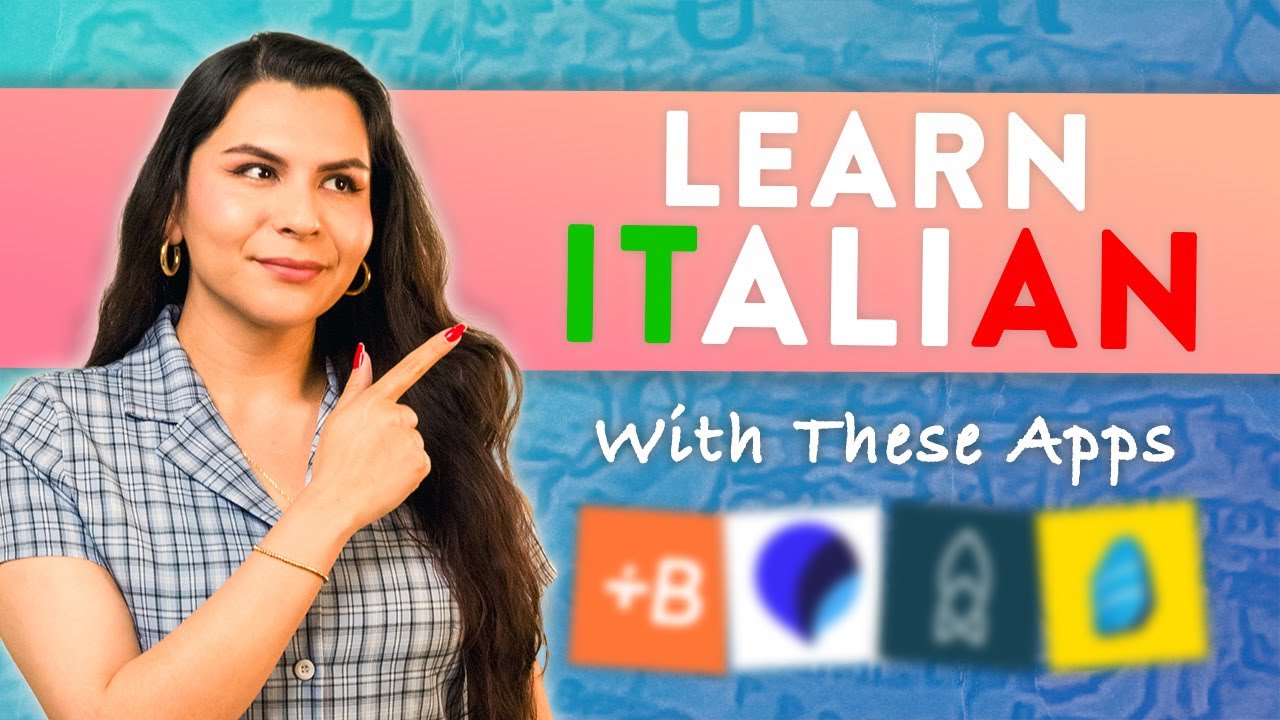
In this guide, you will see how FluentU, Lingopie, and Jolii compare for Italian learners, and the best way to combine them for faster fluency.
What is the best app for Italian learners?
- Jolii is the best option because it forces active output with real-time feedback.
- Lingopie is best for immersion and comprehension.
- FluentU is best for structured vocabulary and guided learning.
What is the best way to learn Italian with videos?
Learning Italian with videos works because it builds context. You see facial cues, hear rhythmic patterns, and absorb natural phrasing.
Subtitles help you connect sound to meaning. Interactive subtitles help even more.
What videos don’t do well on their own:
- Train spontaneous sentence building
- Build turn-taking speed
- Correct your speaking errors in real time
That gap is filled by AI conversation tools that outperform standard video platforms.
Jolii: What does it offer?
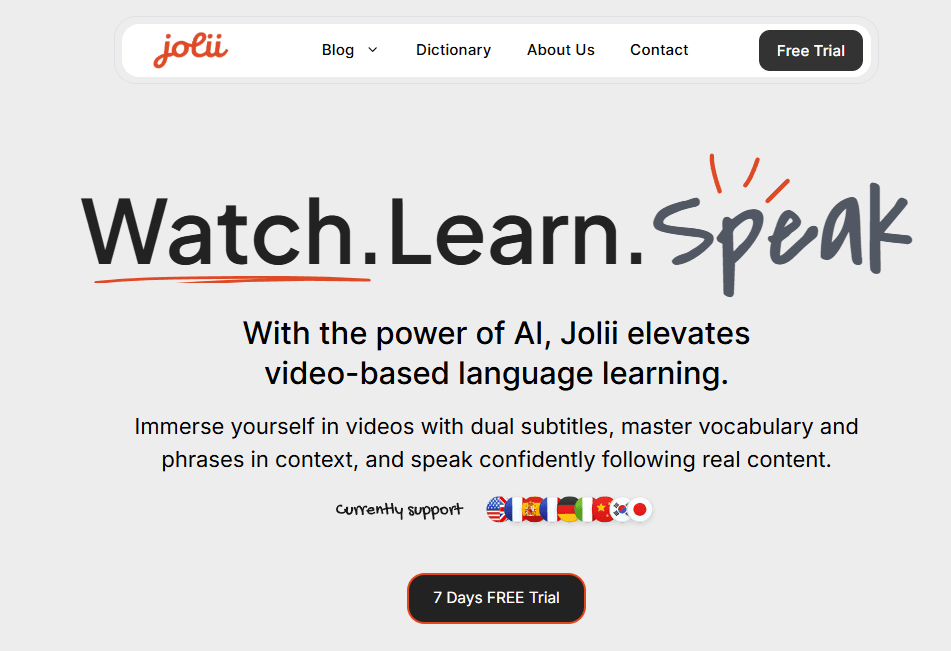
Jolii is designed to fix the speaking gap. It combines video context with AI-driven conversation, thereby enabling you to speak early and get corrected immediately.
The app provides:
- AI roleplay conversations for real-time speaking practice
- Repeat-and-respond loops that move from shadowing to free replies
- Pronunciation, grammar, and fluency feedback during speaking
- Mobile-first sessions built for frequent practice
Strengths
- Output-first design that builds speaking speed
- Real-time correction that prevents mistakes from becoming habits
- Faster confidence growth through repeated speaking reps
Weaknesses
- Works best when paired with immersion or structured input
- Less focused on formal grammar sequencing than classic lesson apps
To sum it up: Jolii is built for speaking performance, not just knowledge.
FluentU: What does it offer?
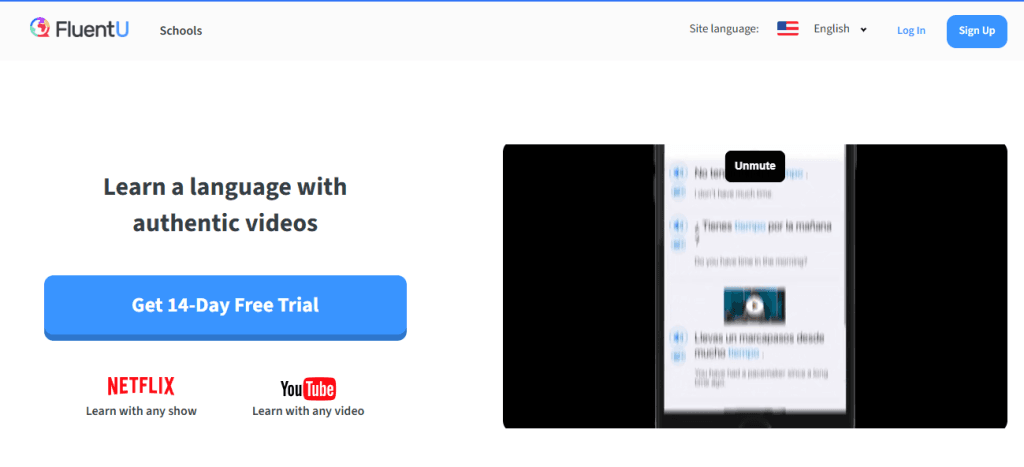
FluentU is built around short, authentic clips (news, trailers, music, interviews) packaged into structured lessons.
The app focuses on comprehension plus vocabulary reinforcement through quizzes and review.
FluentU typically provides:
- Interactive transcripts and word definitions
- Vocabulary review with spaced repetition
- Quizzes that reinforce comprehension
- Clear structure for beginners and steady progression
Strengths
- Strong for vocabulary acquisition
- Structured learning path and predictable routine
- Good for learners who want organized lessons
Weaknesses
- No real conversational speaking loop
- Speaking progress depends on external practice
- Gains show up more in recognition than production
To sum it up: FluentU helps you understand Italian more clearly, but it does not directly train you to respond quickly in real conversations.
Lingopie: What does it offer?
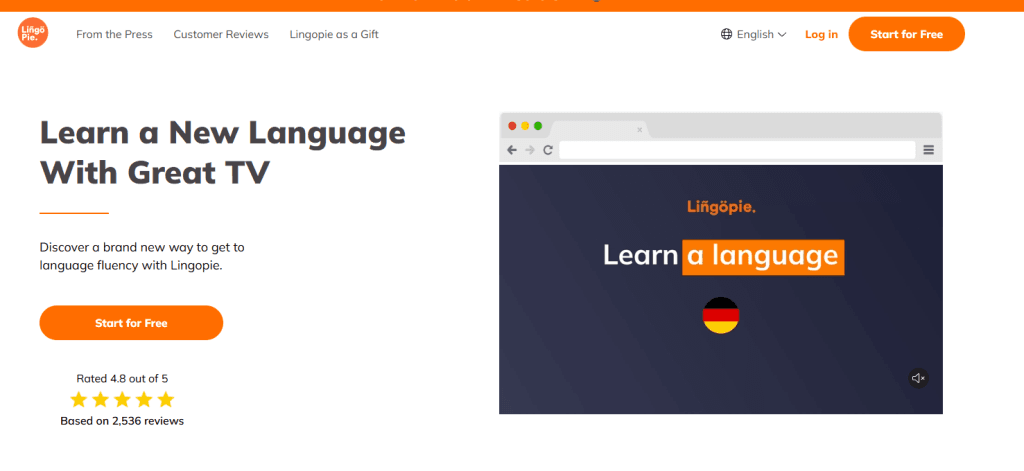
Lingopie is immersion-first. It uses full TV shows, movies, and documentaries in a streaming-style experience. The goal is high exposure and natural listening growth.
Lingopie typically provides:
- Dual subtitles and interactive word lookup
- Auto-repeat and replay tools
- Flashcards based on what you watch
- Scripted pronunciation practice features in some modes
Strengths
- Excellent for immersion and listening confidence
- Strong accent exposure and natural phrasing
- High motivation due to binge-friendly design
Weaknesses
- Speaking practice is limited and mostly scripted
- Output stays reactive (repeat lines) rather than spontaneous
- Speaking transfer is slower without a conversation tool
To sum it up: Lingopie is a strong immersion layer, but it is not a direct speaking accelerator by itself.
Head-to-Head: Which App Speeds Up Speaking
Speaking improves fastest through:
- Forced recall
- Sentence building under pressure
- Immediate correction
- High repetition of real output
Jolii does this by design. Lingopie supports partial output through repetition. FluentU supports receptive skills and vocabulary reinforcement.
Pro-Insight: Video volume does not create speaking speed. Output design creates speaking speed.
Quick Comparison: Speaking and Learning Style
| Feature | Jolii | Lingopie | FluentU |
| Speaking practice | High | Low to moderate (scripted) | Low |
| AI conversation | Yes | No | No |
| Video format | Short clips + prompts | Full TV shows | Curated short clips |
| Structure level | Medium | Medium | High |
| Best for | Speaking fluency | Immersion | Vocabulary + structure |
Pricing & Plans: FluentU vs Lingopie vs Jolii
Pricing changes over time, but the value logic is stable.
- FluentU: $29.99/month; annual listed as $143.99/year (effective ~$11.99/month) with a 14-day trial.
- Lingopie: 7-day free trial; annual pricing commonly listed at around $83.88/year.
- Jolii: 7-day free trial is promoted; pricing varies by plan/version and may be presented in-app.
Engagement and Retention
The language-learning market is increasingly driven by tools that keep learners active and consistent. This shift is significant because it prioritizes long-term engagement.
Additionally, AI features are now credited with boosting this engagement at scale.
- FluentU feels structured and academic, which some learners love, and others abandon.
- Lingopie feels like entertainment, which makes long sessions easy.
- Jolii feels action-driven and fast, which supports daily speaking reps.
Best Strategy: Combine Two Tools for Faster Fluency
The fastest learners run a hybrid system:
- One tool for input and vocabulary
- One tool for speaking output and correction
This combination:
- Builds comprehension faster
- Converts knowledge into usable speech
- Reduces anxiety by increasing practice volume
- Speeds up real conversational performance
Pro-Insight: Pairing structured input with AI output compresses the learning timeline. Errors get corrected early, and speaking becomes routine.
AI Trends in Language Learning
In 2025 and beyond, language learning is moving toward:
- Personalization that adapts to your weaknesses
- Conversational AI that simulates real dialogue
- Pronunciation analytics that correct stress and rhythm
- Microlearning sessions that keep consistency high
- Hybrid systems that combine immersion with output practice
The market direction is clear. Tools that lack output layers are increasingly seen as comprehension tools rather than true fluency builders.
FAQs
Q. Is Jolii better than Lingopie or FluentU?
Jolii is the fastest for speaking because it forces active conversation and delivers corrections in real time.
Q. Can I really learn Italian just by watching videos?
Video-only learning builds comprehension, but spontaneous speaking usually lags without output practice.
Q. Which app is the cheapest?
Lingopie is often the most affordable long-term option for immersion-focused learners.
Q. What is a practical timeline for conversational Italian?
Consistent daily practice with an output tool plus an input tool typically produces faster conversational gains than passive learning alone.
Final Thoughts
FluentU, Lingopie, and Jolii can all help you learn Italian with videos.
The smartest setup in 2025?
Use Jolii as the core speaking tool, then support it with either Lingopie for immersion or FluentU for structured vocabulary.