Learning Spanish goes way beyond memorizing grammar rules or a vocabulary list. There’s a whole wild world of slang out there. Spanish slang is like a secret handshake of real conversations. It makes you sound less like a textbook and more like someone who actually belongs. Want a chat that feels friendly? Slang does it.
So let’s jump into what Spanish slang is all about. The usual words everyone runs into, and how they change depending on where you are. And simple ways to start slipping these phrases into your learning journey, allowing you to finally reach an advanced level in Spanish. Sounds good? Let’s get rolling.
What are Spanish Slang Words?
They’re just words or phrases people incorporate into everyday talk. Nothing formal, and they often skip rules. You hear them on the street or among friends, not in textbooks. These words pop up and change, but they stick around because you need them to really get what’s going on in casual conversations.
Keep a balance: Yes, use formal Spanish when you want to sound clear and professional. But slang, that’s where real spark lives. It brings people together and adds some color, especially if you’re out exploring a new country.
Common Spanish Slang Words You’ll Hear All Over
Wondering what kind of Spanish slang you’ll run into pretty much anywhere? Here’s an initial list you can use hanging with friends, watching TV shows in Spanish, or scrolling through social media.
| Word | Country | Example Sentence | Meaning |
| Güey, Guey | Mexico | “¡Hola, güey!” | Dude, bro |
| Bondi | Argentina | “¡Se me fue el bondi!” | Bus |
| Chévere | Venezuela | “¡Qué chévere está esta fiesta!” | Cool, great |
| Cuático | Chile | “Mi ex era muy cuático” | Intense, dramatic |
| Neta | Mexico | “La neta, no me gustó la comida” | Honestly, the truth |
| Guiri | Spain | “Barcelona está llena de guiris hoy” | Tourist |
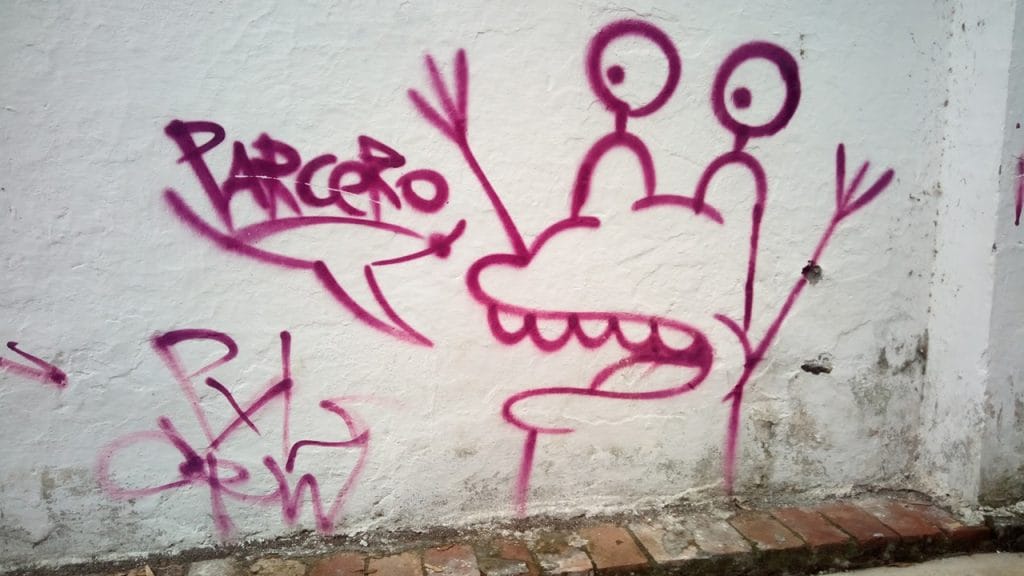
| Parce, Parcero | Colombia | “Véngase conmigo, parce” | Dude, bro |
| Chido | Mexico | “La película estuvo chida” | Cool, Awesome |
| Cachai | Chile | “¿Cachai?” | Get it, understand |
| Mango | Argentina | “No tengo ni un mango” | Money |
| Tinto | Colombia | “Deme un tinto, por favor” | Black coffee |
| Vale | Spain | “Ya vengo, ¿vale?” | Ok |
| Brete | Costa Rica | “No puedo ir, estoy en el brete” | Work |
| Yuma | Cuba | “Se nota que eres yuma” | Tourist, foreigner |
| Tío, Tía | Spain | “¡Qué bonito tu gato, tía!” | Dude, girl |
| Yesca | Bolivia | “Estoy yesca, no te puedo acompañar” | Broke, with no money |
| Cana | Uruguay | “Ahí viene la cana, vámonos” | Police, cops |
| Chela | Mexico | “Te invito unas chelas” | Beer |
| Pibe, Piba | Argentina | “Conozco a un pibe en la puerta” | Guy, dude, boy, girl |
Hot tip: Make sure to make a list of common slang words before you visit a country, because it’s likely you’ll find them very often spoken to you during your trip!
Why It’s Important to Learn Spanish Slang
The answer is simple. You can’t get a 100% real experience speaking the language without knowing slang, which is used naturally in most conversations. Native speakers use it all the time, so if you actually want to sound like them, you have to learn it. Not only will it make you sound more natural, but like you actually know the culture of the place.
- Slang helps you understand what you hear in casual conversations and media.
- It also helps you make friends by showing you get their culture.
- Using slang makes you feel surer of yourself and cuts down on mix-ups.
- It gives you a peek into how language differs from place to place and what’s new these days.
- Learning slang keeps you interested by making language learning more fun.
Did You Know?: A study published in Mind & Language demonstrates that mastering slang positively impacts informal communication skills and social integration, making learners sound more natural and improving their ability to participate in conversations with native speakers.
Regional Differences in Spanish Slang Words
You wouldn’t think English slang is the same everywhere, right? Well, it’s the same deal with Spanish slang – it changes depending on where you are. Culture, history, local sayings, and even the internet all shape how we talk. What sounds normal in Mexico might not make sense in Spain. A word that’s funny in Argentina could be offensive in Colombia.
Think about it: Mexicans say “chido” for “cool”, but Spaniards say “guay.” Argentinians use “copado”, and Chileans say “bacán.” Even something simple like “bus” changes. It’s “camión” in Mexico, “bondi” in Argentina, or just “autobús” in Spain.
How to Learn Spanish Slang Words
Want to sound like you grew up speaking Spanish? Get into the slang. It’s the quickest way to really connect with the language. Just explore culture.
- Watch Spanish vloggers. Sing along to Latin hits. Follow folks from Mexico, Spain, Chile, wherever you like.
- Jot down words you hear all the time. Try them out when you chat online, message a friend, use an app, and don’t be afraid to get a little bold.
- Listen a lot. Copy others and test new phrases. The more you play with slang, the sooner you’ll talk like someone who lives it.
Avoid These Mistakes When Using Spanish Slang
We’re going to be honest here. Even if you know Spanish pretty well, slang still messes with you. It can feel weird, make you laugh, or be a bit rude (unintentionally). Keep an eye out for these mistakes.
- Don’t throw around slang all the time. Mix it with regular Spanish.
- Skip slang at work, in school, or anywhere the vibe is more serious.
- Watch out, because some slang offends people or sets off the locals’ red flags.
- Old slang goes out of style fast! Stay sharp.
- Go easy on the slang in writing unless you’re being casual or writing something creative.
Bottom line: If you keep your eyes open and pay attention, you’ll sound cool instead of clueless.
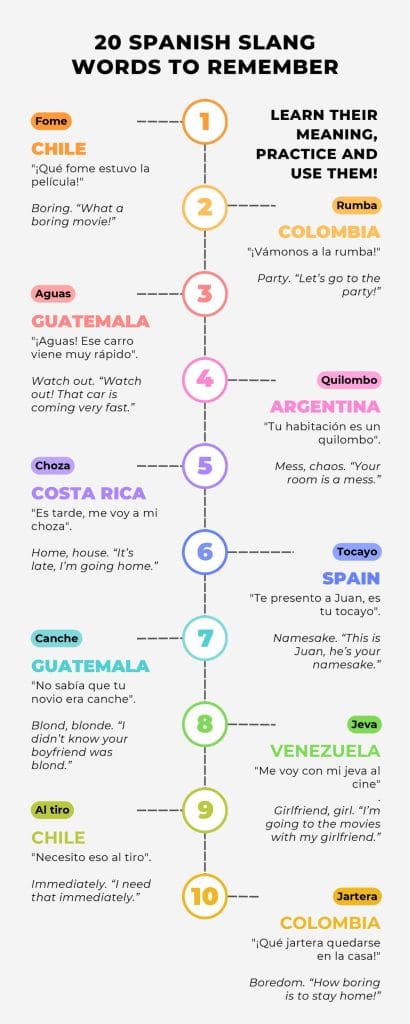
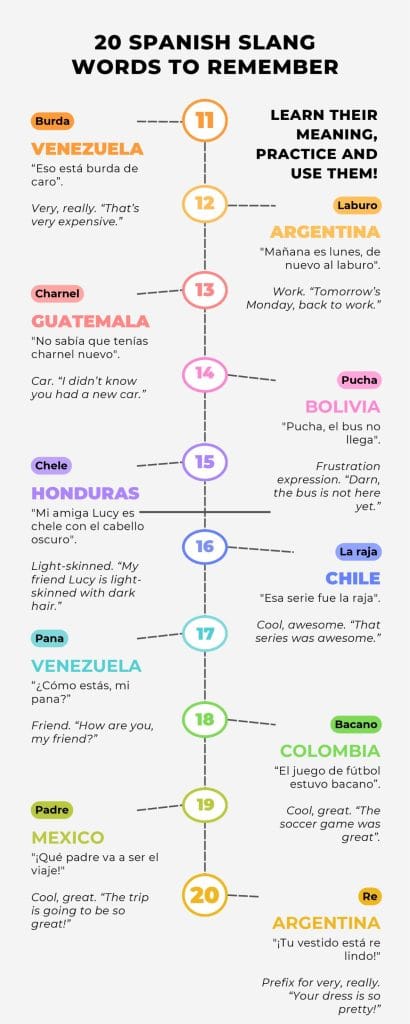
Quick Reference: 20 Spanish Slang Words to Remember
Here’s an infographic-style list of some useful Spanish slang words used around Spain and Latin America that you need to remember.
FAQs
Are slang words in Spanish the same everywhere?
No. Some words like “guay” or “chévere” pop up in a bunch of different places, and people generally know them. Most slang has the tendency to be popular in one country or even just one city.
Should I use slang in my work conversations?
Skip the slang when you’re being professional. Save it for chats with friends or when you’re just hanging out.
How do you pick up slang in a natural way?
Watch movies, listen to music, scroll through social media or talk with native speakers. Soak up how real people use these words.
Is slang ever rude?
Yeah, it can be. Sometimes it’s funny, but sometimes slang crosses the line or doesn’t work outside its home turf. Check what slang means before you start dropping it into your vocab.
Spanish slang makes your language skills sound real. It shows you get the culture and you understand the people, making you fit in. Slang brings color, of course, but you have to make sure the words match the place and people. Keep digging into new phrases, use tools like Jolii.AI, stay curious, and have fun learning!