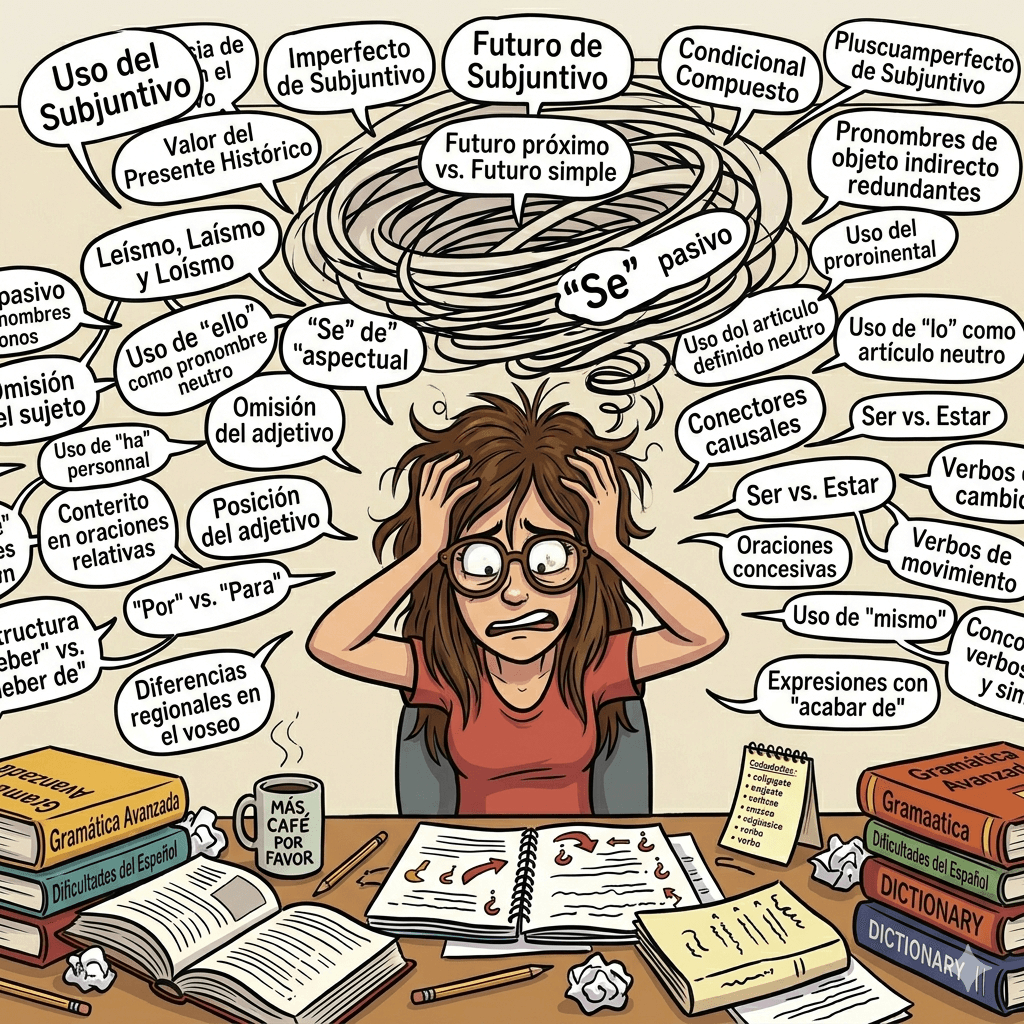
In the vast sea of Spanish words, anyone can become overwhelmed. Where to start, what to memorize, and what to skip? Sometimes, it might feel that Spanish is just a series of beautiful words, and the next moment you feel the words are so elusive. They trick you into learning but you end up getting frustrated. Almost all language learners face these doubts, and you wonder if you will ever be a fluent Spanish speaker.
“Where there is a will, there is a way”, and for you, landing here is the sign that you want to learn Spanish with its full range of unique words and phrases to make you a fluent speaker.
Mastering Spanish words isn’t about cramming lists or memorizing textbooks. We have a smarter way to connect all the dots and learn impactful vocabulary through the Jolii app, which lets you learn Spanish in an immersive environment.
Why Learning Spanish Words Is Important
A whopping 21 countries with just one official language —- Spanish.
If you want to connect with around 500 million Spanish speakers, learning Spanish words is the key. It serves as a communication medium for travelers and professionals in diverse fields.
Getting Started: Most Common Spanish Words
To start any language, we have to keep in mind, “There is an interesting fact of learning 100 high-frequency words can take you a step closer to learning a language”
These 100 very high-frequency words repeat frequently and make up 50% of all daily conversations. Most of these words are words like I, you, want, at, and appear in nearly every sentence in the spoken language. So here is the list of the top 100 high-frequency words for Spanish.
Will you be able to understand 50% of conversations after learning them? To be realistic, probably not. It is estimated that the number of words that are necessary to be conversational in any language is around 1000 words. Nevertheless, these first 100 words are essential and a great starting point in learning Spanish!
Top 100 High-Frequency Spanish Words For Beginners
These 100 high-frequency Spanish words can be a foundation for any beginner. These include pronouns, verbs, adjectives, and many more words/phrases used in routine life.
You can also take a look at the other high-frequency word list used in advanced Spanish.

Pronouns In Spanish
Pronouns are essential grammar elements that are crucial for learning any language. You can never keep on repeating the nouns, so the pronouns come to the rescue. Interrogative pronouns, in particular, are crucial when initiating your first conversations in Spanish. Here we have a list of pronouns used in the Spanish language with their English equivalents.
Personal Pronouns
| Category | No | Spanish | English | Example in Spanish | Example in English |
| Personal Pronouns | 1 | yo | I | Yo soy estudiante. | I am a student. |
| 2 | tú | you | ¿Tú hablas español? | Do you speak Spanish? | |
| 3 | Él / ella / usted | He / she / you (formal) | Él es mi hermano.Ella canta bien. | He is my brother.She sings well. | |
| 4 | Nosotros / nosotras | we | Nosotros vamos al parque. | We are going to the park. | |
| 5 | Vosotros / vosotras | You (plural, used in Spain) | Vosotros sois estudiantes. | You are students. | |
| 6 | Ellos / ellas / ustedes | They / you (plural, formal) | Ellos viven en Madrid. | They live in Madrid. |
Demonstrative Pronouns
| Category | No | Spanish | English | Example in Spanish | Example in English |
| Demonstrative Pronouns | 7 | Este / esta | this | Este libro es interesante. | This book is interesting. |
| 8 | Ese / esa | that | Ese coche es rojo. | That car is red. | |
| 9 | Aquel / aquella | that (farther away) | Aquella es mi casa. | That is my home. |
Interrogative Pronouns
| Category | No | Spanish | English | Example in Spanish | Example in English |
| Interrogative Pronouns | 10 | qué | what | ¿Qué hora es? | What time is it? |
| 11 | quién | who | ¿Quién es tu profesor? | Who is your teacher? | |
| 12 | dónde | where | ¿Dónde está el baño? | Where is the bathroom? | |
| 13 | cuándo | when | ¿Cuándo es tu cumpleaños? | When is your birthday? | |
| 14 | cómo | how | ¿Cómo estás? | How are you? | |
| 15 | por qué / porque | Why / because | ¿Por qué estudias español? | Why do you study Spanish? | |
| 16 | cuál | which | ¿Cuál es tu color favorito? | Which is your favorite color? | |
| 17 | cuánto/cuánta | how much | ¿Cuánto cuesta este libro? | How much does this book cost? | |
| 18 | cuántos/cuántas | how many | ¿Cuántos hermanos tienes? | How many siblings do you have? |
Articles In Spanish
Articles are a fundamental building block for developing the language. Although they may not seem very relevant, they still have a key role in sentence structure and meaning. Without articles, a sentence can often sound incomplete or unclear.
For any Spanish sentence in general, the following set of articles are used.
| Category | No | Spanish | English | Example in Spanish | Example in English |
| Articles | 19 | El / la | the | El libro está aquí. | The book is here. |
| 20 | Un / una | A / an | Tengo un perro. | I have a dog. |
Numbers In Spanish
Counting is a basic part of any language. Here, we offer just a glimpse of Spanish words used for numbers. You can check this post to get a detailed know-how of “Spanish Ordinal and Cardinal Numbers.”
| Category | No | Spanish | English | Example in Spanish | Example in English |
| Numbers | 21 | uno | one | Tengo uno en mi bolsa. | I have one in my bag. |
| 22 | dos | two | Hay dos manzanas. | There are two apples. | |
| 23 | tres | three | Tres amigos fueron al cine. | Three friends went to the movies. | |
| 24 | diez | ten | Mi hermana tiene diez años. | My sister is 10 years old. |
Verbs In Spanish
When an action or an event occurs, verbs come into play. They are the most helpful words that describe what someone is doing or what is happening. The following list of verbs in Spanish will give you a solid foundation for basic communication.
| Category | No | Spanish | English | Example in Spanish | Example in English |
| Verbs | 25 | Ser | to be (essential) | Soy estudiante. | I am a student. |
| 26 | Estar | to be (temporary) | Estoy en casa. | I am at home. | |
| 27 | tener | to have | Tengo dos hermanos. | I have two brothers. | |
| 28 | hacer | to do/make | Hago ejercicio cada día. | I exercise every day. | |
| 29 | ir | to go | Voy al supermercado. | I’m going to the supermarket. | |
| 30 | venir | to come | Ven aquí, por favor. | Come here, please. | |
| 31 | saber | to know | No sé la respuesta. | I don’t know the answer. | |
| 32 | poder | can/to be able | ¿Puedes ayudarme? | Can you help me? | |
| 33 | querer | to want | Quiero aprender español. | I want to learn Spanish. | |
| 34 | ver | To see | Nos vemos pronto. | We will see each other soon. | |
| 35 | hablar | To speak | Yo hablo español | I speak Spanish |
Adverbs In Spanish
Adverbs add precision or clarity to your sentences, providing more information about how and to what extent something happens.
| Category | No | Spanish | English | Example in Spanish | Example in English |
| Adverbs | 36 | sí | yes | Sí, quiero ir. | Yes, I want to go. |
| 37 | no | no | No, no quiero café. | No, I don’t want coffee. | |
| 38 | mucho | Much / A lot | Trabajo mucho. | I work a lot. | |
| 39 | muy | very | Está muy caliente. | It’s very hot. | |
| 40 | demasiado | too | Es demasiado caro. | It’s too expensive. | |
| 41 | poco | A bit | Hablo un poco de inglés. | I speak English a bit. | |
| 42 | bien | well | Estoy bien. | I am well. | |
| 43 | mal | badly | Me siento mal. | I feel bad. | |
| 44 | todo | all | Todo está bien. | Everything is fine. | |
| 45 | aquí | here | Pon el libro aquí. | Put the book here. | |
| 46 | allí | there | El gato está allí. | The cat is there. | |
| 47 | también | also | Yo también quiero ir. | I want to go too. |
Prepositions In Spanish
No matter what sort of sentences you are going to make, the prepositions may seem small, but they have ultimate importance in structuring a sentence.
| Category | No | Spanish | English | Example in Spanish | Example in English |
| Prepositions | 48 | en | in/on/at | Vivo en España. | I live in Spain. |
| 49 | de | of/from | Soy de México. | I’m from Mexico. | |
| 50 | a | to/at | Voy a la escuela. | I’m going to school. | |
| 51 | por | for/by | Gracias por tu ayuda. | Thanks for your help. | |
| 52 | para | for/to | Este regalo es para ti. | This gift is for you. | |
| 53 | con | with | Voy con mis amigos. | I’m going with my friends. | |
| 54 | sin | without | Café sin azúcar, por favor. | Coffee without sugar, please. |
Conjunctions In Spanish
Conjunctions show the connection between two sentences. To improve your Spanish fluency and create more complex sentences, you need to use them effectively.
| Category | No | Spanish | English | Example in Spanish | Example in English |
| Conjunctions | 55 | y | and | Quiero café y té. | I want coffee and tea. |
| 56 | o | or | ¿Quieres arroz o pasta? | Do you want rice or pasta? | |
| 57 | pero | but | Me gusta, pero es caro. | I like it, but it’s expensive. | |
| 58 | porque | because | Estudio porque es importante. | I study because it’s important. | |
| 59 | entonces | then | Entonces, ¿qué hacemos? | | Then, what do we do? |
Common Nouns
Common nouns are here for you so you can learn how to identify and refer to general places, objects, and people.
| Category | No | Spanish | English | Example in Spanish | Example in English |
| Common Nouns | 60 | casa | house | Mi casa es grande. | My house is big. |
| 61 | escuela | school | La escuela está cerca. | The school is nearby. | |
| 62 | familia | family | Mi familia es pequeña. | My family is small. | |
| 63 | amigo | friend | Él es mi mejor amigo. | He is my best friend. | |
| 64 | restaurante | restaurant | Me gusta este restaurante. | I like this restaurant. | |
| 65 | tienda | shop | Esta es una tienda de ropa. | This is a clothes shop. | |
| 66 | ciudad | city | Vivo en la ciudad. | I live in the city. | |
| 67 | comida | food | Me gusta la comida española. | I like Spanish food. | |
| 68 | libro | book | Estoy leyendo un libro. | I’m reading a book. | |
| 69 | trabajo | work/job | Mi trabajo es interesante. | My job is interesting. | |
| 70 | coche | car | Tengo un coche azul. | I have a blue car. | |
| 71 | agua | water | Bebo mucha agua. | I drink a lot of water. |
Time-related Nouns
The following list of time-related nouns will help you talk about schedules and routines, make appointments, and discuss when something takes place.
| Category | No | Spanish | English | Example in Spanish | Example in English |
| Time-related Nouns | 72 | día | day | Hoy es un buen día. | Today is a good day. |
| 73 | mañana | morning | Voy al gimnasio por la mañana. | I go to the gym in the morning. | |
| 74 | tarde | Afternoon, evening | Vamos al parque por la tarde. | We go to the park in the afternoon. | |
| 75 | noche | night | Leo un libro por la noche. | I read a book at night. | |
| 76 | ayer | yesterday | Ayer fue un buen día. | Yesterday was a good day. | |
| 77 | hoy | today | Hoy tenemos clase. | Today we have class. | |
| 78 | mañana | tomorrow | ¡Hasta mañana! | See you tomorrow! | |
| 79 | semana | week | Esta semana estoy ocupado. | This week I am busy. | |
| 80 | mes | month | El próximo mes es diciembre. | Next month is December. | |
| 81 | estación | season | El verano es mi estación favorita. | Summer is my favorite season. | |
| 82 | año | year | Este año quiero viajar más. | This year I want to travel more. | |
| 83 | minuto | minute | Espera un minuto, por favor. | Wait a minute, please. | |
| 84 | hora | hour | Falta una hora para la cena. | There’s one hour left for dinner. | |
| 85 | ahora | now | Ahora estoy ocupado. | I’m busy now. | |
| 86 | pronto | soon | Hasta pronto. | See you soon. |
Spanish Adjectives
Adjectives help you describe how things, places, and persons are, adding expressivity to your Spanish. Below is a list of frequently used Spanish adjectives with examples.
| Category | No | Spanish | English | Example in Spanish | Example in English |
| Adjectives | 87 | bueno | good | La película es buena. | The movie is good. |
| 88 | malo | bad | El tiempo está malo hoy. | The weather is bad today. | |
| 89 | grande | big | Es una casa grande. | It’s a big house. | |
| 90 | pequeño | small | El perro es pequeño. | The dog is small. | |
| 91 | feliz | happy | Estoy feliz hoy. | I’m happy today. | |
| 92 | triste | sad | La película es triste. | The movie is sad. | |
| 93 | bonito | pretty | Es un vestido bonito. | It’s a pretty dress. |
Expressions In Spanish
Our list of 100 high-frequency Spanish words for beginners concludes with some basic expressions to help you engage effectively with native Spanish speakers.
| Category | No | Spanish | English | Example in Spanish | Example in English |
| Expressions | 94 | gracias | Thank you | Gracias por tu ayuda. | Thank you for your help. |
| 95 | De nada | You are welcome | De nada, no hay problema. | You’re welcome, no problem. | |
| 96 | hola | hello | Hola, ¿cómo estás? | Hello, how are you? | |
| 97 | Adiós | goodbye | Adiós, hasta mañana. | Goodbye, see you tomorrow. | |
| 98 | Por favor | please | Un vaso de agua, por favor. | A glass of water, please. | |
| 99 | disculpe | Excuse me | Disculpe, ¿dónde está el baño? | Excuse me, where is the bathroom? | |
| 100 | Lo siento | I am sorry | Lo siento, llegué tarde | I’m sorry, I arrived late. |
Travel-Related Spanish Words
Traveling is undoubtedly one of the best ways to immerse yourself in the Spanish language. While many people in popular tourist destinations speak English, you should not expect to be able to get by using only English in other areas.
During your trip to a Spanish-speaking country, you will find yourself in situations in which you will need to speak Spanish – turn it into a great opportunity to practice your speaking skills and learn from locals! Check out some travel vocabulary terms and phrases that we recommend memorizing before you set off for Spain or Latin America!
Food and Drink Words In Spanish
Spain is known worldwide for its delicious cuisine and unique beverages. This section will take you on a culinary journey to expand your Spanish vocabulary and your appreciation of Spanish gastronomy. Learn how to order typical dishes like “paella” or “gazpacho” and talk about food and drinks. Discover useful vocabulary and phrases to use in Spanish restaurants.
Business Words In Spanish
Are you looking for a job in Spain or about to start working in a Spanish-speaking country? Then, a bunch of vocabulary terms and sentences are a must-know to get started with Español comercial (Business Spanish). Find out the helpful Spanish business words.
Spanish Words Used For Family and Relationships
La Familia (the family) has a central role in Spanish culture. Learning how to speak about your family and relationships and how to ask natives about their own family will help you build meaningful relationships in Spanish-speaking cultures. You can also learn about birthday wishes for mom in Spanish and much more Spanish quotes.
Popular Spanish Idioms
Learning a language is much more than just mastering vocabulary and grammar. It is about learning the culture and expressions that are a vital part of it. To learn Spanish like a native, you definitely need the following ten expressions, which every Spanish person is familiar with and uses daily. Check out the popular Spanish idioms here.
5 Strategies to Remember Spanish Words
Here, we have jotted down fun strategies to remember Spanish Words.
- Try to remember words in context. The best way is to watch a movie or a video and see how the word is used in it. It is easier to remember the dialogue.
- Create fun mnemonics. You can use the songs, stories, or any incident related to a new Spanish word.
- Learn the history of the word. Sometimes, the origins of a difficult word helps you remember it.
- Combine Spanish words in larger Spanish phrases. This way it will be easier to use them in your routine.
- Use the Jolii language learning app to get an immersive approach. Jolii allows you to learn Spanish by integrating Netflix videos in the app and practicing them frequently.
FAQs About Spanish Words
Q: How many Spanish words do I need to know to be fluent?
A: To be fluent in Spanish, you need to know 2000-3000 high-frequency words. These can help you in routine conversations. Fluency in Spanish also has a strong connection with how good you are at its grammar and contextual understanding. Jolii can help you build a contextual understanding of the language.
Q: Are Spanish words similar to English words?
A: Spanish and English have a close relation; many Spanish words resemble English words due to their Latin roots.
Q: Can I learn Spanish vocabulary without grammar?
A: Learning Spanish vocabulary without grammar is possible. However, if you want to be a fluent Spanish speaker, you need to try using correct grammar to make meaningful sentences.
Conclusion
We should encourage ourselves to try and learn new languages. Learning Spanish words enhances our language skills and also builds strong connections. If you use these Spanish words and phrases effectively in your learning, you can become a fluent speaker. Jolii language learning app takes a step forward in bringing Netflix videos or any videos you want to immerse yourself in Spanish learning. Download Jolii today to learn Spanish Words and phrases effectively!