Ever heard someone say Germans don’t have a sense of humor? Let’s bust that stereotype right now.
Behind the stereotype of precision hides a nation that loves a good laugh.
The truth is, it’s just different from what you might expect. While American comedy often goes for big, loud laughs, German humor tends to be more subtle, witty, intellectual, and wonderfully dry.
You just need to know the language.
The crafted wordplay and punchlines will catch you completely off guard once you understand them. The beauty of it is that humor has been found to boost engagement and help learners remember vocabulary.
So whether you’re preparing for a trip to Berlin or just want to add some linguistic spice to your life, German humor is definitely worth exploring.
Ready to learn through entertainment?
Download the app now and start improving your skills!
7 Days FREE TrialSo let’s dive into the world of German jokes and discover why they’re funnier than you think.
Why German Humor is More Fun Than You Think
Here’s what makes German humor special.
The German language itself is a comedy goldmine, especially with those famously long compound words. When you can combine words like “Schadenfreude” (pleasure from someone else’s misfortune), you’ve got built-in comedic potential.
What’s more, they enjoy it.
A 2023 study of 5,000 German adults found that more frequent laughter “almost every day” was significantly associated with lower levels of loneliness and social isolation.
This tells you something. As you learn the German language, you also need to learn some jokes.
Classic German Jokes That Never Get Old

Here are some timeless German jokes that showcase the unique comedic style for language learners:
The Grammar Joke
Treffen sich zwei Jäger. Beide tot.
Translation: “Two hunters meet. Both dead.”
This ultra-short joke plays on the multiple meanings of “treffen”, which means both “to meet” and “to hit/shoot.” Dark? Maybe. Hilarious? Absolutely.
Little Fritz (Fritzchen) Jokes
Much like “Little Johnny” in English, Fritzchen is the mischievous kid who stars in countless German jokes. Here’s a classic:
Lehrer: “Wo wurde der Friedensvertrag von 1807 unterschrieben?”
Translation:
Teacher: “Where was the peace treaty of 1807 signed?”
Little Fritz: “Bottom right!”
The teacher meant “where” geographically, but Fritz answered “where in the document”. These jokes are perfect for language learners because they’re simple and teach you everyday vocabulary.
“Alle Kinder” Jokes: Jokes including children
These jokes follow a specific format: “All children do X, except Y, who Z.” They’re often dark but catchy.
“Alle Kinder springen über die Schlucht, außer Peter, der weiter springt.”
Translation: “All children jump over the canyon, except Peter, who jumps farther.”
The dark humor comes from the implication that Peter… well, didn’t make it.
These jokes teach German names, verbs, and sentence structure while making you giggle.
Modern German Jokes for Today’s Comedy Lovers
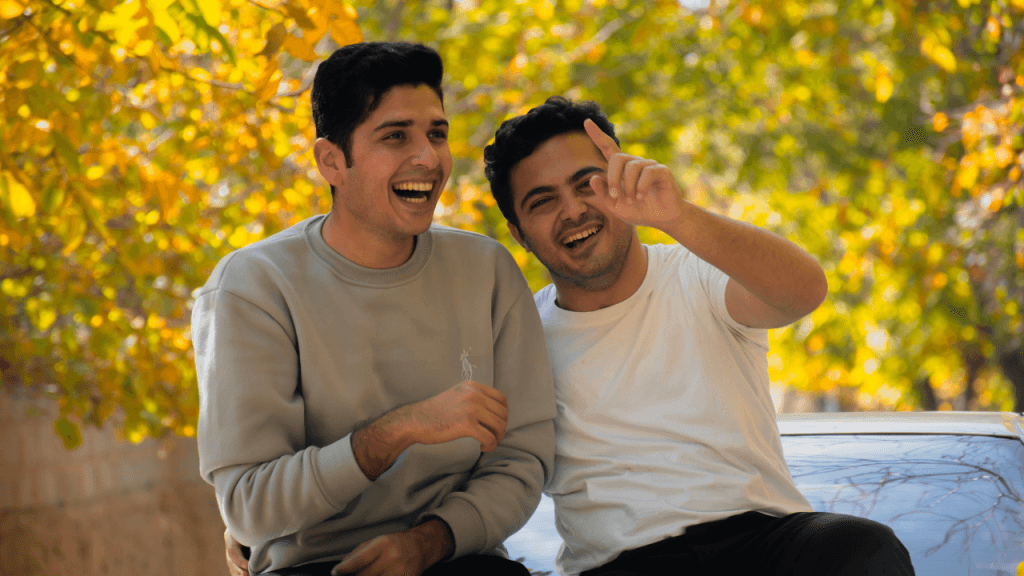
German humor has evolved with the times. A lot of today’s jokes reflect modern life, technology, and global culture. Contemporary German comedy embraces everything from social media to political satire.
If you’re learning the language, you’ve likely come across funny clips on social media. Comedians are redefining German humor for younger audiences, and yes, a lot of sarcasm.
The WiFi Joke
“Warum können Geister kein WLAN haben? Weil sie durch Wände gehen können.”
Translation: “Why can’t ghosts have WiFi? Because they can go through walls.”
This plays on the fact that WiFi signals struggle with walls, but ghosts don’t. It’s perfectly adapted for our digital age.
The Social Media Generation
“Wie nennt man jemanden, der gerne Selfies macht? Ein Ich-Telefonierer.”
Translation: “What do you call someone who likes taking selfies? A me-phoner.”
The pun combines “Ich” (I) with “Telefonieren” (to phone), creating a clever commentary on selfie culture.
If you’re learning the German language through Netflix shows like “How To Sell Drugs Online (Fast)”. You’ll encounter this kind of modern, casual German humor firsthand.
German Wordplay and Puns That Lose Meaning in Translation
Here’s where things get tricky and fascinating.
Some German jokes simply don’t translate well, but that doesn’t make them any less brilliant.
Kalauer Jokes
Take “Kalauer” jokes, for example. These are essentially puns or dad jokes that rely heavily on similar-sounding words. Here are some good examples:
“Geht ein Cowboy zum Friseur. Als er rauskommt, ist sein Pony weg.”
Translation: “A cowboy goes to the hairdresser. When he comes out, his pony is gone.”
In German, “Pony” means both “pony” (the animal) and “bangs” (the hairstyle). In English? You completely lose that double meaning, though the visual of a confused cowboy is still pretty funny.
Another wordplay gem:
“Seeräuber sind schlecht in Mathe, weil sie Pi raten.”
Translation: “Pirates are bad at math because they guess pi.”
The pun here is brilliant. “Piraten” and “Pi raten” sound nearly identical.
“Kalauer” wordplay also applies here:
“Was sagt ein Krokodil, das einen Clown gefressen hat?” Schmeckt komisch!
Translation: What does a crocodile say after eating a clown? Tastes funny!
“Komisch” translates to weird and funny. In short, the crocodile is expressing two things here. The clown tastes “strange” in reference to flavor and “funny” for the humor.
Final Takeaway
What makes German jokes unique? They give you a glimpse into the culture and mindset of German speakers.
Research already confirms that humor reduces anxiety and helps information stick in your brain. So why not add some laughter to your language practice?
Next time you’re studying German, throw in a joke or two. Share them with German-speaking friends or use the puns as conversation starters.
The fun doesn’t have to stop there. You can use the Jolii.ai app to personalize your German language classes. Practice the jokes you’ve learnt, and the AI-powered app will adapt to your learning pace.
FAQs
Are German jokes easy to understand for English speakers?
Not always! Many jokes rely on wordplay that doesn’t directly translate. But once you get familiar with how German words combine, the humor becomes much clearer and funnier.
Can learning German jokes help me learn the language faster?
Absolutely. Jokes improve vocabulary, pronunciation, and comprehension. What’s more? They make practice sessions a lot more enjoyable.