Let’s be honest. Staring at grammar tables isn’t anyone’s idea of a good time.
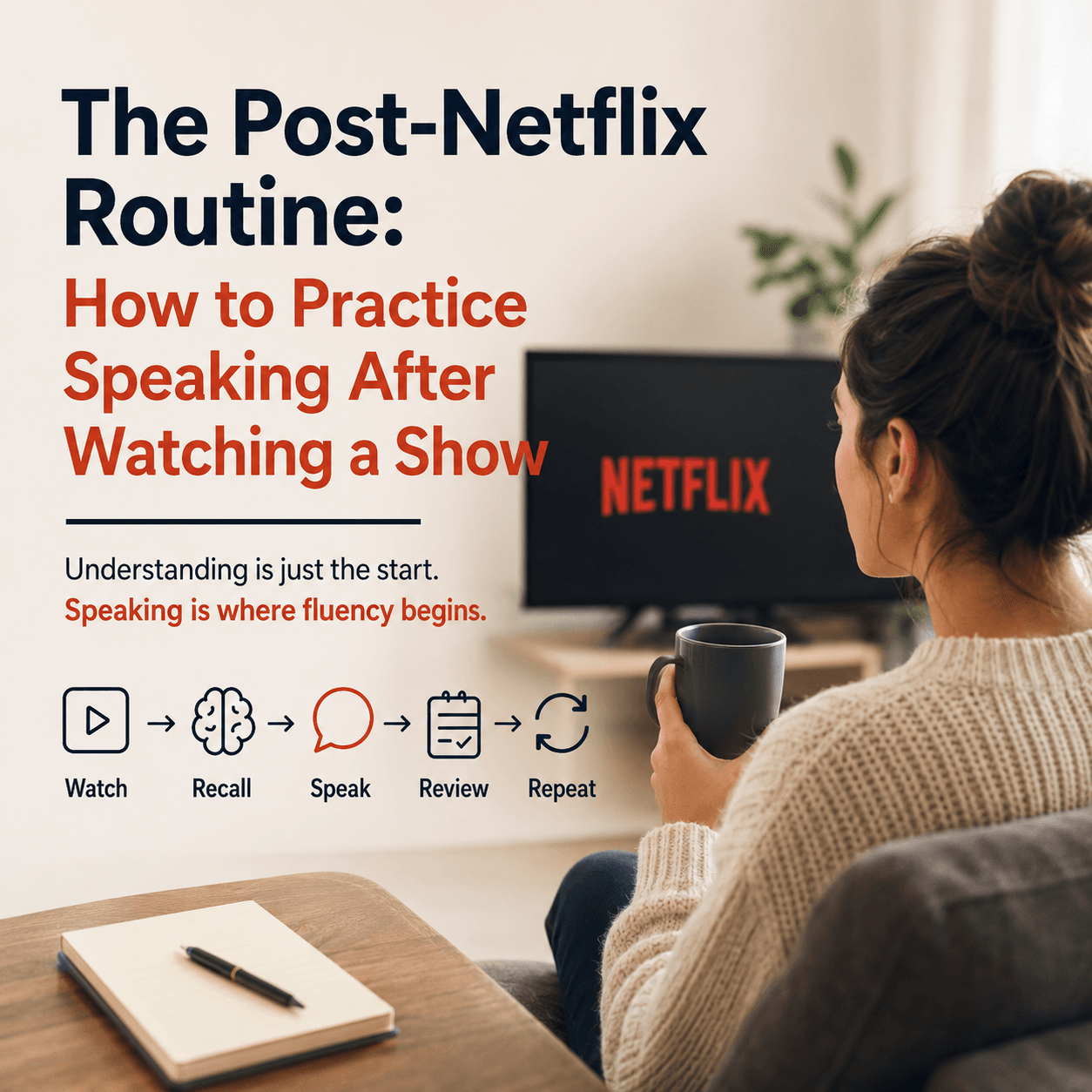
But what if I told you that your next Netflix binge could actually make you fluent in German?
Here’s something they don’t tell you. You can learn more from one season of a good German TV show than from months of drilling vocabulary lists.
The best TV shows for learning German do something magical for you. They trick your brain into learning while you’re just trying to follow a storyline. Before the season ends, you’ve already picked up slang and how German humor works.
So let’s talk about how you can get a full German immersion experience and how to pick shows that actually work for language learning, so you’re not just reading subtitles.
Why TV Shows Are Perfect for Learning German
Think about how children learn their first language.
They don’t dwell so much on conjugation charts; they absorb language through context, repetition, and real-life situations. So, how does this work for you as a German learner? You need to do the same, but this time with TV shows.
Research backs this up too. A 2022 review on audiovisual language learning found that TV shows and films can significantly improve listening comprehension, vocabulary acquisition, and overall language fluency.
So, here’s why you should schedule some learning time for TV:
- You actually hear people speak: Textbook German? Mostly formal and proper. Real German? Full of slang and filler words like “halt” and “eben.” You also learn those shortened phrases and regional expressions.
- Your memory will thank you: Want to learn more German vocabulary and remember it? Watch your favorite TV characters say the words. That emotional and visual connection is good for your memory.
- Cultural fluency: Yes, you want to learn the vocabulary. But do you know the social norms, or what Germans consider rude or polite? TV shows will give you that cultural immersion without the plane ticket.
Plus, there’s the practical advantage. You can pause and rewatch as many times as you need. Something you don’t get often.
How to Choose the Best TV Shows for Learning German
Before you narrow down to a list, here are some things to keep in mind:
- What’s the difficulty level? If you’re just starting, jumping straight into a complex political thriller will leave you frustrated. Start simple.
- Native German content is the best option: Yes, you could watch “Friends” dubbed in German, but you’d get more authentic dialogue on an original show.
- Subtitles are your friend: Watch that German TV show and turn on the English subtitles. A way to learn German much faster.
The Best TV Shows for Learning German (By Level)
Let’s create a watchlist:
Beginner-Friendly
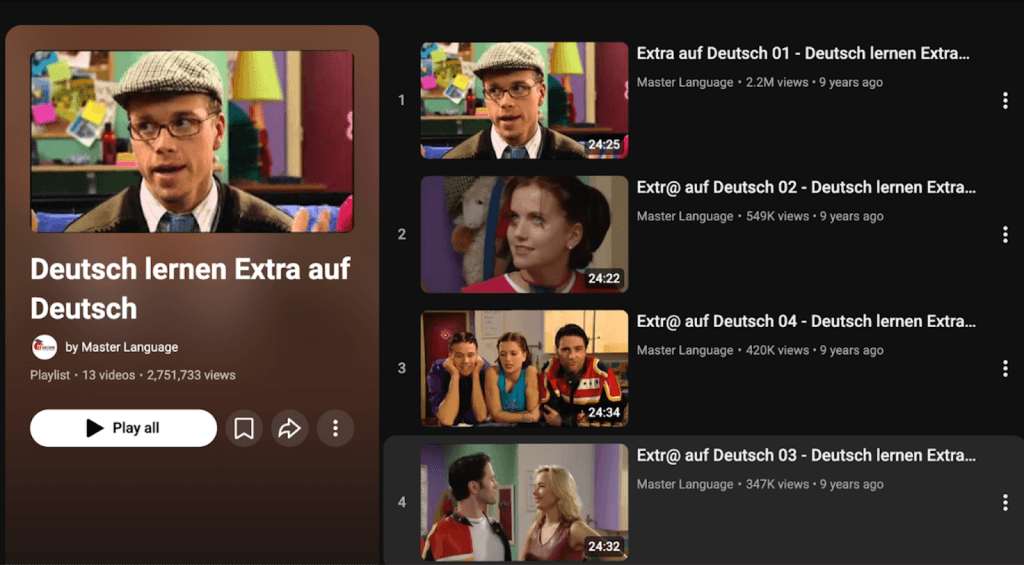
“Extra auf Deutsch”
Basically, the German version of “Extra.” For this sitcom, the dialogue is deliberately slow with lots of repetition. Yes, it’s cheesy, but it’s incredibly effective for beginners.
What you learn: Vocabulary themes and grammatical structures.
“Türkisch für Anfänger”
Who doesn’t like a funny TV show? This family comedy follows a blended German-Turkish family as they navigate cultural differences. The relatable situations and simple dialogue are a plus.
What you learn: Tons of everyday conversational German.
“Peppa Wutz”
Don’t knock it till you’ve tried it. Children’s shows like “Peppa Pig” can be a great learning tool. Perfect for building a foundation before moving to more complex content.
What you learn: You won’t miss the word pronunciations or simple vocabulary.
Intermediate and Advanced

“Dark”
A mind-bending sci-fi thriller and a class all in one sitting. This is your opportunity to learn about more complex German phrases. It’s one of Netflix’s most successful non-English shows for good reason.
What you learn: Dialogue at a natural pace.
“How to Sell Drugs Online (Fast)”
Yes, this is a dark comedy about a nerdy teenager who starts selling drugs online to win back his ex-girlfriend. But also, it’s a German language class. “How to Sell Drugs Online” brings in the slang and cultural insights.
What you learn: How younger Germans actually talk. The pace is quick but manageable, and the humor makes vocabulary stick.
“Babylon Berlin”
Set in 1920s Berlin, Babylon Berlin is the perfect TV show to learn sophisticated dialogue. Want to polish your language skills? This show is the one. You get the full immersion. The historical context, political intrigue, and a fun way to learn German.
What you learn: Formal German language and authentic dialogues
Strategies to Learn German From TV Shows
For your binge session to be effective, here are some tips:
- Watch actively: Heard a new phrase? Write it down, or pause and speak it aloud. This is the best time to use your Jolii.ai app to practice pronunciation.
- Embrace repetition: The advantage of watching a TV show is that you can pause and rewatch. Didn’t understand phrases or the theme in one episode? Watch it again and use the subtitles.
- Focus on phrases: Which expressions come up repeatedly? What are the common greetings or conversation fillers? That’s where the learning starts. You need to pay attention to this instead of focusing on single words.
Final Takeaway
Start tonight. Pick one show from this list, set those German subtitles, and learn while being entertained.
Every episode you watch is expanding your vocabulary and training your ear to understand German as it’s really spoken. And don’t struggle when you hear difficult phrases. Jolii.ai is right there if you need to practice until those new expressions stick.
FAQs
Which are the best German TV shows on Netflix?
There are multiple options. “Dark” is perfect if you love sci-fi thrillers, “How to Sell Drugs Online (Fast)” offers modern slang and teen dialogue, and “Babylon Berlin” gives you sophisticated historical drama.
What are the best German TV shows for beginners?
Want simple dialogue? Start with “Türkisch für Anfänger” or “Extra auf Deutsch.”
How do you say “TV shows” in German?
The most common term is “Fernsehsendungen” ( television broadcasts). You’ll also hear Germans say “Serien” for series or shows. And in casual conversations, “TV-Serien.”