For most beginners trying to learn German vocabulary fast, words slip because the brain deletes new input quickly. Most terms vanish the moment attention shifts.
The fix is repeated exposure before the forgetting curve hits.
Short reviews, real context, and quick recall checks turn random vocab lists into assets your brain actually keeps.
In this guide, you will discover study techniques that help you learn German vocabulary fast and build lasting recall.
1. Use Spaced Repetition Systems (SRS) to Learn German Vocabulary Fast
Grinding vocab feels productive, but most of it evaporates by the next day.
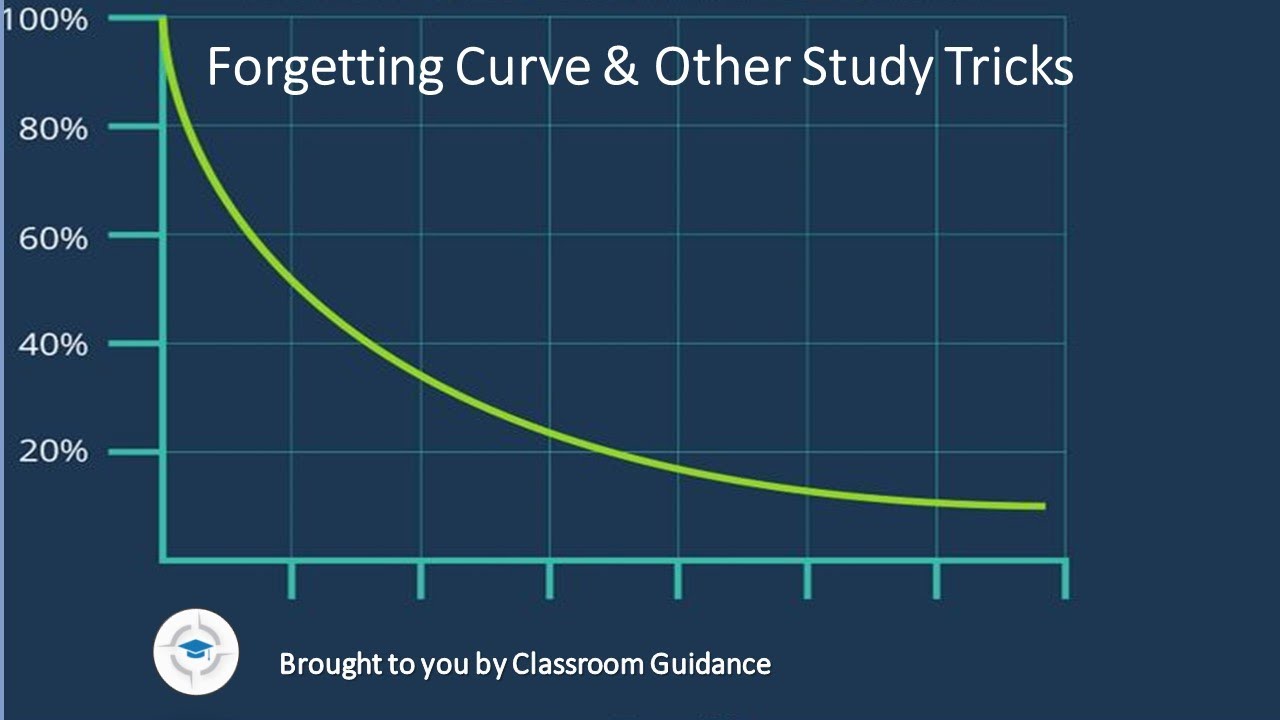
Welcome to the Ebbinghaus Forgetting Curve! This forgetting curve wipes around 70% of new input within 24 hours. SRS stops that!
Anki and Quizlet schedule reviews at intervals that activate long-term memory formation.
Spaced repetition lifts retention by about seventy to seventy-four percent. It delivers roughly eighty percent recall, compared to around sixty percent with cramming.
Takeaway: Ten minutes a day keeps your vocab recall near 90%.
2. Learn German Vocabulary Fast by Learning in Context, Not Isolation
Random word lists don’t stick. The brain ignores isolated items. Words inside sentences trigger more pathways, which speeds up recall.
Gehen as “to go” is shallow. Ich gehe später nach Hause builds structure, rhythm, and meaning.
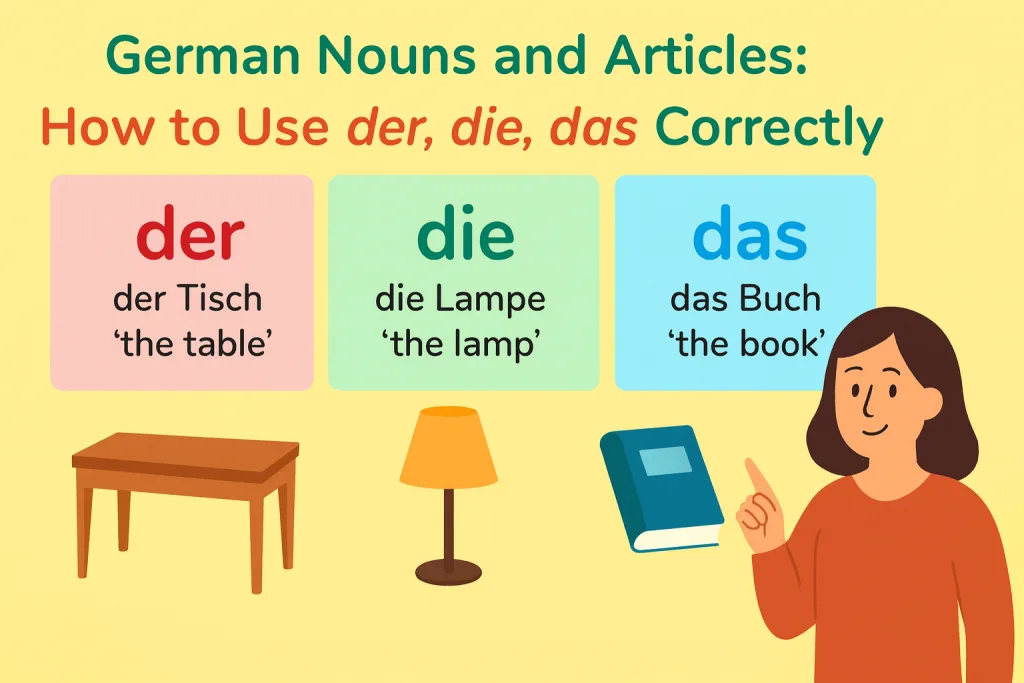
Articles must be learned with the noun from the start. Der, die, das treated separately leads to mistakes later.
Mine short lines from YouTube or Netflix with German subtitles. Drop them into SRS and replay for rhythm and context.
A2–B1 graded readers work best because they hit the ninety to ninety-eight percent comprehension range, where learning actually happens.
Takeaway: Context accelerates recall and prevents the fossilized mistakes that haunt advanced learners.
3. Prioritize High-Frequency Vocabulary First
You don’t need all 300,000 German words. You need the right 1,000.
The stats are savage and crystal clear:
- Top 1,000 German words = ~80% of daily comprehension
- Top 2,000 = ~90%
- Goethe A1 lists = 600–700 words
- A2 lists = 1,200–1,400
This is the Pareto Principle wearing lederhosen.
Takeaway: Stop wasting time on obscure and absurd nouns like der Dachshaarfettfilter.
4. Use Mnemonics and Visual Memory Techniques
The brain remembers unusual images and discards the ordinary.
Der Apfel sticks when tied to an ape eating an apple.
2025 data shows higher retention across all age groups when visuals are used.
Place nouns in rooms, attach gender cues, and retrieve them by mentally walking through the space.
Takeaway: If it feels ridiculous, it probably works.
5. Chunk Vocabulary by Theme to Learn German Vocabulary Fast
Your brain organizes information in clusters—food, travel, weather, emotions, work, home.
Thematic groups create natural associative pathways and prevent confusion with similar-looking words.
Takeaway: Chunks save time, boost retention, and mirror real-world usage.
6. Leverage the English-German Connection for Faster Vocabulary Learning
German isn’t as foreign as people pretend. It’s English’s older, moodier cousin.
Cognates are everywhere:
- Haus → house
- trinken → drink
- finden → find
Spot the patterns, and suddenly German stops looking like ancient runes.
There are predictable sound shifts:
- English th → German d
- English p → German pf
- English t → German z
Once you see them, you can decode meanings before officially learning them.
Takeaway: Cognates cut learning time because half the job is already done.
7. Speak and Write ASAP for Active Recall
Active recall use builds real memory. Recognition doesn’t.
Use AI bots like ChatGPT, HelloTalk, or Jolli to practice on demand. Write a short daily diary entry. Say words out loud before checking answers.
Takeaway: Active recall > passive recognition. Always.
8. Immersion and Input Flooding to Learn German Vocabulary Fast :
Immersion is daily exposure, not travel. Use YouTube, German podcasts, Netflix, labels, and a German device setup. Thirty minutes of input a day builds automatic acquisition.
Aim for content where you understand ninety to ninety-eight percent, so new vocab settles fast.
Takeaway: Your environment teaches you faster than your textbook.
9. Use Flashcards the Right Way to Learn German Vocabulary Fast
Flashcards aren’t the problem. Your flashcards are the problem.
Fix them by:
- Add example sentences
- Add audio
- Add images
- Keep decks small
- Review daily, not monthly
And for the love of Goethe: Use ACTIVE recall, not passive scrolling.
Takeaway: Flashcards work when they force effort, not when they feel easy.
10. Gamify Your Learning for Motivation and Speed
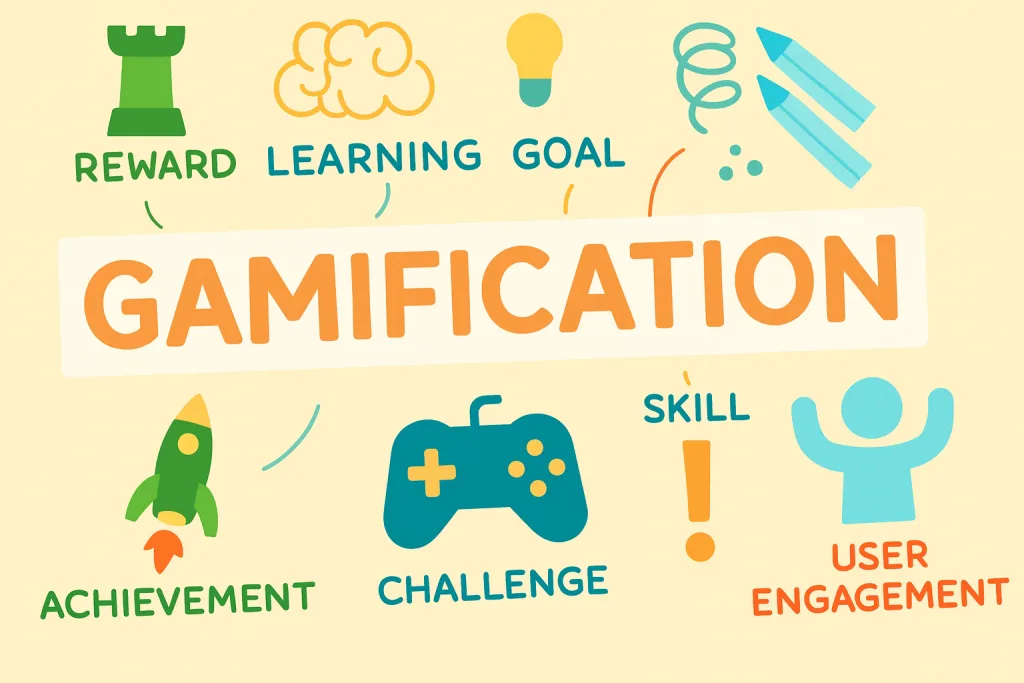
Apps like Memrise and Jolli hijack your dopamine loops with streaks, leaderboards, and micro-rewards.
And guess what? Gamification isn’t fluff. It’s statistically the most effective tool for preventing learner dropout across 2024–2025 datasets.
Takeaway: If streaks keep you consistent, streaks win.
German Language Learning Market in 2025
In 2025, German is used online by about 6 out of 100 people. The language-learning market is worth $83 billion and will double by 2030.
Apps use short, smart lessons to help kids remember better. AI tools adjust difficulty and tone in real time. LLMs enhance data, predict tasks, and act as personal agents for vocab learning.
FAQs
Q. Can I learn German vocabulary fast without immersion?
A. Up to ~3,000–4,000 words, yes. After that, progress hits a ceiling. True long-term scaling needs real input (podcasts, YouTube, series, conversations).
Q. Do I need grammar to learn vocabulary?
A. Only the basics. Vocabulary drives comprehension far more than grammar early on.
Q. Are flashcards enough?
A. No. Flashcards alone create recognition, not real recall. Sustainable memory comes from pairing them with context and active retrieval.
Q. Why is my vocabulary growing so slowly, even though I study?
A. Consistency outperforms intensity. Short daily reviews work. Weekly cram sessions don’t.
Final Thoughts
Vocabulary is something you develop and maintain over time.
Use SRS, context, frequency lists, mnemonics, active recall, and immersion together for rapid growth.
Track your goals and gamify your consistency.
Still confused? Then use Jolli.ai app. This app provides adaptive vocab drills that speed up German learning and cut the friction.