Whether you’re planning a trip to Paris, chatting with French-speaking friends, or exploring the beauty of communication through French. Learning natural French phrases gives you immediate, practical confidence.
Let’s dive deep into over 50 essential French expressions you’ll hear in cafés, bakeries, metro stations, and real conversations. Don’t worry, whether you’re a complete beginner or looking to refresh your skills, you’ll learn to speak more naturally and confidently, little by little.
Why Learning Real French Phrases Matters (Learn Them Fast)

Focusing on real French phrases…the ones you’ll actually hear in markets, cafés, workplaces, and daily life, is the fastest and most natural way to become conversational.
Real Phrases = Real Confidence
When you learn whole expressions instead of isolated words, you instantly sound more fluent. Instead of memorizing “merci”, you learn phrases like:
- Merci beaucoup !🔊 (Thank you so much!)
- C’est super gentil.🔊 (That’s really kind.)
- Je vous remercie.🔊 (I thank you – more formal.)
These are the phrases that help you connect authentically, just like real speakers do in French.
Cultural Context Makes Everything Click
France has its own rhythms, politeness norms, and habits :
- Saying bonjour🔊 before anything else is a cultural must.
- Saying ça va ?🔊 twice in a row is totally normal.
- Saying s’il vous plaît🔊 incorrectly can sound abrupt.
These small details make your French feel natural and respectful.
Why Phrases Improve Conversational Flow
Learning full expressions helps you:
- Speak without translating in your head
- Understand natives even when they speak fast
- Recognize idiomatic shortcuts like “T’inquiète🔊” or “On y va🔊 ?”
- React in real time during conversations
You shift from “What’s the French word for…?” to “Oh, I know how a French person would say this.”
A Multilingual Advantage
If you’ve studied other languages, like
Italian, German, Spanish, or English, you’ll notice patterns that make learning French phrases easier.
For example:
- French “Bonjour”🔊 ↔ Italian “Buongiorno”🔊
- French “Merci”🔊 ↔ Spanish “Gracias”🔊
- French “Je comprends”🔊 ↔ German “Ich verstehe”🔊
Your brain starts building bridges between languages, accelerating your learning.
How to Learn French Phrases Quickly
- Read the phrase and say it out loud.
- Listen for the rhythm, French is musical.
- Learn the context (formal, casual, polite).
- Use it in a real sentence you might say today.
- Repeat it tomorrow, even briefly, to reinforce it.
50+ Essential French Phrases
Below is a carefully curated list of practical everyday expressions you can start using immediately. They cover greetings, social life, travel, opinions, and real spoken French. Each phrase includes an English meaning and a context note to help you learn naturally.
This list reinforces everything you’ve learned so far and helps you build a real conversational foundation in French
Greetings & Politeness
- Bonjour – Hello / Good morning
- Bonsoir – Good evening
- Salut – Hi (casual)
- Au revoir – Goodbye
- À bientôt – See you soon
- Merci / Merci beaucoup – Thank you / Thanks a lot
- De rien – You’re welcome (casual)
- Je vous en prie – You’re welcome (formal)
- S’il vous plaît / S’il te plaît – Please (formal/informal)
- Excusez-moi – Excuse me
Conversation Starters
- Ça va ? – How’s it going?
- Comment ça va ? – How are you?
- Vous allez bien ? – Are you doing well? (formal)
- Comment vous appelez-vous ? – What’s your name? (formal)
- Tu t’appelles comment ? — What’s your name? (informal)
- D’où venez-vous ? – Where are you from?
- Vous parlez anglais / italien / espagnol / allemand ? – Do you speak english ?
- C’est votre première fois ici ? – First time here?
- Qu’est-ce que vous faites dans la vie ? – What do you do?
- Vous connaissez un bon café dans le coin ? – Know a good café nearby?
Useful Daily Expressions
- Je comprends. – I understand
- Je ne comprends pas. – I don’t understand
- C’est une bonne idée. – That’s a good idea
- C’est intéressant. – That’s interesting
- C’est possible ? – Is it possible?
- Pas de souci. – No problem
- Ça marche. – Sounds good
- T’inquiète. – Don’t worry (informal)
- On y va ? – Shall we go?
- On se retrouve où ? – Where should we meet?
Feelings & Opinions
- Je suis fatigué(e). – I’m tired
- Je suis content(e). – I’m happy
- Je suis stressé(e). – I’m stressed
- J’ai faim / J’ai soif. – I’m hungry / thirsty
- Je pense que… – I think that…
- À mon avis… – In my opinion…
- Je ne suis pas sûr(e). – I’m not sure
- C’est génial ! – That’s awesome!
- C’est dommage. – That’s a shame
- C’est pas possible ! – No way!
Cafés, Restaurants & Food
- Je voudrais… – I would like…
- Vous recommandez quoi ? – What do you recommend?
- L’addition, s’il vous plaît. – The bill, please
- C’est pour ici ou à emporter ? – For here or to go?
- C’était délicieux ! – It was delicious!
Directions & Transportation
- Où est… ? – Where is…?
- Comment aller à… ? – How do I get to…?
- C’est loin ? – Is it far?
- À droite / À gauche / Tout droit – Right / Left / Straight
- Je descends à la prochaine. – I’m getting off at the next stop
Slang & Real Spoken French
- Carrément ! – Totally!
- Grave ! – Absolutely / totally
- C’est chaud. – That’s tough
- C’est cool. – That’s nice
- On se tient au courant. – Let’s keep in touch
- J’avoue. – True / I agree
- La honte ! – So embarrassing!
- Chais pas. – I dunno (from je sais pas)
- Y a… – There is… (from il y a)
Bonus Phrases French People Love
Cultural Tips to Use These Phrases Naturally
French culture has subtle rules around politeness, rhythm, and interaction styles that can make your conversations flow smoothly or feel awkward if ignored.
Politeness and Formality
1. Always greet first
In France, it’s considered rude to start speaking without a greeting. Whether you enter a shop, office, or café, always say Bonjour or Bonsoir before anything else.
2. Know when to use “tu” vs. “vous”
- Tu → casual, used with friends, peers, family
- Vous → formal or plural, used with strangers, elders, or professional contexts
Tip: When in doubt, start with vous; most people will invite you to use tu if appropriate.
3. Politeness in requests
Always add s’il vous plaît or merci. Even if you’re casual, French people notice politeness and it makes interactions smoother.
Conversation Rhythm & Tone
1. French is musical
French has a distinct rhythm with rising and falling intonation. Practice phrases aloud to capture the flow, reading isn’t enough.
2. Pauses matter
Don’t rush; French speakers often leave small pauses, especially at the start of sentences or after polite greetings. It shows respect and gives your listener time to process.
3. Short phrases & contractions
- Spoken French often drops words or shortens them:
Je ne sais pas → Chais pas
Il y a → Y a
Use these carefully: they’re casual, not for formal settings.
A quick note on slang (argot🔊) in French and English
French slang works a bit like English slang: people shorten words in fast, casual speech. For example, Je ne sais pas becomes Chais pas, just like I don’t know becomes I dunno. You don’t need to learn slang to speak good French, far from it, but seeing these parallels can help you recognize them when you hear them. Think of slang as a window into how real conversations sound, not a priority to memorize. If you keep your ears open, you’ll slowly get familiar with these natural shortcuts.
Body Language & Eye Contact
- Handshake or cheek kiss?
A handshake is standard in professional or first-time encounters. Friends may do a bise (cheek kiss). Observe cues. - Eye contact
Maintain moderate eye contact. Too little seems evasive; too much can feel aggressive.
Do’s and Don’ts in Conversation
Do:
- Greet before speaking
- Use polite phrases: merci🔊, s’il vous plaît🔊, excusez-moi🔊
- Listen actively, nod, and repeat phrases for clarity
- Mirror casual expressions in informal contexts
Don’t:
- Skip greetings
- Use slang in formal or professional settings
- Interrupt frequently
- Overuse English words when French equivalents exist
How to Practice French Phrases in Your Daily Routine
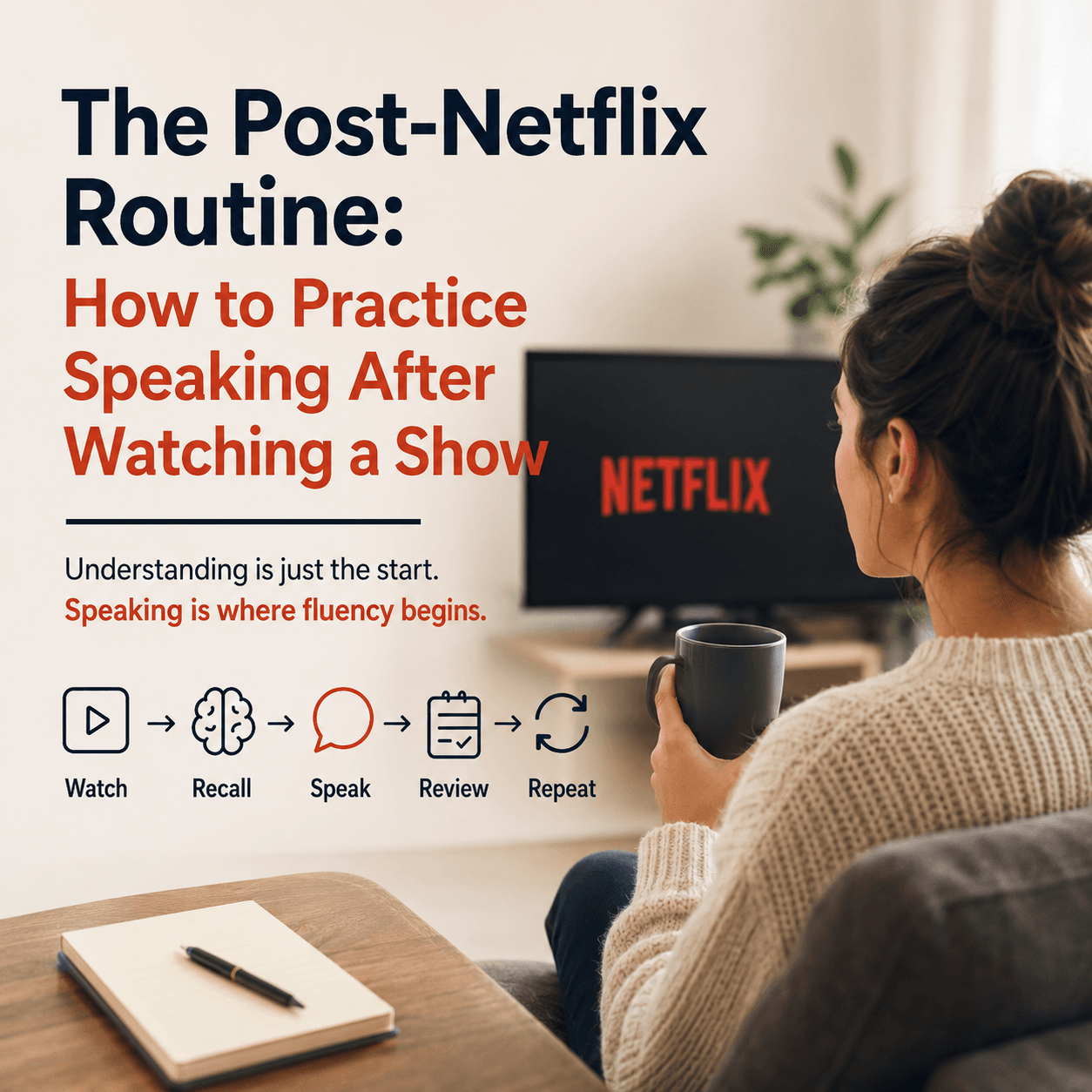
Integrate French phrases naturally into your daily life. You don’t need hours of study, just a few consistent habits that help your brain absorb expressions the same way native speakers do.
Use Micro-Practice Moments Throughout the Day
Short, frequent exposure strengthens memory far more than long, irregular sessions. You can review three or four phrases while making coffee, commuting, or scrolling on your phone. Repeating Ça marche🔊, C’est une bonne idée🔊, or On y va🔊 ? aloud several times is enough to reinforce them.
Label Your Environment With French Words & Phrases
A powerful trick is to place small sticky notes around your home with mini-phrases, not single words.
Example:
- On your mirror: Ça va ?
- On the fridge: J’ai faim.
- Near the door: On y va !
Seeing these naturally keeps the language alive in your mind.
Shadow Real Conversations
Shadowing means listening to native audio and repeating exactly as you hear it, matching rhythm, pauses, and pronunciation. Choose a short clip, a scene from a movie, or even a short dialogue, and imitate it out loud. It trains your accent and your reflexes without translating.
Use French During Solo Tasks
Thinking aloud in French is an underrated practice method. Describe what you’re doing:
Je prépare le café.
Je vais sortir.
Je suis un peu fatigué aujourd’hui.
Even simple sentences teach your brain to retrieve phrases automatically when you need them.
Set One Realistic Phrase Goal per Day
Instead of overwhelming yourself with lists, pick just one phrase to master each day. Use it at least three times: write it, say it, or use it in a message. After a month, you’ve mastered 30 usable expressions without stress.
Recycle Phrases You Already Know
Language fluency comes from reusing, not just learning,expressions. Once you learn phrases like C’est possible🔊 ?, Je ne suis pas sûr🔊(e), or C’était délicieux🔊 !, try adapting them to new situations. Recycling helps your brain recognize patterns and feel more natural using the language.
Summary
Learning a language is about connecting with people and understanding the culture behind it. We’ve seen practical expressions for greetings, daily life, and social interactions. By using these phrases, you have a starting point to begin having a conversation in real-life situations, even if brief, exchanging small talk (that kind of stuff).
Takeaway
Mastering these phrases allows you to turn vocabulary into real communication. And when you learn French phrases, even simple ones, you make this connection much easier and more natural. When you learn expressions in context, practice them regularly, and pay attention to cultural nuances, speaking French becomes intuitive rather than mechanical. Even a few well-chosen phrases can make interactions smoother, help you connect with locals, and boost your confidence immediately.Jolii AI provides interactive practice, instant feedback on pronunciation and phrasing, and opportunities to explore multiple languages like Italian, German, Spanish, and English. With Jolii AI, the phrases in this guide become real conversation skills you can use every day. Start practicing now and bring your French to life: Try Jolii AI.