The music featured today, the French song “Alors on danse” 🔊 by Stromae, stands out for learners. Its steady rhythm, simple and repetitive lyrics, as well as its commentary on everyday struggles, make it the ideal tool for practicing vocabulary, sentence structures, and pronunciation.
Listening to a song several times helps train the ear, absorb grammar naturally, and connect with French culture, so let’s dissect it to understand how to learn French from it.
New to learning French with songs?
Start with our complete guide to learning French through music like “Alors on danse”.
Presentation of “Alors on danse”
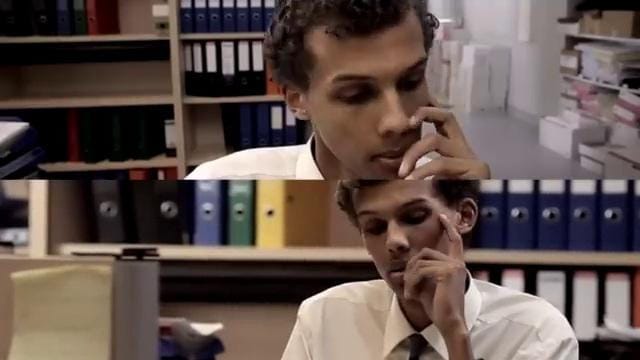
Released in 2009, “Alors on danse” was Stromae’s breakout hit, making him internationally famous. Its catchy techno-pop beat and stark lyrical contrast, simple, repetitive music paired with deep reflections on life’s struggles, create a song that is both fun and meaningful.
Culturally, the song reflects the modern pressures of work, money, relationships, and global crises, resonating widely in Europe and beyond. The lyrics blend everyday vocabulary with abstract expressions of stress and emotion, making it perfect for French learners who want both practical language and cultural insight.
Why a French song analysis of “Alors on Danse” helps learners
- Clear, rhythmic delivery
Stromae articulates each phrase clearly, with repetition that emphasizes key vocabulary. Even when the melody is electronic and upbeat, the words are easy to hear and follow. - Steady tempo
The song’s consistent beat allows learners to focus on individual words, mimic intonation, and practice shadowing without feeling rushed.
Repetition of essential structures
The chorus repeats “Alors on danse”🔊 multiple times. Similarly, lines like “Qui dit… dit…”🔊 appear frequently, reinforcing sentence patterns:
Qui dit argent dit dépenses 🔊
Ready to learn through entertainment?
Download the app now and start improving your skills!
7 Days FREE TrialQui dit amour dit les gosses 🔊
These repetitions create natural opportunities to memorize structures and vocabulary in a musical, intuitive way.
What Learners Can Learn from This Song

1. Modern Emotional and Everyday Vocabulary
This song has a vocabulary that learners rarely find in textbooks but hear frequently in conversations about work, money, stress, and daily life. It mixes concrete actions with abstract emotions, making the words both memorable and practical.
Here are some key examples from the song:
| French Word/Phrase | Meaning in English | Type of Word |
| étude 🔊 | study | concrete action |
| travail 🔊 | work / job | concrete action |
| argent 🔊 | money | concrete action |
| dépenses 🔊 | expenses | concrete action |
| dette 🔊 | debt | abstract concept |
| crise 🔊 | crisis | abstract concept |
| fatigue 🔊 | fatigue / tiredness | physical state |
| pleurer 🔊 | to cry | emotional action |
| prier 🔊 | to pray | action + emotion |
Learners pick up words used in daily contexts, financial stress, family issues, or personal struggle. The song’s emotional intensity helps these words stick, making them easier to recall when discussing real-life situations.
2. Useful Repetitive Structures (“Qui dit… dit…” / “Alors on…”)
One of the song’s most powerful teaching tools is its repetition of simple patterns.
“Qui dit… dit…” 🔊 → Literally: “Who says… says…”
This structure links two ideas logically and appears in nearly every verse:
Qui dit étude dit travail 🔊
“Alors on…” 🔊 → “So we…”
The chorus uses this pattern repeatedly:
Learning benefits:
- Helps learners internalize subject + verb structures
- Shows how French connects ideas logically
- Reinforces high-frequency verbs like danser, chanter, and dire
How to memorize while listening:
- Focus on the first word (Qui / Alors) and the verb ending
- Repeat after Stromae (shadowing)
- Try creating your own sentences using the same structure:
3. The Syllabic Rhythm of French
French is a syllable-timed language, and Stromae’s delivery is excellent for practicing rhythm.
- Even syllables: Each syllable is pronounced with similar length
- Repetition: Reinforces pronunciation patterns
- Smooth liaisons: “Alors on danse” flows naturally, linking the words softly
Mini pronunciation exercise:
Practice this fragment with even timing and smooth liaisons:
- Give each syllable the same weight
- Keep the rhythm steady
- Link sounds naturally: Al-lor-son-danse 🔊
4. Expressing Daily Life and Emotional States
The song’s lyrics showcase structures for talking about stress, fatigue, and life’s challenges.
- “Qui dit … te dit …” expresses cause and effect
- Qui dit argent dit dépenses → Money leads to expenses
- Qui dit fatigue dit réveil → Being tired leads to waking up
- Qui dit argent dit dépenses → Money leads to expenses
- “Alors on …” expresses coping strategies
- Alors on danse → So we dance
- Alors on chante → So we sing
- Alors on danse → So we dance
Why it helps learners:
- Shows how French conveys sequences of cause and action
- Provides templates for everyday French expression: Alors on mange, Alors on part, Alors on rit
- Encourages learners to express both routine and emotion naturally
Step-by-Step Analysis of 4 Key Lines

Line 1 – “Qui dit étude dit travail” (fragment)
Linguistic explanation:
This line introduces the song’s main repetitive structure “Qui dit… dit…”, which links concepts logically. Here, étude → travail shows cause and effect: studying leads to work.
- Grammar tip: “Qui dit X dit Y” = “Who says X says Y” → conveys natural consequences.
- Cultural note: The verse reflects the French perspective on societal expectations: study, work, and financial responsibilities.
Shadowing tip:
Repeat the line slowly, paying attention to the liaison:
Line 2 – “Alors on danse” (chorus)
Linguistic explanation:
This is the song’s central refrain. The structure “Alors on + verb” expresses coping or reaction to life’s difficulties. “Danse” is a high-frequency verb and easy to conjugate in present tense.
- Why it helps learners:
- Repetition strengthens pronunciation
- Provides a template for other verbs: Alors on chante, Alors on rit, Alors on part
- Connects rhythm and meaning, reinforcing memory
- Repetition strengthens pronunciation
Focus on even syllable timing and the soft “s” in danse.
Line 3 – “Et là tu te dis que c’est fini”
Linguistic explanation:
This line shows reflexive pronouns in French: tu te dis → “you tell yourself”. It’s a natural way to express internal thought or reflection.
- Grammar insight: Reflexive verbs often describe mental or physical actions done to oneself: je me couche, tu te lèves, il se demande.
- Cultural note: Expressing self-reflection is common in French pop, giving emotional depth to the lyrics.
Shadowing tip:
Emphasize smooth transitions between words, especially que c’est → the t in c’est links softly.
Line 4 – “Encore sourd de la veille”
Linguistic explanation:
This phrase means “still deaf from yesterday” and shows French poetic phrasing for fatigue or hangover.
- Vocabulary: encore (still), sourd (deaf), la veille (the day before)
- Why it helps: Learners encounter adverbs, adjectives, and temporal expressions in a natural context.
Notice the soft r in sourd and the nasal -ille in veille.
How to Use This Song to Learn French (Jolii-Style Method)

Step 1: Listen Without Reading the Lyrics
Start by playing the song without looking at the text. Focus on:
- The beat and melody
- Stromae’s voice and rhythm
- Repeated words and phrases
Step 2: Read the Lyrics and Highlight Key Words
Listen again, this time with the lyrics in front of you. Highlight:
- Repeated verbs: danser, chanter, dire 🔊
- Emotional and everyday vocabulary: fatigue, crise, dette 🔊
- Useful structures: Alors on…, Qui dit… dit…
Step 3: Repeat Out Loud
Now comes the most effective part: shadowing. Repeat short fragments immediately after Stromae, imitating:
- Pronunciation
- Rhythm and timing
- Intonation and flow
Because the song repeats key phrases, shadowing naturally reinforces grammar, vocabulary, and syllable rhythm.
Step 4: Mini-Test and Active Recall
Pause the song and test yourself:
- Can you recall three new words from the song?
- Can you say a sentence starting with Alors on… or Qui dit… dit…?
- Can you pronounce one line smoothly without looking at the lyrics?
Active recall strengthens memory and ensures the language sticks beyond passive listening.
Step 5: Extend with Personal Practice
Use the song as a template to create your own sentences:
- Alors on mange 🔊 → So we eat
- Qui dit vacances dit repos 🔊 → Who says vacation says rest
- Alors on rit 🔊 → So we laugh
You practice creativity while consolidating sentence patterns learned from the song.
Additional Resources & Similar Songs
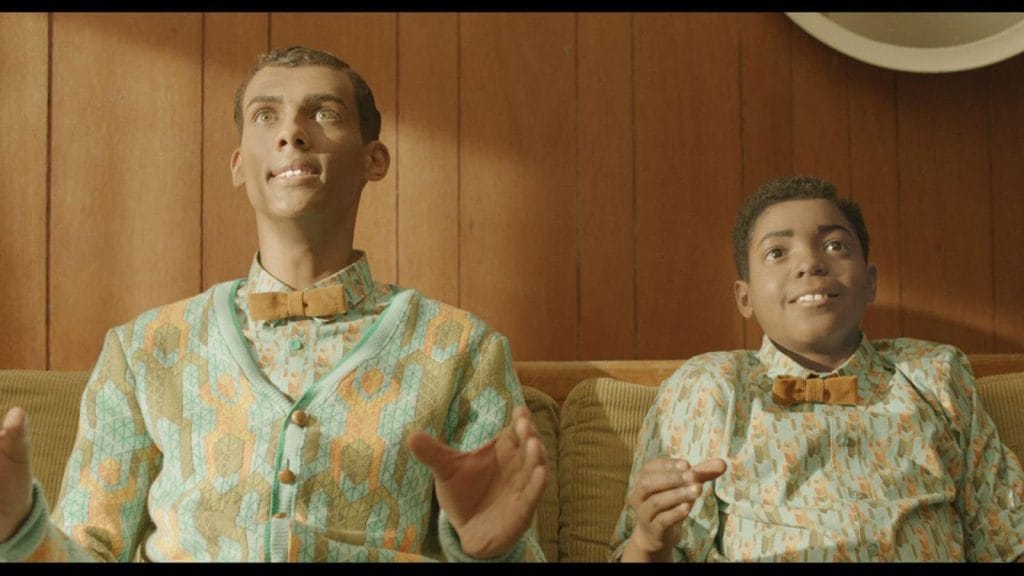
If you enjoyed learning with “Alors on danse”, continue your French-learning journey with songs that offer similar advantages.
- “Papaoutai” 🔊 – Stromae
- Focuses on family and emotions
- Clear enunciation and repeated phrases make it excellent for vocabulary retention
- Focuses on family and emotions
- “Formidable” 🔊 – Stromae
- Slower tempo, perfect for listening carefully to pronunciation
- Emotional storytelling teaches modern expressive vocabulary
- Slower tempo, perfect for listening carefully to pronunciation
- “Tous les mêmes” 🔊 – Stromae
- Repetitive chorus and present-tense structures
- Ideal for practicing rhythm and reflexive verbs
- Repetitive chorus and present-tense structures
- “Je te promets” 🔊 – Johnny Hallyday
- Classic ballad with clear enunciation
- Repetitive promises are great for learning sentence patterns
- Classic ballad with clear enunciation
- “Je vole” 🔊 – Louane
- Soft, heartfelt song
- Slow tempo helps beginners focus on syllable rhythm and clear pronunciation
- Soft, heartfelt song
Why these songs help learners
- Clear diction and strong repetition
- Emotional or cultural content that reinforces memory
- Useful structures for everyday French conversation
- Opportunities to practice shadowing and intonation
Start with one song at a time, follow the Jolii-style method (listen → read → shadow → recall), and gradually expand your repertoire. This keeps learning structured, fun, and culturally immersive.
Useful Expressions to Remember from “Alors on danse”

Some repetitive phrases and structures from the song are extremely practical for real-life conversations:
| Expression | Meaning | Why It’s Useful |
| Alors on danse 🔊 | So we dance | High-frequency coping expression; template for Alors on + verb |
| Alors on chante 🔊 | So we sing | Repetition reinforces pronunciation and rhythm |
| Qui dit… dit… 🔊 | Who says… says… | Teaches cause-effect logic and sentence linking |
| Et là tu te dis 🔊 | And then you tell yourself | Example of reflexive verbs for internal thoughts |
| Encore 🔊 | Again / still | Simple adverb frequently used in spoken French |
Conclusion
You now know that through a French song analysis, “Alors on danse” is a compact and structured tool for learning French. Thanks to it, learners can acquire practical vocabulary for everyday life and emotions, practice the present tense, reflexive verbs, and cause-and-effect structures, as well as integrate rhythm, liaisons, and natural pronunciation.
By combining active listening, shadowing, and mini-tests, learners turn music into a fun and undeniably effective study method. Modern language-learning tools, like Jolii AI, can guide you step by step, making this approach even easier and more personalized. Let music become your secret shortcut to mastering French pronunciation.
Takeaway
Learning French through music works best with songs like “Alors on danse”:
- Clear diction → Easy to follow and repeat
- Repetitive structures → “Alors on…” and “Qui dit… dit…” stick in memory
- Cultural & emotional vocabulary → Words related to work, money, stress, and coping become memorable
Once you see how music naturally reinforces vocabulary, grammar, and pronunciation, you’ll want to explore more French songs, each offering new expressions and cultural insights.Next step: Let Jolii AI help you practice these phrases, track your progress, and create a personalized listening routine so that learning French feels effortless and fun.