When I passed the TOPIK I exam (reading and listening comprehension), I felt like I was making real progress in my Korean studies. But here’s the thing – I wasn’t actually speaking. The apps that I used focused on grammar drills and vocabulary, but didn’t push me to speak Korean out loud. So, I ended up testing dozens of tools in search of the learn Korean application that actually helps you speak. I gathered a list of the 9 best apps to learn Korean that provide a balance between speaking, listening, and grammar practice.
It’s hard to find a one-size-fits-all tool, but you can mix these apps to help you build conversational confidence.
Why I Wasn’t Speaking Korean (Even After Passing TOPIK I)
When I was preparing for TOPIK I, my listening improved fast, but speaking lagged behind painfully. I remember freezing when a Korean friend asked me a simple follow-up question I hadn’t rehearsed. That’s when I realized: recognition isn’t production. Most apps train the first and assume the second will magically follow.
What “Learning Korean Fast” Actually Means
Learning Korean fast doesn’t mean becoming fluent in a few weeks. It means reaching usable speaking confidence as early as possible, without waiting until everything feels “perfect.”
Many learners make steady progress in reading and listening, but speaking lags behind because it’s postponed. Apps often reward recognition — tapping answers, matching words — while real conversation requires retrieval, speed, and tolerance for mistakes.
In practice, learning Korean fast means:
- starting to speak early, even with limited vocabulary
- practicing short, realistic responses instead of full sentences
- training reaction time, not just comprehension
Apps that introduce speaking from the beginning — through roleplay, repetition, or guided conversation — tend to produce faster real-world results, even if the process feels uncomfortable at first. That discomfort is usually a sign that active learning is happening.
1. Jolii: Best Low-Pressure Way to Speak Korean Naturally
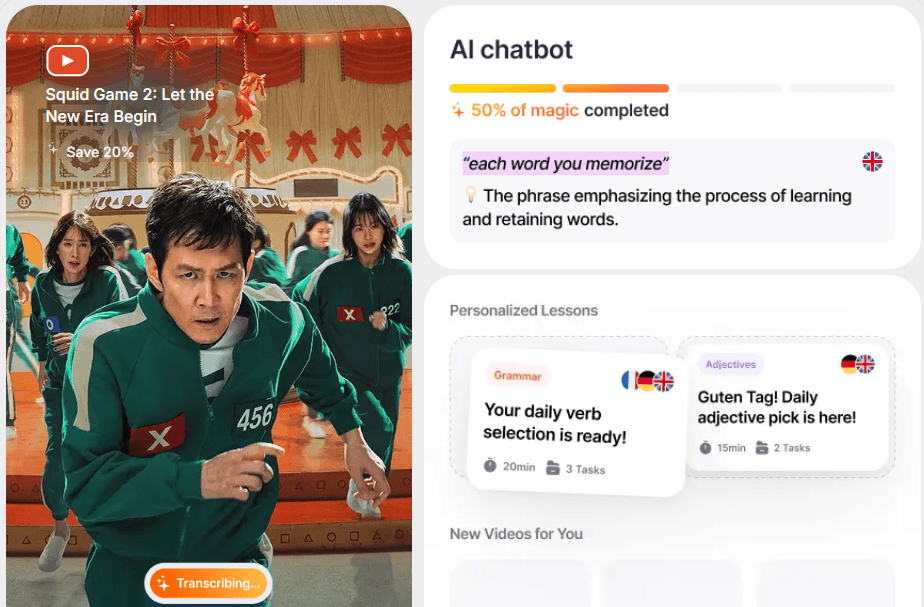
Using AI, Jolii lets you practice real-life scenarios, such as ordering food and meeting friends. It adapts to what you say, so it feels like you’re genuinely speaking with a conversation partner. Also, Jolii relies on recent studies that showed how AI chatbots can help eliminate the speaking anxiety in learners trying to communicate in Korean. The app’s AI tools contribute to creating a low-pressure speaking environment.
Jolii integrates language practice directly into the entertainment you already love. By connecting with platforms like Netflix and YouTube, it turns your favorite K-content into personalized Korean lessons.
This means you can absorb conversational Korean, including modern slang. Something I particularly struggle with is (informal speech), which most courses briefly cover. That’s why I like Jolii’s real-media approach – you get access to a full spectrum of polite and casual speech, depending on the content you choose. The app is new, so you can expect some bugs and small issues, but it is very promising so I definitely recommend giving it a try.
Who it’s best for: Media-savvy intermediate learners who want a fun, emotionally engaging way to build speaking confidence without feeling judged.
Pros
- Adaptive AI gives feedback on pronunciation and tone
- Supports offline downloads (great for commuting)
- Instant word lookups and dual subtitles help with listening
- Transcription features that can be switched off as you make progress
Cons
- Less suitable for complete beginners
- Requires integration with external streaming services (like Netflix) for full potential
Speaking tools: AI chatbot, voice record feature with pronunciation analysis
2. Teuida: Best for Realistic Video-Based Speaking Practice
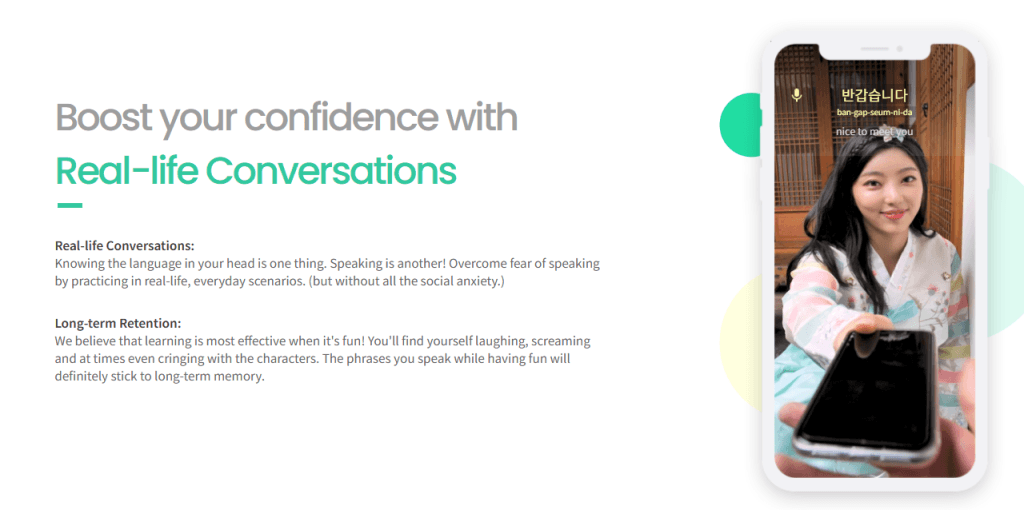
Teuida’s name literally means “to open up” and its mission is to open your mouth to Korean. Among the apps on this list, this one is the most speaking-centric. You immediately take part in activities, like ordering at a coffee shop or talking to a friend, where you have to speak the lines to move forward.
The app teaches Korean through short video scenarios featuring Korean actors and even K-pop idols. You respond to the characters by speaking, making the experience feel like you’re inside a mini K-drama.
Because the emphasis is on real-time video streaming, lessons typically aren’t available for offline use. There are romanization features, and you can switch them off as you become more comfortable with Hangul.
Who it’s best for: K-drama fans who want to instantly apply vocabulary and phrases in context
Pros
- Uses real actors for natural context
- Strong focus on speaking, not memorizing
- Builds confidence through repeated roleplay
- Immersive storytelling keeps motivation high
Cons
- Limited grammar explanations
- Smaller lesson library compared to competitors
Speaking tools: Video roleplays, speech recording, and pronunciation matching that show you how closely you mirror native speech
3. Lingory: Best App to Learn Korean Pronunciation
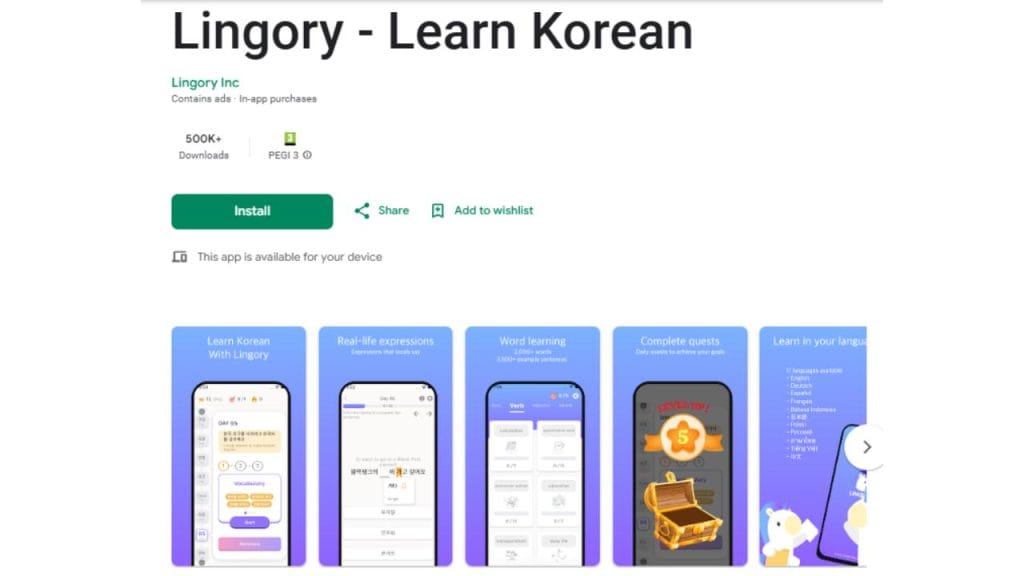
Lingory’s content uses dialogues spoken by native speakers, which means you are learning authentic Korean. There are mini modules that help you practice pronunciation, listening comprehension, and conversational patterns. That said, Lingory doesn’t neglect grammar. It provides concise grammar explanations, moving you logically from the basics of Hangul to intermediate sentence structures.
Lingory’s core lessons integrate all four skills (listening, reading, writing, and speaking). This helps bridge the gap between pure conversation apps and textbook-style learning.
Who it’s best for: Learners who want strong foundations in pronunciation and listening before diving into free-form conversation.
Pros
- Curriculum designed by certified Korean teachers
- High audio quality with professional voice actors
- Downloadable lessons for offline use
- Optional romanization features
Cons
- Less interactive speaking practice
- Limited cultural context compared to immersive apps
Speaking tools: Recorded audio comparisons with native speakers, AI pronunciation feedback
4. Rehearse App: Best for Practicing Real Conversations on Your Own
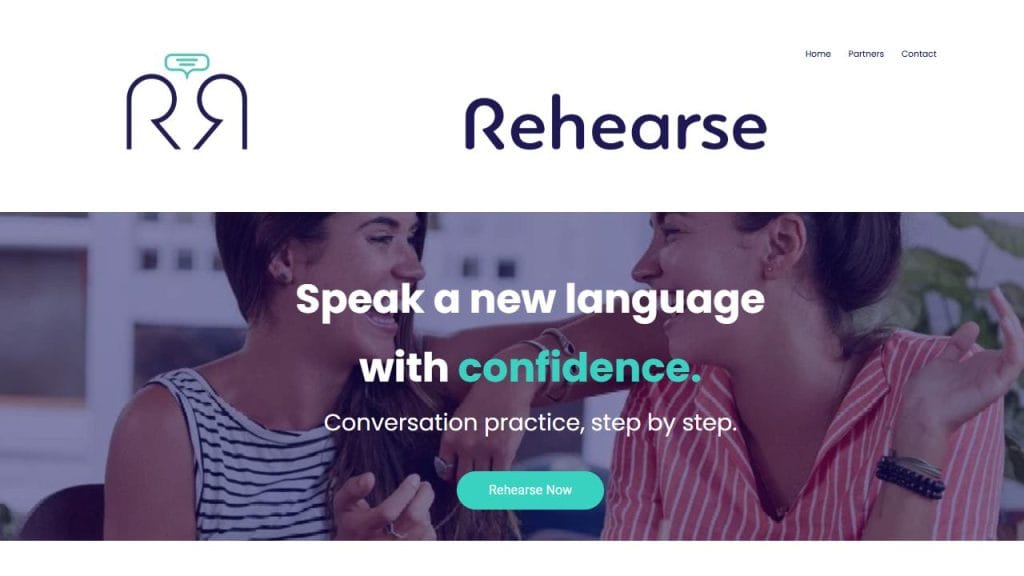
The Rehearse app’s method is repetition and gradual independence. You start with structured conversations where you’re given every line. After multiple repetitions, the app gradually removes the cues until you can say the full dialogue from memory.
It’s particularly useful for practicing specific conversations like introducing yourself or asking for recommendations. This Korean learning application encourages consistent daily speaking, and with repeated practice your speaking anxiety levels will likely lower.
The app partners with popular Korean content creators, so you get exposure to authentic, everyday conversations.
Who it’s best for: Korean learners who want structured, low-pressure practice ahead of real-life situations.
Pros
- Customizable and downloadable conversation scripts
- Simple interface
- Optional romanization features
- Content includes polite and informal speech
Cons
- May feel too repetitive if you prefer a constant influx of new material
- Less immersive than AI-driven apps
Speaking tools: Voice recording, side-by-side native comparison, and customizable conversation templates
5. Eggbun: Best App to Learn Korean Through Chatting
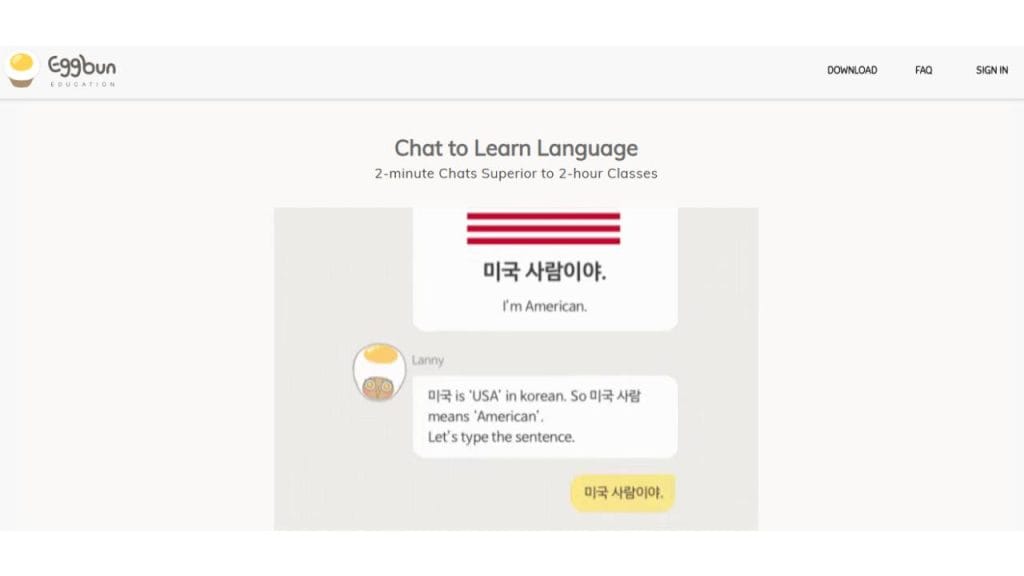
Eggbun is like having a friendly Korean tutor in your pocket. The app is built entirely around a chatbot named Lanny, who guides you through lessons by having conversations with you. Lessons feel casual and friendly, which makes learning less intimidating.
It covers all four core skills by prompting you to respond to Lanny’s questions, practice typing in Korean, and record your voice. I like how you get exposure to polite and casual speech, as the chat format gives Lanny a chance to explain the two in context.
Who it’s best for: Beginner-level, introverted learners, especially K-culture fans who feel most comfortable learning through digital communication.
Pros
- Great cultural explanations
- Easy for absolute beginners
- Engaging personality-based teaching style
- Optional romanization features
Cons
- Limited free content
- Less advanced speaking practice
Speaking tools: Short speaking prompts, pronunciation practice, and conversational drills included in chat lessons
6. Mango Languages: Best for Structured Conversation Patterns
Mango Languages offers a linguistic approach to learning Korean. Lessons follow predictable patterns, with a strong focus on functional conversation. It’s a straightforward method that builds speaking confidence through repetition.
The app teaches polite Korean almost exclusively, but it does highlight when casual speech is appropriate.
The good thing about Mango is that many public libraries and universities offer free access to it. Check for eligible institutions – you may be able to use premium tools free of charge.
Who it’s best for: Learners who need an immediately practical skill set for travel, business, or quick social interaction
Pros
- Practical dialogues and complete sentences from the start
- In-depth cultural notes
- Offline learning (audio included)
- Optional romanization features
Cons
- Less variety in lesson types
- Can be challenging for absolute beginners if you don’t take time to review
Speaking tools: Voice comparison and call-and-response conversation practice (using review slides)
7. LingoDeer: Best for Grammar with Speaking Integration
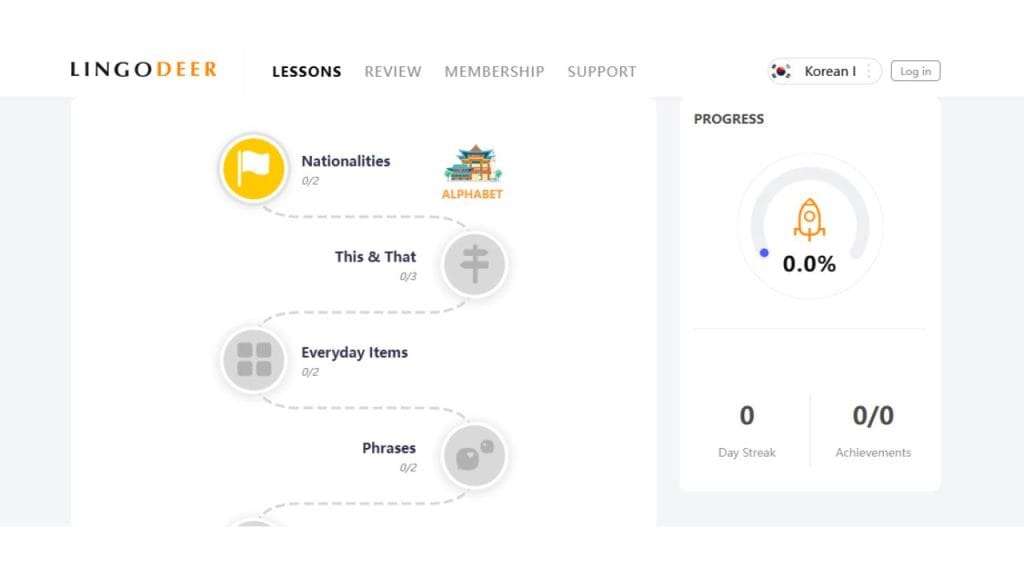
LingoDeer includes detailed, easy-to-understand grammar explanations for tricky concepts like verb conjugation. While not a pure speaking app, it has speaking prompts and recording features that help reinforce new structures.
The app is specifically designed for East Asian languages, which makes the structure stronger (as opposed to apps adapted from European languages.)
Who it’s best for: Beginners who want strong grammar foundations without sacrificing speaking practice.
Pros
- High-quality, native audio content
- Structured, beginner-friendly units
- Different politeness levels introduced from the start
- Offline access, including audio
Cons
- Speaking features are not the main focus
- Limited free content
Speaking Tools: pronunciation prompts, speaking quizzes
8. Pimsleur: Best for Audio-Driven Speaking Training
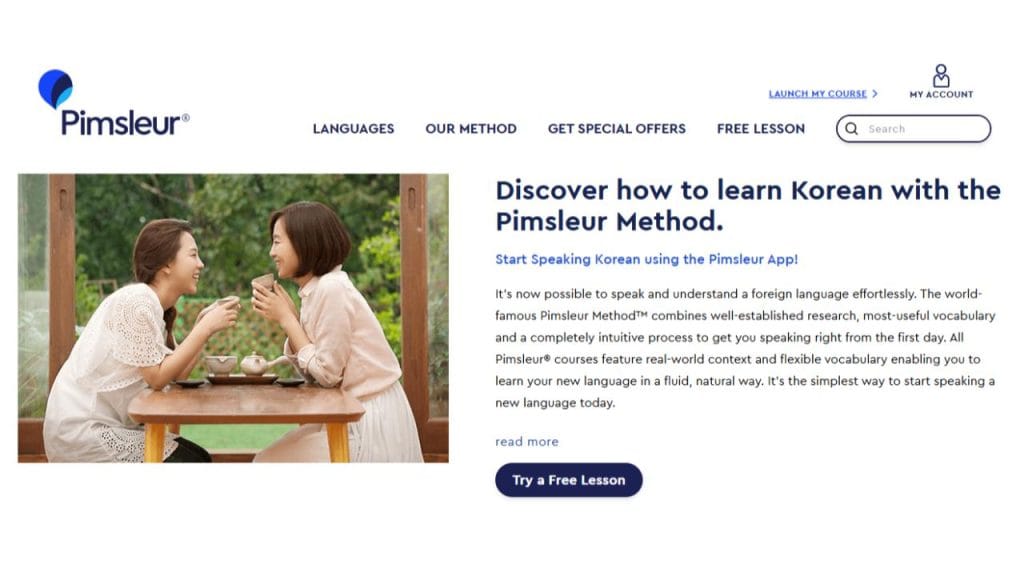
Pimsleur focuses on speaking and listening above everything else. It uses 30-minute audio lessons based on a Spaced Repetition System (SRS) applied to conversation. This system requires you to speak new phrases at precise intervals to lock them into your long-term memory.
The app prioritizes polite forms. Also, there are Read lessons (a premium feature) that show Hangul and the option to display simplified phonetic romanization (this can be turned off.)
Who it’s best for: Learners with a busy schedule who want to learn hands-free.
Pros
- Strong speaking-first method
- Offline access
- AI Voice Coach feature provides real-time pronunciation feedback
- Reliable, consistent course design
Cons
- Pricey compared to other similar apps
- Less emphasis on Korean reading practice and writing (minimal visuals)
Speaking tools: Call-and-response audio, AI Voice coach
9. Cake: Best for Bite-Sized Speaking Practice With Real Clips
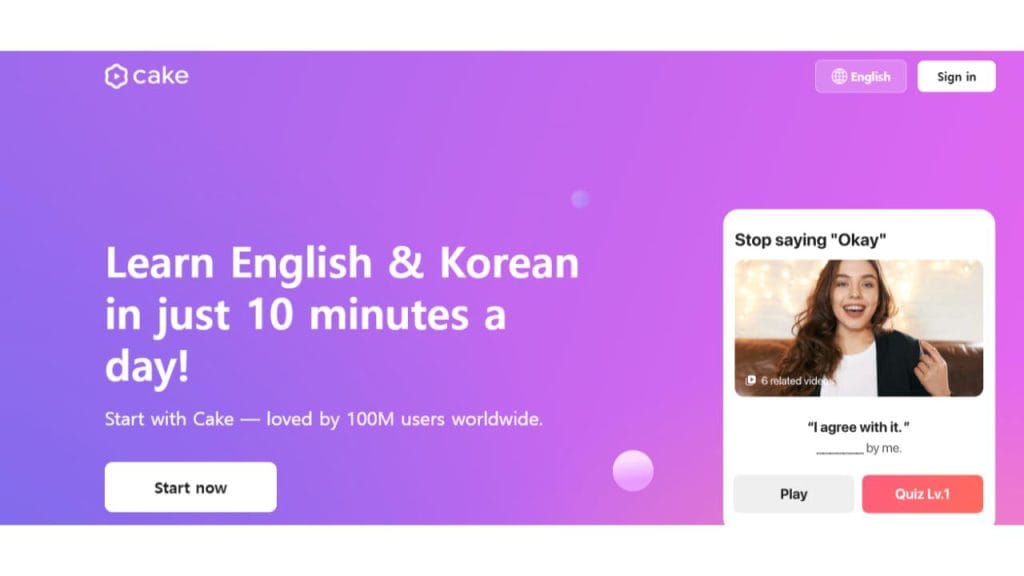
Cake uses short clips from dramas, movies and YouTube to teach real Korean expressions and pronunciation. It’s BTS-heavy (perfect for ARMYs like myself), with plenty of casual spoken Korean and slang.
The app is good for building vocabulary and improving listening comprehension. Its short, fun structure is highly motivating, designed to fill those 5-10 minute gaps in your day.
Also, you can save clips and practice sets to practice offline.
Who it’s best for: Learners who want daily exposure to real Korean speech patterns in short bursts.
Pros
- Bite-sized learning
- Daily expression clips
- AI pronunciation check
- Subtitles in Hangul and romanization
Cons
- Limited offline access
- Can feel repetitive without structured study
Speaking tools: Shadowing real video clips, pronunciation mimic challenges
Which Korean App Should You Choose?
There’s no single best app to learn Korean — the right choice depends on how you learn and where you struggle. Here’s a quick way to decide:
- If you understand Korean but freeze when speaking
→ Jolii or Teuida
These apps push you to respond out loud in low-pressure, guided scenarios. - If you want strong pronunciation and listening foundations
→ Lingory
Clear native audio and focused pronunciation practice help you build confidence before free conversation. - If grammar clarity helps you feel secure
→ LingoDeer or Mango Languages
Structured explanations combined with speaking prompts work well for analytical learners. - If you commute or want hands-free learning
→ Pimsleur
Audio-first lessons train reaction speed and spoken recall without screens. - If you only have 5–10 minutes a day
→ Cake
Short, real-video clips are ideal for daily exposure and maintaining motivation.
Most learners make the fastest progress by combining two tools — one for structure and one for speaking — rather than relying on a single app.
Final Thoughts
If you want a tool that finally helps you break through the “I can understand Korean but can’t speak it” wall, Jolii is a good place to start. But, there isn’t a single best app to learn Korean. The trick is to mix the materials and cover all four skills to help you reach fluency faster.
FAQ
What is the best app to learn Korean?
There is no one-size-fits-all solution when it comes to learning Korean application. It’s best to combine several tools, for example Lingory or LingoDeer for grammar and Jolii for AI-powered speaking practice.
How can I learn Korean by myself?
Try to immerse yourself in Korean language and culture as much as possible. Use language apps and online materials, watch K-dramas and movies, and listen to K-pop and Korean podcasts. The best app to learn Korean combines the real content you already enjoy with language practice, intensifying the learning effect without a human tutor.
What is the best app to learn Korean for complete beginners?
Eggbun is a fun, chat-based app that can help you practice Hangul. Also, the Mango app is clear, predictable, and easy to follow. You learn basic conversation patterns from the ground up.
What is the best app to learn Korean for busy learners?
Cake’s short lessons work well if you only have 5-10 minutes every day. Also, Pimsleur’s audio-driven lessons are great if you want a hands-free approach.
Which learn Korean application is best for improving speaking and pronunciation?
Lingory works great for practicing pronunciation, while Teuida and Jolii offer immersive practice with engaging video content. Jolii also offers AI tools that give pronunciation feedback.