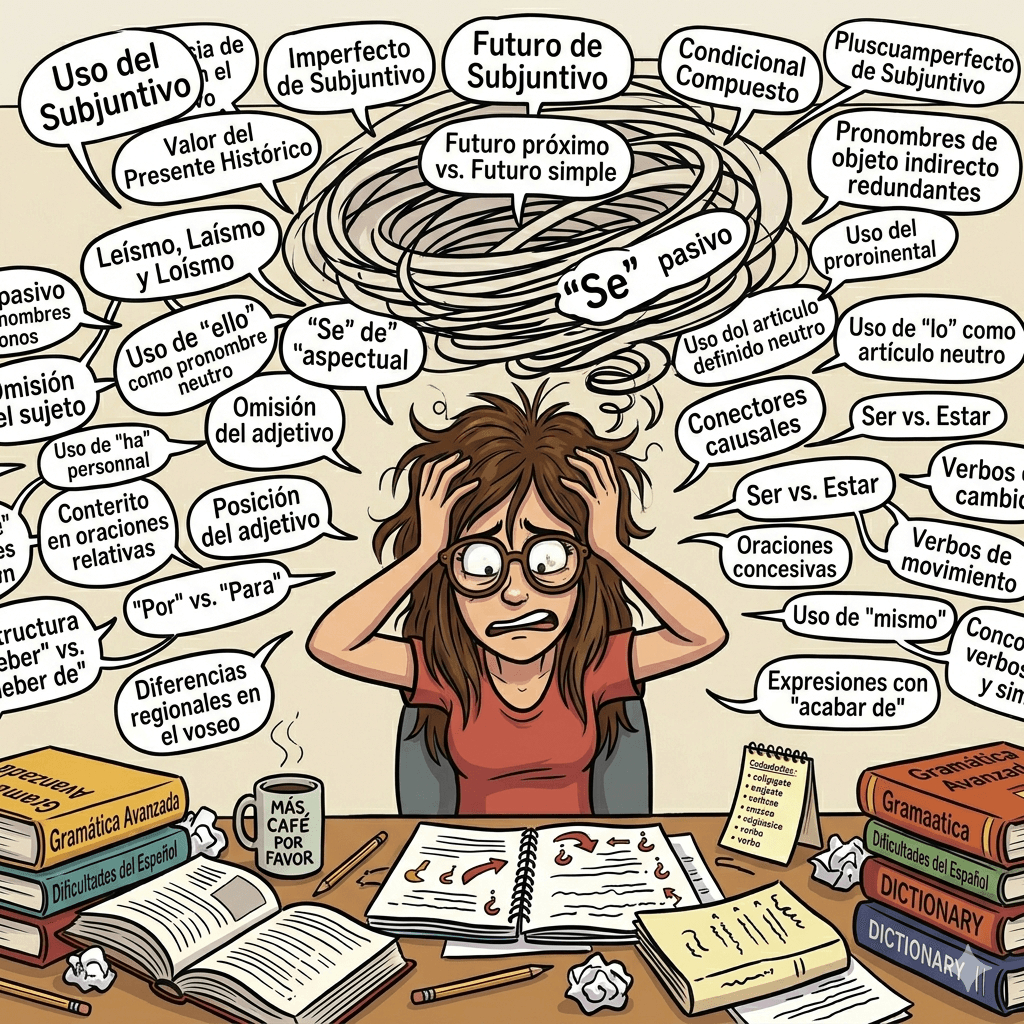
Motivation often drops after three months of language learning because the brain transitions from novelty-driven progress to effort-driven progress.
During the first weeks, everything feels new and rewarding.
After a few months, improvement becomes slower and less visible.
Many learners interpret this stage as failure and start switching apps or methods.
However, this stage is not failure.
It is the point where language learning shifts from excitement to long-term skill building.
Why Motivation Feels High at the Beginning
At the start of learning a language, progress appears very fast.
You learn basic greetings.
You recognize familiar words.
You can form simple sentences.
These early gains trigger a strong psychological reward loop.
Every small improvement feels meaningful because your brain is experiencing rapid novelty.
This stage is sometimes called the “honeymoon phase” of language learning.
However, this rapid progress cannot continue forever.
If you want to understand why early progress feels so fast at the beginning, you might also enjoy our article “Why Beginners Progress Fast — and Then Suddenly Stop,” which explains the psychology behind rapid beginner improvement.
What Happens Around the Three-Month Mark
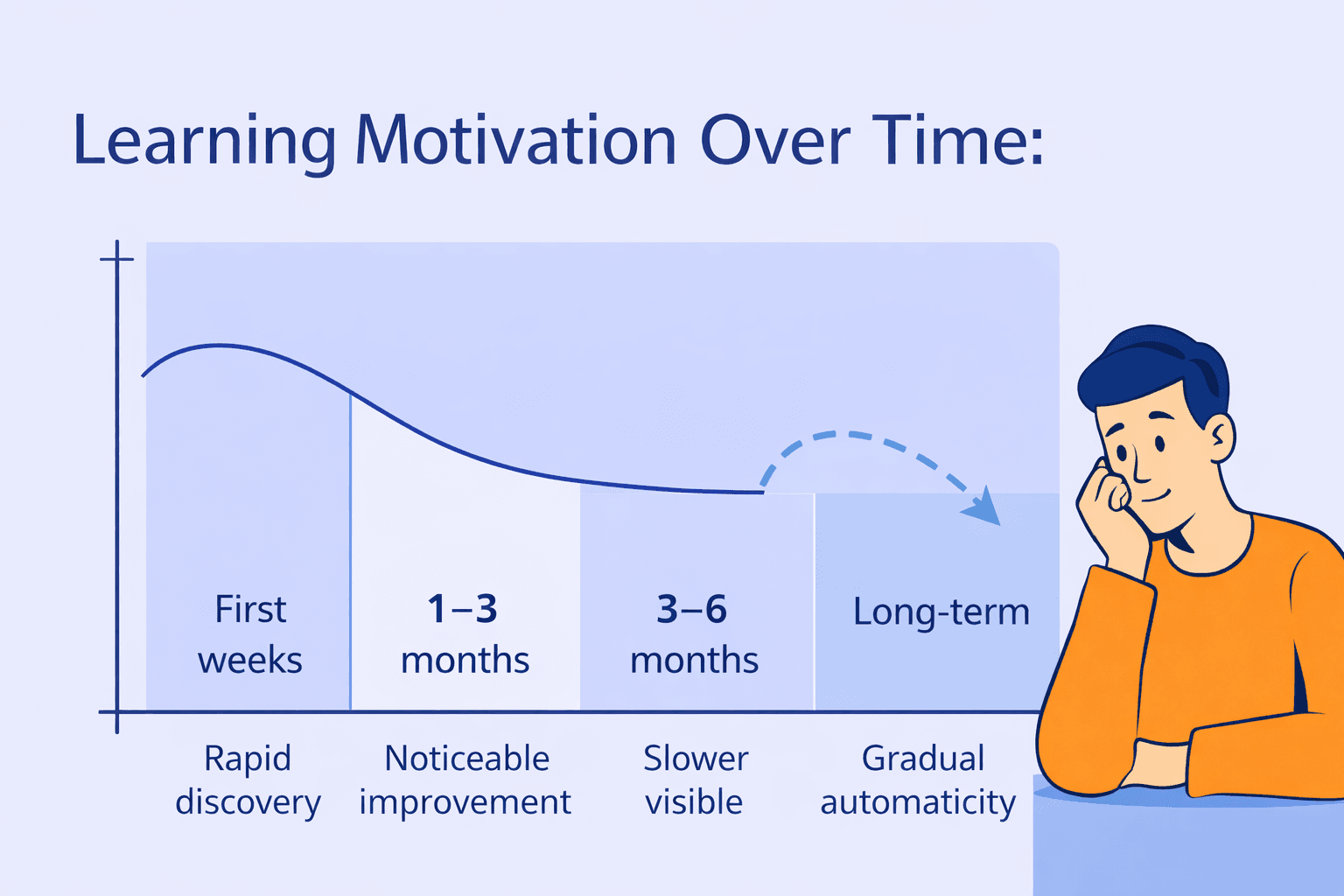
After a few months, the learning process changes.
Instead of discovering completely new things, learners start reinforcing existing knowledge.
This creates a perception problem.
Progress still happens, but it becomes less visible.
| Learning Phase | What It Feels Like |
| First weeks | Rapid discovery |
| 1–3 months | Noticeable improvement |
| 3–6 months | Slower visible progress |
| Long-term | Gradual automaticity |
The three-month mark is often where the brain begins building deeper language processing, which takes longer to notice.
The Psychology Behind Motivation Drop
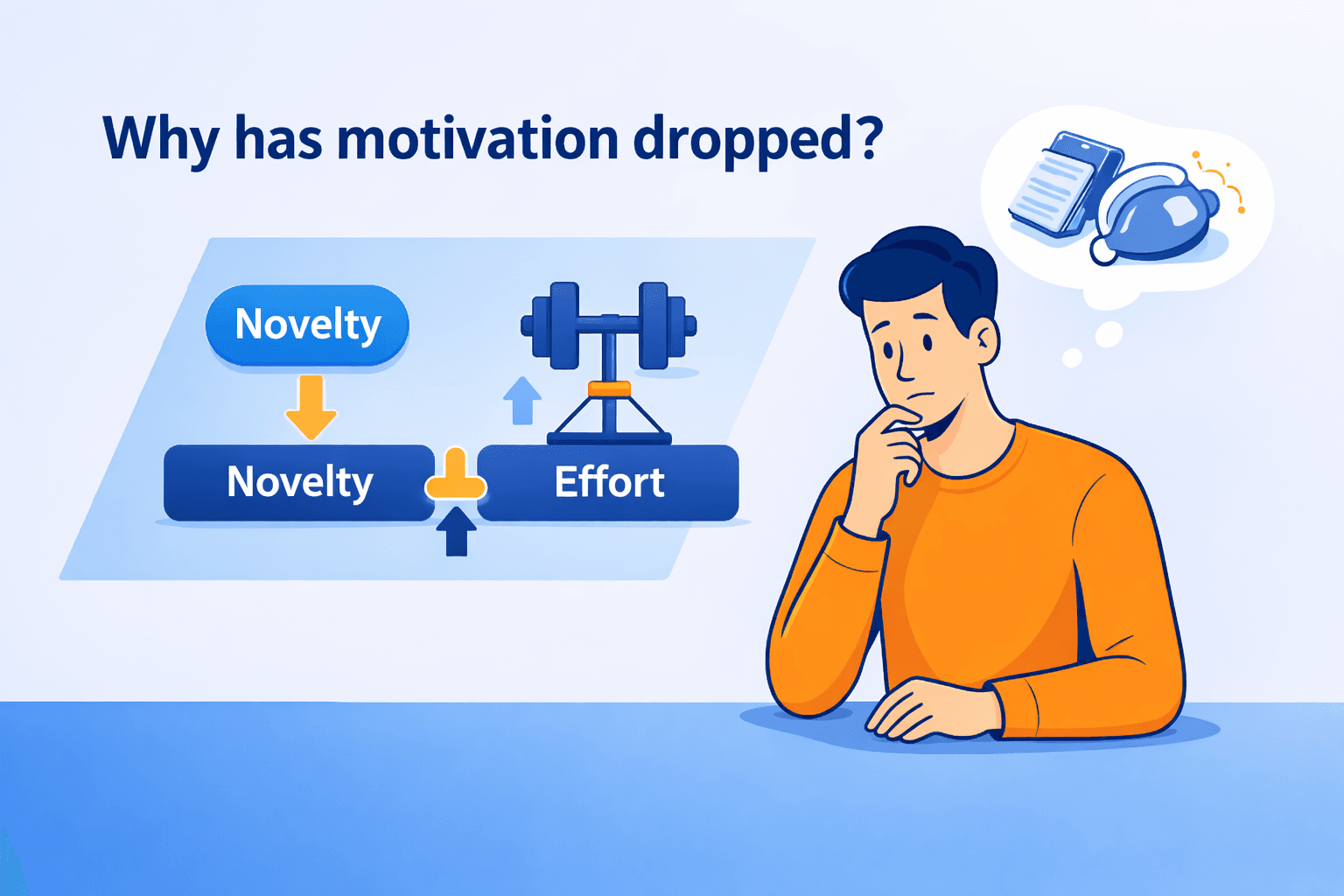
From a cognitive perspective, motivation is closely tied to perceived progress.
Early learning provides frequent positive feedback.
Later stages involve repetition, refinement, and consolidation.
Research in motivation psychology shows that novelty activates dopamine systems in the brain, which explains why early learning feels exciting.
As novelty decreases, intrinsic motivation must replace initial excitement.
In other words, motivation does not disappear — the source of motivation simply changes.
A Moment I Realized This Personally
I remember reaching about three months of studying Korean and feeling strangely discouraged.
At the beginning I had learned dozens of new words every week.
By month three, I was spending more time reviewing familiar grammar patterns.
It felt like progress had stopped.
But later I realized something important: conversations that previously felt impossible had slowly become easier. The improvement had not disappeared — it had simply become less obvious.
Why the Plateau Is Actually a Good Sign
The three-month plateau often signals that your brain is shifting from memorization to automatic processing.
Early learning focuses on recognition.
Later learning focuses on retrieval.
This deeper stage involves:
- Stabilizing grammar patterns
- Strengthening vocabulary retrieval
- Improving listening processing speed
Learning feels slower because your brain is reorganizing knowledge into more efficient systems.
Educational psychology refers to this stage as skill consolidation, where repeated retrieval strengthens long-term memory pathways.
Paradoxically, the phase that feels slow is often when real fluency begins developing. Our guide “A1 to A2 Is Easy. A2 to B1 Is Where Most People Quit” explores why the transition to intermediate learning feels dramatically harder.
Common Signs You Are in the “3-Month Slump”

Many learners experience similar signals during this stage:
- Motivation drops unexpectedly
- Learning feels repetitive
- Progress seems invisible
- Speaking still feels difficult
These signals do not indicate failure.
They simply mean the learning process has moved beyond the novelty stage.
How to Maintain Motivation After the First Plateau
The first time my motivation dropped, I assumed something was wrong.
For the first two months, learning had felt surprisingly easy.
Every week there was something new — a word, a phrase, a grammar pattern.
Progress was obvious.
Then around the third month, that feeling disappeared.
I was still studying.
Still watching videos.
Still learning new words.
But the sense of progress wasn’t as clear anymore.
Nothing dramatic had changed — but the excitement was gone.
At first I thought it meant I was losing interest in the language.
Later I realized something simpler was happening.
The early stage of learning is full of visible milestones.
Later stages are quieter.
The brain is still learning, but the changes are harder to notice from day to day.
Once I understood that, the plateau felt much less discouraging.
What helped most was making a few small adjustments in how I approached learning.
1. Stop Thinking in Months — Think in Exposure Hours
One thing I used to say a lot was:
“I’ve been learning this language for three months.”
It sounds like a meaningful measurement.
But when you think about it, it doesn’t really tell you anything.
Three months could mean ten hours of exposure.
Or it could mean two hundred.
The brain doesn’t measure time in months.
It measures contact with the language.
I once tried to estimate my actual exposure hours.
The number was much smaller than I expected.
Some weeks I had practiced consistently.
Other weeks I had only watched a few short clips.
So my “three months of learning” wasn’t actually that many hours.
That realization changed how I thought about progress.
Language learning started to feel less mysterious.
Instead of asking “Why am I still struggling?”
I started asking:
“How much time has my brain actually spent with this language?” That question is much easier to answer — and much less frustrating
2. Change the Feeling of Practice
Another thing that slowly drains motivation is repetition without variation.
At the beginning, repetition feels productive because everything is new.
But after a while, repeating the exact same activity every day can start to feel mechanical.
I noticed this when I was practicing short listening dialogues.
At first I would simply listen and repeat the lines.
For a few days it worked well.
Then it started to feel dull.
The material was still useful — but the routine had become predictable.
What helped was not changing the material.
It was changing the way I used it.
Some days I listened just to understand the general meaning.
Other days I repeated the sentences slowly and focused on pronunciation.
Sometimes I read the transcript and looked at how the sentences were built.
And occasionally I paused the audio and tried answering the speaker myself.
The dialogue stayed exactly the same.
But the experience of practicing it felt different.
Those small changes made the practice feel more alive again.
3. Notice the Small Signs of Progress
For a long time I believed progress meant learning something new.
A new grammar rule.
A new vocabulary list.
Another sentence pattern.
But eventually I started noticing something else.
Some of the most satisfying moments happened when familiar phrases suddenly became effortless.
Small responses began appearing in my mind automatically.
Things like:
- “That makes sense.”
- “I think so.”
- “Maybe later.”
- “I’m not sure.”
They’re tiny pieces of language, but they appear constantly in real conversations.
At some point those phrases stopped feeling like something I had to construct.
They just appeared.
Speaking didn’t suddenly become perfect.
But it felt lighter.
Those moments are easy to miss, because they don’t look dramatic.
But they’re often the clearest signs that fluency is slowly developing.
And once you begin noticing them, motivation usually returns on its own.
Because instead of feeling stuck, you start to see that the language is quietly becoming part of how you think.
FAQs
1. Is losing motivation after three months normal?
Yes. Many learners experience this stage once the initial novelty disappears and the brain begins deeper consolidation of language patterns.
2. Does motivation eventually return?
Often it does. When learners start noticing improvements in comprehension or speaking speed, motivation tends to increase again.
3. How can I avoid quitting during this stage?
The key is changing your focus from excitement to systems — tracking exposure hours, practicing retrieval, and introducing variety in learning activities.
A Simple Way to Stay Consistent
One reason motivation drops is that many learners rely entirely on self-discipline.
Structured learning environments can help maintain engagement during slower phases of progress.
For example, Jolii’s gamified learning system introduces small achievements and progress feedback that help maintain motivation over longer learning periods. These small rewards can make consistent practice feel more satisfying, even when progress is gradual.
If you’re interested in why progress sometimes feels repetitive during language learning, you might also enjoy this article:
Why Repetition Alone Doesn’t Build Fluency (But Variation Does)
It explains why repeating the same exercises can feel productive but does not always strengthen real fluency, and how small variations in practice help the brain build more flexible language skills.
Final Thoughts
Motivation dropping after three months is not a sign that language learning has stopped working.
It is simply the moment when the learning process becomes deeper and less visible.
Early progress is exciting because it is obvious.
Later progress is meaningful because it becomes automatic.
The learners who reach fluency are usually not the most motivated at the beginning.
They are the ones who continue practicing even after motivation temporarily fades.
Consistency eventually turns effort into fluency.