Memorizing “hola” is not the only thing you need if you want to know how to say hi in Spanish. Although a well-placed “hola” works in many circumstances, natives usually depend on lots of other greetings—both polite and casual. Which greeting to use depends on the situation. A greeting can show if you want to be formal, where you come from, and how you’re feeling. This guide helps you with 12 natural greetings in Spanish that native speakers use in Spain and Latin America. Plus, you will learn about usage, and how they sound in actual conversations.
How to Say Hi in Spanish — Quick Answer
If you’re wondering how to say hi in Spanish, the key is choosing a greeting that matches the situation, the time of day, and the region. While “hola” works everywhere, native speakers often use more natural alternatives. Learning them helps you sound friendly, confident, and more fluent from the start. The most common options include:
- Hola – universal and always correct
- Buenos días – morning greeting in Spanish
- Buenas – casual and widely used
- ¿Qué tal? – friendly and conversational
- ¿Qué onda? / ¿Qué pasa? – informal, regional greetings
Why Learning Natural Spanish Greetings Matters
When you use only “hola”, you can appear polite, but at the same time restricted. On the other hand, applying native-style greetings can give someone confidence and can bring more fluid talk. Greetings also usually set how things will go. If a greeting sounds formal, it shows respect; but casual greetings are better for close connections. So, learning different ways to say hi in Spanish does increase understanding and also knowledge of culture.

How to Say Hi in Spanish by Context
Formal Situations
Use these greetings in professional or respectful settings. They work well in offices, emails, and first meetings.
- Buenos días — IPA: /ˈbwe.nos ˈdi.as/ — Approx: “BWEH-nos DEE-as”
- Buenas tardes — IPA:/ˈbwe.nas ˈtaɾ.des/ — Approx: “BWEH-nas TAR-des”
- Buenas noches — IPA:/ˈbwe.nas ˈno.tʃes/ — Approx: “BWEH-nas NO-ches”
Casual Conversations
For friends or relaxed settings, try these. They sound natural without feeling too informal.
- Buenas — IPA: /ˈbwe.nas/ — Approx: “BWEH-nas”
- ¿Qué tal? — IPA: /ke ˈtal/ — Approx: “keh TAL”
- ¿Todo bien? — IPA: /ˈto.ðo ˈβjen/— Approx: “TO-tho BYEN”
Regional and Slang Greetings
If you want to sound local, then take a pick depending where you are. Spanish slang varies a lot across countries, even in greetings.
- Spain: ¿Qué pasa? — IPA: /ke ˈpa.sa/ — Approx: “keh PA-sa”
- Mexico: ¿Qué onda? — IPA: /ke ˈon.da/ — Approx: “keh ON-da”
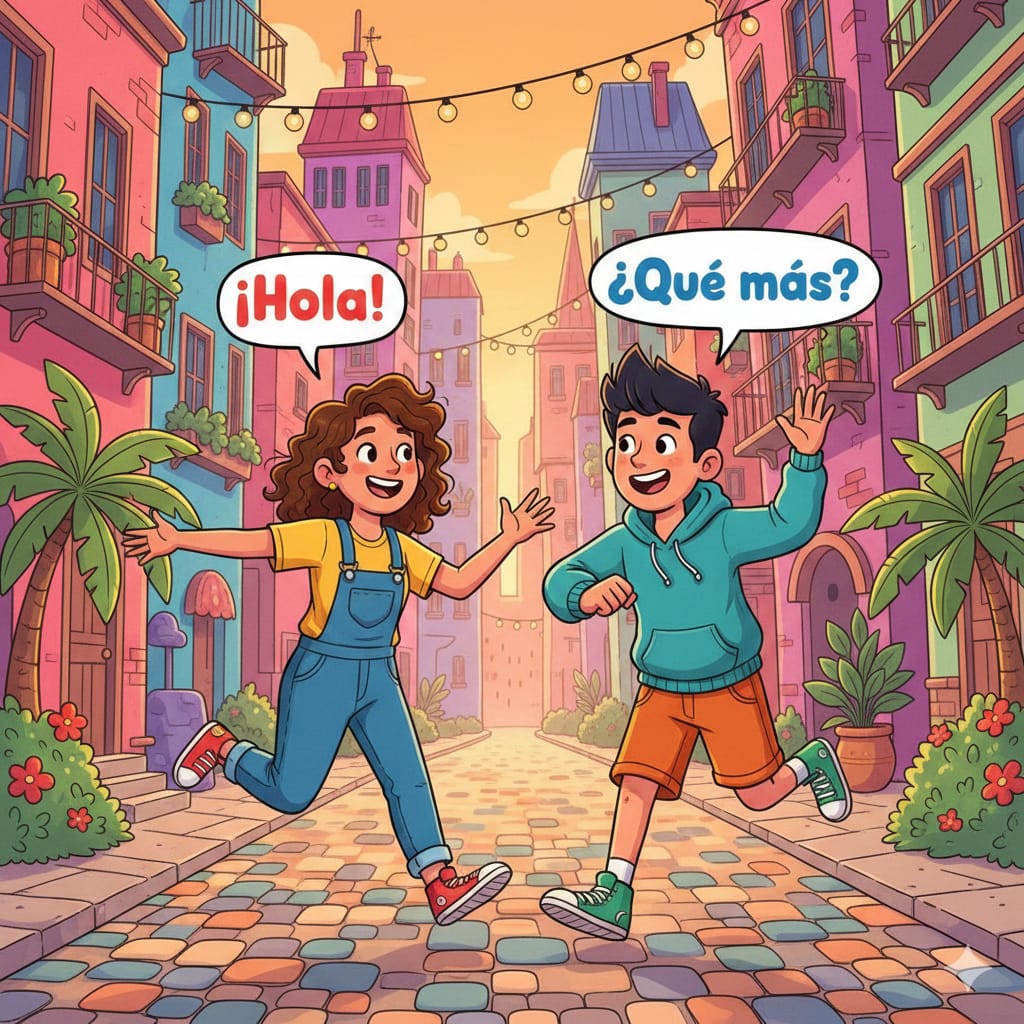
- Colombia: ¿Qué más? — IPA: /ke ˈmas/ — Approx: “keh MAS”
- Argentina: ¿Cómo andas? — IPA: /ˈko.mo ˈan.das/ — Approx: “KOH-mo AN-das”
How to Say Hi in Spanish: 12 Greetings Natives Actually Use
The chart beneath presents twelve usual methods to say hi in Spanish. It also gives locations used, their meanings, and in what situations natives apply them.
| Spanish Greeting | Region | English Meaning | Example Sentence |
| Hola | Spain & Latin America | Hi / Hello | Hola, ¿cómo estás? — Hi, how are you? |
| Buenos días | Spain & Latin America | Good morning | Buenos días, profesor. — Good morning, professor. |
| Buenas tardes | Spain & Latin America | Good afternoon | Buenas tardes a todos. — Good afternoon, everyone. |
| Buenas noches | Spain & Latin America | Good evening/night | Buenas noches, nos vemos mañana. — Good night, see you tomorrow. |
| Buenas | Spain (very common) | Hi | Buenas, ¿todo bien? — Hi, all good? |
| ¿Qué tal? | Spain & Latin America | How’s it going? | ¿Qué tal el día? — How’s your day going? |
| ¿Cómo estás? | Spain & Latin America | How are you? | Hola, ¿cómo estás hoy? — Hi, how are you today? |
| ¿Qué pasa? | Spain | What’s up? | ¿Qué pasa, todo tranquilo? — What’s up, all good? |
| ¿Qué hubo? | Latin America | What’s up? | ¿Qué hubo contigo? — What’s up with you? |
| ¿Qué onda? | Mexico & Central America | What’s up? | ¿Qué onda, llegaste bien? — What’s up, did you arrive okay? |
| ¿Todo bien? | Spain & Latin America | All good? | Hola, ¿todo bien por aquí? — Hi, all good here? |
| ¿Cómo vas? | Latin America | How’s it going? | ¿Cómo vas con el trabajo? — How’s work going? |
Practice Activities to Learn How to Say Hi in Spanish
To help you remember what you learned, do these tasks by yourself:
- Greetings Change: Make five little conversations using greetings that are different. Use something besides “hola” for each.
- Pick by Time: Drill on picking greetings for morning, afternoon, or at night time.
- Local Watching: View short video clips from Spanish areas, noticing which greetings appear.
- Mirror Talk: Say greetings out loud in the mirror for confidence and to get more fluent.

FAQs — How to Say Hi in Spanish
What is the most popular way to say hi in Spanish?
You can never go wrong saying “hola”. It works in all regions and situations.
Is “buenas” a polite greeting?
Yes. It sounds polite but is also casual. It’s great for everyday conversations.
Is it ok to use “¿Qué tal?” as a greeting?
Absolutely. It works as both “hi” and “how’s it going.”
Do Spain and Latin America have different greetings?
Yes. As we know, “hola” works everywhere, but they have unique casual greetings.
Do Spanish greetings change by time of day?
Yes. Buenos días, buenas tardes, and buenas noches depend on the time.
Finding a way to say hi in Spanish allows you to have conversations that sound more natural. Still, regular practice and saying these words in real situations is what actually counts. Jolii.ai lets you try greetings in real situations, get feedback on your Spanish very fast, and make your confidence improve. Join us!