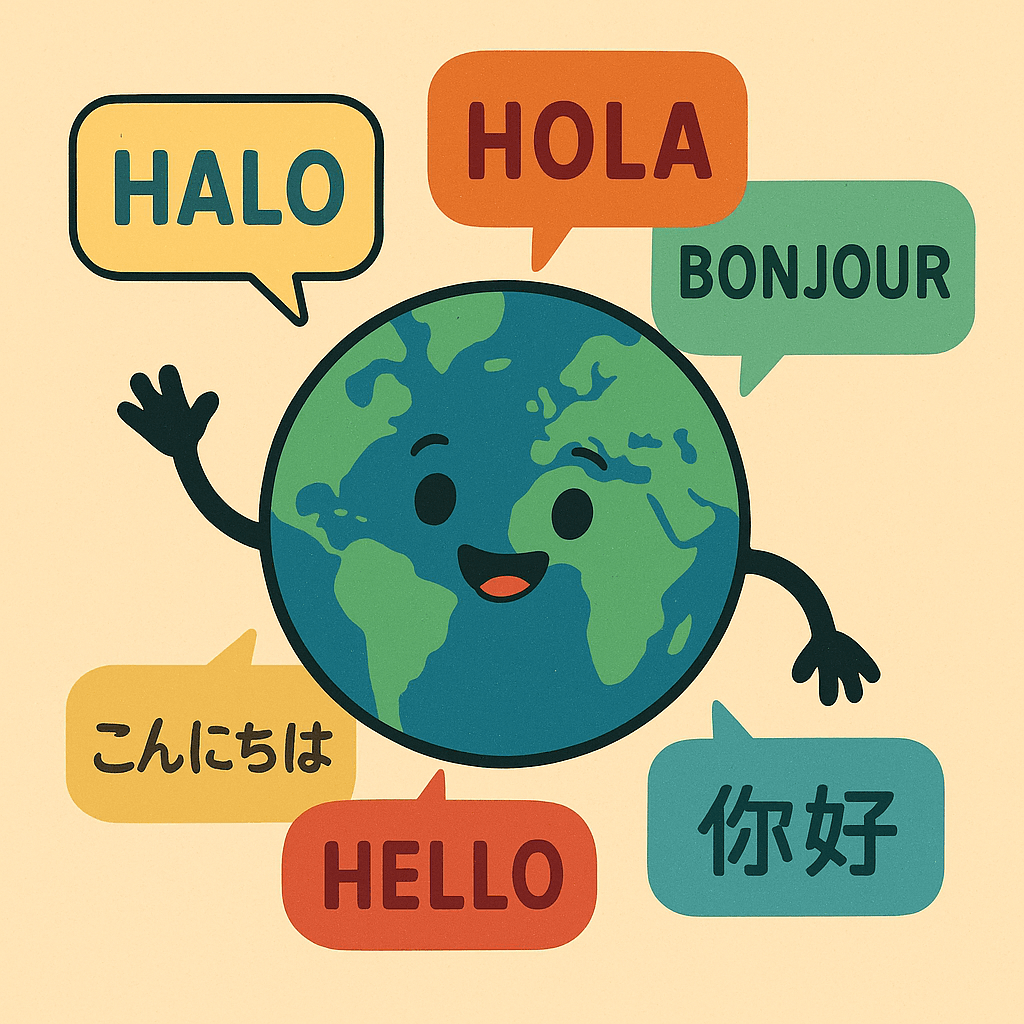
Saying hello is one of the simplest and most universal ways to create a connection. Yet, the word we use, and the way we use it, changes beautifully from culture to culture. Whether you’re traveling, working in international contexts, or simply curious, learning how to say hello in different languages is an easy gateway into deeper cultural understanding.
Let’s explore together 25 ways to say hello around the world. Let’s journey from the warm Hola of Spain to the respectful Konnichiwa of Japan, greeting people confidently, wherever you are.
How to Say Hello in Different Languages – Quick Reference
Here are popular greetings from around the world:
| # | Language | How to Say Hello |
|---|---|---|
| 1 | English | Hello |
| 2 | Spanish | Hola |
| 3 | French | Bonjour / Salut |
| 4 | German | Hallo / Guten Tag |
| 5 | Italian | Ciao / Buongiorno |
| 6 | Portuguese | Olá |
| 7 | Mandarin Chinese | 你好 (Nǐ hǎo) |
| 8 | Japanese | こんにちは (Konnichiwa) |
| 9 | Korean | 안녕하세요 (Annyeong haseyo) |
| 10 | Arabic | مرحبا (Marhaba) |
| 11 | Hindi | नमस्ते (Namaste) |
| 12 | Swahili | Jambo / Habari |
| 13 | Turkish | Merhaba |
| 14 | Greek | Γειά σου / Γειά σας (Yá sou / Yá sas) |
| 15 | Russian | Привет / Здравствуйте (Privet / Zdravstvuyte) |
| 16 | Polish | Cześć / Dzień dobry |
| 17 | Dutch | Hallo / Goedendag |
| 18 | Thai | สวัสดี (Sawasdee) |
| 19 | Vietnamese | Xin chào |
| 20 | Hebrew | שלום (Shalom) |
| 21 | Persian (Farsi) | سلام (Salam) |
| 22 | Indonesian | Halo / Selamat siang |
| 23 | Tagalog (Filipino) | Kamusta |
| 24 | Swedish | Hej |
| 25 | Zulu | Sawubona |
Scroll down for pronunciation tips, cultural notes, and examples for each greeting!
Why Learning “Hello” Matters
Learning how to say hello in different languages is more than memorizing a word. It’s a simple gesture that shows respect, curiosity, and openness. Even one local greeting can shift how people perceive you, turning a transactional moment into a warm human exchange.
It Builds Instant Rapport
A greeting in someone’s native language often sparks a smile. It shows that you made the effort to acknowledge their culture, even if you’re not fluent.
It Helps You Travel Smarter
Understanding when and how to say hello can prevent awkwardness. In some countries, a firm handshake is the norm; in others, a slight bow or a cheek kiss is expected.
Hello Opens the Door to Cultural Nuance
Many greetings reflect values: respect in Japan, warmth in Latin America, or formality in Germany. Saying hello the right way helps you understand how a society communicates.
How to Say Hello in 25 Different Languages
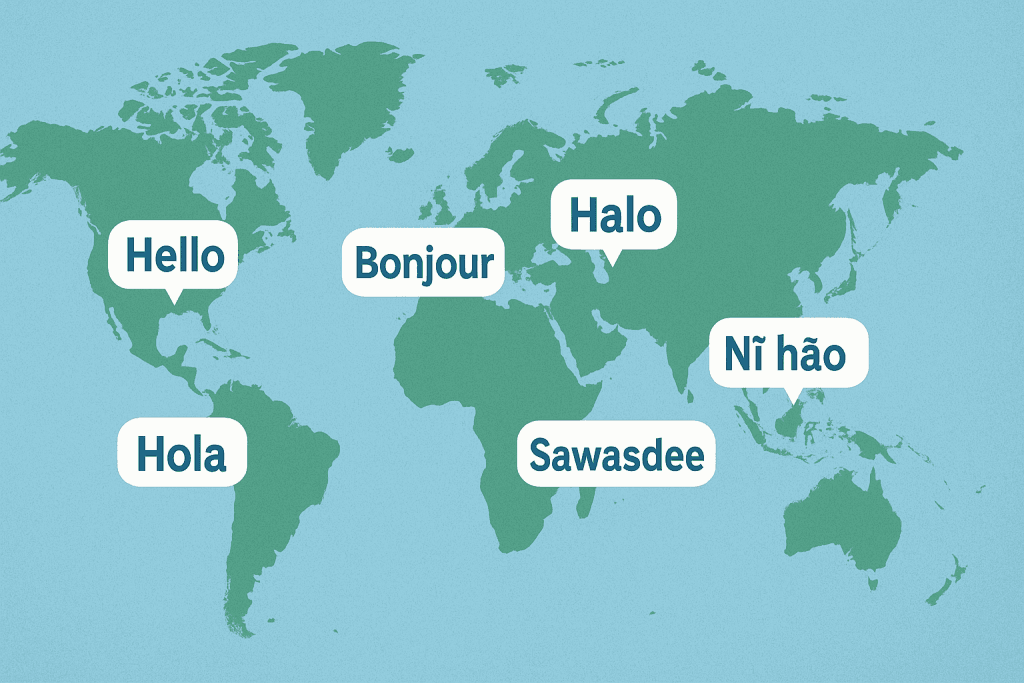
You’ll find 25 greetings, each with pronunciation, cultural notes, and when to use them.
1. Hello in English – Hello
Pronunciation: heh-LO
Context: Universal and versatile. Works in formal and informal situations.
Cultural note: In English-speaking countries, a quick “Hi!” is often even more common.
2. Hello in Spanish – Hola
Pronunciation: OH-lah
Context: Used at any time of the day. In the morning, Buenos Dias is commonly used as a way to say good morning in Spanish.
Cultural note: In Spain and much of Latin America, Spanish greetings may include cheek kisses depending on familiarity.
3. Hello in French – Bonjour / Salut
Pronunciation: bon-ZHOOR / sah-LOO
Context: Bonjour (formal) for daytime; Salut (informal) for friends.
Cultural note: Always greet when entering shops, it’s considered polite.
4. Hello in German – Hallo / Guten Tag
Pronunciation: HAH-lo / GOO-ten tahk
Context: Hallo is casual, Guten Tag more formal.
Cultural note: Handshakes are common in professional settings.
5. Hello in Italian – Ciao / Buongiorno
Pronunciation: chow / bwon-JOR-no
Context: Ciao is casual; Buongiorno is polite.
Cultural note: Italians often greet with enthusiasm and gestures.
6. Hello in Portuguese – Olá
Pronunciation: oh-LAH
Context: Used in Portugal and Brazil.
Cultural note: Brazilians typically use warmer tones and body language.
7. Hello in Mandarin Chinese – 你好 (Nǐ hǎo)
Pronunciation: nee-how
Context: Suitable for most social situations.
Cultural note: A slight nod is a respectful gesture.
Personally, Chinese is one of my favourite greetings because it literally means “you good”, caring and direct at the same time.
8. Hello in Japanese – こんにちは (Konnichiwa)
Pronunciation: kon-nee-chee-wah
Context: Daytime greeting.
Cultural note: Bowing replaces handshakes in most contexts.
9. Hello in Korean – 안녕하세요 (Annyeong haseyo)
Pronunciation: an-nyong ha-seh-yo
Context: Polite and widely used.
Cultural note: A small bow often accompanies the greeting in Korean.
10. Hello in Arabic – مرحبا (Marhaba)
Pronunciation: mar-ha-ba
Context: Universal greeting across many Arabic-speaking countries.
Cultural note: Hospitality and warm welcomes are important cultural values.
11. Hello in Hindi – नमस्ते (Namaste)
Pronunciation: nah-mah-stay
Context: Can be formal or spiritual.
Cultural note: Usually said with hands pressed together (añjali mudra).
12. Hello in Swahili – Jambo / Habari
Pronunciation: JAM-bo / ha-BAH-ree
Context: Jambo is basic; Habari means “What’s the news?”
Cultural note: Common in Kenya, Tanzania, and East Africa.
13. Hello in Turkish – Merhaba
Pronunciation: mehr-hah-bah
Context: Works anytime.
Cultural note: Hospitality is central to Turkish culture, greetings often come with tea.
14. Hello in Greek – Γειά σου / Γειά σας (Yá sou / Yá sas)
Pronunciation: yah-soo / yah-sahs
Context: Yá sou informal; Yá sas formal.
Cultural note: Expect warm tones and friendly body language.
15. Hello in Russian – Привет / Здравствуйте (Privet / Zdravstvuyte)
Pronunciation: pree-VYET / zdrah-stvooy-tyeh
Context: Privet casual; Zdravstvuyte formal.
Cultural note: Handshakes are firm, and smiles are usually reserved for close acquaintances.
16. Hello in Polish – Cześć / Dzień dobry
Pronunciation: cheshch / jen DOH-brih
Context: Cześć casual; Dzień dobry formal/daytime.
Cultural note: Greetings tend to be polite and reserved in Polish.
17. Hello in Dutch – Hallo / Goedendag
Pronunciation: HAH-lo / khoo-duhn-dakh
Context: Informal vs. formal.
Cultural note: Directness is valued in Dutch culture.
18. Hello in Thai – สวัสดี (Sawasdee)
Pronunciation: sah-wah-dee
Context: Works for all genders and situations.
Cultural note: Usually accompanied by a wai (hands together, slight bow).
19. Hello in Vietnamese – Xin chào
Pronunciation: sin chow
Context: Used broadly in greetings.
Cultural note: Tone matters in Vietnamese, intonation can slightly change meaning.
20. Hello in Hebrew – שלום (Shalom)
Pronunciation: shah-LOHM
Context: Means “peace,” used for hello and goodbye.
Cultural note: Warm and symbolic greeting with deep cultural roots.
21. Hello in Persian (Farsi) – سلام (Salam)
Pronunciation: sah-LAHM
Context: Friendly and common in Iran and Afghanistan.
Cultural note: Hospitality is significant; greetings may be lengthy.
22. Hello in Indonesian – Halo / Selamat siang
Pronunciation: HAH-lo / suh-LA-mat see-ang
Context: Halo casual; Selamat siang for daytime politeness.
Cultural note: Cultural diversity creates many variations across the archipelago.
23. Hello in Tagalog (Filipino) – Kamusta
Pronunciation: kah-MOOS-tah
Context: Means “How are you?” but works as a hello.
Cultural note: Derived from Spanish ¿Cómo está?
24. Hello in Swedish – Hej
Pronunciation: hay
Context: Simple and universal.
Cultural note: Swedes value personal space, so greetings are friendly but not overly physical.
25. Hello in Zulu – Sawubona
Pronunciation: sah-woo-BOH-nah
Context: Literally “I see you,” used as hello.
Cultural note: Reflects the cultural emphasis on acknowledgment and presence.
Tips to Use These Greetings Naturally
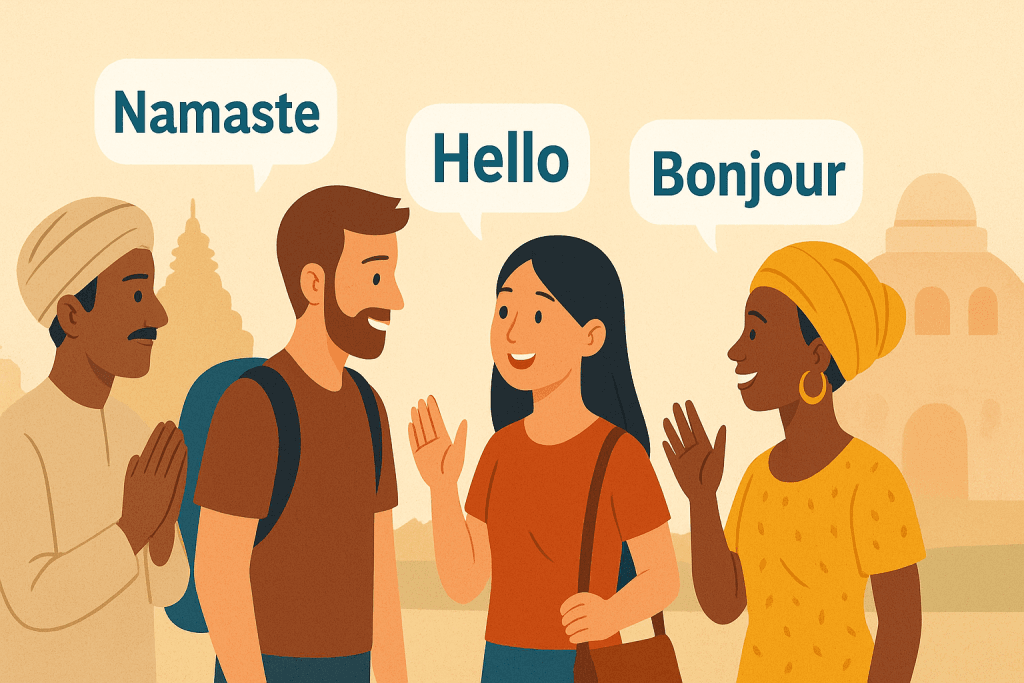
Learning how to say hello in different languages is a great start, but using these greetings naturally is what truly creates meaningful interactions. Here are some practical tips to help you sound confident and respectful anywhere.
Understand the Level of Formality
Some cultures rely heavily on formal vs. informal greetings.
- Use formal versions (like Japanese “Konnichiwa” or French “Bonjour”) with strangers or in professional settings.
- Switch to informal greetings only when the situation feels appropriate or when invited to do so.
Pay Attention to Body Language
A greeting is rarely just a word.
- Japan: A bow is expected.
- Middle East: Handshakes may be gentle or optional depending on gender.
- Latin America: Expect warmth, sometimes cheek kisses among friends.
- Nordic countries: Personal space matters, so a simple “Hej” and a smile is enough.
Listen Before Speaking
Observing how locals greet each other helps you tune into:
- Tone
- Volume
- Gestures
- Whether people smile, bow, or shake hands
This prevents missteps and shows cultural awareness.
Practice, Start Small & Combine
You don’t need to be perfect, but aim to get close. Most speakers appreciate the effort. If unsure, repeat the greeting after hearing it from a local, they’ll usually help you naturally.
If you’re overwhelmed, begin with 3-5 languages you’re likely to encounter in your travels or work. Build from there.
Across the world, the easiest universal language is warmth. Even if your pronunciation isn’t perfect, a smile makes the message clear.
Cultural Insights & Fun Facts About Greetings

Greetings are more than just words, they reveal fascinating cultural norms and stories. Here are some interesting insights and fun facts from around the world:
Bowing in Asia
In countries like Japan, Korea, and Thailand, bowing is a key part of greeting etiquette. The depth and duration of a bow can indicate respect, hierarchy, or formality.
Cheek Kisses Across Europe and Latin America
In countries like France, Spain, Italy, and Brazil, cheek kisses are common among friends and family. The number of kisses varies: two in France, three in the Netherlands, sometimes even four in parts of Switzerland.
Handshakes Around the World
A firm handshake is standard in Germany, Russia, and the U.S., but in Middle Eastern countries, handshakes can be softer, and sometimes women avoid shaking hands with men due to cultural norms.
Greetings That Mean “I See You”
The Zulu greeting “Sawubona” literally translates to “I see you,” emphasizing recognition and presence, showing that greetings can carry deep philosophical meaning.
Multi-Layered Greetings
Some languages include questions within the greeting. For example:
- Swahili “Habari?” means “What’s the news?”
- Tagalog “Kamusta?” literally asks “How are you?”
These greetings invite conversation right from the start.
“Hello” itself became globally recognized thanks to telephones. Alexander Graham Bell suggested it as the standard phone greeting, shaping a universal practice we still use today.
Summary
Saying hello in different languages is a small effort that opens big doors. Greetings reflect culture, respect, and connection. With 25 greetings covered here, complete with pronunciation, context, and cultural notes, you’re ready to make a great first impression. It’s a small step in language learning.
Takeaway
Saying hello involves understanding, respect, and presence. Start with a few greetings in the languages most relevant to your travels or work, observe local customs, and don’t forget to smile.
Quick FAQ
1. Do I need to learn exact pronunciation?
Not perfectly. Locals appreciate effort, and even a close attempt shows respect. Pair it with an appropriate gesture.
2. How do I know which greeting is formal or informal?
Check cultural context and relationship. For instance, use Bonjour in French for strangers or Salut with friends. Observe how locals greet each other.
3. Can greetings vary within one country?
Absolutely. Many countries have regional differences or variations for age, social hierarchy, or time of day. Learning multiple forms is helpful.
Ready to master greetings and boost your cultural confidence? Tools like Jolii AI can help you practice pronunciation, create personalized language flashcards, and learn interactive cultural notes, making your journey of learning hello in different languages fun, easy, and effective!