Quick Answer:
The most common way to say “hello” in Italian is ciao, but it’s informal and best used with friends. In polite or professional situations, Italians usually say buongiorno or buonasera. The right greeting depends on formality, time of day, and who you’re speaking to.
Ciao, come va? (Hi, how’s it going?) Saying “hello” in Italian is one of the first and most important things you will learn when studying the language. It is important to learn to understand what other people are saying when they greet you, as well as for knowing different ways to greet other people yourself. Let’s take a look at some of the many ways to say “hello” in Italian.
14 Ways to Say “Hello” in Italian
The first step to speaking Italian starts with saying “hello.” Starting with simple, everyday words like greetings helps learners build confidence quickly — one of the reasons Italian is often considered an easy language to begin with. Luckily, there are plenty of different ways to say hello depending on your mood, the situation, and who you are talking to.
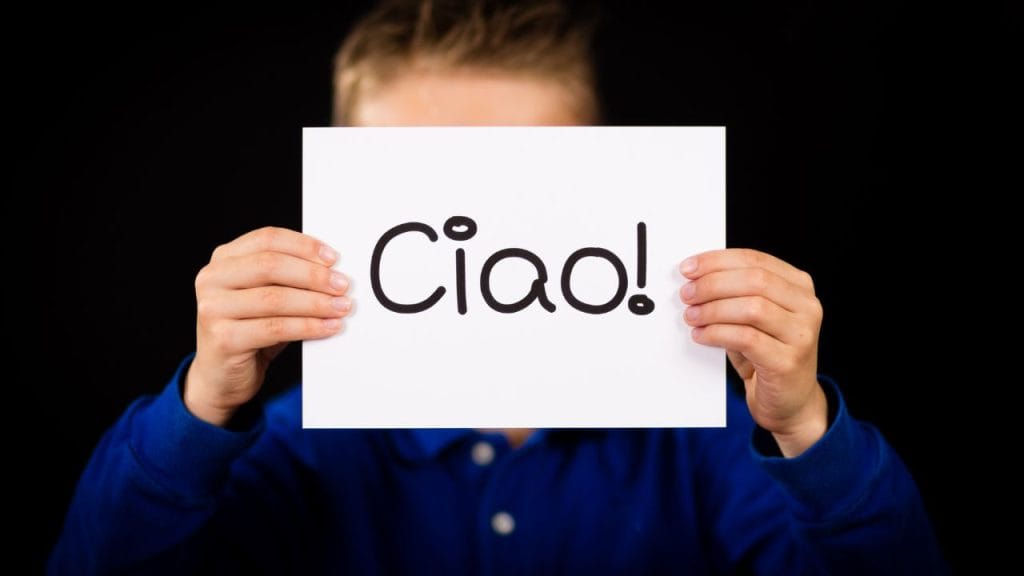
1. Ciao (Hi/Hello/Bye)
- Pronunciation: /chow/
Chances are, you’ve heard this one before. “Ciao” is the most common way to say “hello” in Italian, but there is something you may not know about it. “Ciao” is the greeting reserved for people you know, like friends, family, and coworkers you see every day. There is a different word for formal greetings (more on that later), so if you want to be completely correct and polite, try to remember to use “ciao” only with those you are close to.
2. Salve (Hello/Hi)
- Pronunciation: /sahl-veh/
Remember how I just said that there is a more formal way than “ciao” to greet someone? Well this is it! When meeting someone for the first time or speaking to an authority figure, you use the word “salve” to say “hello.” It means the same thing, but it is just used in situations where a bit more politeness and respectfulness is required.
3. Buongiorno (Hello/Good morning/Good day)
- Pronunciation: /bwohn-jor-noh/
“Buongiorno” is my personal favorite way to say “hello” in Italian. Whereas sometimes it can be a bit tricky to know if you should say “ciao” or “salve,” “buongiorno” is a greeting that can be used with literally anyone you meet without any regard to formality. It literally means “good day,” but also means “good morning,” so you can also use it when you are seeing someone for the first time that day.
4. Buon pomeriggio (Good afternoon)
- Pronunciation: /bwohn poh-meh-ree-joh/
“Buongiorno” is mostly used in the morning, but when it is past noon, you can start saying “buon pomeriggio.” This phrase means “good afternoon” and can be used with anyone, especially when you want to be polite. You might have never heard it before because, in practice, most Italians skip “buon pomeriggio” entirely and say directly “buonasera” whenever it is past 3pm.
5. Buonasera (Good evening)
- Pronunciation: /bwoh-nah-seh-rah/
Once you pass three or four in the afternoon, you can begin to greet others with the phrase “buonasera.” This means “good evening,” and can be used with anyone.
6. Come stai? (How are you?) (informal)
- Pronunciation: /koh-meh stah-ee?/
“Hello” isn’t the only way to greet someone. You will probably also want to know how they are. To find out, you can ask them “come stai?” which means “how are you” in Italian. This is for people you know, like friends and family.
7. Come sta? (How are you?) (formal)
- Pronunciation: /koh-meh stah?/
“Come sta?” is the formal way to ask “how are you?” The verb stare is conjugated for the formal “you” form (Lei) as opposed to the informal “you,” so use this with people you don’t know well or people who are in authority.
8. Tutto bene? (All good?)
- Pronunciation: /toot-toh beh-neh?/
“Tutto bene?” is a phrase many Italians use often. It is casual, and is used to mean “is everything alright?”
9. Che fai? (What are you doing?)
- Pronunciation: /keh fai?/
“Che fai?” is another casual way to see what someone is up to. It is most often used with friends and family and means literally “what are you doing?” (but in a friendly way, not a demanding one).
10. Come va? (How’s it going?)
- Pronunciation: /koh-meh vah?/
“Come va?” is a more casual way of saying “come stai?” It means something closer to “how’s it going?” and is used exclusively with friends and people you are close to.
11. Piacere (Nice to meet you)
- Pronunciation: /pya-cheh-reh/
Literally, “piacere” means “pleasure.” It is used when meeting someone for the first time to express that it is nice to meet them.
12.Ehi (Hey)
- Pronunciation: /eh-ee/
“Ehi” is a very informal greeting that you should only use with close friends. It is like the English “hey!” and is often used to get someone’s attention.
13. Benvenuto/a (Welcome)
- Pronunciation: /ben-veh-noo-toh/ (male) / ben-veh-noo-tah/ (female)
“Benvenuto” means “welcome” and can be used when inviting people into your house or to a party. Pay attention to this one, though, as the ending changes to “a” if you are speaking to a girl or woman, and changes to “i” or “e” when welcoming multiple people.
14. Tutto a posto? (Is everything okay?/Everything good?)
- Pronunciation: /too-toh ah poh-stoh?/
“Tutto a posto?” is another phrase that you will hear native Italian speakers say often. It literally means “is everything in place?” which means “all good?” or “is everything okay?” Use this when asking friends and family how things are going.
FAQs
How do you say “hello” in Italian?
The simplest way to say “hello” in Italian is “ciao.” While most Italians in Italy will accept this regardless of how well you know them, it is more polite to use the word “salve” to say “hello” to someone you don’t know well.
What does “ciao” mean in Italian?
“Ciao” can mean either “hello” or “goodbye” in Italian, and is used most in casual contexts.
Final Takeaway
There are many different ways to say “hello” in Italian. Hear them used by native speakers by watching videos with Jolii.ai today.