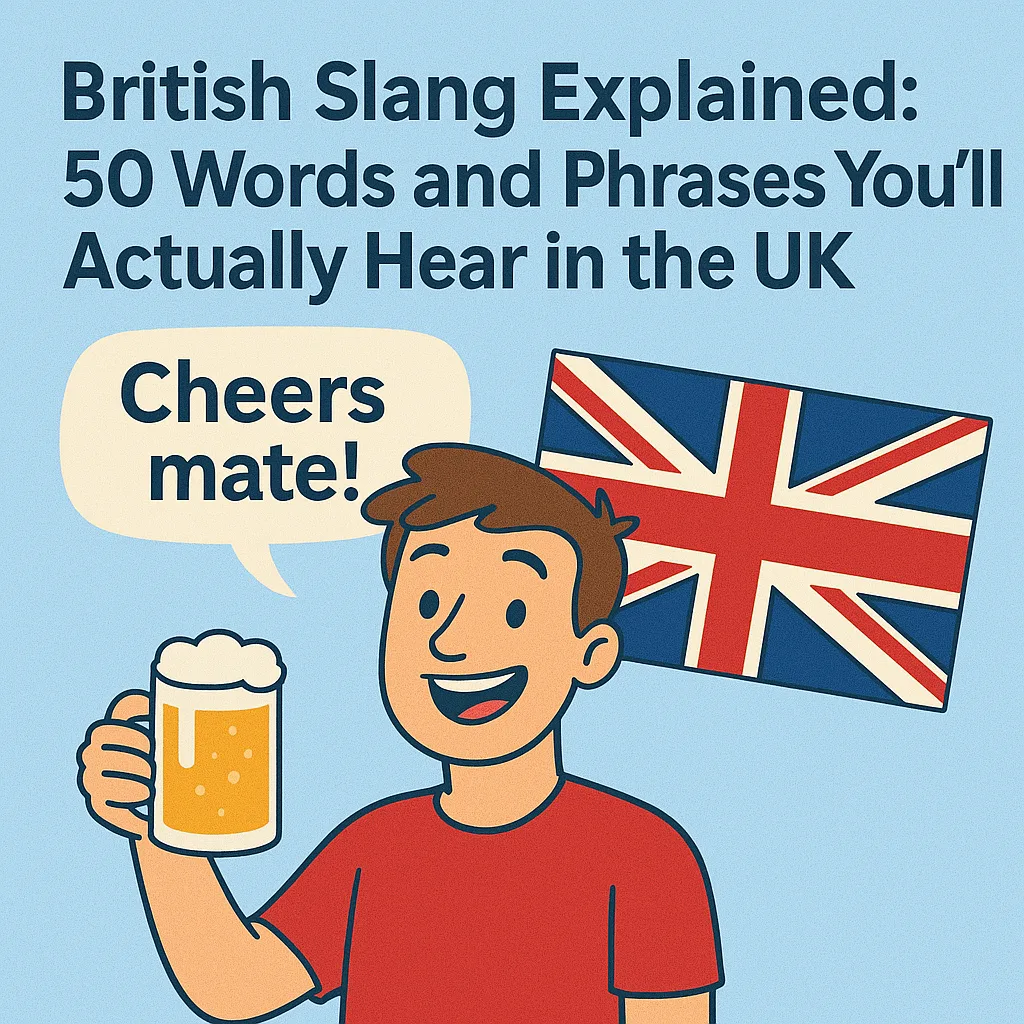
The UK—made up of England, Scotland, Wales and Northern Ireland—is full of unique regional culture, accents and expressions. One thing that often surprises first-time visitors is just how many different slang words you hear in everyday conversation. From London to Liverpool, Glasgow to Cardiff, each area has its own phrases and vocabulary that you’ll never hear anywhere else in the world.
If you want to understand real British English, learning British slang is essential. In this guide, I’ll explain 50 common British slang words and phrases that you’ll actually hear in the UK—helping you sound more natural, avoid confusion, and connect better with locals.
Common Everyday Words or Phrases
1. Cheers
Thanks / a friendly toast
2. Mate
Friend, buddy.
3. Knackered
Exhausted / very tired.
4. Chuffed
Pleased, proud, happy.
5. Dodgy
Suspicious, unsafe, low-quality.
6. Gutted
Devastated, deeply disappointed.
7. Fancy
To like someone (romantically) OR to want something.
“Do you fancy a cup of tea?”
8. Rubbish
Trash OR nonsense.
“That film was rubbish.”
9. Taking the piss
Making fun of someone/mocking.
10. Sorted
Organised or handled.
“No worries, it’s sorted.”
11. Ta
A casual way to say “thanks.”
12. Skint
Broke, no money.
13. Mint
Amazing, excellent.
14. Proper
Very / really. “That meal was proper good.”
15. Peng
Attractive/delicious (more common with younger people; mainly used in London).
16. Fit
Good-looking.
17. Stroppy
Moody or easily annoyed.
18. Miffed
Annoyed or slightly upset.
19. Naff
Uncool, tacky.
20. Faff
To waste time or overcomplicate things. “Stop faffing about!”
Insults (Friendly or Not)
21. Muppet
Idiot (often playful).
22. Plonker
Foolish person.
23. Tosser
Jerk/idiot (stronger insult).
24. Wanker
Very rude insult referring to someone unpleasant or stupid.
25. Git
Annoying person.
British Daily Life Slang
These are common nouns used in daily life that sound very different from their US counterparts.
26. Loo
Bathroom/toilet.
27. Biscuit
Cookie (American).
28. Chips
French fries (American).
29. Crisps
Potato chips (American).
30. Garden
Backyard (American).
A full comparison of American vs British accents is useful to learn which terms are common in each country.
Social & Going Out
31. Bevvy
Drink, usually alcohol.
32. Pissed
Drunk (NOT angry — that’s American usage).
33. Pissed off
Annoyed.
34. Legless
Extremely drunk.
35. On the piss
Out drinking for the night.
Reactions & Exclamations
36. Blimey
Surprised, shocked.
37. Brilliant
Great, amazing.
38. Wicked
Awesome/cool.
39. Bloody
Mild swear used for emphasis.
“That was bloody amazing.”
40. Bollocks
Nonsense/rubbish. This one is a swear word, so be careful with using this one.
Travel & Direction
41. Underground/Tube
Metro/subway – specifically used to refer to the London metro.
42. Motorway
Highway/freeway.
43. Car park
Parking lot.
44. Boot
Car trunk.
45. Pavement
Sidewalk (American).
Expressions You’ll Hear All the Time
46. Lost the plot
Acting crazy or irrational.
47. Up for it
Willing or excited to do something.
48. Can’t be bothered
Too lazy / don’t feel like it.
49. Give me a bell
Call me (phone).
50. Fancy a cuppa?
Do you want a cup of tea?
Real Example Sentences — British Slang in Everyday Use
Knowing a slang word is one thing — hearing how it’s used in real life is what actually helps you remember it and use it naturally. Here are some genuine sentence examples using the British slang terms you just learned.
British Slang — Real Usage Examples
| Slang | Example Sentence | English Meaning |
|---|---|---|
| Cheers | Cheers for the lift — I owe you one! | Thanks |
| Mate | You alright, mate? Haven’t seen you in ages. | Friend |
| Knackered | I’m absolutely knackered after work today. | Exhausted |
| Chuffed | She was chuffed with her exam results. | Very pleased |
| Dodgy | That street looks a bit dodgy at night. | Unsafe / suspicious |
| Gutted | I was gutted when we lost the match. | Strongly disappointed |
| Fancy | Do you fancy a coffee? | Want / like |
| Rubbish | The service at that restaurant was rubbish. | Terrible |
| Taking the piss | Are you taking the piss, or are you serious? | Mocking |
| Sorted | Don’t worry — it’s all sorted. | Handled |
| Skint | I can’t go out — I’m totally skint. | No money |
| Mint | That new pub’s mint — you should go. | Excellent |
| Stroppy | He gets stroppy when he’s tired. | Moody |
| Muppet | I locked my keys inside — I’m such a muppet. | Idiot (playful) |
| Loo | Where’s the loo — I’ll be right back. | Toilet |
| Bevvy | Fancy a bevvy after work? | Alcoholic drink |
| Pissed | They were completely pissed by midnight. | Drunk |
| Blimey | Blimey, that’s expensive! | Surprise |
| Lost the plot | He’s totally lost the plot lately. | Acting crazy |
| Give me a bell | Give me a bell when you get home. | Call me |
Conclusion
British slang is one of the most colourful and entertaining parts of the English language—and it’s something you only truly appreciate once you hear it in real conversations. From everyday phrases like cheers and mate to more uniquely British expressions like knackered, taking the piss, or can’t be bothered, these words add humour, personality, and authenticity to communication in the UK. If you are travelling to the UK or other English-speaking countries, check out this article to help you speak confidently.
So, whether you’re travelling, studying, or simply binge-watching British TV (recommendation list), learning these slang terms helps you understand the culture behind the language and connect more naturally with native speakers. Keep listening, keep practising, and don’t be afraid to try a few of these expressions yourself. Soon enough, you’ll sound like a local—well, almost. Cheers!