You’ve watched Demon Slayer, added “visit Tokyo” to your bucket list, and maybe even attempted to order ramen in Japanese.
But still, the Japanese language feels intimidating, and we can clearly see why. Three writing systems. Grammar that flips English on its head. Pronunciation that requires you to actually listen. It gets complicated fast.
Here’s the good news. 2026 could be the year you finally learn Japanese (by yourself), thanks to language apps that adapt to how you learn. No expensive tutors. Just your phone, 15 minutes a day, and genuine progress.
Language learning apps aren’t just hype, either. Studies have found that apps can significantly boost vocabulary acquisition and motivation when used consistently.
But with dozens of apps claiming to be the “best app to learn Japanese”, how do you choose? This guide will help you find your perfect match.
Why Should You Use an App To Learn Japanese?
The first thing you need to know about the Japanese language is that it has three writing systems.
You’ll be juggling Hiragana, Katakana, and Kanji. What’s more, you need to differentiate between polite and casual speech. The best app to learn Japanese should help you manage all of that without overwhelming you.
Look for apps with:
- Comprehensive writing system support. You need all three scripts.
- Speech recognition to catch your pronunciation mistakes.
- Cultural context. You see how people talk in shows? You need to know that so you don’t accidentally insult someone.
- Structured lessons that don’t overwhelm beginners.
Top 5 Apps to Learn Japanese in 2026
Start your Japanese lessons with these apps.
Jolii
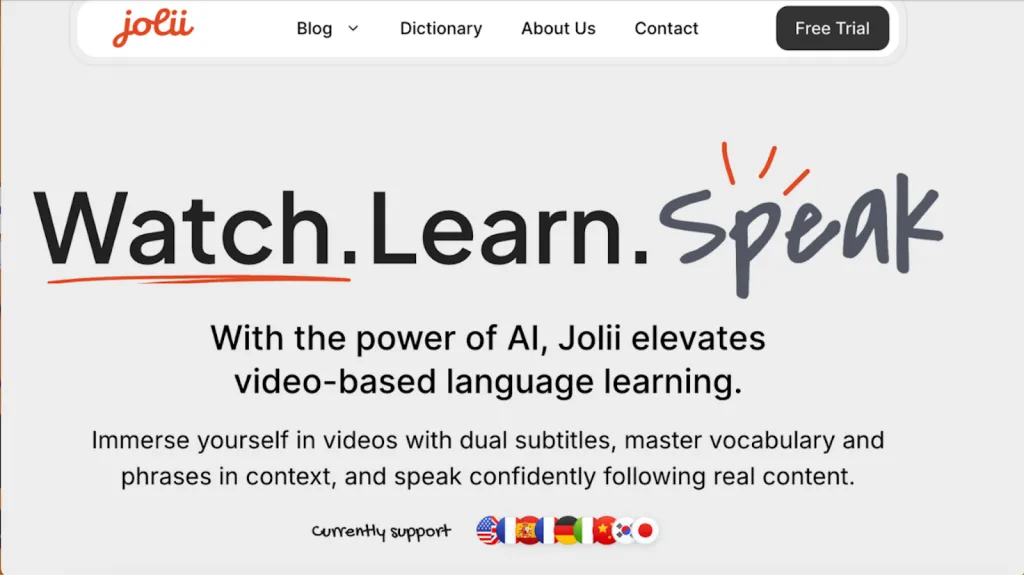
Yes, Japanese is ranked among the hardest languages to learn. But with Jolii, you get immersed in the language from day one. No memorizing vocabulary, just an AI tutor that helps you practice daily. Soon you’ll be ordering food in Japanese or navigating Tokyo’s train system when you travel.
Key strength: AI-powered conversation practice that adapts to your skill level.
Core features:
- Love Netflix? You can learn Japanese while watching your favorite anime shows. Just turn the subtitles on and use the app to practice.
- Personalized learning paths
- Real-time feedback on your Japanese pronunciation and grammar
- YouTube can be part of your study time. Jolii connects to your account as you listen to J-pop or watch J-drama.
WaniKani
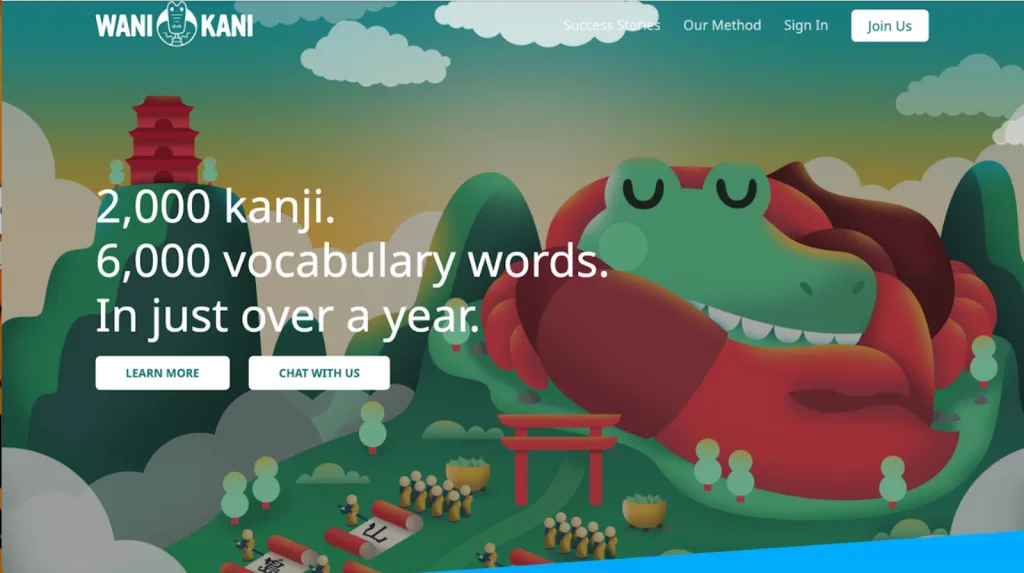
If kanji terrifies you, WaniKani is your new best friend. There are over 2,000 commonly used characters, so this app uses mnemonics and spaced repetition to make kanji actually stick in your brain.
Key strength: Kanji mastery through proven memory techniques.
Core features:
- Systematic approach teaching radicals first, then building to full kanji
- You’ll learn through mnemonics that turn abstract symbols into memorable stories
- Can’t get the words the first time? The spaced repetition system that reviews characters right when you’re about to forget them
Duolingo
You’ve already heard of Duolingo. For Japanese, Duolingo offers a gamified introduction that makes learning feel relaxed. It’s particularly strong for complete beginners who need structure without overwhelm.
Key strength: Gamification that keeps you coming back daily.
Core features:
- Bite-sized lessons perfect for busy schedules
- Competitive leaderboards and streak tracking for motivation
- All three writing systems will be introduced gradually
Busuu
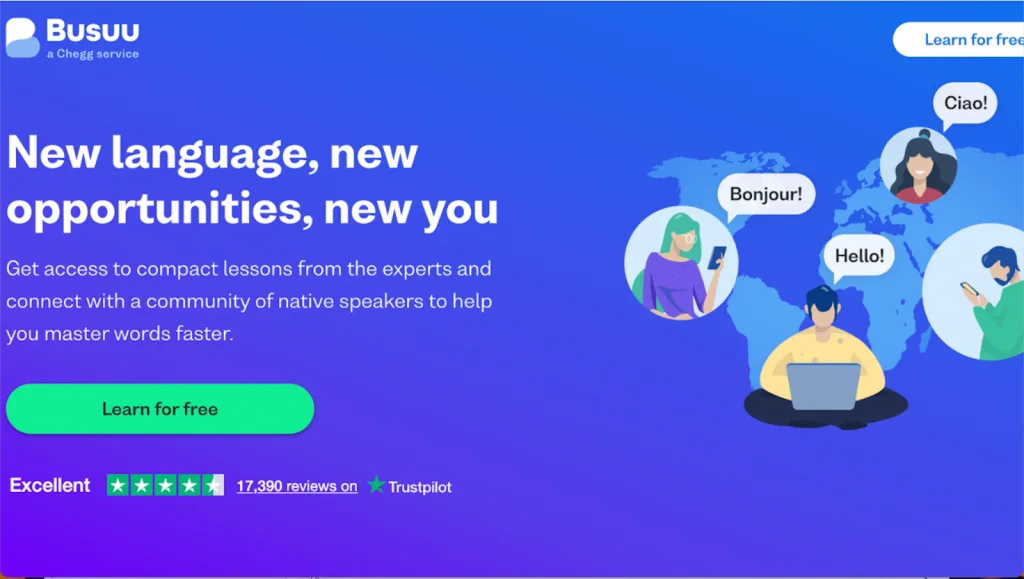
Want a more structured curriculum? Busuu provides this. You can move through different language levels and get certification once completed. You get a hybrid approach that bridges the gap between solo study and real conversation.
Key strength: Native speaker feedback on your actual work.
Core features:
- Writing and speaking exercises reviewed by real Japanese speakers
- Lessons aligned with CEFR language levels
- Offline mode means you can learn during commutes
LingoDeer

For starters, it’s designed for Asian languages. So you know the Japanese lessons are well structured for beginners. Even better? LingoDeer is a work of art by actual Japanese teachers.
Key strength: The app prioritizes those Grammar explanations.
Core features:
- Want to learn all three writing systems? LingoDeer has a proper system in place.
- No, you don’t need to have WiFi all the time. Offline access lets you download lessons.
Comparison Table: Best Apps to Learn Japanese
| App | Key Features | Best For | Pricing |
| Jolii | AI-powered conversation practice with Netflix & YouTube integration | Learning personalization | 7-day free trial, premium $9.99 per month |
| WaniKani | Mnemonics and speed repetition | Kanji mastery | Free until level 4, premium $9 per month |
| Duolingo | Gamified lessons with streaks | Complete beginners | Free with ads, Premium at $12.99/month |
| Busuu | Native speaker feedback | Learners seeking structure and certification | Free plan, premium $12.99 per month |
| LingoDeer | Grammar | In-depth grammar lessons | Starts at $14.99 per month |
Tips for Learning Japanese Faster with Apps
Yes, apps are powerful, but they’re not magic.
You still need to be smart to learn Japanese faster. Do this:
- Practice daily, even if just 10 minutes. Consistency beats marathon sessions.
- Pair app learning with native content. Watching shows, anime, or YouTube helps your brain recognize natural speech patterns and context.
👉 Learn Japanese with Netflix: Build Real Fluency Through Context (Banshaku no Ryuugi). - Write by hand occasionally, not just on screens. The physical act of writing helps memory.
Final Takeaway
If you’re trying to find the best app to learn Japanese, don’t overthink it. Pick one app that matches your learning and start today. You can always layer others in later.
I would vouch for an app that gets you immersed in the language. How fun is it to learn from the kind of content you already love? Those TV shows, movies, and online videos will work perfectly with Jolii.ai. Cultural context? Fun lessons? You name it, you can set learning goals, and the app will adapt.
FAQs
What is the best app to learn Japanese for travel?
Jolii, hands down. It focuses on the stuff you’ll actually need. Ordering food without pointing at pictures, asking where the bathroom is, and figuring out Tokyo’s subway system. The AI lets you practice real conversations before you land in Japan, so your first word doesn’t come out as a nervous squeak.
Can you become fluent in Japanese using only an app?
It depends. Apps build your foundation, but fluency needs constant practice and conversations.
Think of apps as your training wheels. Fluency happens when you start using the language.