Curious about how to get fluent in French without dropping everything and jetting off to Paris? Here’s what you need to know: you can do it. Every year, heaps of learners reach fluency in spots where no one’s actually speaking French. Toss in strong resources and a can-do mindset, and you’re suddenly crafting your own French-speaking community. Wondering what the trick is? We assure you, it’s not all about geography. It’s about sticking it out, getting regular exposure, and building your personal little bubble, wherever you may be.
How to Get Fluent in French With Daily Micro-Immersion
Try daily exposure: even just 15 or 20 minutes a day is game-changing. If you’re thinking micro-immersion means you’ve got to buy a flight, think again, because it only takes tweaking how French pops up in your day.
Small Daily Habits
- Swap your phone and laptop settings for French, and you’re off to the races.
- Take a break from your usual playlists and put on French tracks for a change.
- Why not scan quick news highlights from Le Monde or France 24?
Micro-immersion is the secret: Recent research on spaced vocabulary learning through relaxed listening proves that folks remember far more words when their language intake arrives in quick bursts instead of longer, sporadic study sessions. Plus, if you grab just a couple of minutes of French daily, it sort of nudges your brain to absorb the lingo like it’s hardly any effort at all.

Learn French at Home Through Active Listening
Passive listening helps, but active listening is what truly moves the needle. When you’re learning, really listening means you focus deliberately: take in the details, spot the grammar patterns, and speak the words right back out loud.
Boost Your Listening Skills
- Shadowing: Say what you hear right as it comes, caring less about getting it all perfect and more about the rhythm and how the words roll.
- Divide and conquer: If you pause a podcast or video and break the phrases into little chunks, it gets much easier.
- Pattern spotting: Keep an eye out for repeated sentence types like “il faut que”, “je viens de”, or “c’est pas grave”.
- Slow and fast: Sometimes you’ll need to slow down a video while tackling new grammar, then gradually hit faster speeds.
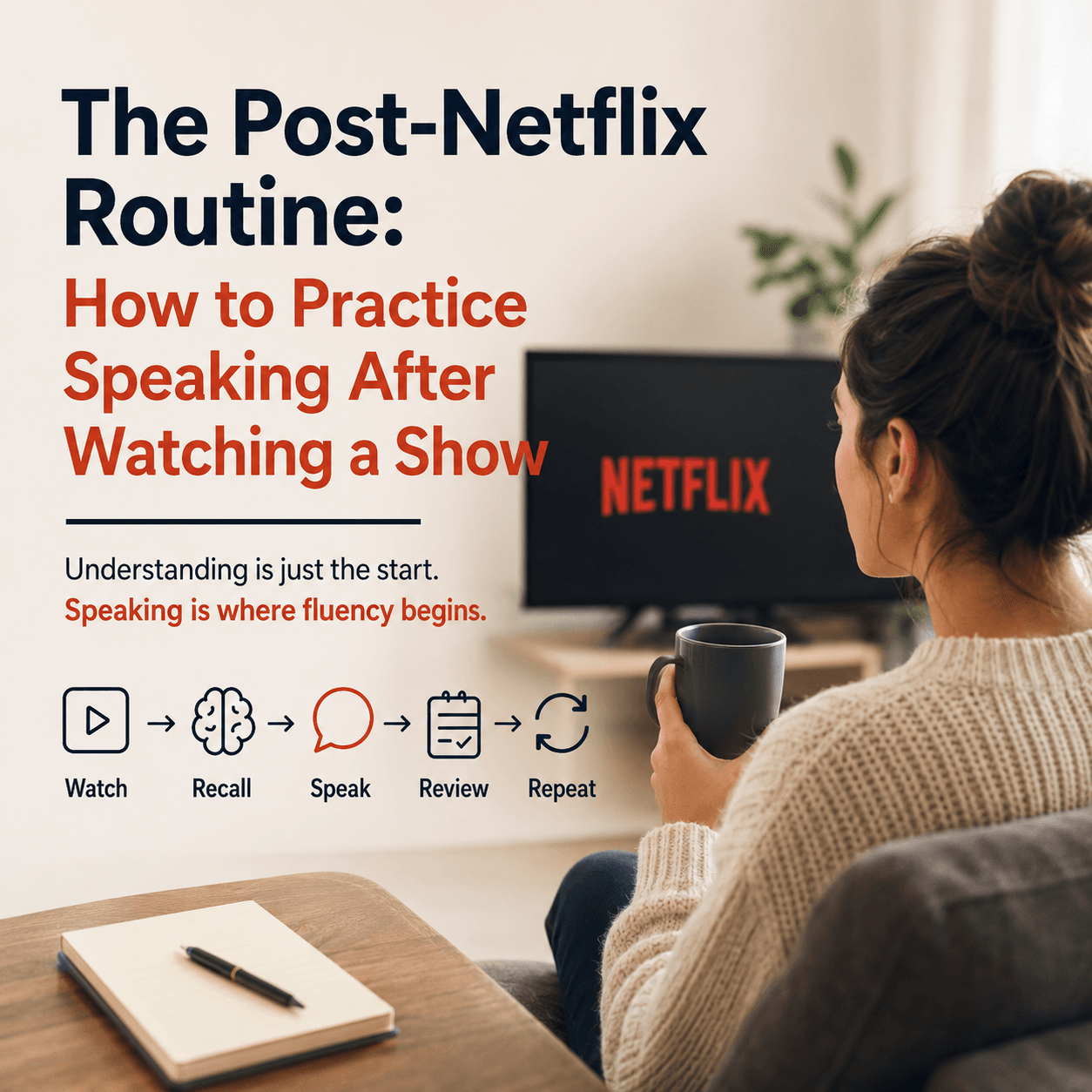
Enjoy as you learn: Watching series like “Dix Pour Cent”, “Lupin”, or “Plan Cœur” can be pretty fun while learning, since they mix casual slang and formal French in a way that feels natural.

How to Get Fluent in French by Speaking Regularly—Even Without Native Speakers Nearby
Most people shy away from speaking and fail to learn French fast, especially if they learn at home and are not surrounded by French speakers. This is where tech essentially starts changing the game.
Ways to Practice Speaking
- Language exchange apps: They let you instantly link up with folks who speak French.
- Tutoring platforms: Some apps let you quickly grab brief, budget-friendly one-on-one chats.
- Voice recording: You can tape yourself talking about your day, then try again using sharper words or smoother grammar.
- Self-talk: Just say out loud what you’re up to—“Je prépare le café”, “Je dois envoyer un email”—which gets French into your thought stream.
Add Cultural Touchpoints for Natural Fluency
Getting a handle on culture frames language in a way that matters, making you sound similar to those who really speak it fluently.
French Cultural Elements to Explore
- Music: Stromae, Angèle, Aya Nakamura, Lomepal
- French Podcasts: “Transfert”, “Sur le Fil”, “Affaires Sensibles”
- Books: “Le Petit Nicolas”, “Ensemble c’est tout”, novels by Amélie Nothomb
- Food and how people live: Dive in by giving easy French recipes a go, checking out travel vloggers who film in France, or reading up on local customs from different regions.

FAQs
Can I actually become fluent in French without moving to France?
Yeah! Getting fluent is all about how much real exposure and hands-on chatting you get, rather than your location. If you mix listening, speaking, and mini-immersion, you can nail down a solid French level right from home.
How long will it take to reach fluency in French?
Some may say most people get good enough to hold solid conversations in around 8 to 14 months, as long as their practice is regular.
Is a tutor absolutely necessary?
Not really, but even adding one lesson a week can make your pronunciation and confidence improve a fair bit.
What skill is toughest to boost when you’re not living in a French-speaking spot?
Speaking often gives learners the most trouble, though online chats and voice recordings mean working on it is completely doable.
Is micro-immersion still realistic when you’re strapped for time?
For sure. Just 15 minutes of everyday exposure can give you results that actually show.
If you wish for a more personalized and sharper approach, using Jolii.AI is an excellent way to do so. The platform adapts to your current stage and puts you in actual discussions, so your French advancement shifts. You could say it acts like a mobile immersion companion who keeps you communicating, paying attention, plus making progress wherever you are. Start now!