When I had my first conversation in Italian, I was over the moon! All my months of practice, learning Italian from apps, shadowing Italian movies, and mimicking several YouTube videos of Italian YouTubers finally paid off.
Here’s how it all played out: I went on a work trip to Italy, and had a meeting at a quaint café in Naples. After my meeting, I ordered an espresso and had a brief chat with the barista.
The conversation was rusty, but exciting, and the adrenaline rush was real. The barista was also very kind and chipped in some corrections.
The conversation went like this:
Me: Ciao, vorrei un expresso, per favore
(Meaning: Hi, I would like an expresso, please.)
Barista: Certo! Solo una piccola cosa; in italiano diciamo ‘espresso’, senza la ‘x’
(Meaning: Sure! Just one small thing; in Italian we say ‘espresso’ without the ‘x’)
Me: Ah! Espresso. Grazie per la correzione
(Espresso. Thanks for the correction.)
Barista: Nessun problema. Con zucchero?
(No problem. With sugar?)
(A little, thank you)
We had some small talk about the perfect Italian snack to have with an espresso, and by the time I returned to my hotel room, I couldn’t contain my excitement.
That moment is etched in my memory and has motivated me through my language learning process. Many months after my first real conversation, I’m reliving the moment and everything that led to it.
I believe the story of my first conversation in Italian can be the push you need to get there, too!
Why My First Conversation in Italian Mattered (As Yours Does)
You could learn Italian and memorize a ton of words, but until you have a conversation, your efforts haven’t reached their mark. The primary reason for learning a language is for social interactions, so why not have them?
I believe that conversational practice is one of the best ways to learn Italian. When you have a conversation, you practice your accent, process words, and handle interruptions in real-time. This experience is worth more than a thousand flash cards and recorded dialogues.
According to the American Council on the Teaching of Foreign Languages, Immersive language engagement through several methods, including conversations, has a positive effect on fluency, confidence, and cultural understanding of a language.
I didn’t miss out on any opportunities to have conversations while learning the language, and it improved my skills by a lot.
Let’s get real about how long it took me to have my first conversation in Italian (and how long it might take you).
How Long Does It Take to Reach Speaking Level in Italian?
It doesn’t take as long as you think to reach a conversational Italian knowledge level, but it also doesn’t happen overnight.
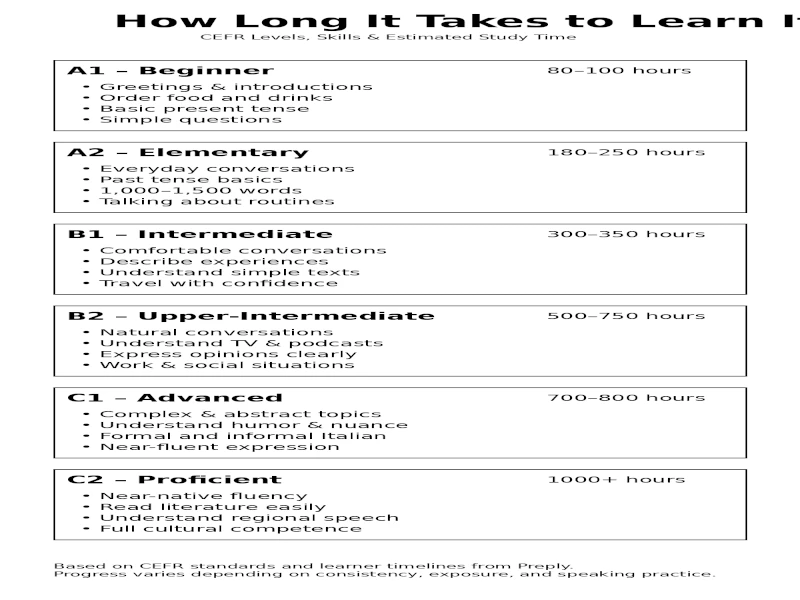
Italian is a Category I language and typically requires between 600 and 750 study hours to reach professional working proficiency, according to the U.S Foreign Service Institute.
The different milestones for learning Italian (A1-C2) are represented below:
What Did This Mean for Me?
I set aside 30-60 minutes daily for targeted Italian learning, including speaking lessons, and I reached my goal sooner than expected.
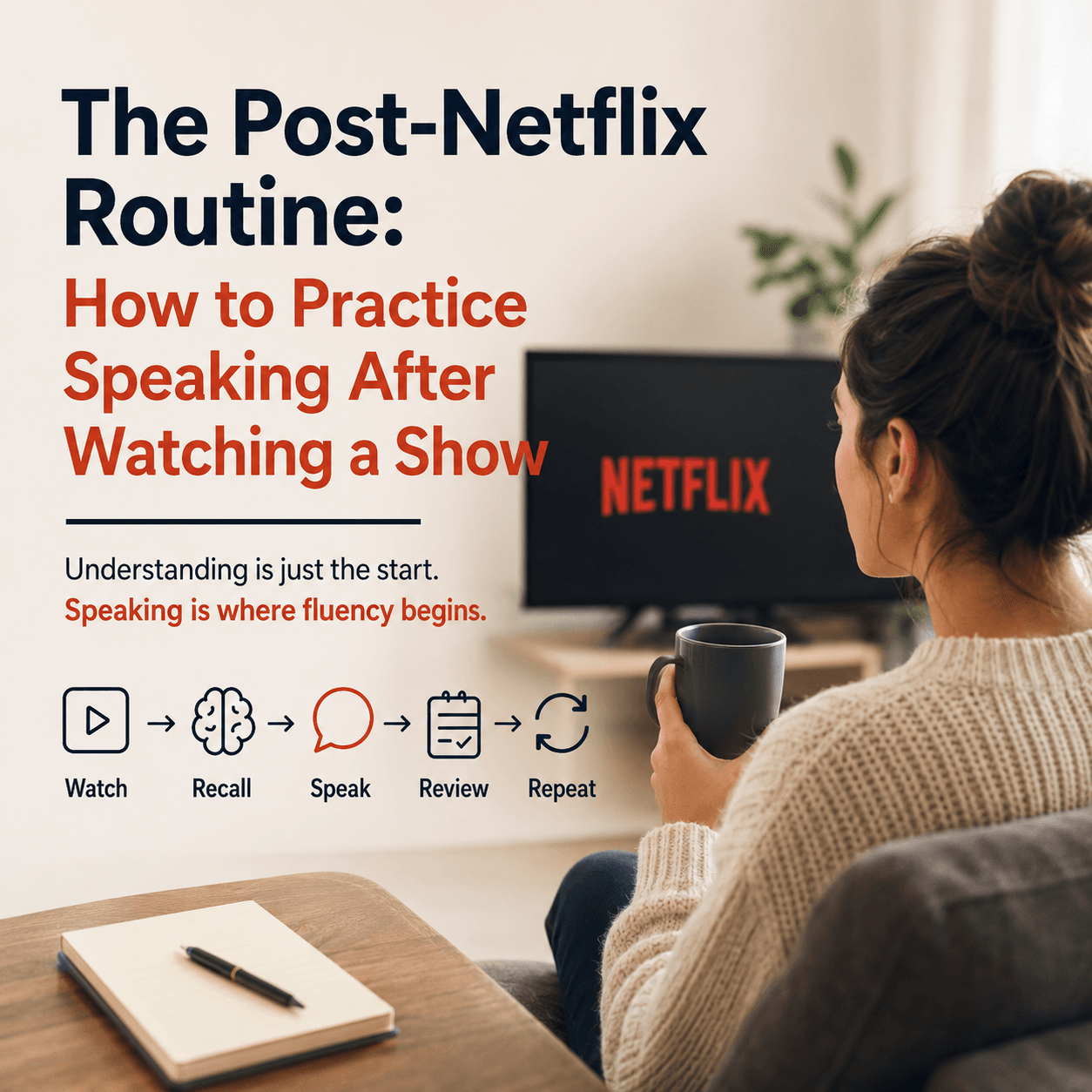
Here’s a practice style that worked for me: 30 minutes of guided study followed by 30 minutes of speaking practice or exchanges. Within 3 months, I was pleased with my listening, speaking, and overall confidence.
My Practical Learning Tips I Used to Master Real Conversations
- Begin with the survival phrases
My experience taught me that your first conversation in Italian will likely contain Italian survival phrases, so I learned them first. Phrases like “Mi scusi” (Excuse me), “per favore” (Please), “Puoi ripetere” (Can you repeat that?) are the fluid that keeps the conversation wheel running.
- Shadowing and Chunking
Shadowing is simply listening to short Italian phrases and repeating them. You can shadow movies in Italian, Italian podcasts, or YouTube videos.
Chunking is breaking a full-length conversation into smaller blocks and practicing them.
I love German comedies, so I practiced shadowing and chunking with films like A coffee in Berlin and Goodbye Lenin.
- Listen to Italian A LOT!
Reading in Italian and other traditional forms of studying helped me, but listening to Italian conversations and picking up the accents was one of the fastest ways I built my language comprehension.
I always listened to an Italian podcast on my way to work and back and listened to Italian songs too, and I learned a lot.
I discovered that the more you listen, the more familiar you get with the words, inflections, and accents, and the more natural you’ll sound when you have your first conversation in Italian.
- Have Micro-Conversations Daily
Although I wasn’t in an Italian-speaking country when I started learning the language, I had some people around me who spoke the language. I spent 5 to 10 minutes having simple conversations with them every day.
In a couple of months, I was shocked to discover how the simple conversations amounted to massive conversation gains.
- Measure Your Progress According to Functions
One thing I learned early about having a conversation in Italian is that most sentences are more about functions than about random words.
Can you introduce yourself? Can you order a meal? Exchange pleasantries? I focused on how many things I could say and do, rather than how many words and their meanings I had memorized.
Tools And Resources I Used to Build My Italian Conversation Skills
I discovered many tools when I started practicing speaking Italian. I abandoned some of them halfway, mostly because they didn’t work for me. The ones on this list worked for me, and they can work for you too.
- Language Exchange apps: I found speaking partners or language buddies on apps like HelloTalk, Speaky, and Tandem, and engaged in low-pressure learning with them. It was a fun learning experience.
- AI language tutoring and conversation apps: There are many modern apps out there that use AI to drive tutoring and conversations. I used Jolii.ai for language lessons, study tips, and conversation practice, with video and audio resources.
- Podcasts: I was an avid listener of podcasts, especially ItalianPod101, Coffee Break Italian, and 5 Minute Italian. They improved my listening, comprehension, and speaking.
- Trips: Going on trips gives you an immersive experience. I made a few weekend trips to Italy some months after I started learning the language, and experienced the language and culture for myself.
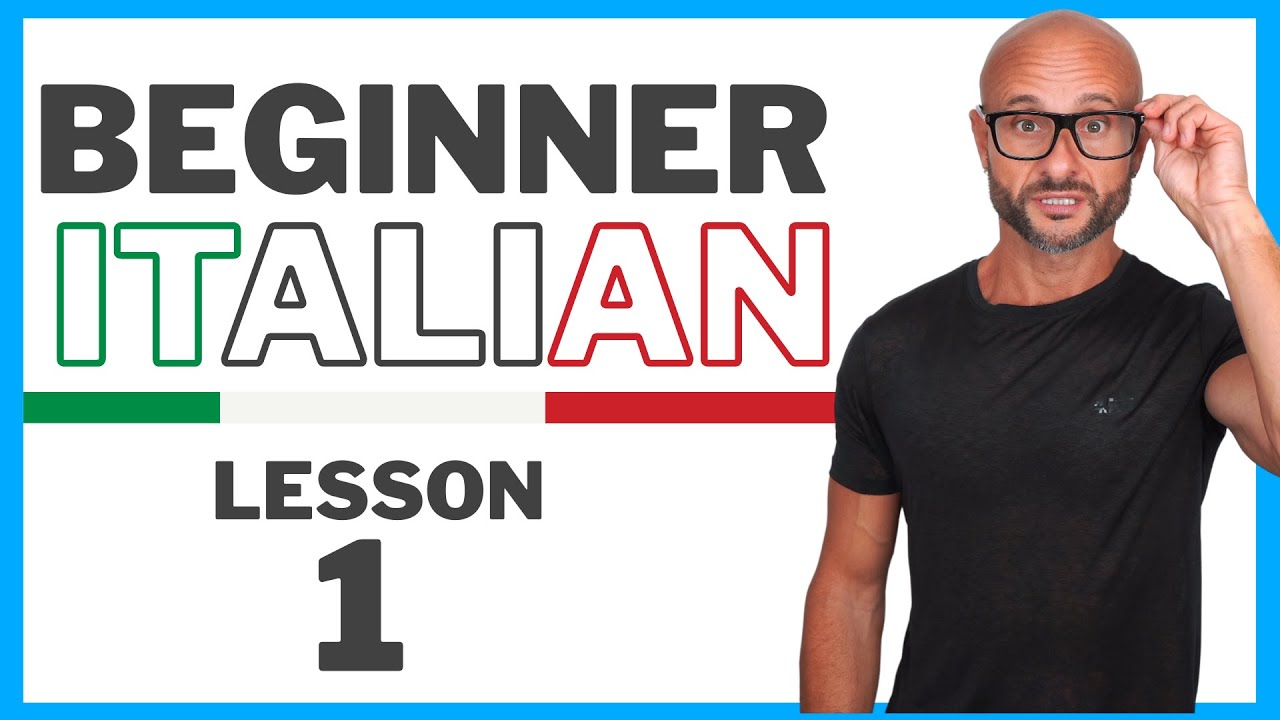
- YouTube Videos: I watched content across channels like Italy Made Easy, Learn Italian with Lucrezia, and Joy of Languages Italian and the subtitles helped me learn fast. Check out the YouTube channel below:
My 30-Day Italian Learning Plan
I designed this 30-day practical plan to help build my Italian conversation skills. It is not written in any rule book, but it worked for me.
- I spent 15 minutes daily on vocab study and phrase drills.
- I engaged in 20–30-minute conversation sessions weekly with friends, conversation buddies, and AI partners.
- I wrote a list of conversation topics I wanted to learn, and followed the list.
- After every session, I wrote down the phrases that were difficult and rehearsed them.
- After 30 days, I tested myself (a conversation with a stranger, a café order, or a request for directions).
- I celebrated every little progress and started the cycle again until I got to where I am now.
Final Thoughts: Looking Back at My First Conversation
Many conversations later, my first conversation in Italian remains a fond memory for me. It showed me what real learning and real results should look like.
Learning Italian is an adventure; embrace it, explore it, experience it, until you reach your conversation goal.
Whether you’ll be practicing with podcasts, videos, or AI apps like Jolii.ai, enjoy every stage, starting with your first “Ciao!” and other ways to say hello in Italian.