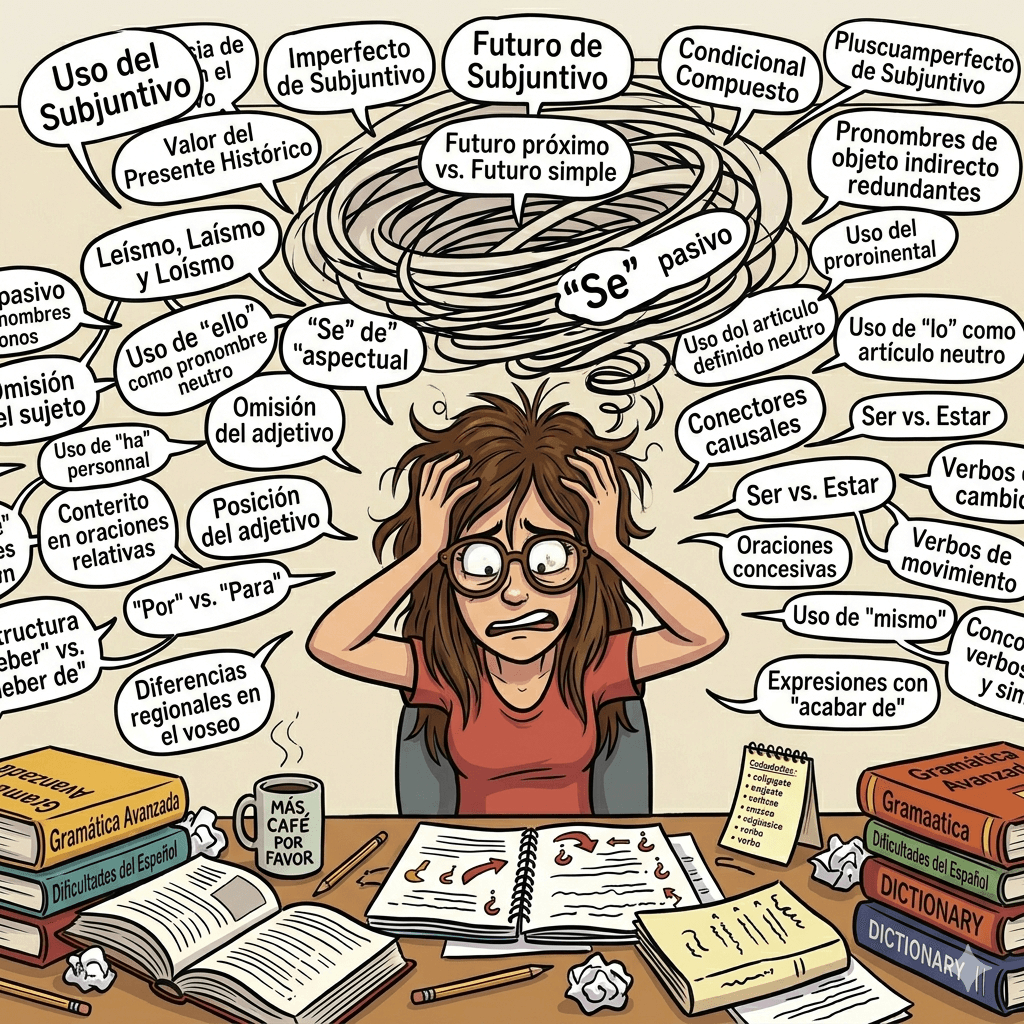
Learning Spanish can actually pump you up and be packed with fun, particularly when you let that fun drive the whole adventure. Toss in some Spanish tongue-twisters, music, plus a splash of YouTube and Netflix, and you’re working those language skills. But did you realize jokes are absolute gold for Spanish learners? Yeah, you read that right. Jokes aren’t just about having a good time; they boost your fluency, help you get how the culture ticks, and make your memory sharper. Wondering how? Come and join us.
Why Learning Spanish Jokes Helps You Learn Faster
Many people tend to focus on vocabulary, grammar, and talking when they’re picking up a new language, but there’s a hidden force: humor. Jokes can support language learning by showing off idiomatic expressions, giving your memory more sticking power, and even cooling down your stress. So, don’t hesitate to laugh along the way!
Learning Spanish Jokes: The Benefits Backed by Research
A 2018 study made in India discovered that using jokes when picking up a new language brings the tension way down, sharpens your pronunciation, sparks motivation, and immerses learners right into authentic pieces of culture. Humor also gets you involved, making language learning pop with creative and enjoyable exercises. So, it’s pretty clear why tossing jokes into your routine makes sense:
- Idomatic Language and Cultural Insight: Jokes play with words, lean on slang, and toss around cultural nods that you’ll never spot in textbooks. Getting the joke? That means you’re actually understanding how native speakers joke and talk on a deeper level.
- Memory Improvement: Laughing locks in emotional engagement, making memories stick way better. Odds are, you’ll hang onto words or lines you picked up in a joke longer than some boring memorization.
- Stress Reduction: Picking up a language can make anyone anxious. Telling jokes creates an easygoing atmosphere, swapping out stress for endorphins so you feel pumped and take more chances.
- Social Connection: Swapping jokes is a fast way to break the ice with native speakers, helping you chat more comfortably and making practice lively and amusing.
How to Use Jokes to Improve Your Spanish
Learning jokes is not only a fun activity, but it’s also a tactical move when it comes to learning Spanish. We recommend these activities to add a little fun to your routine.
- Repeat your favorite jokes out loud until you’re happy with your accent and rhythm.
- Write down any fresh terms or slang that come your way.
- Crack some jokes with your friends or study buddies to crank up your social game.
- Watch some comedy shows in Spanish, or listen to comedy podcasts for even more real-life practice.

25 Funny Spanish Jokes with English Translations
Here are some classic, straightforward, and fun jokes perfect for Spanish learners. We added the translations, so grasping their meaning is a breeze.
| Joke in Spanish | English translation |
| Estaba una pizza llorando en el cementerio. Llega otra pizza y le dice: — ¿Era familiar? — No, mediana. | There was a pizza crying in the cemetery. Another pizza arrives and says: — “Was it a relative?” — “No, medium.” (A wordplay on the size of pizzas: the word familiar/relative is also the size of the biggest pizza) |
| — Papá, papá, me ha mordido una serpiente. — ¿Cobra? — No, me ha mordido gratis. | — Dad, Dad, a snake bit me. — A cobra? — No, it bit me for free. (“cobra” = a species of snake / “does it charge?”) |
| — ¿Qué le dijo un jardinero a otro? — ¡Disfrutemos mientras podamos! | — What does one gardener say to another? — Let’s enjoy while we can (“podamos” = can / prune). |
| — ¿Qué hace un perro con un taladro? — Tá—ladrando. | — What does a dog do with a drill? — Drill-ing. (“Tá-ladrando” = wordplay with está ladrando/is barking). |
| — Mi capitán, hemos perdido la batalla. — ¡Pues búsquela inmediatamente! | — Captain, we have lost the battle. — Then find it immediately! |
| — ¿Cuál es el colmo de Aladín? — Tener mal genio. | — What’s Aladdin’s biggest irony? — Having a bad genie (temper). |
| — ¿Por qué el libro de matemáticas estaba triste? — Porque tenía muchos problemas. | — Why was the math book sad? — It had too many problems. |
| — ¿Cómo se dice perro en inglés? — Fácil, se dice dog. — ¿Y cómo se dice veterinario? — Pues… dog—tor. | — How do you say dog in English? — That’s easy, you say “dog.” — And how do you say veterinarian? — Well… “dog-tor.” |
| — ¿Qué hace un teléfono cuando se aburre? — Llama a un amigo. | — What does a phone do when it’s bored? — Call a friend. |
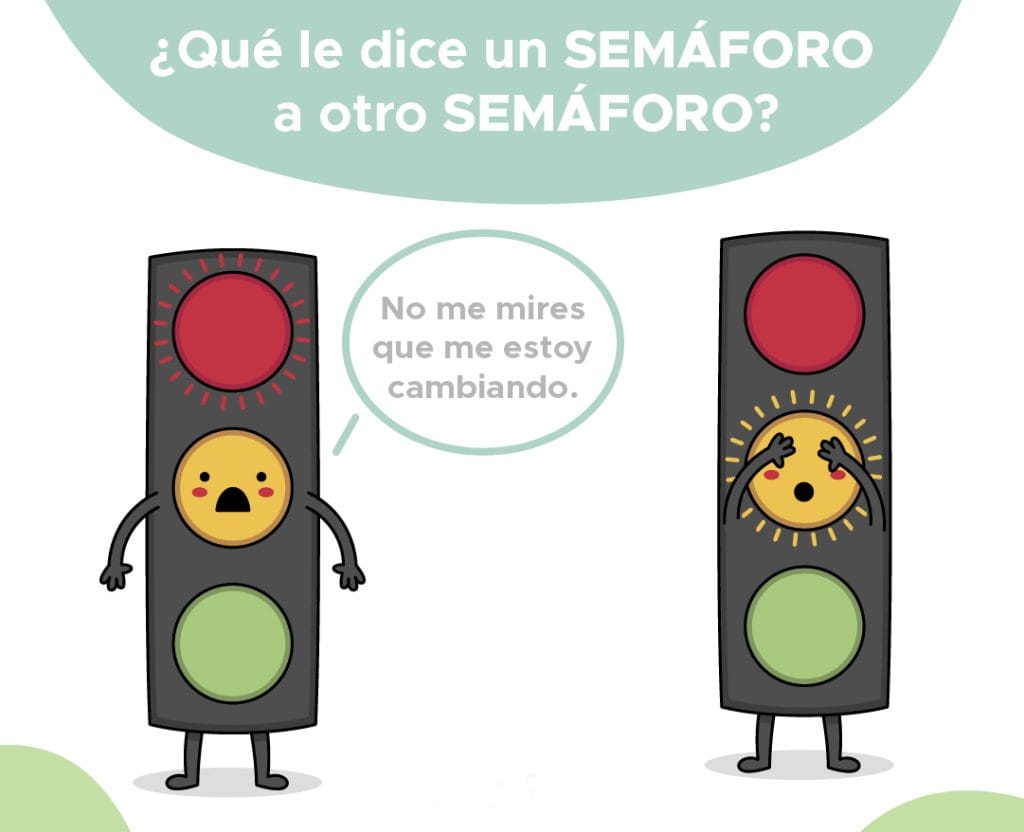
| — ¿Qué le dice un semáforo a otro? — No me mires, me estoy cambiando. | — What does one traffic light say to another? — Don’t look, I’m changing. |
| — ¿Qué hace un gato en la computadora? — Busca el ratón. | — What does a cat do on the computer? — Look for the mouse. |
| — ¿Qué le dice una impresora a otra? — ¿Esa hoja es tuya o es una impresión mía? | — What does one printer say to another? — Is that paper yours or just my impression? |
| — ¿Qué le dice un techo a otro? — Techo de menos. | — What does one roof say to another? — I miss you (techo/te echo de menos). |
| — ¿Qué hace un pez? — Nada. | — What does a fish do? — Nothing (nada/swims) |
| — ¿Cuál es el pez más divertido? — El pez payaso. | — What’s the funniest fish? — The clownfish. |
| — ¿Qué le dice el uno al diez? — Para ser como yo, tienes que ser sincero. | — What does the number one say to the number ten? — To be like me, you have to be sincere (a pun with sincero: sin cero = without zero). |
| — ¿Cuál es el animal que es dos veces animal? — El gato, porque es gato y araña. | — Which animal is twice an animal? — The cat, because it is both a cat and a spider (araña = spider/scratches). |
| — ¿Por qué la computadora fue al médico? — Tenía un virus. | — Why did the computer go to the doctor? — It had a virus. |
| — ¿Qué le dice el cero al ocho? — ¡Bonito cinturón! | — What does zero say to eight? — Nice belt! |
| — ¿Qué hace un pato con una pata? — Cojea. | — What does a duck do with one leg? — Limp (pun on “pata” = leg/female duck). |
| — ¿Qué hace una abeja en el gimnasio? — ¡Zumba! | — What does a bee do at the gym? — Zumba! (pun on “buzzing”) |
| — ¿Por qué el maestro de música necesita una escalera? — Para alcanzar las notas altas. | — Why does the music teacher need a ladder? — To reach the high notes. |
| — ¿Qué le dijo una uva verde a una uva morada? — ¡Respira! | — What did a green grape say to a purple grape? — Breathe! |
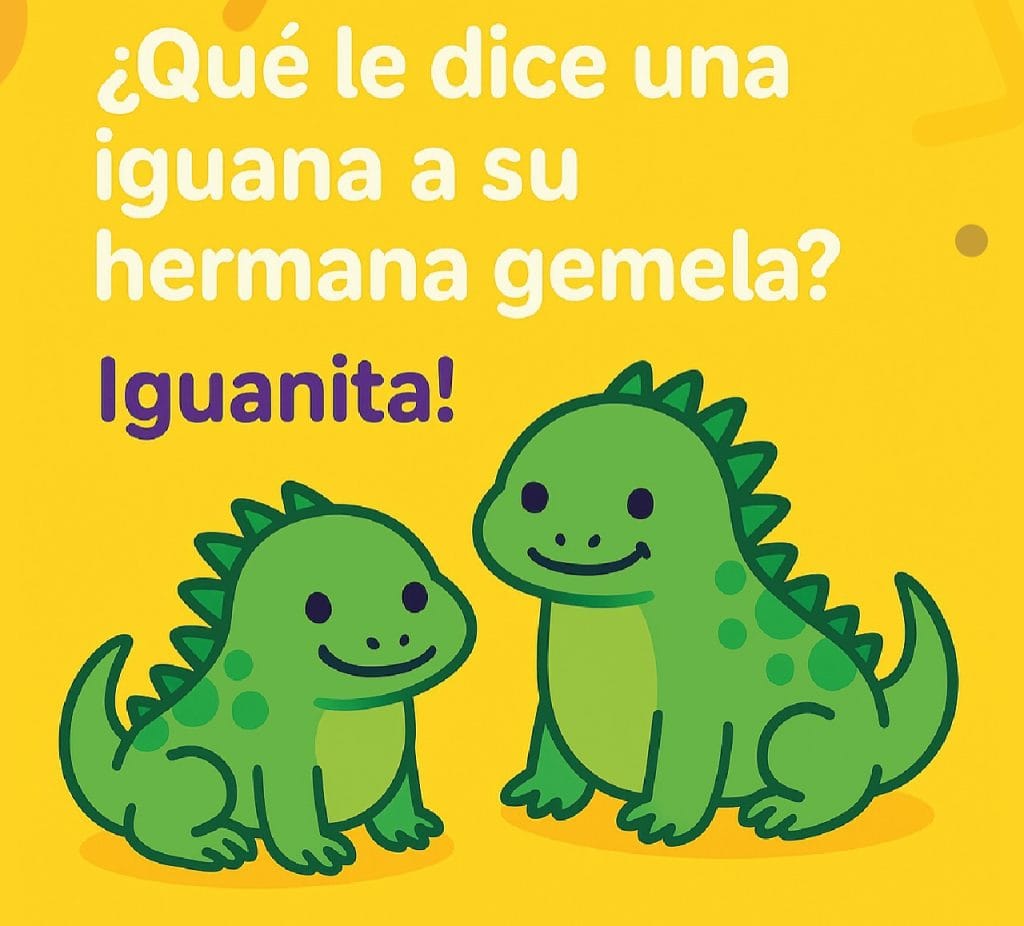
| — ¿Qué le dice una iguana a su hermana gemela? — Somos iguanitas. | — What does an iguana say to her twin sister? — We’re little iguanas (“iguanitas” sounds like “igualitas” = identical). |
| —¿Cómo se dice pañuelo en japonés? — Saka-moko. | — How do you say handkerchief in Japanese? — “Saka-moko” (made-up pun: “take out mucus”). |
FAQs
Can newbies pick up Spanish jokes?
Absolutely! Lots of these jokes stick to basic words or lean on clever wordplay, making it easier for learners to develop their natural feel for the language bit by bit.
Do jokes actually help with grammar?
Well, jokes usually twist grammar rules in playful ways, showing learners patterns and exceptions that stand out in memory.
How do you find Spanish jokes that really reflect the culture?
Try starting with ones from Spain or Latin America; after that, check out more local humor to boost your cultural smarts.
What if I’m not sure what a joke means?
No worries. You just need to search for unknown words, look into cultural references, or ask native speakers to break things down. That’s all part of how you learn.
Mixing jokes into your Spanish study routine does way more than simply add fun: it’s actually backed by scientific findings that hint at lower anxiety, sharper memory, and better cultural grasp. When you crack into exploring language humor, you get bolder and fired up, which boosts how you pick up Spanish overall. Why not make your Spanish adventure more exciting? Check out Jolii.AI for some new tools and resources that make picking up a language both useful and genuinely fun. Go ahead and start giggling your way to fluency right now!