Asking questions is a vital skill to have in any language. Imagine you are travelling in Latin America or Spain, and you need to ask the hotel receptionist for recommendations or directions, maybe you have a question for your waiter about the menu, or maybe you want to find out more about someone you just met in a café or bar. Don’t rely on them knowing or speaking English; this is a vital time to practice your Spanish.
Studies have shown that asking questions is vital for building fluency. Here is a guide to how you can ask these types of questions and more using certain keywords and phrases. Master these, build your confidence in speaking Spanish, and eventually, you will be able to ask anything.
Spanish question words, like, qué, cuándo, dónde, cómo, quién, por qué, and cuál, are the foundation for real conversation. Let’s break them down with clear examples you can start using immediately.
1. Qué – What?
Qué is one of the most common Spanish question words. Use it to ask for information, explanations, or meanings.
Examples:
- ¿Qué es esto? – What is this?
- ¿Qué quieres comer? – What do you want to eat?
- ¿Qué significa esta palabra? – What does this word mean?
Learners often get confused about when to use cuál vs qué; so, remember:
- Use qué when asking for definitions or when you need general information.
- Use cuál when choosing from a specific set of options.
Examples:
- ¿Qué es paella? – What is paella?
- ¿Cuál prefieres, té o café? – Which do you prefer, tea or coffee?
2. Cuándo – When?
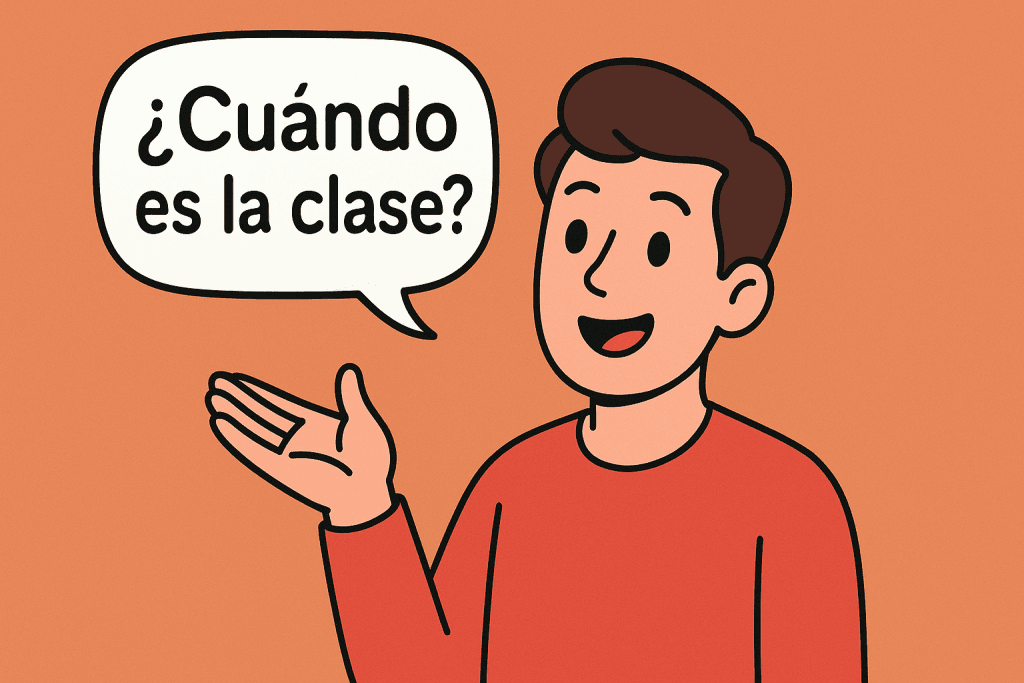
Use cuándo to ask about time, dates, or schedules.
Examples:
- ¿Cuándo llegas? – When do you arrive?
- ¿Cuándo es la fiesta? – When is the party?
- ¿Cuándo abre el museo? – When does the museum open?
This word is extremely helpful for travel—perfect for checking opening hours, event times, or transport schedules.
3. Dónde – Where?
If you need to ask about a location, dónde is the word you need. Travellers use it constantly.
Examples:
- ¿Dónde está el baño? – Where is the bathroom?
- ¿Dónde está la estación de tren? – Where is the train station?
- ¿De dónde eres? – Where are you from?
Notice how Spanish often includes prepositions inside the question word phrase: ¿De dónde…? Which literally means “From where…?”
4. Cómo – How?
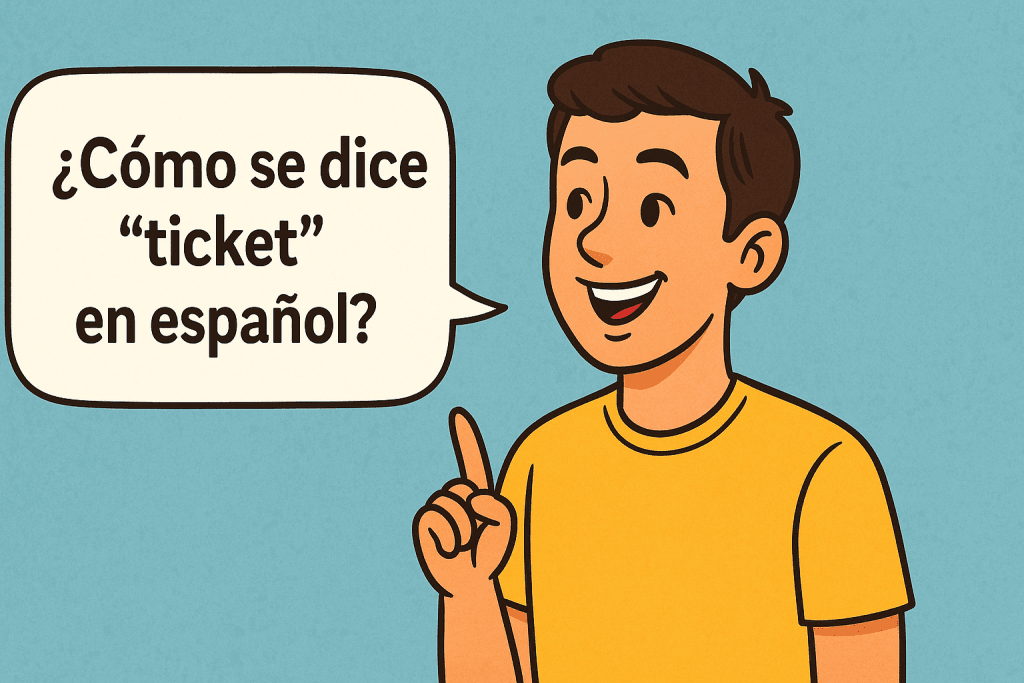
Cómo is flexible and extremely common. Use it to ask about methods, instructions, conditions, or the way something works.
Examples:
- ¿Cómo estás? – How are you?
- ¿Cómo llego al centro? – How do I get to the city centre?
- ¿Cómo se dice ‘ticket’ en español? – How do you say “ticket” in Spanish?
The phrase ¿Cómo se dice…? is essential because it helps you think in Spanish without translating word-for-word from English. I use this every day, learning Spanish in Panama.
5. Quién / Quiénes – Who?
Use quién to ask about a single person and quiénes for more than one.
Examples:
- ¿Quién es ella? – Who is she?
- ¿Quiénes vienen contigo? – Who is coming with you?
Whether you’re meeting new people, joining a tour group, or working with Spanish speakers, this word helps you understand who is involved in a situation.
6. Por qué – Why?
Use por qué when asking for a reason or explanation.
Examples:
- ¿Por qué estudias español? – Why are you studying Spanish?
- ¿Por qué está cerrado el restaurante? – Why is the restaurant closed?
Be mindful of the difference between:
- Por qué = why
- Porque = because
Beginners often confuse these, but once you remember that the question form has a space and an accent, it becomes automatic. When speaking, the listener will understand which one you mean based on context.
7. Cuál – Which? / What?
English speakers sometimes find cuál confusing because English uses “what” in many of these contexts. Use cuál when choosing between options or when the answer is expected to be specific.
Examples:
- ¿Cuál es tu número? – What is your number?
- ¿Cuál te gusta más? – Which do you prefer?
- ¿Cuál es tu comida favorita? – What is your favourite food?
If the answer is a selection, cuál rather than qué is usually preferred.
8. Remember the Accent Marks
Spanish question words always take an accent when used for direct or indirect questions.
Examples:
- ¿Dónde vives?
- No sé dónde vives.
Without the accent, the word has a different meaning entirely.
Examples:
- el que (that/which) vs. qué (what)
- cuando (when, not a question) vs. cuándo (when as a question)
- como (like/as) vs. cómo (how)
Getting in the habit of adding these accents helps your writing become clearer and more accurate.
9. Useful Travel Phrases with Question Words
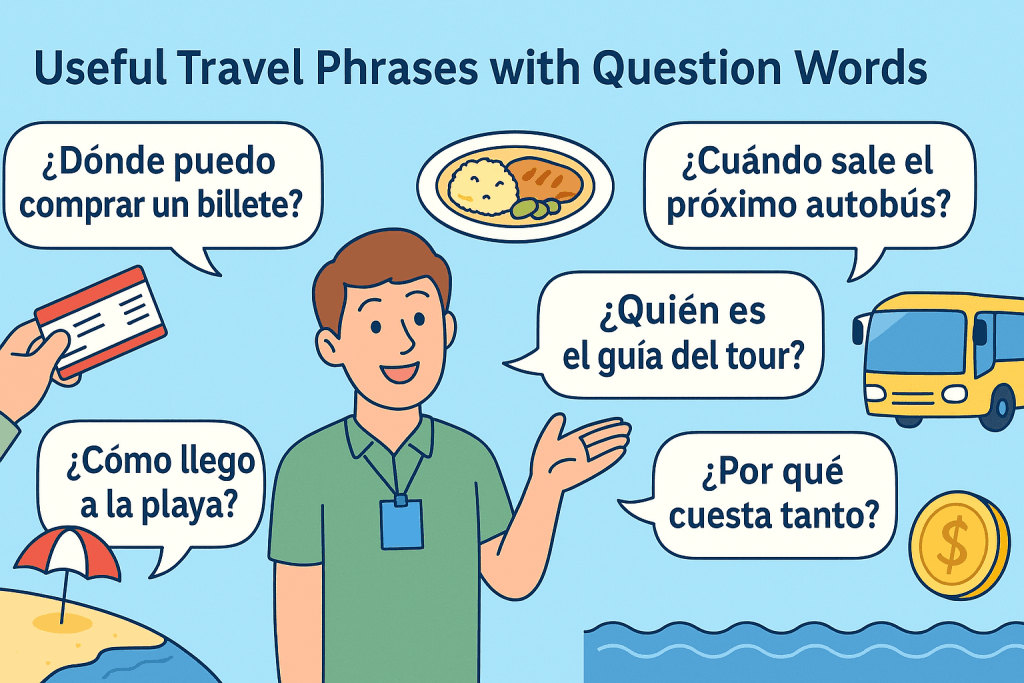
Here are practical examples you can use right away:
- ¿Dónde puedo comprar un billete? – Where can I buy a ticket?
- ¿Qué recomiendas comer aquí? – What do you recommend to eat here?
- ¿Cuándo sale el próximo autobús? – When does the next bus leave?
- ¿Cómo llego a la playa? – How do I get to the beach?
- ¿Quién es el guía del tour? – Who is the tour guide?
- ¿Por qué cuesta tanto? – Why does it cost so much?
Using these in real conversations will build your confidence quickly.
Quick Reference: Spanish Question Words
| Question Word | English | Example |
|---|---|---|
| Qué | What | ¿Qué quieres comer? |
| Cuándo | When | ¿Cuándo llega el tren? |
| Dónde | Where | ¿Dónde está el baño? |
| Cómo | How | ¿Cómo llego al centro? |
| Quién / Quiénes | Who | ¿Quién viene contigo? |
| Por qué | Why | ¿Por qué estudias español? |
| Cuál | Which / What | ¿Cuál prefieres, té o café? |
Real-Life Mini Dialogues
At a café
— ¿Qué recomiendas comprar aquí?
— El pastel de chocolate.
(What do you recommend to buy here? — The chocolate cake.)
Asking for directions
— ¿Dónde está la playa?
— Todo recto y a la derecha.
(Where is the beach? — Straight ahead and to the right.)
Planning an activity
— ¿Cuándo salimos?
— Mañana por la mañana.
(When are we leaving? — Tomorrow morning.)
Meeting new people
— ¿Quién es ella?
— Es mi hermana.
(Who is she? — She’s my sister.)
Making choices
— ¿Cuál prefieres: pizza o pasta?
— Prefiero pasta.
(Which do you prefer: pizza or pasta? — I prefer pasta.)
Clarifying meaning
— ¿Cómo se dice “ticket” en español?
— Se dice “billete”.
(How do you say “ticket” in Spanish? — You say “billete.”)
Expressing curiosity
— ¿Por qué estás aprendiendo español?
— Porque viajo mucho.
(Why are you learning Spanish? — Because I travel a lot.)
In Jolii.ai, you can hear these question words used by native speakers in authentic videos and stories with built-in subtitles and speaking practice to help you start using Spanish naturally.
Conclusion
These simple question words get me through every day, learning Spanish and living in Central America. Mastering Spanish question words is one of the fastest ways to become more confident in real Spanish conversations. Learning Spanish question words like qué, cuándo, dónde, cómo, quién, por qué, and cuál allows you to ask for help, explore new places, and connect with people. With regular practice, these words will start to feel natural, and you’ll find yourself having smoother, more enjoyable conversations in Spanish.
Bonus: Practice Spanish Question Words
Beginner Level (A1–A2)
Complete the questions using the correct word:
- ¿_____ está el baño?
- ¿_____ quieres beber?
- ¿_____ llegas mañana?
Intermediate Level (B1)
Choose between qué or cuál:
- ¿_____ es tu comida favorita?
- ¿_____ prefieres, tren o autobús?
Conversation Challenge
Try answering out loud:
- ¿Por qué estudias español?
- ¿Cómo practicas todos los días?
- ¿Quién es tu persona favorita para hablar español?