Quick Answer (TL;DR)
Browser extensions fail for language learning because they rely on desktop usage and intentional study, while most real language exposure happens on mobile. Apps succeed because they reduce friction and fit into existing habits, allowing learners to engage with language more frequently and consistently.
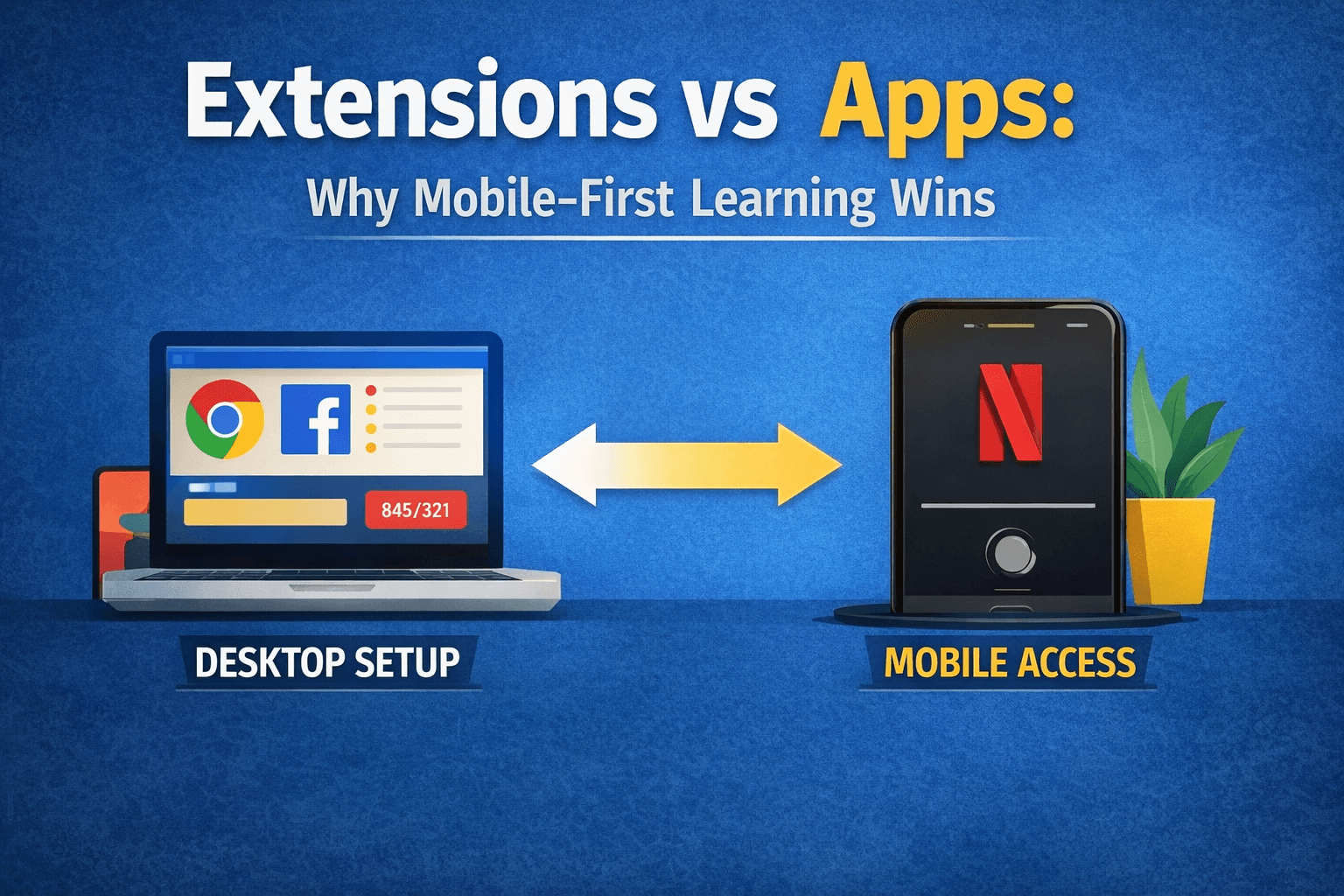
Browser extensions often fail for language learning because they depend on desktop usage, while most real language exposure happens on mobile.
Apps succeed because they match how people naturally consume content—short, frequent sessions on their phones.
In other words, learning becomes more effective when it fits existing behavior instead of trying to change it.
Why Many Learners Start Strong but Drop Off
A lot of language learners begin with good intentions.
They install a browser extension.
Open Netflix on their laptop.
Try to turn watching into learning.
For a few days, it works.
Then something changes.
They stop opening their laptop as often.
They watch shows on their phone instead.
The extension is still there—but it’s no longer part of the habit.
Nothing is “wrong” with the tool.
The problem is friction.
Most daily media consumption today happens on mobile.
But many language tools are still built for desktop-first behavior.
That mismatch quietly breaks consistency.
The Behavioral Gap: Desktop Learning vs Mobile Reality
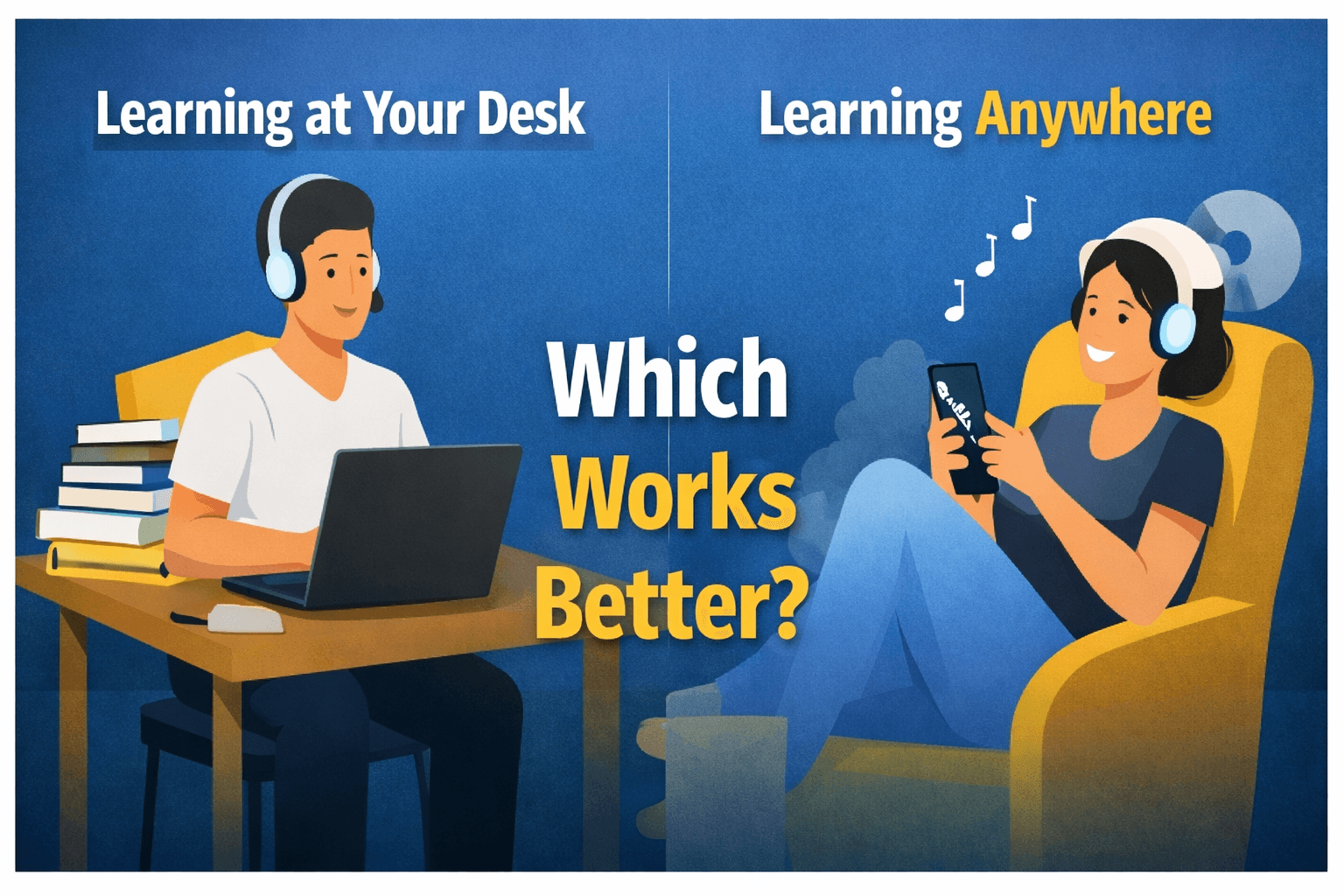
Think about how people actually watch content today.
Short clips during breaks.
Episodes while lying in bed.
Quick scrolls between tasks.
This behavior is:
- Fragmented
- Short
- Mobile-first
Browser extensions, however, assume something else:
- Focused sessions
- Laptop usage
- Intentional study time
That gap matters more than it seems.
Because learning is not only about quality of content.
It is also about frequency of exposure.
If a tool is slightly inconvenient, it gets used less.
And when exposure drops, learning slows down.
The Cognitive Advantage of Mobile-First Learning
There is another layer beyond behavior.
Mobile-first usage aligns surprisingly well with how the brain learns.
Short sessions reduce cognitive fatigue.
Frequent exposure increases pattern recognition.
And repeated contact with language in real contexts strengthens memory.
Research on mobile-assisted language learning shows that mobile environments provide immediate access and portability, allowing learners to engage with language more frequently throughout the day, which increases total exposure time.
Research in cognitive psychology has also shown that spaced and repeated exposure improves retention more effectively than long, infrequent sessions.
This explains why:
- 10 minutes × 5 times
often works better than - 50 minutes × 1 time
Mobile usage naturally creates this pattern
Why Extensions Feel Powerful (But Often Fade)
Browser extensions are not useless.
In fact, they often feel very powerful at the beginning.
You can:
- Pause
- Translate
- Analyze subtitles
- Review vocabulary
It feels like “serious learning.”
But over time, something subtle happens.
The process becomes effortful.
You need to:
- Open your laptop
- Choose the right setup
- Consciously decide to study
This shifts learning from:
👉 passive habit
to
👉 active effort
And active effort is harder to sustain daily.
A Moment I Noticed This Myself
I went through this exact cycle while learning Korean.
At one point, I tried to learn from shows more seriously.
So I started pausing more.
Looking up words.
Replaying lines.
Sometimes even writing things down.
At first, it felt like I was finally “learning properly.”
But after a while, something felt off.
Everything took too long.
A short scene could turn into fifteen or twenty minutes.
Sometimes more.
And the more I stopped, the less I actually enjoyed watching.
If I just watched normally, it felt too passive.
Like I wasn’t really learning anything.
But if I kept pausing, checking, and taking notes, it became exhausting.
Somewhere in between, the experience stopped being enjoyable.
And slowly, I stopped doing it altogether.
There was another problem too.
To do it “properly,” I felt like I had to sit at my desk.
Open my laptop.
Be in study mode.
It started to feel heavy.
Like something I had to schedule, instead of something I could just do.
That was when I realized something simple.
If learning makes the experience harder to continue, it doesn’t last.
Extensions vs Apps: A Practical Difference
| Learning Format | What It Requires | What Actually Happens |
| Browser extensions | Desktop setup, intentional study | Used occasionally |
| Mobile apps | Quick access, low friction | Used frequently |
| Result | High effort, low consistency | Lower effort, higher consistency |
Consistency almost always beats intensity.
Why Mobile-First Learning Feels Easier to Sustain
Mobile learning works because it blends into existing behavior.
You don’t need to create a new habit.
You attach learning to something you already do:
- Watching shows
- Scrolling content
- Listening during downtime
This reduces friction.
And when friction is low, repetition increases.
That repetition is what drives learning.
The Real Shift: From Study Time to Exposure Time
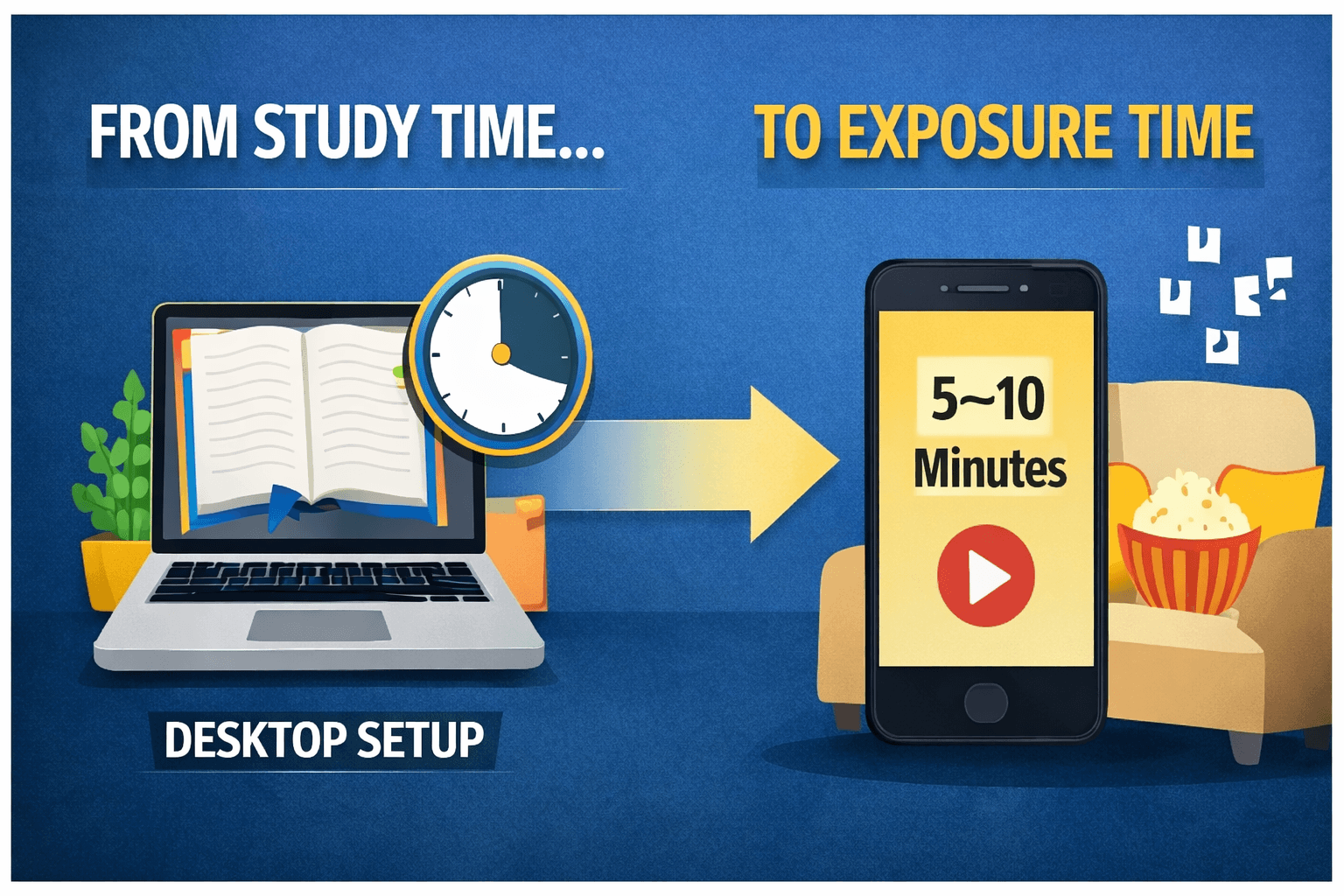
One of the biggest mindset changes is this:
Language learning is not only about how long you study.
It is about how often your brain encounters the language.
Browser extensions optimize study time.
Mobile-first tools optimize exposure time.
And exposure time is often more important for fluency.
How to Use Mobile-First Learning Effectively
Here are three simple ways to apply this idea.
1. Use Short Sessions Intentionally
Instead of long study blocks, aim for:
- 5–15 minute sessions
- multiple times per day
This keeps attention high and fatigue low.
2. Keep Learning Close to Entertainment
Do not separate learning from watching.
Let them overlap.
If you already watch Netflix daily, that becomes your learning environment.
3. Focus on Frequency, Not Perfection
You don’t need to understand everything.
What matters is repeated exposure.
Patterns become clearer over time.
Why This Connects to Micro-Immersion
This idea is closely related to micro-immersion.
Short, frequent exposure to real language creates stronger learning signals than long abstract study sessions.
If you want to understand the cognitive side of this approach, you can read more here:
👉 The Science of “Micro-Immersion”: How 15 Minutes of Netflix Beats a 1-Hour Textbook Session
FAQs
1. Are browser extensions bad for language learning?
No. They are useful, especially for focused analysis.
But they are harder to use consistently.
2. Why are apps more effective?
Because they match real user behavior—short, frequent, mobile sessions.
3. Should I stop using desktop learning completely?
Not necessarily.
A combination works best:
- Desktop for deep study
- Mobile for daily exposure
4. Is it safe to use browser extensions for language learning?
Browser extensions often require permission to access and modify web page content, which can introduce privacy and security considerations. While many are safe, this additional layer of access can reduce user trust and increase friction compared to mobile-first apps like Jolii AI.
A Simple Way to Make This Work Daily
The challenge is finding a way to stay in that middle ground.
Not completely passive.
But not so effortful that it breaks the experience.
That’s where tools like Jolii start to feel different.
Instead of forcing you to pause constantly or switch between apps, it keeps everything in one place.
You can:
- watch short scenes
- see dual subtitles
- notice highlighted words and grammar
- replay key moments easily
So the learning happens while you’re still watching.
But the biggest difference is where it fits.
You can use it on your phone.
On the bed.
At the gym.
Walking in the park.
During short breaks at work.
Any time you would normally watch something.
Learning no longer feels like something separate.
It becomes part of what you already do.
Final Thoughts
Browser extensions are not failing because they are poorly designed.
They fail because they do not match how people actually use media today.
Apps succeed because they fit naturally into daily behavior.
And when learning becomes part of something you already do, consistency follows.
In the long run, consistency matters more than intensity.
And sometimes, the most effective learning does not look like studying at all.