First published: March 2026. Last updated: June 2026
TL;DR
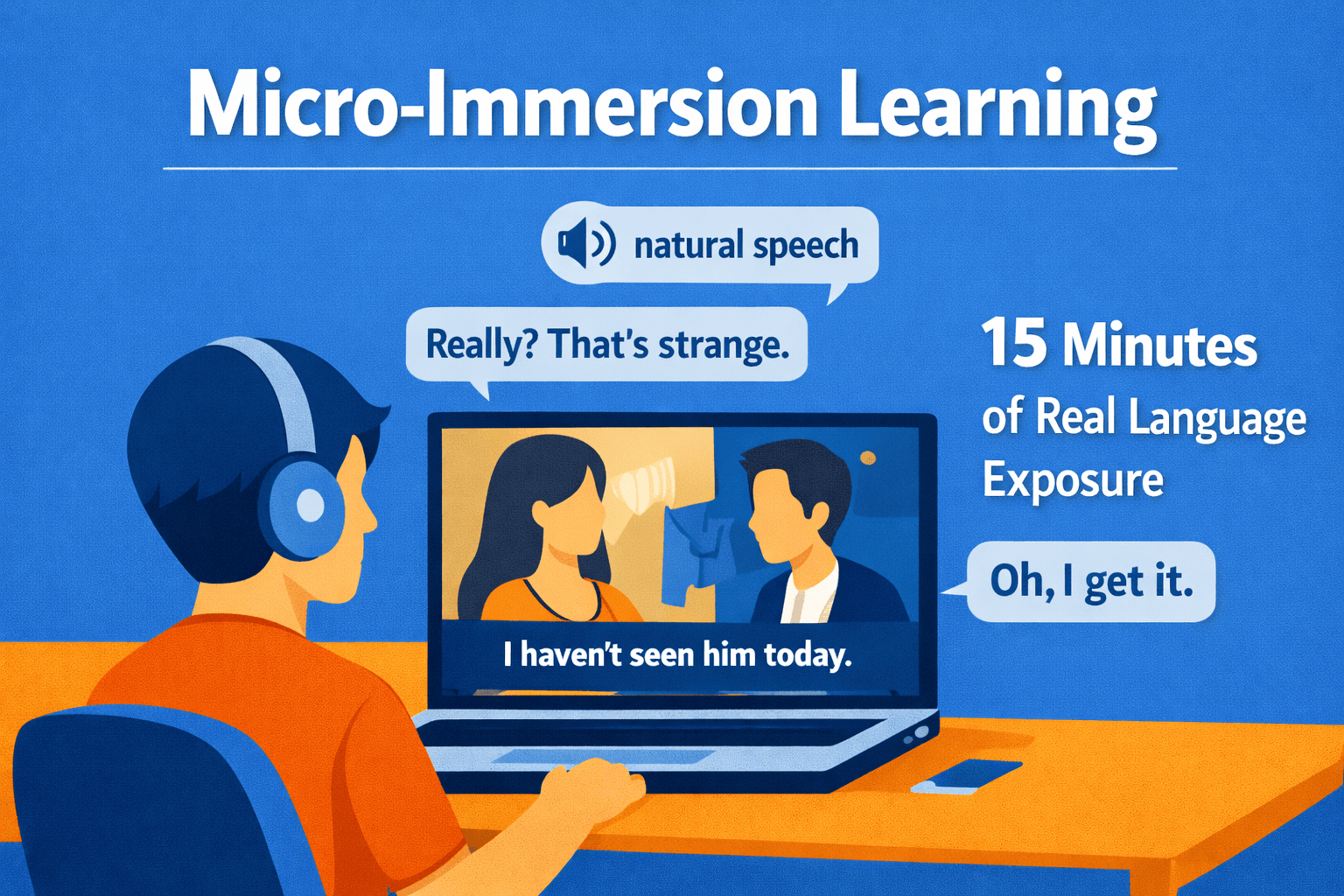
Micro-immersion means exposing your brain to short bursts of authentic language—often just 10–15 minutes. Because real media activates multiple learning systems at once (listening, context, emotion, prediction), these short sessions can sometimes produce stronger learning signals than long periods of abstract study.
This happens because real language activates multiple cognitive systems at once: listening, context prediction, emotional engagement, and pattern recognition.
In other words, your brain often learns language more efficiently from dense, meaningful exposure than from long periods of abstract study.
This article focuses on the cognitive mechanisms behind why short authentic exposure works — the neuroscience of prediction, multimodal processing, and desirable difficulties. For practical strategies on how to use Netflix actively, see Can You Learn a Language With Netflix?. For the broader argument about why passive watching fails, see Why Passive Watching Doesn’t Build Speaking Skills. This article explains the why behind both.
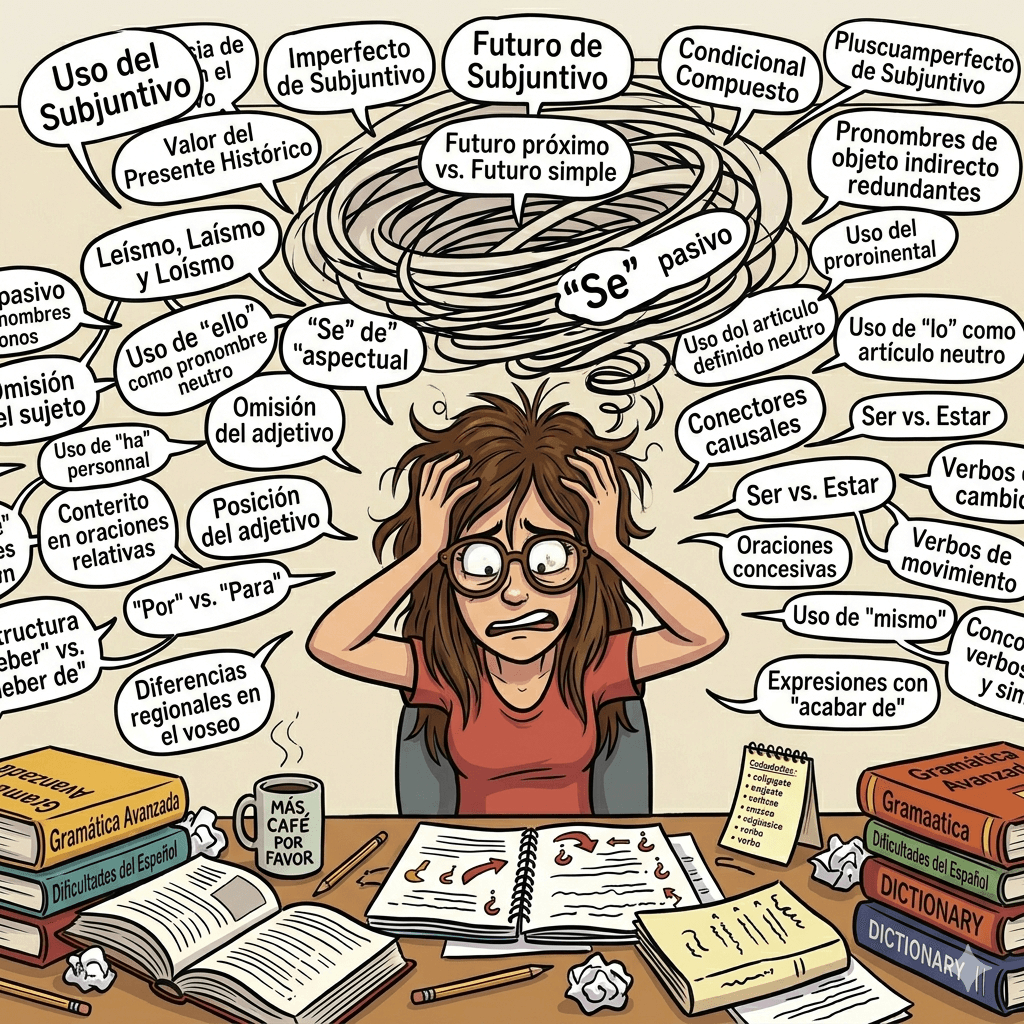
Why Traditional Study Often Feels Slow
Many learners believe longer study sessions automatically lead to faster progress.
So they schedule something like this:
- One hour with a textbook
- Grammar explanations
- Vocabulary lists
- Written exercises
On paper, it looks productive.
But the experience often feels different.
You read a grammar explanation.
Complete a few exercises.
Then close the book.
A few days later, much of it feels surprisingly unfamiliar again.
The problem is not effort.
The problem is how the brain processes language information.
Textbook learning often isolates language into pieces: rules, example sentences, and lists of vocabulary.
Real communication does not work this way.
Language normally appears as continuous streams of meaning, where words, emotions, context, and timing all interact simultaneously.
When learning lacks that context, the brain stores knowledge more weakly.
This is one reason short periods of authentic input can sometimes produce stronger learning signals than longer abstract study.
The Cognitive Advantage of Micro-Immersion
Micro-immersion works because it activates several learning mechanisms at the same time.
Instead of studying language as isolated information, the brain experiences it as communication.
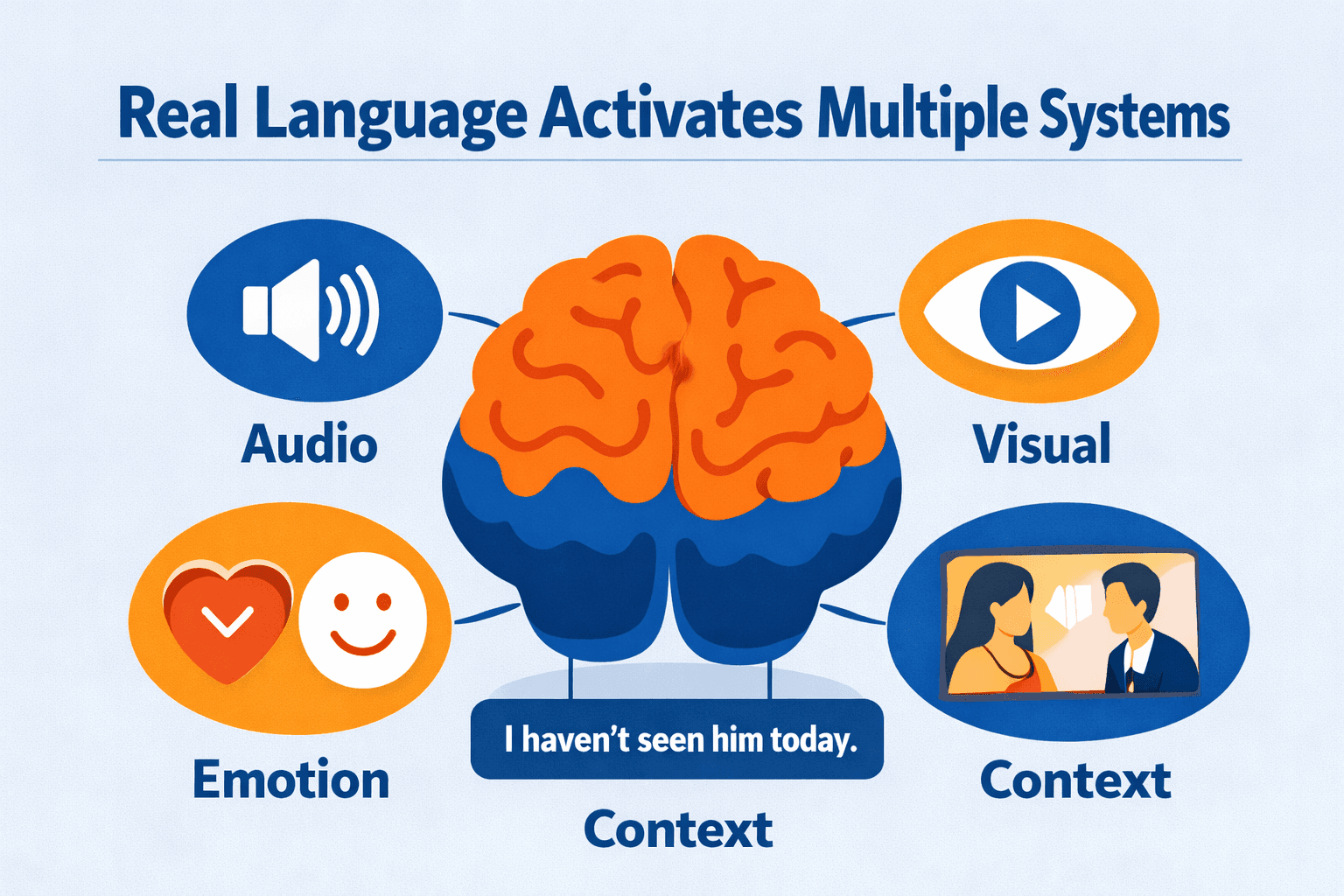
When you watch a short scene from a show, your brain processes:
- Sound patterns
- Facial expressions
- Emotional reactions
- Conversational context
- Predictions about what will happen next
This creates a richer learning environment.
Research in cognitive psychology suggests that learning becomes stronger when information appears in varied and meaningful contexts. Robert Bjork’s research on “desirable difficulties” shows that learning conditions that feel slightly challenging often produce stronger long-term retention.
In language learning, authentic input often creates these conditions naturally.
Another important factor is multimodal input. Studies show that combining audio, visual cues, and language improves comprehension and memory formation because the brain receives multiple signals at the same time.
A short scene from a show naturally includes these multimodal signals.
A grammar exercise rarely does.
Why Short Sessions Sometimes Work Better
At first this sounds counterintuitive.
How could 15 minutes beat one hour?
The answer lies in how attention works.
Long study sessions often create cognitive fatigue.
After twenty or thirty minutes, attention begins to drift.
The brain starts processing information less efficiently.
Short exposure sessions maintain higher concentration.
But something else matters too.
Real media creates prediction pressure.
When watching a conversation unfold, your brain constantly tries to anticipate meaning:
What are they talking about?
What will they say next?
Why did they react that way?
Prediction forces the brain to actively process language instead of passively observing it.
Educational research consistently shows that active processing strengthens learning much more than passive review.
Textbook Study vs Micro-Immersion
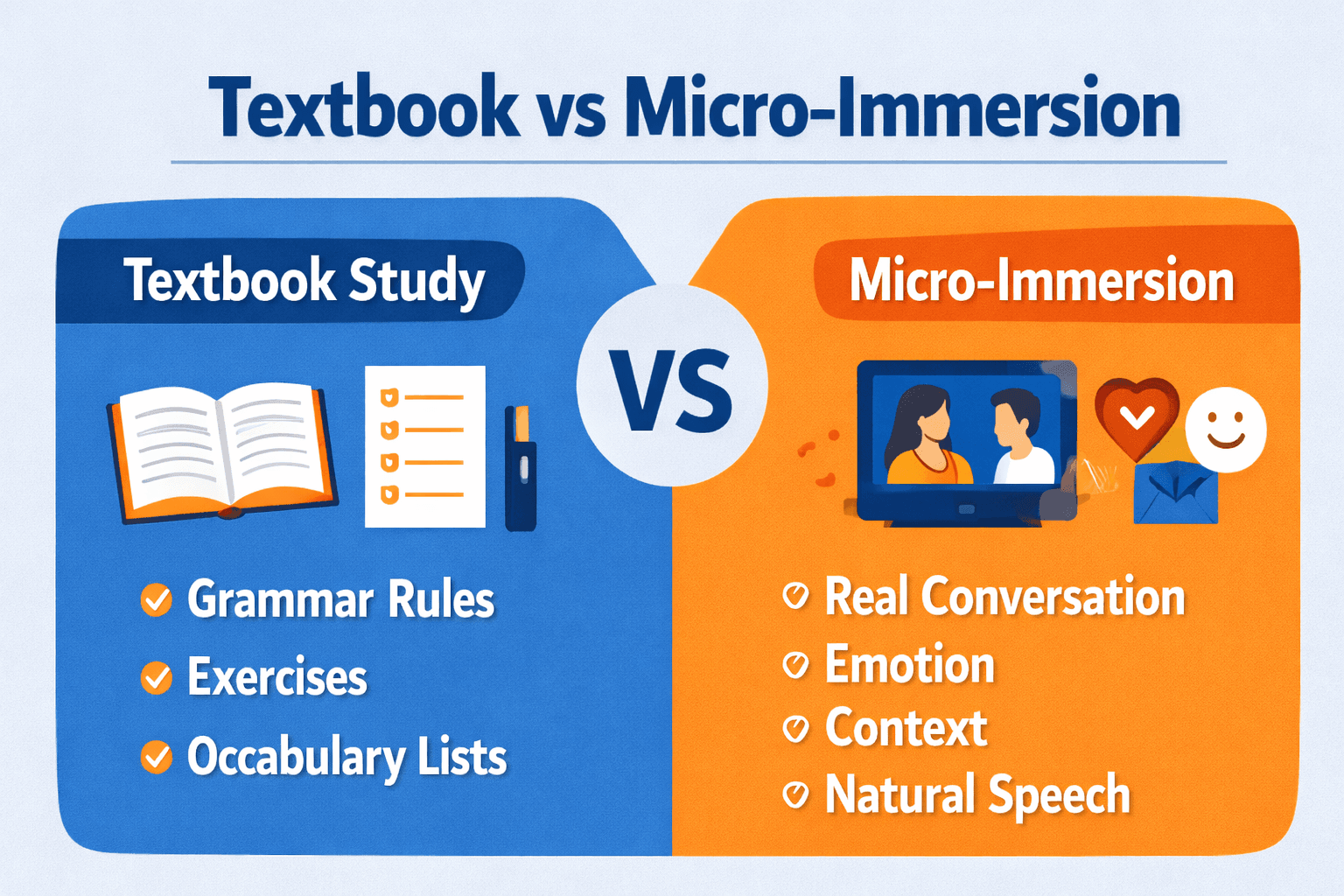
| Learning Mode | What It Feels Like | What the Brain Processes |
| Textbook Study | Structured and controlled | Rules, isolated examples |
| Micro-Immersion | Natural and dynamic | Context, emotion, conversation patterns |
| Combined Approach | Balanced learning | Knowledge + real-world usage |
Textbooks are useful for understanding structure.
Micro-immersion helps the brain experience how that structure behaves in real communication.
For a practical framework on how to combine both approaches with Netflix content specifically, Can You Learn a Language With Netflix? What Actually Works breaks down the methods — subtitle progression, shadowing, and weekly routines — that make the combination effective.
A Moment When I Noticed This Myself
I once tried an experiment while studying Korean.
For several weeks I focused mostly on textbooks.
I studied grammar explanations carefully.
Completed exercises.
Reviewed vocabulary.
It felt structured and productive.
But conversations still felt slow.
Then one evening I started watching a short interview clip online.
At first I planned to watch it only for entertainment.
But I noticed something interesting.
After a few days of watching short clips like that—sometimes only ten or fifteen minutes—I began recognizing phrases much faster.
Expressions that had appeared in textbooks suddenly felt more natural.
The grammar had not changed.
But the context made the patterns easier to retrieve.
That was the moment I realized something important.
The brain does not learn language only through explanation.
It learns through exposure inside meaningful situations.
How to Use Micro-Immersion Effectively
Micro-immersion works best when the exposure is short but focused.
Here are three simple ways to apply it.
1. Watch Small Segments, Not Full Episodes
Instead of watching an entire show passively, choose short segments.
For example:
- A two-minute dialogue
- A short interview clip
- One scene from a series
Short segments make it easier to notice patterns and replay important moments.
2. Replay Interesting Moments
When a phrase sounds familiar or interesting, replay that moment.
Listen again.
Notice:
- The tone
- The rhythm
- How the sentence is structured
Repetition inside context helps the brain store patterns more deeply.
3. Focus on Patterns, Not Individual Words
Many learners pause constantly to translate vocabulary.
But micro-immersion works best when focusing on phrases and patterns.
For example, instead of translating each word in a sentence, notice the structure:
“I think we should…”
“Maybe we can…”
“That makes sense.”
These patterns appear repeatedly in natural conversation.
Recognizing them accelerates comprehension and speaking ability.
Why Micro-Immersion Feels Surprisingly Powerful
One reason micro-immersion works well is emotional engagement.
Stories, characters, and conversations activate emotional processing systems in the brain.
Emotion strengthens memory formation.
This is why people often remember movie quotes years later but forget vocabulary lists after a week.
Language attached to meaningful moments simply sticks better.
Micro-immersion takes advantage of this effect.
Even a short scene can create a memorable learning experience.
FAQs
1. Is watching Netflix really useful for language learning?
Yes—if used actively.
Short segments of authentic conversation expose learners to natural pronunciation, rhythm, and sentence patterns that rarely appear in textbooks.
2. Why does short exposure sometimes feel more effective?
Because real media activates multiple learning systems simultaneously: listening, prediction, emotion, and context processing.
This creates stronger memory encoding.
3. Should I stop using textbooks completely?
No.
Textbooks help explain grammar and structure.
However, combining them with regular exposure to real language dramatically improves long-term fluency development.
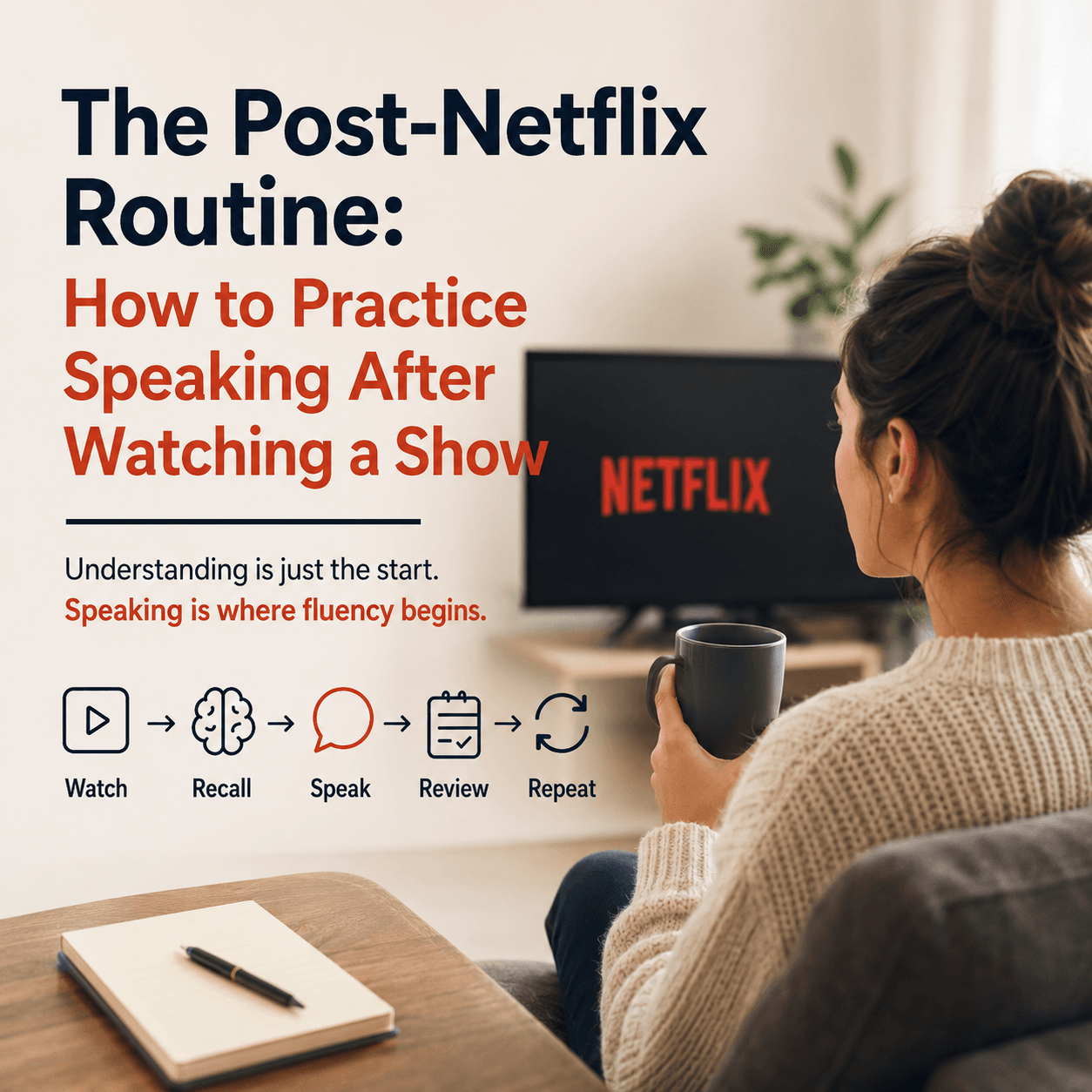
A Simple Way to Practice Micro-Immersion
One challenge with learning through shows or videos is that many learners watch passively.
Passive viewing increases recognition but does not always encourage active processing.
Tools designed for language learning can help transform passive watching into interactive exposure.
For example, Jolii turns short video segments into interactive learning sessions with dual subtitles and structured exercises.
This approach allows learners to experience the natural flow of conversation while still engaging actively with the language.
If you are interested in why repeating the same exercise can sometimes slow down learning progress, you might also enjoy this article:
Why Repetition Alone Doesn’t Build Fluency (But Variation Does)
It explains why variation and context help the brain develop more flexible language skills.
Final Thoughts
Micro-immersion is not about replacing traditional study.
It is about changing the balance between explanation and exposure.
Language is not only a system of rules.
It is a living pattern of sounds, reactions, and meanings.
Even short moments of authentic input can activate the brain’s natural learning systems in ways that long abstract study sometimes cannot.
Sometimes fifteen minutes of real conversation is enough to remind your brain what language actually looks like in the wild.
And those small moments of exposure often accumulate faster than we expect.