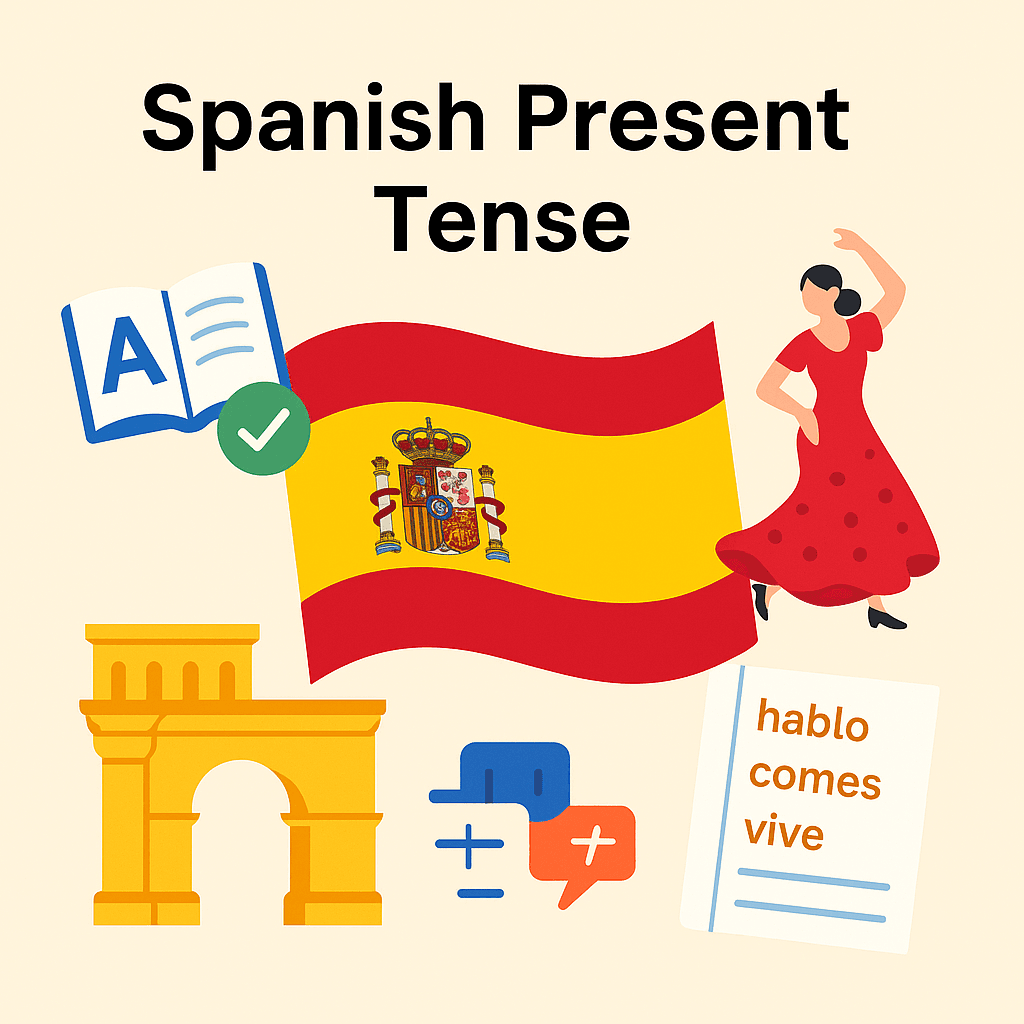
When beginning your Spanish learning journey, you probably asked yourself: Should I learn Spanish from Spain or Spanish from Mexico?
Spain, of course, is where the language originated, and many learners will opt for this version of Spanish, known as Castilian or peninsular Spanish. However, Mexico has the largest number of Spanish speakers in the world, so it is more easily understood and recognised across Latin America, where there are 455 million speakers in total. For this reason, many learners find Mexican Spanish more practical.
The truth is, when you understand one, you can understand the other; these are the same languages after all, just with regional twists (think US vs. UK English).
The differences are noticeable but not game-changing. But what exactly are the differences between the two?
Read on for the key differences explained.
Pronunciation
Words can sound very different depending on whether you learn to pronounce sounds the Spanish way or the Mexican way.
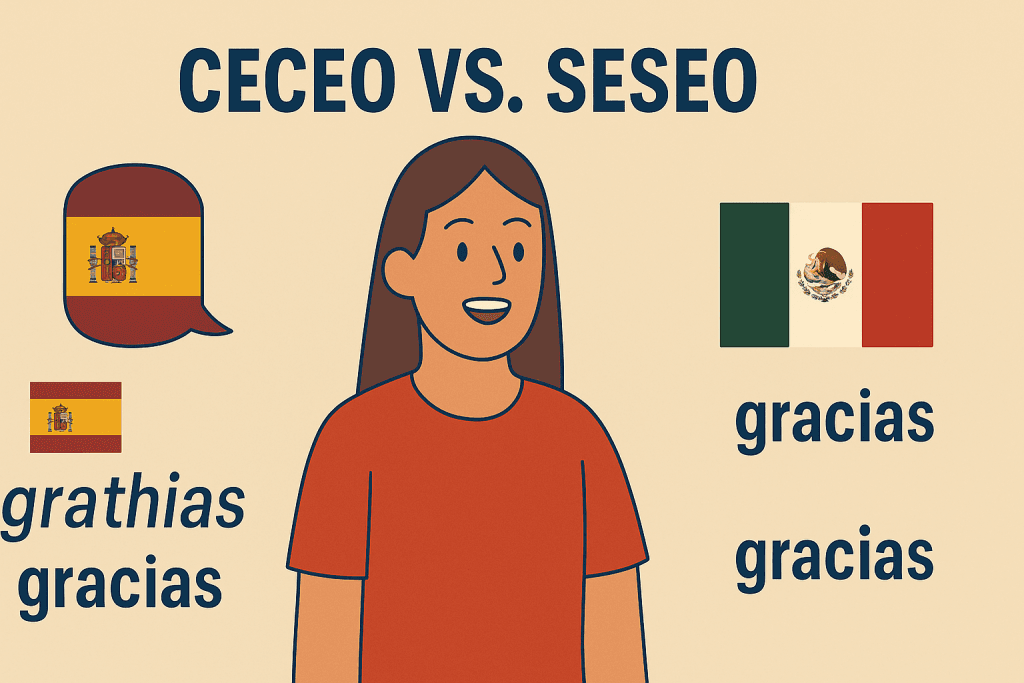
a. Ceceo vs. Seseo
- In Spain (except for the Canary Islands and parts of Andalusia) “z” and soft “c” (before e or i) are pronounced like the English “th” in think: gracias → “ɡɾathias”. This pronunciation style is known as ceceo.
- However, in Mexico, both “z’ and “c” are pronounced like an “s”: gracias → “ɡɾasjas”. This is known as seseo.
Once, I was poked fun at (in a friendly way) in Mexico for my pronunciation of the Spanish island of Ibiza after pronouncing it the Spanish way, as in “Ibitha.
b. Accent / Intonation
- Spain’s Madrid accent tends to be sharper and faster, with a distinctive “lisp” sound (due to ceceo).
- Mexican Spanish is often slower and more melodic, influenced by indigenous and American English sounds.
- Accents in both countries differ depending on the regions.
2. Vocabulary Differences
Many words differ between Spain and Mexico. Here are some common examples:
| English | Spain | Mexico |
| Car | coche | carro |
| Cell phone | móvil | celular |
| Computer | ordenador | computadora |
| Pen | bolígrafo | pluma |
| Bus | autobús | camión |
| Juice | zumo | jugo |
| Potato | patata | papa |
| Money | pasta | lana / plata |
| Cool | guay | padre / chido |
Note: Spanish vocabulary can differ across Latin America. Although Mexican Spanish is the most widely used and understood, there are many differences between countries. For example, in Mexico, torta is a sandwich, while in many other LATAM countries (Argentina, Chile, Colombia, etc.) it means “cake”.
I recommend this hilarious video, which highlights many of these differences.
Fun Fact: There are 11 different words for “straw” in Spanish, varying by country.
3. Grammar
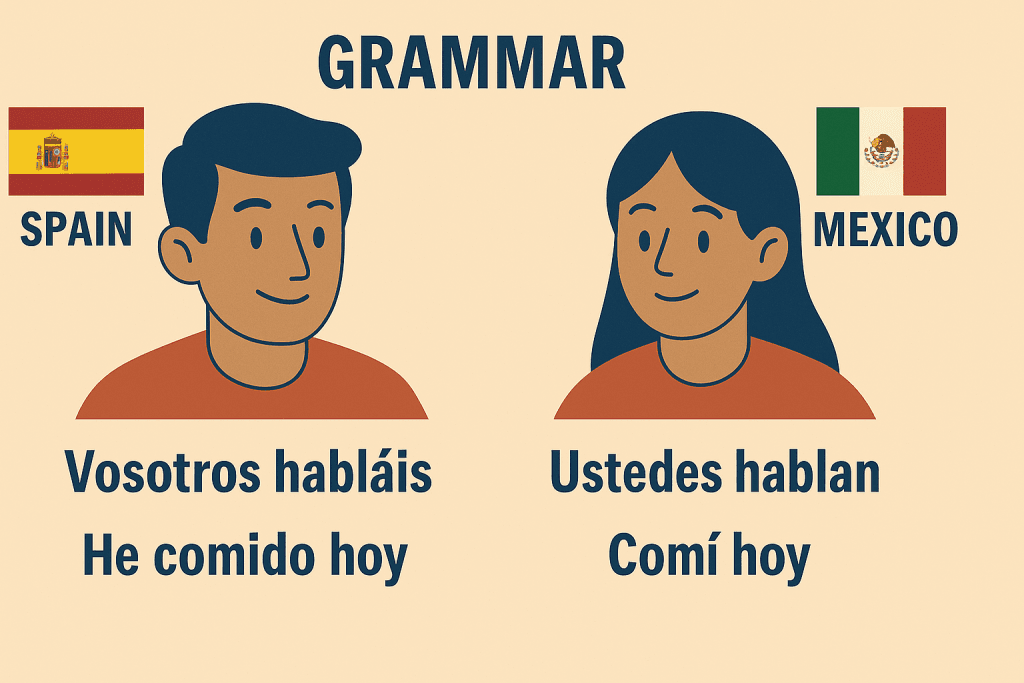
Another key difference is grammar and usage. When you understand these differences, you will easily be able to determine whether you are listening to Spanish from Spain or Mexico.
a. Vosotros vs. Ustedes
- In Spain, people use vosotros (“you all”) with its own verb forms (for example, vosotros habláis).
- In contrast, Mexicans don’t use vosotros; instead, they use ustedes for both formal and informal plural “you”.
b. Past tenses
- Spain uses the present perfect tense for the recent past:
- He comido hoy. (“I’ve eaten today.”)
- Mexico usually prefers the simple past:
- Comí hoy. (“I ate today.”)
c. Diminutives:
- Mexico uses the diminutives -ito/-ita frequently and affectionately:
- cafecito, casita, momentito
- Spain also uses them, but less often and sometimes differently (ratito vs. ratico in Latin America).
4. Slang and Expressions
There are Spanish slang phrases and expressions that people use every day in Spain that you would never hear in Mexico, and vice versa. Here are some examples to illustrate the difference:
- Spain:
- Vale = Okay
- Tío/tía = Dude / guy / girl
- Qué guay = How cool!
- Currar = To work
- Mexico:
- Órale = Wow / Okay / Let’s go
- Güey = Dude (friendly)
- No manches = No way! / You’re kidding!
- Chamba = Work / Job
You can find more regional slang in the Bad Bunny DTMF breakdown (Puerto Rican Spanish), the Calle 13 Latinoamérica analysis (pan-Latin American), and the Élite breakdown (Castilian Spain Spanish).
5. Cultural & Media Influence
Spanish from Spain is dominant in Europe and formal international organisations. Meanwhile, Mexican Spanish is common across Latin America due to its large presence in TV, music, and films. It is also highly influential and important in the United States, where it is the second most spoken language.
If you are looking for Spanish-language media to aid in your language learning journey, the Spanish TV shows hub covers six series at different difficulty levels, and the music analyses break down songs from across the Spanish-speaking world.
Conclusion

Whether you decide to learn Spanish from Spain or Mexican Spanish, the most important thing is to enjoy the learning process. Once you develop a solid foundation in grammar, vocabulary, and pronunciation, you’ll be able to understand Spanish speakers from almost anywhere in the world — yes, even Chile (eventually).
Your choice will likely depend on where your Spanish teacher or tutor is from, the resources and apps you use, or the movies, podcasts, and music you listen to. For many learners, especially those in the United States, Mexican Spanish feels more natural and practical due to its wide influence across Latin America and global media.
At the end of the day, there’s no “better” Spanish — only the one that connects with you most. Focus on consistency, have fun with it, and you’ll soon be speaking confidently in any Spanish-speaking country. ¡Buena suerte!
Learning in Panama, I hear both influences daily — Mexican slang from TV, Castilian grammar from textbooks, and neither quite matching what people say on the street. That mix is actually a feature, not a bug. The more varieties of Spanish you encounter, the faster your ear adapts to all of them.
If you are at the stage where these differences are starting to matter, A1 to A2 Is Easy. A2 to B1 Is Where Most People Quit explains why intermediate Spanish is where regional variation starts to feel significant — and what to do about it.