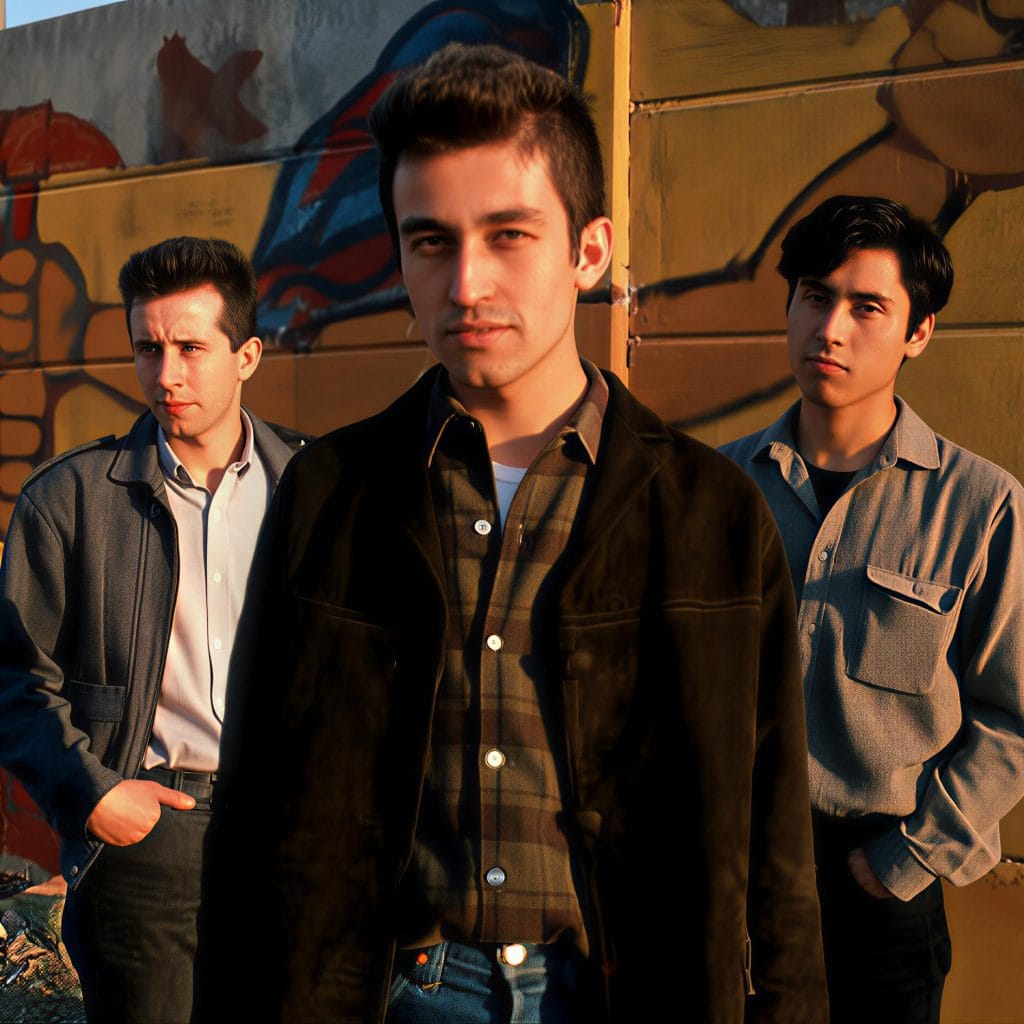
Do you want to give your language studies a little kick? If you choose to learn Spanish with Los Prisioneros, you are going directly into one of the most powerful entry doors to Latin American culture. Music is not background noise; it is a rhythmic textbook. Today, we’re exploring the 1986 track “El Baile de los que Sobran.” This song was the anthem of a generation in Chile, and still resonates on the streets of Santiago and around all of Latin America.
Learn Spanish with Los Prisioneros — Quick Answer
If you’d like to learn Spanish with Los Prisioneros, then “El Baile de los que Sobran” is the best place to start learning social vocabulary and Chilean history. This 1986 anthem addresses the injustices of the education system with lyrics that strike a chord.
- Vocabulary: You will learn some essential Chilean expressions
- History: The song reflects on education inequality under Pinochet’s dictatorship.
- Cultural Impact: While written decades ago, this song remains a symbol of resistance.
The Song’s Story: A Voice for the “Leftover” Generation
Released in 1986 under Pinochet’s dictatorship, “El Baile de los que Sobran” criticized the neoliberal policies that led to an “economic miracle,” which privatized education and left the working class behind. The band encapsulated the betrayal of a generation that completed twelve years of schooling (“los doce juegos”) and was left with no jobs or future.
Learn Spanish with Los Prisioneros: A Cultural Analysis and A Defiant Declaration of Identity
Let’s jump headfirst into the most hard-hitting lines from “El Baile de los que Sobran” and see what the words really mean. We will look at why they matter so much in Chilean culture.
Verse 1: The Broken Promise of Education
| Original lyrics in Spanish | English translation |
| Oías los consejos, los ojos en el profesor / Había tanto sol sobre las cabezas / Y no fue tan verdad porque esos juegos al final / Terminaron para otros con laureles y futuros / Y dejaron a mis amigos pateando piedras | We listened to the advice, our eyes on the teacher / There was so much sunshine above our heads / And it wasn’t so true because those games, in the end / Ended for others with laurels and futures / And left my friends kicking stones |
Language Notes: This verse utilizes the preterite tense (“dejaron,” “terminaron”), to describe actions that were completed in the past. The expression “pateando piedras” (kicking stones) is a standard Chilean idiom for not having work.
Cultural Analysis: This part takes on the 1980s mythological meritocracy. The rich prospered, while the working class kept falling behind. Students thought you would succeed if you worked hard. But the “laurels” were reserved for those who had money.
The Chorus: An Invitation to the Marginalized
| Original lyrics in Spanish | English translation |
| Únete al baile de los que sobran / Nadie nos va a echar de más / Nadie nos quiso ayudar de verdad | Join the dance of those left over / No one is going to miss us / No one really wanted to help us |
Language Notes: The word “sobran” comes from the verb “sobrar”, which means “to be left over,” or surplus. The singers create a community environment with the command ”Únete” (Join).
Cultural Analysis: The “dance” is, of course, a derisive metaphor. Here, it’s the “dance” of the unemployed and the unheard. They are “los que sobran,” the song’s title, so disposable and of no use in this neoliberal logic that turns human beings into parts of a machine.
Verse 2: The Secret Education of the Elite
| Original lyrics in Spanish | English translation |
| A otros le enseñaron secretos que a ti no / A otros dieron de verdad esa cosa llamada “educación” / Ellos pedían esfuerzo, ellos pedían dedicación / ¿Y para qué? Para terminar bailando y pateando piedras | Others were taught secrets that you weren’t / Others were truly given that thing called “education” / They asked for effort, they asked for dedication / And for what? To end up dancing and kicking stones |
Language Notes: Note the contrast between “a otros” (to others) and “a ti” (to you). This emphasizes the social divide. The question “¿Y para qué?” (And for what?) is slang to express frustration in Spanish.
Cultural Analysis: This is an indictment of the privatized form of education. In Chile, the quality of your education was mostly based on how much was in your family’s bank account. The “secret” knowledge was the networking and high-level training available only to upper-class members.

FAQs — Learn Spanish with Los Prisioneros
What does “pateando piedras” mean?
Literally, it means “kicking stones.” Culturally, it refers to being unemployed, marginalized, or having no clear path forward in life.
Is Chilean Spanish hard to learn?
Chilean Spanish has unique slang and a very fast pace. However, listening to Los Prisioneros is a great way to practice because Jorge González pronounces his lyrics with clear, raw emotion.
Why is this song still popular?
It captures the universal feeling of being let down by “the system.” It remains a symbol of resistance against inequality.
Music is an entry point into the heart of a language, unlike what’s found on any flashcard. If you’re looking to take things a step further than this when learning the intricacies of Latin American Spanish and going beyond repetition, you need a few good tools. Visit Jolii.ai now to see how we can help you go from “kicking stones” to complete confidence speaking. Let’s jumpstart your path to fluency together!