Quick Answer (TL;DR)
To learn Korean with Netflix effectively, focus on emotional expressions and reactions, not full sentences. In shows like Hospital Playlist, repeated patterns of tone, pauses, and everyday responses help your brain build real conversational fluency.
You don’t become fluent in Korean by memorizing perfect sentences.
You become fluent when you start recognizing and using emotional expressions in real conversations.
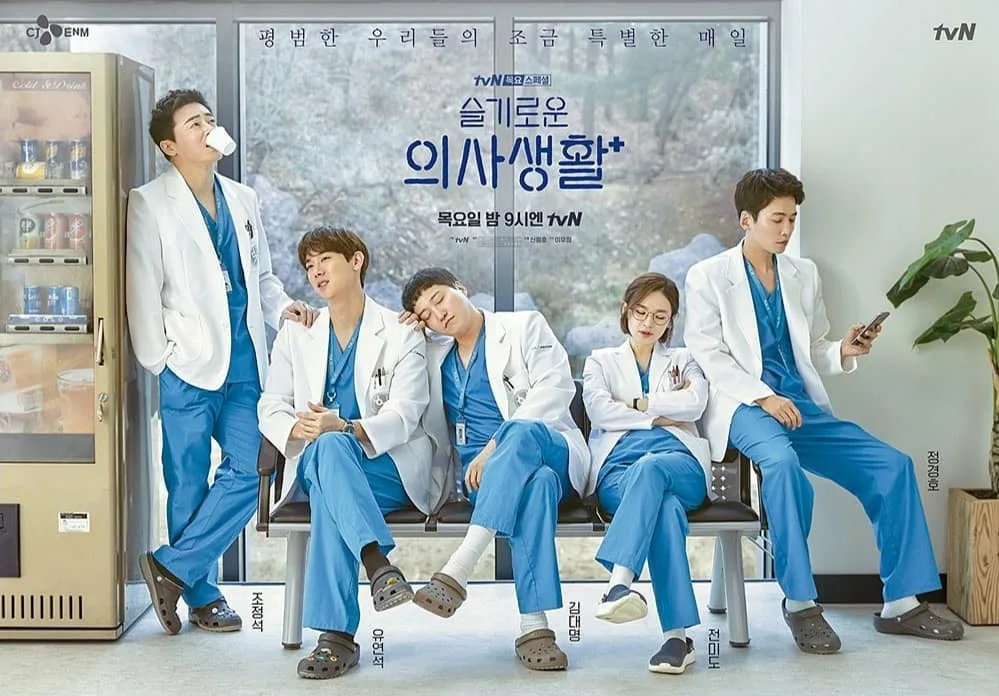
In Hospital Playlist, a slice-of-life medical drama available on Netflix that follows five doctors and their everyday lives, everyday reactions, pauses, and subtle emotional cues show how Korean is actually used—and this is what helps your brain build natural fluency.
Why Korean Feels Natural to Understand—but Hard to Use
At some point, Korean starts to feel familiar.
You can follow conversations.
You recognize words as they appear.
It almost feels like progress is happening.
But then something subtle starts to show.
You understand what people say.
Yet when it’s your turn to respond, there’s a small delay.
Not because you don’t know the words.
But because nothing comes out naturally.
That gap is easy to miss.
Because on the surface, everything looks fine.
The issue is not understanding.
It’s how real conversations actually move.
Korean is not built on complete, carefully structured sentences.
It moves through reactions.
People respond in fragments.
In feelings.
In small signals like:
- “아…” (ah…)
- “진짜?” (really?)
- “와…” (wow…)
These are not full sentences.
But they carry meaning instantly.
If you only learn structured language, you can understand Korean.
But it will still feel slightly out of reach.
Because real conversation doesn’t wait for perfect sentences.
It moves through reactions.
The Cognitive Insight: Why Emotional Language Builds Fluency
Your brain does not prioritize perfect sentences.
It prioritizes meaningful signals.
And emotional expressions are strong signals.
When you hear:
- “아 진짜…” (ah seriously…)
Your brain does not process grammar.
It processes feeling.
That is what makes it memorable.
In shows like Hospital Playlist, language appears as:
- Reactions
- Interruptions
- Incomplete thoughts
This activates pattern recognition.
Over time, your brain starts predicting:
- How people react
- What comes next
- How emotion shapes language
That prediction is what builds fluency. This is the same principle explored in The Science of Micro-Immersion — short bursts of emotionally engaging authentic content produce stronger learning signals than longer passive sessions.
Why “Hospital Playlist” Is Surprisingly Effective for Learning Korean
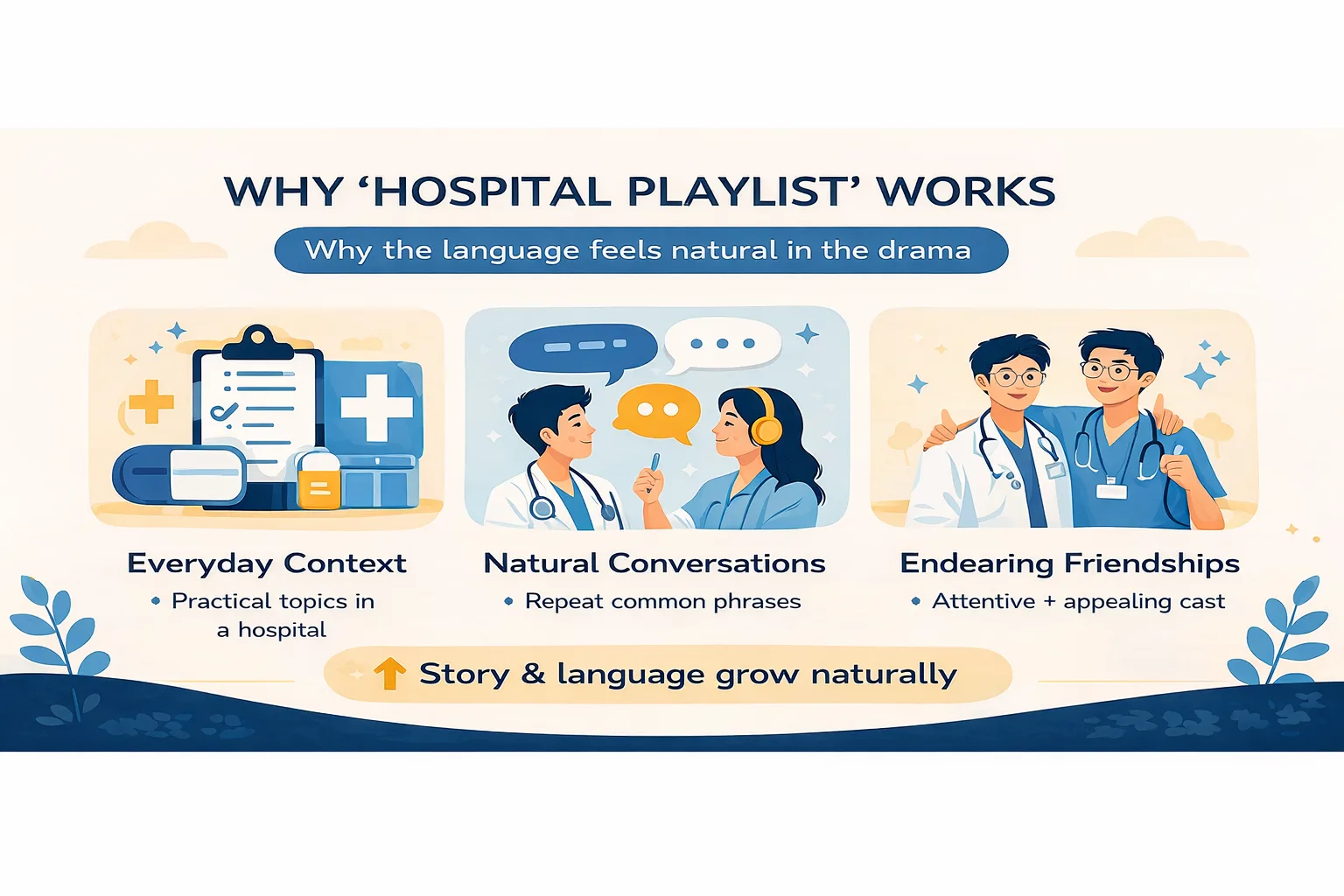
Not every show works well for language learning.
Some are too dramatic.
Some use unnatural dialogue.
Others move too fast to follow.
But Hospital Playlist feels different.
Because it stays close to real life.
And you can see that clearly in how language is used.
1. Everyday Language That Feels Real
The story follows five doctors, but most conversations feel human—not scripted.
For example, in group meal scenes, you often hear:
- “야, 오늘 뭐 먹을래?” (hey, what should we eat today?)
- “나 진짜 배고파” (I’m really hungry)
Even small reactions like:
- “아 진짜…” (ah seriously…)
appear naturally.
2. Vocabulary That Comes From Real Situations
The show mixes professional and everyday language seamlessly.
In a patient consultation:
- “어디가 불편하세요?” (where does it hurt?)
Moments later, with a colleague:
- “오늘 진짜 힘들다” (today was really tough)
You learn how language shifts with context.
3. Clear Pronunciation and Comfortable Pace
Dialogue is:
- Clear
- Steady
- Emotionally expressive
For example:
- “걱정하지 마세요” (please don’t worry)
is spoken calmly and clearly, making it easier to follow.
4. Learning Through Music (OST Effect)
Music adds another powerful layer.
Songs like Aloha are simple and emotional.
They repeat naturally, making them easier to remember.
And because it’s sung by Jo Jung-suk, one of the main actors, it feels connected to the story.
5. Cultural Understanding Through Everyday Moments
You also learn culture naturally.
For example:
When someone is praised, they might respond:
- “아니야, 별거 아니야” (no, it’s nothing)
This reflects modesty—a key cultural trait.
Research on multimodal learning supports this. A 2024 study on foreign language education found that emotions are expressed through multiple channels simultaneously — facial expressions, gestures, tone, and verbal cues — and that understanding this multimodal nature of emotion is essential to how language is processed and retained. While that research focused on written feedback in academic settings, the same principle applies to spoken dialogue: a scene that combines tone, facial expression, and emotional context creates a richer, more memorable language signal than text alone.
This helps explain why emotional scenes stay in your memory longer than grammar exercises.
A Moment I Noticed This Myself
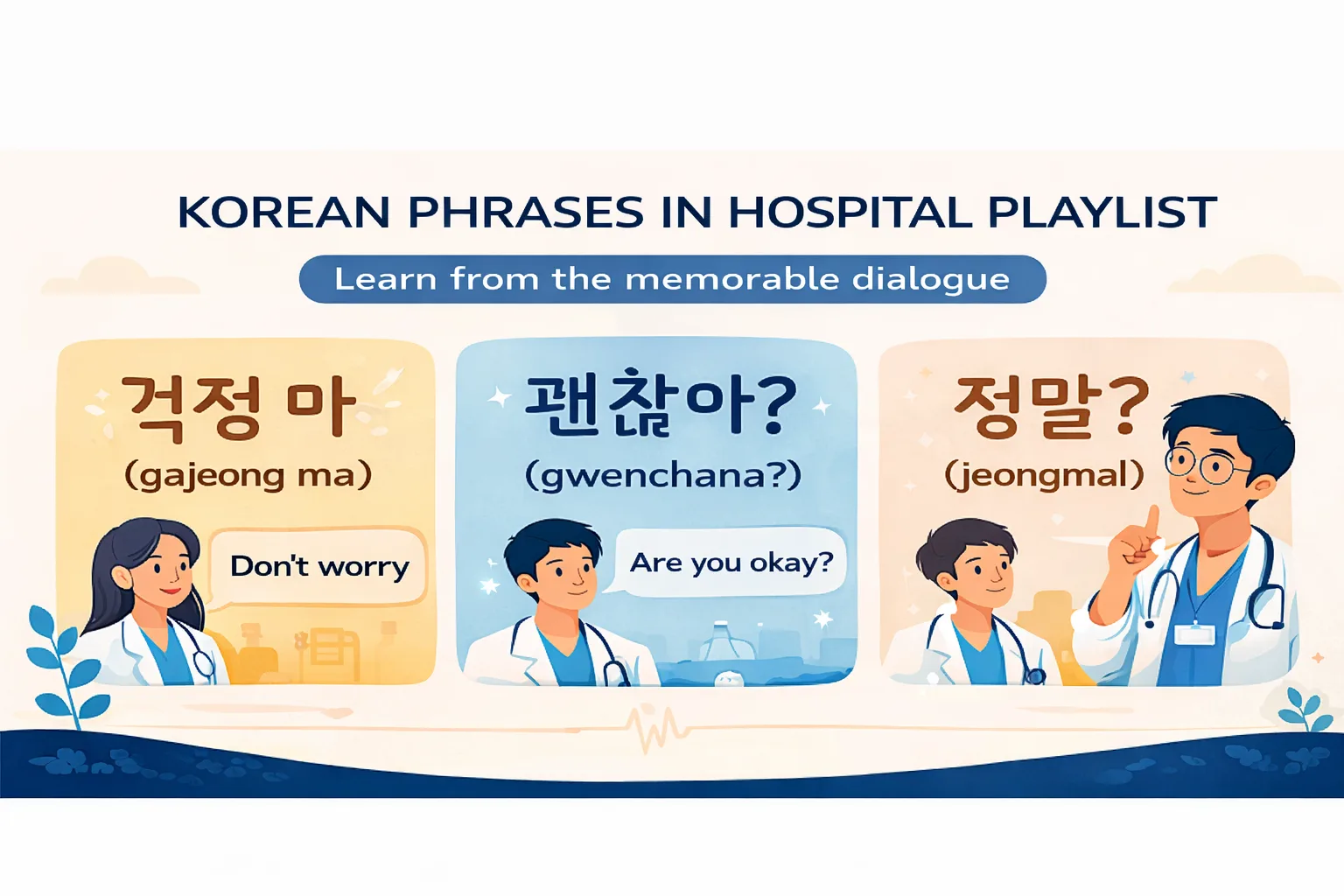
I remember hearing the expression “아 진짜…” (ah seriously…) many times before.
At first, I thought it simply meant “really.”
Something direct.
Something literal.
But over time, I started noticing something different.
The same phrase kept appearing in completely different situations.
Then I watched a scene in Hospital Playlist.
There’s a moment where Lee Ik-jun reacts to his friend in a slightly annoyed but playful way and says:
“아 진짜…” (ah seriously…)
He wasn’t asking if something was true.
He wasn’t expressing surprise.
Instead, it felt more like:
- Mild frustration
- Teasing
- Emotional reaction
Same words.
Different meaning.
Depending entirely on context and tone.
That’s when it became clear.
“아 진짜…” is not just about meaning.
It’s about feeling.
Later, I started recognizing similar patterns in real conversations.
And even responding more naturally.
That was when I understood something important.
Language becomes usable when it connects to emotion, not just definition.
Context vs Study-Based Learning
| Learning Mode | What It Feels Like | What the Brain Builds |
| Vocabulary Study | “I know this word” | Isolated memory |
| Grammar Practice | “I understand the rule” | Structured knowledge |
| Emotional Context | “I feel what this means” | Pattern recognition |
| Context + Repetition | “I can react naturally” | Automatic retrieval |
How to Learn Korean Effectively from This Show
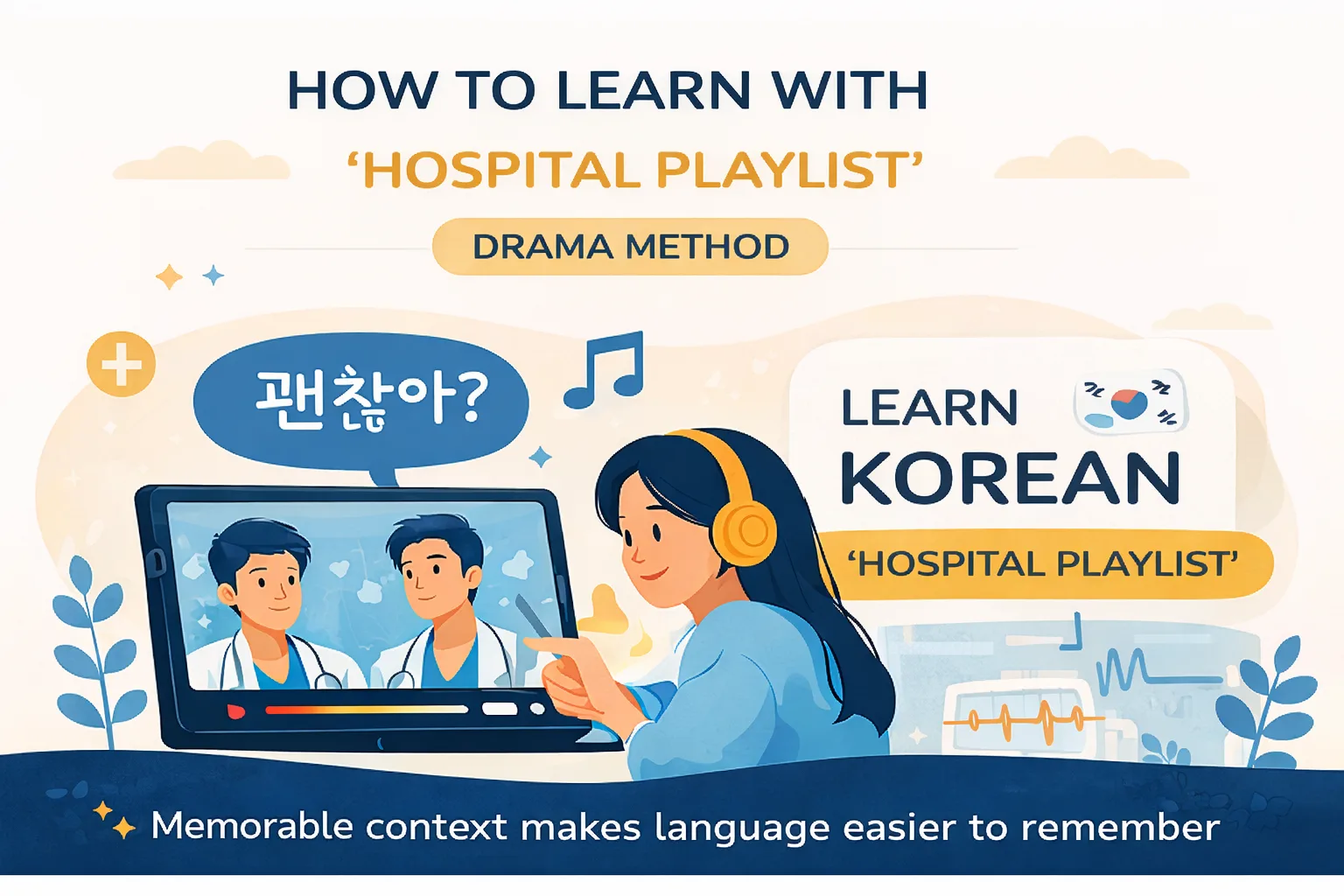
Watching is not enough.
You need to engage with reactions.
1. Focus on Reactions, Not Sentences
Ask yourself:
What emotion is being expressed?
Why did they react this way?
2. Notice Repetition and Tone
Pay attention to:
- Repeated phrases
- Tone
- Pauses
3. Replay Emotional Moments
Emotion helps memory.
Replay scenes that feel meaningful.
Over time, your brain shifts.
You stop thinking in sentences.
And start responding in patterns.
Why This Connects to Context-Based Learning
Emotional patterns only become useful when they appear in the right context.
A phrase like:
- “아 진짜…” (ah seriously…)
can mean different things depending on tone, situation, and relationship.
This is why context matters more than isolated meaning. Context is what makes emotional expressions usable rather than just recognisable, as explained here: Context is King: How Netflix & Jolii AI Rewire Your Brain for Fluency
When language is experienced inside real situations, your brain connects:
- Meaning
- Emotion
- Usage
Instead of memorizing words, you start recognizing patterns. And that is what makes language feel natural.
FAQs
1. Is this better than studying grammar?
You need both. Grammar gives structure, but emotional context makes language natural and usable.
2. Can I learn Korean just from this show?
Not really. Watching shows like this helps improve your listening, pattern recognition, and understanding of how Korean is used in real situations.
But to build real fluency, you still need to combine it with other forms of learning, such as vocabulary study, speaking practice, and active usage.
3. Why are Korean reactions so important?
Because real conversations are built on emotion. Reactions help you respond quickly and naturally without constructing full sentences.
For a broader overview of how Korean fits into a language learning timeline, How Long Does It Really Take to Learn a Language? covers the FSI estimates and what actually determines progress speed.
A Simple Way to Make This Work
By now, the idea is clear.
Fluency is not built from perfect sentences.
It is built from real reactions.
That’s where Jolii becomes useful.
It helps you:
- Follow emotional context in real scenes
- Notice patterns more clearly
- Replay key moments without breaking immersion
So instead of memorizing language,
you start experiencing it.
Final Thoughts
Fluency in Korean is not about speaking perfectly.
It is about responding naturally.
And that comes from understanding how people actually communicate.
Hospital Playlist gives you something powerful.
Not just language.
But emotional patterns.
You begin to see:
- How reactions replace full sentences
- How tone changes meaning
- How small expressions carry big messages
And that changes everything.
Because once you understand how people feel through language,
you don’t just learn Korean.
You start thinking in it.