One thing is for sure: Language learning apps have evolved over the years. Remember when studying vocabulary meant flipping through multiple flashcards? Those days are long gone. Now we’ve got apps like Language Drops or Drops, which look like they belong in your gaming folder, not your education one.
With all the gamification and colorful interfaces, it’s no wonder the language app global market achieved over 26.5 million downloads in 2024.
And Language Drops is one of the apps providing a swipe-based approach to vocabulary building. But the real question is, is Drops an effective way to learn a new language and work towards fluency?
Here’s a detailed breakdown.
What Is Language Drops? A Quick Overview
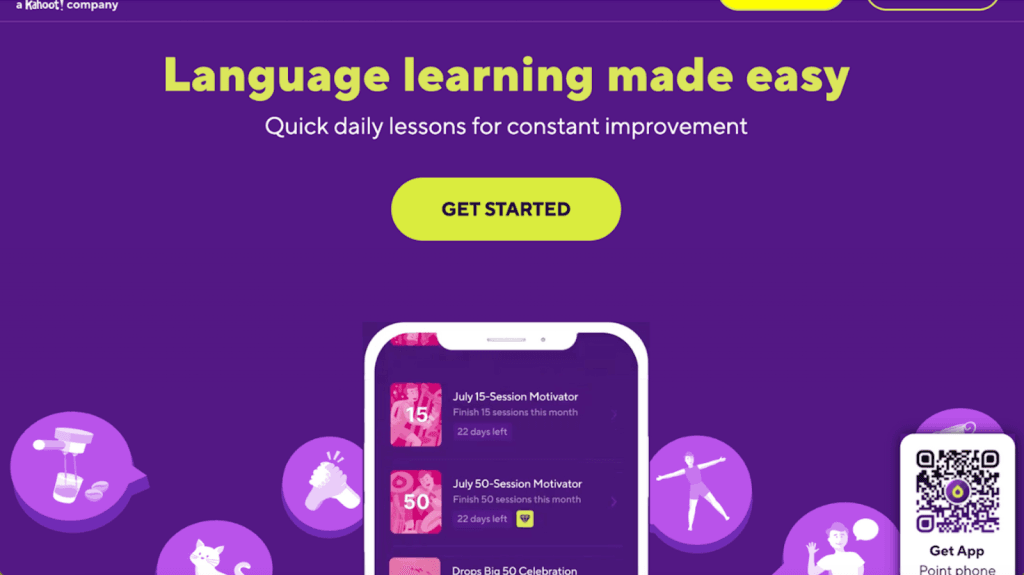
Language Drops launched with a simple mission. To make vocabulary learning visual, fast, and definitely fun. The good thing about this app. It strips away the grammar lectures and focuses purely on building your word bank through illustrated flashcards and quick-fire sessions.
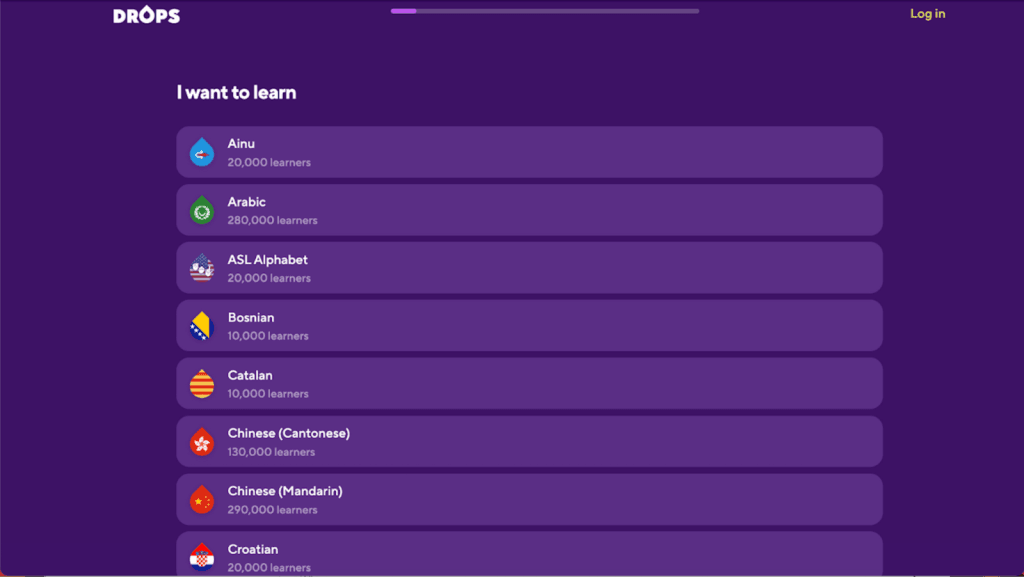
You get access to 50+ languages, including some less common ones like Icelandic and Māori. The lessons? They are limited to 5 minutes per day.
The whole experience centers around themed vocabulary sets covering everything from food and travel to business terms and slang. No lengthy explanations, no grammar drills, just words paired with surprisingly clever illustrations.
Who is it for?
- Busy professionals who want casual practice
- Total beginners curious about a language
- Learners who enjoy gamified visuals over traditional lessons
Core Features of Language Drops
The good thing about language apps is the core features you get to help you learn. Here’s what makes Language Drops stand out:
Visual Learning
Language Drops ditches text translations almost entirely. Instead, you get minimalist illustrations representing each word. The idea? Your brain forms direct associations between the foreign word and the concept, skipping the “translate to English first” step that slows most learners down.
The 5-Minute Time Lock
This one’s controversial. Free users can’t study more than 5 minutes daily. While it sounds restrictive for anyone who wants to learn more, these sessions come in handy for quick lessons. Great for forming habits.
Spaced Repetition
When learning a language, you might struggle with words in the first days. Drops understands this very well. So to help learners, this app uses algorithms to resurface words right when you’re about to forget them.
Offline Mode
Need to be on a plane or in an area with poor WiFi? Language Drops offers downloadable lessons. Your streaks? Words learned? The app tracks all these details so you can continue learning.
Language Drops Learning Style
Language Drops follows the “direct method.” How does this work? You learn words through association.
Let’s say you’re learning French. When you see a cartoon avocado paired with “avocat,” your brain connects the concept directly to the French word. You’ll see a lot of icons.
You’ll also use active recall to learn a language. No more passively reading flashcards. With Drops, you’re actively identifying words by swiping left or right or tapping matching pairs.
But here’s where it gets tricky. Language Drops focuses almost exclusively on vocabulary. No grammar explanations, minimal sentence structure, and zero conversation practice. You’ll learn hundreds of nouns, verbs, and adjectives, but stringing them into coherent sentences? That’s on you.
Yes, this works brilliantly for visual learners and beginners building their first words. For intermediate learners or anyone who needs grammar guidance, you might need more.
Language Drops Pros and Cons
And this brings us to where Language Drops excels or falls short:
| Pros | Cons |
| The intuitive interface is one of the best designs | No grammar instruction. Yes, you’ll know the words, but not how to use them in sentences |
| Perfect for visual learners | The 5-minute free limit is restrictive |
| 50+ languages available, including rare options | Zero conversation practice. You can’t speak a language you’ve never spoken |
| Quick daily sessions fit any schedule. Works for busy people | Vocabulary-only focus. It’s missing listening, reading, and cultural context. |
The bottom line: Language Drops excels at helping learners build vocabulary through visual learning. But it doesn’t try to do everything. This means you’ll likely need additional resources for a well-rounded language education.
Language Drops Pricing
The free version is genuinely usable but frustratingly limited. Just when you hit your groove, boom, time’s up, come back tomorrow. Premium removes the time lock, unlocks all vocabulary topics, and cuts the ads.
So what will this cost you?
- Monthly: $12.99 per month
- Yearly: $69.99/ per year (about $5.80 per month)
- Lifetime: $159.99 one-time payment
Language Drops vs. Jolii: Which App Fits Your Learning Style Better?
Here’s the thing. If you’re the type who needs to see pictures to remember words and wants quick daily drills, Language Drops delivers exactly that.
But if you’re trying to actually speak a language, whether German, Chinese, or English, you need more than isolated vocabulary.
Jolii.ai takes a different approach. You get the conversation-first learning with AI that adapts to your level. You’re using words in context and getting pronunciation feedback.
| Feature | Language Drops | Jolii |
| Learning style | Visual association | Comprehensive language learning with AI conversation |
| Content type | Illustrated flashcards and themed word lists | Speaking practice, grammar, cultural context, and real conversations |
| Session length | 5 minutes (free plan), unlimited (premium) | Flexible, personalized to your schedule |
| Best for | Visual learners, vocabulary building, beginners | Conversational fluency, all types of learners |
Final Takeaway
Language Drops does what it promises. It delivers bite-sized vocabulary lessons with visual associations. The 5-minute sessions genuinely fit into even the craziest schedules. But let’s be real. You’ll need to connect the words you learn in sentences and practice the new language in conversation.
You’ll need to supplement it to make your learning more interactive. Try Jolii’s AI-powered conversation practice and improve your fluency.
FAQs
Is Language Drops good for beginners?
Absolutely. The visual learning approach and themed vocabulary make it super beginner-friendly. You’ll quickly build a foundation of common words without getting overwhelmed by grammar rules.
Can you become fluent with Language Drops?
Not by itself. Yes, Language Drops builds vocabulary. But fluency requires grammar and conversation practice. Practice daily.
Is Language Drops free?
Yes. There’s a free plan that gets you 5 minutes daily. Premium users can study longer.