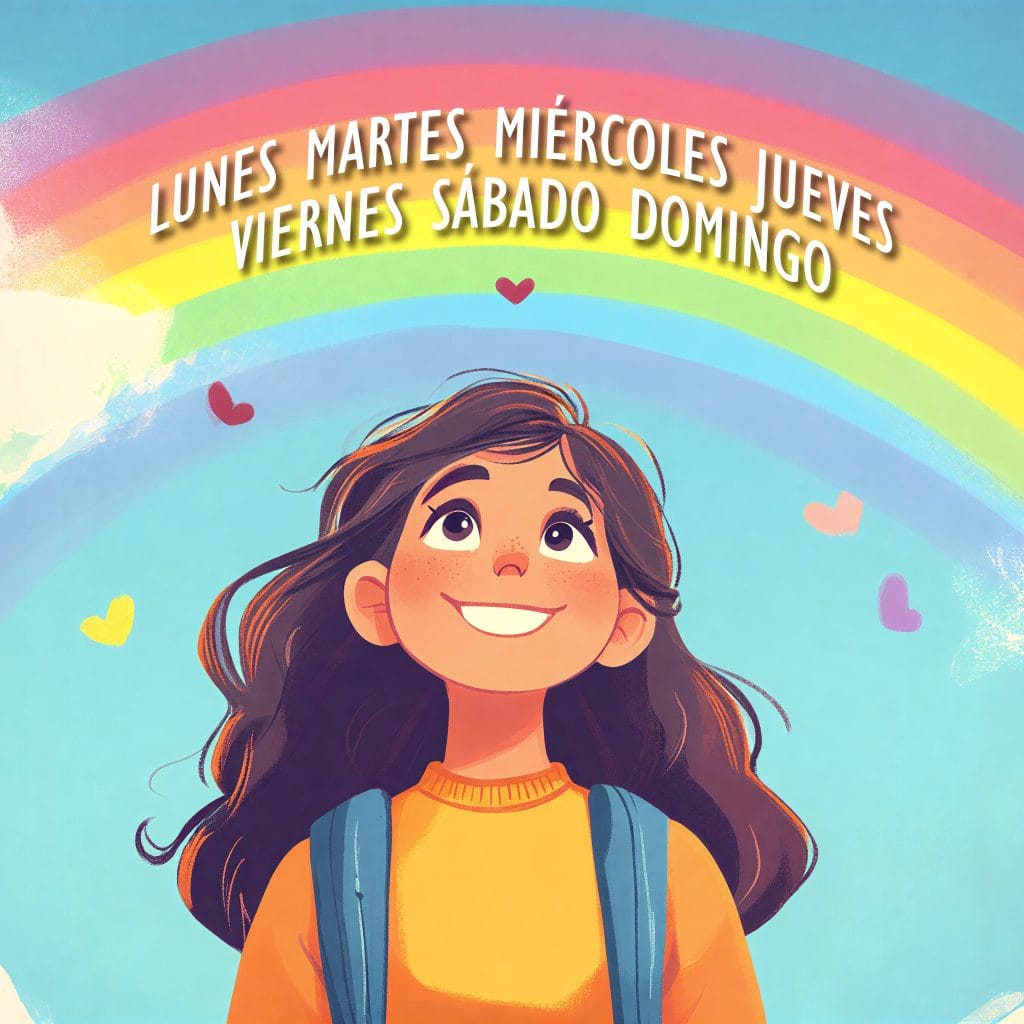
Want to nail the days of the week in Spanish without feeling like you’re cramming? You’ve got this! In this guide, we’ll go through all seven days, how to say them, some fun memory hacks, and even why learning tiny words can give your brain a little boost. By the end, you’ll be tossing them into conversation like a pro. ¡Vamos a darle!
Why learn the days of the week in Spanish?
Getting the days of the week in Spanish down is one of those quick wins that pays off immediately. You’ll see them everywhere — in chats, travel plans, class schedules, work messages, you name it. Since they pop up so often, learning them early builds real confidence. Suddenly, dates and routines make sense, even if you’re still warming up to more complex grammar.
Quick Pronunciation Guide for the Days of the Week in Spanish
Before checking out the full table, peek at this quick guide to pronouncing each day. Spanish sounds are pretty consistent, so once you’ve got them, the rest is a breeze!
- The letter “u” in Spanish sounds like “oo” in food.
- The letter “i” sounds like “ee” in see.
- The letter “j” is similar to a soft “h”, like the “h” in hello, but a little stronger.
- Stress marks matter. When you see an accent (´), that syllable gets the strongest emphasis.
- Each vowel keeps its sound. Unlike English, Spanish vowels don’t change.
Here’s how to say each day:
- Lunes → LOO-nes
(Smooth “oo” sound at the start.) - Martes → MAR-tes
(“Mar” like the English word “mar”, but shorter.) - Miércoles → MEE-eh(r)-ko-les
(Accent on MIE; lightly pronounce the “r”.) - Jueves → HWEH-ves
(Start with an “hwe”, almost like “where” but with an h-sound first.) - Viernes → VYER-nes
(“Vyer” starts like “byer” but with a soft “v”.) - Sábado → SAH-bah-doh
(Accent on SAH; keep each vowel open and clear.) - Domingo → doh-MEEN-goh
(Emphasis on “meen”.)
Watch out: In Spanish, you don’t have to use capitalization on weekdays the way you would in English. Only do it if they are at the start of a sentence or after a full stop.

Days of the Week in Spanish Pronunciation Guide: Roundup
| Day in Spanish | Pronunciation | Example Phrase (Spanish) | English Translation |
| Lunes | LOO-nes | El lunes empiezo un nuevo curso. | I start a new course on Monday. |
| Martes | MAR-tes | El martes tengo una reunión temprano. | On Tuesday I have an early meeting. |
| Miércoles | MEE-er-coh-les | El miércoles salgo a correr por la mañana. | On Wednesday I go for a run in the morning. |
| Jueves | HWEH-bes | El jueves vemos una película en familia. | On Thursday we watch a movie as a family. |
| Viernes | VYER-nes | El viernes ceno con mis amigos. | On Friday I have dinner with my friends. |
| Sábado | SAH-bah-doh | El sábado descanso y hago compras. | On Saturday I rest and run errands. |
| Domingo | doh-MEEN-goh | El domingo visitamos a mis abuelos. | On Sunday we visit my grandparents. |
Hot tip: If you want a really fun way to memorize the days of the week in Spanish, try listening to this song. Music and rhythm create ideal conditions for memory because melodies and repetition stick in your mind far better!
How to Practice and Memorize the Days — Effective Study Tips
- Use repetition + context. Each time you check a calendar, set an alarm or plan your week, think of the day in Spanish.
- Add sensory cues. Try writing the Spanish days on sticky notes and placing them on a wall calendar or fridge. Visual cues improve retention.
- Repeat! Do the whole process the following day, then several days after that. Spacing out your practice like that can really help move words from temporary memory into the solid, long-term kind.
- Speak aloud daily. Even if just to yourself. Engaging your vocal muscles reinforces memory and pronunciation.
Why Learning Simple Vocabulary Matters for Your Brain: What Studies Say
Why is learning all of this important? Well, studies on language learning pretty much indicate that people remember vocabulary better when they pick up words through situations, instead of relying on plain lists. So, even basic stuff like the days of the week sticks way more when you incorporate it right into what you do every day. So now you know!
Tips to Use the Days of the Week in Real Life (and Learn Faster)
- Think in Spanish when planning your week. Before you go to bed or at the start of the day, say the day in Spanish.
- Switch your device’s language to Spanish. Seeing “jueves” instead of “Thursday” trains recognition.
- Bring friends into it. If you chat with someone learning Spanish, try to mention the days in Spanish. Conversations reinforce memory better than solo study.
- Pair days with daily routines to learn Spanish. For example, “martes de yoga” or “viernes es la noche de ver películas”. Associating days with recurring habits helps anchor them in memory.
Did you know? Wednesday Addams’ name in Spanish isn’t Miércoles, but Merlina.
Understanding “Hoy”, “Ayer” and “Mañana” in Spanish
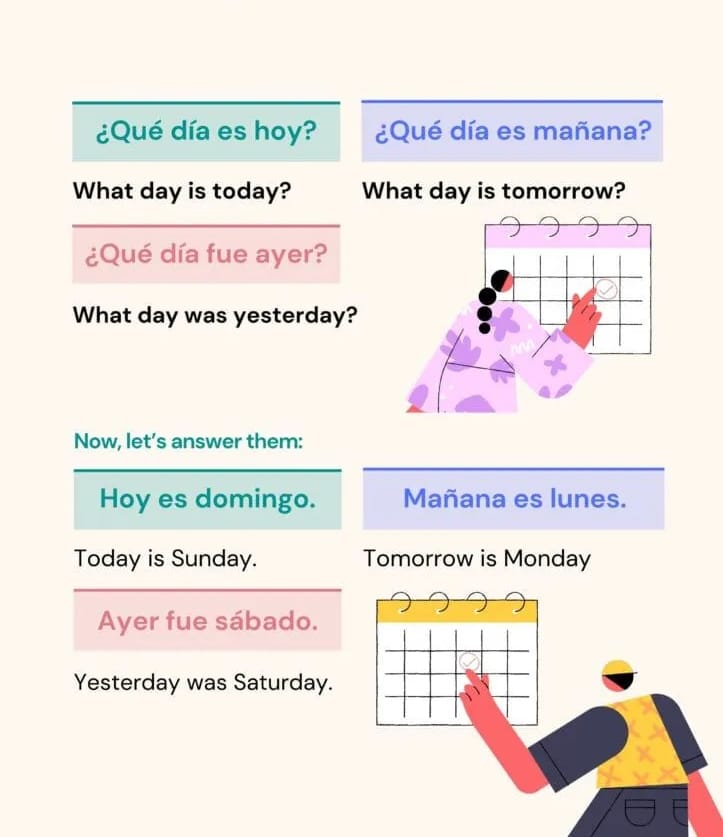
Along with the days of the week, there are three essential questions that Spanish learners use every day: “¿Qué día es hoy?”, “¿Qué día fue ayer?”, and “¿Qué día es mañana?”. Learning these structures helps you talk about the present, the past, and the near future using the days of the week in Spanish. They’re short, practical phrases you can use immediately in class, in conversation, or while traveling.
| Español | English |
| ¿Qué día es hoy? | What day is today? |
| Hoy es… | Today is… |
| ¿Qué día fue ayer? | What day was yesterday? |
| Ayer fue… | Yesterday was… |
| ¿Qué día es mañana? | What day is tomorrow? |
| Mañana es… | Tomorrow is… |
Use this chart as a template and simply plug in “lunes”, “martes”, “miércoles”, “jueves”, “viernes”, “sábado”, or “domingo” depending on the day.
FAQ: Common Questions About Days of the Week in Spanish
1. Why is “miércoles” stressed differently (with a written accent)?
“Miércoles” gets its accent because it has several syllables, and the stress lands right up front, so the accent mark nails down exactly where to say it. The accent tells you which part to emphasize.
2. Does Sunday start the week in Spanish-speaking countries?
It depends. Many calendars in Spanish-speaking countries start with lunes (Monday) as the first day of the workweek — but socially, people still refer to Sunday (domingo) as part of the week’s end or start, depending on context.
3: If I learn just the days, is that helpful or too little?
It’s invaluable. Even small bits like days, numbers, colors — those basics let you understand dates, make plans, read schedules, and get comfortable in everyday conversation. Over time, they build a foundation to learn more.
4: How often should I review to remember them long-term?
Start off by practicing each day for one week, then keep up every couple of days during your first month. Once that’s underway, fold practice into your routine. The more those words come up, the quicker you’ll learn them.
You’re probably thinking that learning the days of the week in Spanish is not too difficult, or not a huge step in your language journey. But that’s where you’re mistaken: learning these seven words is really huge. They make reading dates possible, they help to plan your week, you understand conversations much better, and much more. If you practice frequently, use context and easy routines, they’ll be in your mind permanently sooner than you think.
Want to go further? Jolii.AI has fun, personalized exercises and smart tools to help you really lock in your Spanish (and more). Jump in, keep practicing, and watch the days—and all your new vocab—stick like magic. ¡Buena suerte!