If you’re travelling to Germany and want to avoid being on the receiving end of an extremely cold and judgemental stare, it’s important to learn some basic German greetings and phrases. Once you master basic words such hello, good night, and how are you in German, the next important milestone is learning how to say “thank you” in German. But did you know that there is more than one way to express gratitude in the language?
In this article, we’re going to take a look at the top 10 most common ways to say “thank you” in German and explain which variation you should use in which situation.
1. Danke: Simplest Way to Say “Thank You” in German
Pronunciation: [ˈdaŋkə]
Translation: thanks, thank you
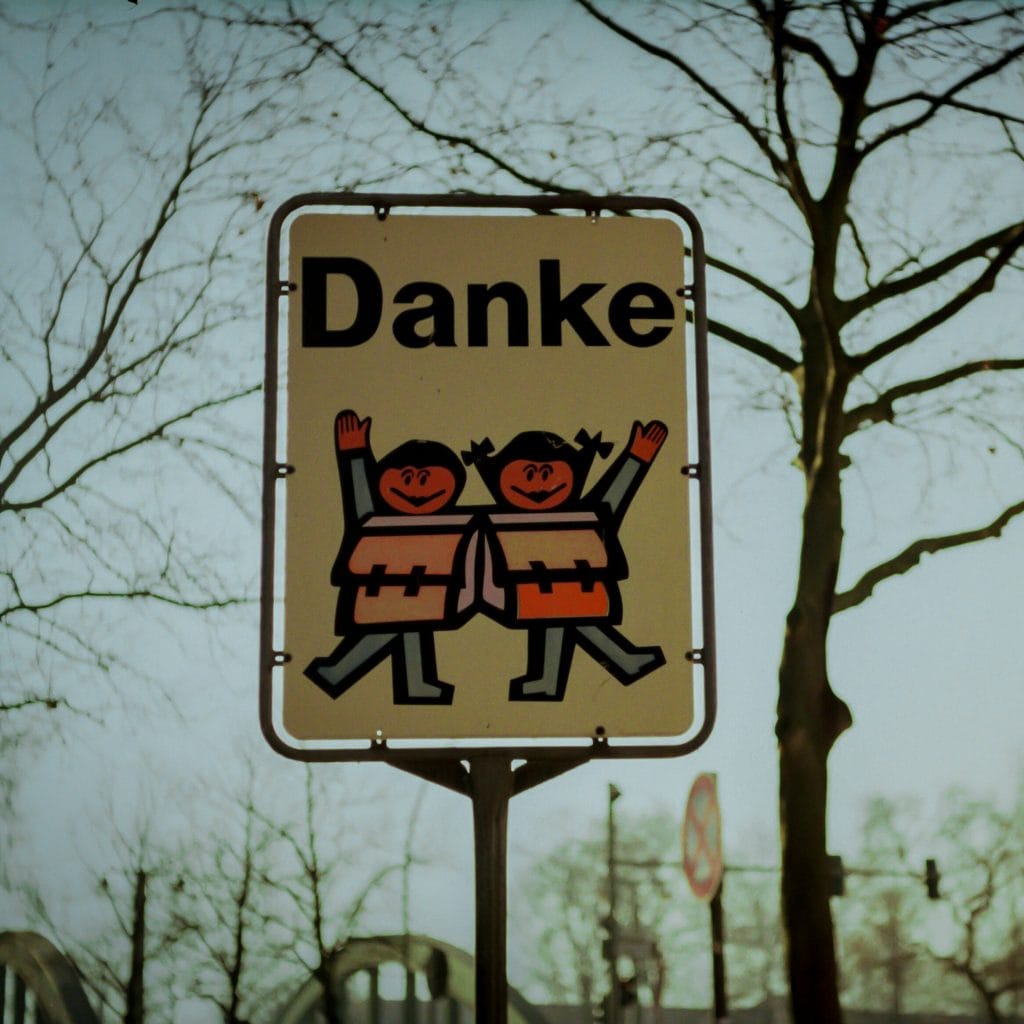
“Danke” is the most universal way to say “thank you” in German. You can use it pretty much in any social situation, whether you’re dealing with your friends, colleagues, or even complete strangers.
Did your friend lend you a book? Say “danke.” Did your server bring you the correct drink? Use “danke” again. What about when the cashier hands you a paper bag? That’s right, you can say “danke” here, too.
While it’s not the most formal or impressive way to say “thank you” in German, “danke” will get you through most situations without any issue.
2. Danke schön: A Polite Way to Say “Thank You”
Pronunciation: [ˈdaŋkə ʃøːn]
Translation: thank you kindly
“Danke schön” is perhaps the second most common way to say “thank you” in German. While it literally means “thank you kindly,” it’s used similarly to the English “thank you very much.”
This phrase is a little more polite and formal than the slightly simpler “danke,” but it’s still pretty versatile. You can use it when thanking your co-worker, a kind stranger, or even a family member who’s done something surprisingly thoughtful for you.
3. Vielen Dank: How to Say “Many Thanks” in German
Pronunciation: [ˈfiː.lən daŋk]
Translation: many thanks
If you’ve received a very nice gift and are, therefore, grateful to a person, you can say “vielen Dank.” It’s a much more heartfelt and sincere way to say “thank you,” and it really shows just how much you appreciate the other person’s gesture.
4. Danke sehr: “Thank You Very Much” in German
Pronunciation: [ˈdaŋkə zeːɐ̯]
Translation: thank you very much
“Danke sehr” means “thank you very much,” and it’s used in a similar way to “danke schön.” This variation, however, is considered a little more formal, and you’ll come across it much less often in your day-to-day life than “danke schön.”
5. Danke für: Thanking Someone For Something in German
Pronunciation: [ˈdaŋkə fyːɐ̯]
Translation: thank you for…
When you want to thank someone for something specific, use the phrase “danke für.”
For example:
- Danke für Ihr Verständnis. (Thank you for your understanding.)
- Danke für deine Hilfe. (Thank you for your help.)
- Danke für die Einladung. (Thanks for the invitation.)
Tip: Remember to always use the accusative case after the preposition “für.”
6. Vielen Dank im Voraus: “Thank You in Advance” in German
Pronunciation: [ˈfiːlən ˈdaŋk ɪm ˈfoːʁaʊs]
Translation: many thanks in advance
In written correspondence, you sometimes make requests of people. It’s only natural to want to thank them for their help, even if they haven’t quite done anything yet.
This is where the phrase “vielen Dank im Voraus” comes in handy. You can use it to thank someone in advance, for example, at the end of an email asking for more information about a specific university course.
7. Herzlichen Dank: A Heartfelt “Thank You” in German
Pronunciation: [ˈhɛʁtslɪçən daŋk]
Translation: heartfelt thanks, thank you kindly
In German, “Herz” means “heart.” So, if you want to thank someone from the bottom of your heart, you can say “herzlichen Dank.” This can be used after someone does a big favor for you, or in formal written correspondence.
8. Ich danke Ihnen: Giving Someone Your Thanks in German
Pronunciation: [ɪç ˈdaŋkə ˈiːnən]
Translation: I give you my thanks (formal)
Not all ways of saying “thank you” in German are equal. While “danke” can be used in informal settings, “ich danke Ihnen” is a completely different story. You would mostly use this phrase in formal situations, especially when you’re trying to show someone a certain level of respect.
Note: “Ich danke Ihnen” uses the formal version of “you.” If you want to take someone you’re on more informal terms with, say, “Ich danke dir” instead.
To learn more about the difference between “Sie” and “du,” watch this short YouTube video in German:
HOW TO ADDRESS PEOPLE CORRECTLY | Duzen und Siezen im Deutschen richtig anwenden
9. Ich bin Ihnen sehr dankbar: Being Thankful to Someone
Pronunciation: [ɪç bɪn ˈiːnən ˈdaŋkbaːɐ̯]
Translation: I am very thankful to you, I am grateful for you (formal)
This may not be the most common way to say “thank you” in German, but it can be very meaningful when used correctly. If you ever find yourself genuinely grateful for what someone has done for you, you can say this German sentence. It’s especially useful in highly personal situations.
Tip: To thank someone you’re on more friendly terms with, say “ich bin dir sehr dankbar” instead.
10. Ich kann Ihnen gar nicht genug danken: “I Can’t Thank You Enough” in German
Pronunciation: [ɪç kan ˈiːnən ɡaːɐ̯ nɪçt ɡəˈnuːk ˈdaŋkən]
Translation: I cannot thank you enough (formal)
Last but not least, we have a phrase that truly goes beyond just a regular expression of gratitude.
Sometimes, a simple “thank you” isn’t enough. If someone has done something truly special for you and you find yourself speechless, you can say, “Ich kann Ihnen gar nicht genug danken.” It shows that not only are you thankful, but you also value the other person’s actions from the bottom of your heart.
Tip: For an informal version of this sentence, simply replace “Ihnen” with “dir.”
In Summary
There are many ways to say “thank you” in German. In most day-to-day situations, you can get by with a simple “danke” or “danke schön.” However, if you’re writing an email or speaking to someone in a more formal setting, phrases such as “vielen Dank im Voraus” and “herzlichen Dank” may be much more useful.
So remember: Always consider the context you find yourself in before you thank someone in German!