AI is transforming how we learn languages, making it faster and more effective than ever. But how does it really work? In this post, we will break down key technologies behind AI in machine learning and natural processing languages. Don’t worry, we will still tell you what all these are. You will understand how these technologies help to personalize your learning experience, improve fluency, and adapt to your specific needs. Get ready to uncover the fascinating mechanics behind AI-driven tools and how they enhance your learning journey.
Language learning is important for you as it fosters better cognitive abilities, creativity, and a love for knowledge. You may have your reasons for learning a new language. It could be you are trying to get into a language-specific career or just because you want to learn a new language. However, you may as quickly realize that this is not as simple as it sounds. Attending classes and exploring the complexities of a new language can be difficult for anyone, especially if you are a working adult. Wouldn’t an AI-powered app be helpful to you?
So, you would be pleased that technology has advanced well past the age of attending physical classes—though this does have its uses—to language learning apps right there on your phone accessible by the tap of a button. You may already be aware of these apps, such as Babbel, Duolingo, Rosetta Stone, Talkpal, and many others. Stay with us as we are going to help you understand how they work to make your learning process easier.
Now let’s dive in.
Understanding How Machines Learn Language
We often use the terms artificial intelligence and machine learning interchangeably. However, these two are quite different.
Artificial intelligence is a broad term describing a machine or a computer that can mimic human intelligence. It is not a system, but the technologies implemented to enable it to learn, reason, and act to solve complex problems.
Machine learning, on the other hand, is an application of AI that aims to teach a machine how to perform a specific task and to provide exact results by identifying patterns. In essence, the objective of machine learning is to build AI systems where computers learn from large sets of data and get progressively better at performing tasks.
Think of it as when you are learning a creative task. You do the task enough times to build muscle memory. This happens because your brain recognizes the patterns when doing the task and gets better at doing it. Eventually, you get so good that you can teach others and solve their problems.
This leads us to explore how computers are taught to recognize these patterns through a process called natural language processing.
The Role of Natural Language Processing in Language Learning
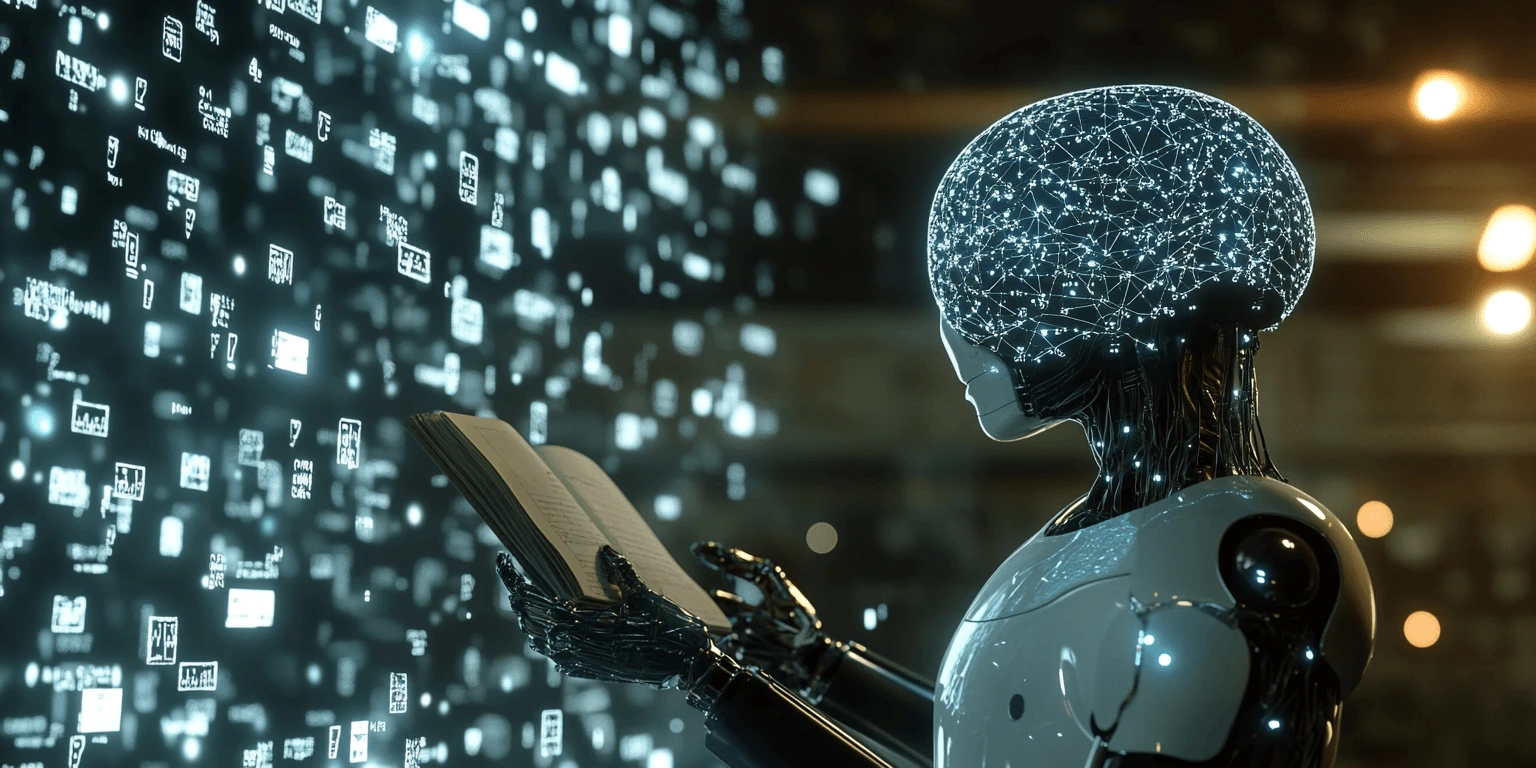
Natural Language Processing, or NLP, is a process of teaching a computer to understand and produce spoken or written speech in a manner as close as possible to human beings. It is a combination of computer science, linguistics, machine learning, and deep learning concepts to study unstructured data and draw information out of it. Deep learning in machines takes on the same model as a human’s deep understanding of concepts. It is the same level of how we get better at recognizing a task or information the more we are exposed to it. Computers get better at recognizing and responding to language concepts the more they study them. Because human voices tend to vary, NLP focuses on speech recognition and the production of natural language. It is mainly used in spam detection and virtual assistants.
You probably have used natural language processing systems without knowing or recognizing what they are. Systems such as those used by Alexa, Cortana, and many of the online chatbots are built on these models. Therefore, next, we are going to explore how NLPs influence our day-to-day lives and how they learn to mimic human interaction.
Algorithms and AI Technologies Behind Language Learning Apps
Think of it this way: you have a huge amount of data placed in front of you. Your only job is to find ways to answer questions based on information drawn from the data set. You would probably start by going through to find related words, phrases, and information. In the same way, language learning models work to find ways to answer your inquiries and aid you.
Deep learning is the process taken by a computer to analyze the data given, draw a logical conclusion, and provide answers if needed. This can be broken down into three main algorithms that work to make this work. We know of natural processing language, which allows computers to read and understand human language, which is how Alexa understands when you request a particular song. Then we have colocation extraction used to retrieve and classify information and solve language generation problems. Finally, we have Point Mutual Information, or PMI, which is used to measure the probability of two words occurring together and helps to string together sensible sentences and phrases.
We may have gotten a bit technical there, but now you understand better how AI works and the concepts and algorithms behind it. Now. Let’s look at how this makes it easier to learn new languages.
The Functionality of Popular Language Learning Apps
What would take a teacher months to assess, grade, and provide feedback for, you can now get instantly from an AI-powered app. By using the models and algorithms we have explored in this post, these apps are able to get your data analyzed, classified, and used to provide an extensive progress plan for you. These are the ways language learning apps leverage AI to personalize learning experiences.
- Personal learning trajectories: Imagine a class of more than 20 students, one teacher, and different learning abilities. Obviously, not everyone will be able to get the teacher’s full attention, and maybe some will even fall behind. With AI’s ability to understand, learn, and develop logical reasoning, each student who decides to learn a language will have something close to an individual teacher.
- Adaptive learning: The most notable thing about AI-powered systems is how quickly they adapt. Your personal language learning app will quickly adapt to your pace of learning and learn your specific strengths and weaknesses.
We have seen how good learning a new language via AI can be. But what benefit do you get as a learner?
Benefits of Using AI in Language Learning
- Personalized learning: With an AI-powered app, you can access learning tailored just for you. AI will take responsibility for your lessons and in deciding how quickly you learn. Your app may even give you reminders to keep up with your learning.
- Accessibility: If you have tried to go to a physical school, you might already be familiar with how inconvenient it can be. Not to mention tiring. AI brings the class to you. You have it on your phone and can probably access your lessons via a tablet or laptop. Furthermore, you can keep up with your lessons anywhere, maybe during work lunch breaks, commute to work, before bedtime, or whichever time you feel is convenient with your schedule.
- Availability: You just can’t get your teacher’s attention when you want it, but you can access your app at any time, 24/7/365. How easy is that?
- Enhanced engagement: It is widely known that one can’t learn purely from a theoretical lesson plan. We do not need other forms of learning like videos, audio clips, and interactive ways of testing knowledge to break the monotony and enhance learning. This way you also get multiple senses engaged in your learning experience.
- Real-time feedback: We know that for you to get access to feedback in a traditional class, will take time. However, with an AI-powered app, you get to see your progress and test results at once. Moreover, your app will recommend a specific lesson plan catered to address problem areas while supporting excellence in areas you are already good in.
Final words
We have looked at what is behind AI. We have also explored how language apps are making use of AI to teach, influence, and develop languages across different people. And we also looked at how you benefit from learning using AI.
As we wrap up, we need to reflect on how AI is helping break down barriers between people from different cultures. AI is also able to adapt to individuality and help you track lessons and celebrate your every accomplishment.
Furthermore, we need to realize that the future awaits us. AI in language learning is still evolving. Imagine a virtual language tutor who understands your emotions, recommends cultural immersion exercises, and rewards you with a digital high-five. Language learning using AI is only going to get better.
So, dear language enthusiasts, keep learning. Remember, language is not just about words; it is about connections with others, and AI is here to help you become part of a linguistically vibrant world.