First published: October 2025. Last updated: June 2026
Chinese has a reputation for being the hardest language for English speakers to learn. The tones, the characters, the grammar that works nothing like English. But the apps available in 2026 are genuinely better than anything that existed five years ago — particularly for the two things that used to require a classroom: tone training and character recognition. Here’s what actually works.
The best apps to learn Chinese in 2026 are: Jolii for conversation practice, HelloChinese for structured beginners, Pleco as a dictionary reference, LingoDeer for grammar, Duolingo for daily habit building, and ChineseSkill for step-by-step guided learning. Each serves a different purpose — this guide explains which one fits your specific goal.
Why Use Apps to Learn Chinese?
Look, I get it. Chinese has this reputation for being impossibly difficult. All those tones, thousands of characters, grammar rules that work nothing like English.
Can an app really teach you something this complex?
Here’s the thing. Apps aren’t trying to replace immersion or living in Beijing for a year. But they’ve become incredibly good at something traditional classes struggle with. They meet you exactly where you are.
Think about it. Traditional classroom settings lock you into a schedule and can cost hundreds or thousands of dollars.
Apps? You can practice at 6 AM before work or at 11 PM in your pajamas. No judgment, just you and your phone.
And here’s where it gets interesting. Modern language apps use AI-powered speech recognition to help you nail those tricky tones. Something that’s genuinely crucial in Chinese, where a simple word like “ma” can mean mother, horse, or scold, depending on your tone.
6 Best Apps To Learn Chinese
Before you start planning your trip to Shanghai or start watching popular Chinese dramas, here are learning apps to help you learn Chinese fast:
Jolii

Yes, it’s great that you can recognize characters on a Chinese menu. But if you want to speak Chinese, Jolii.ai should be your first stop.
Jolii is particularly well suited to Mandarin because it builds tone recognition into real content rather than isolated drills. Instead of repeating “mā, má, mǎ, mà” out of context, you hear tones in natural speech — dialogues, videos, real conversations — which is how the brain actually internalises them. The AI tutor adapts to your level in real time, making it the strongest option for learners who want to move from recognition to actual speaking.
Key features:
- Personalized learning paths focused on your actual goals, whether that’s traveling, doing business, or connecting with family
- Tone training with real-time feedback so you can hear the difference between “I want” (wǒ yào) and “I bite” (wǒ yǎo).
It also offers Netflix and YouTube immersion to help you watch content in Mandarin as you learn.
HelloChinese
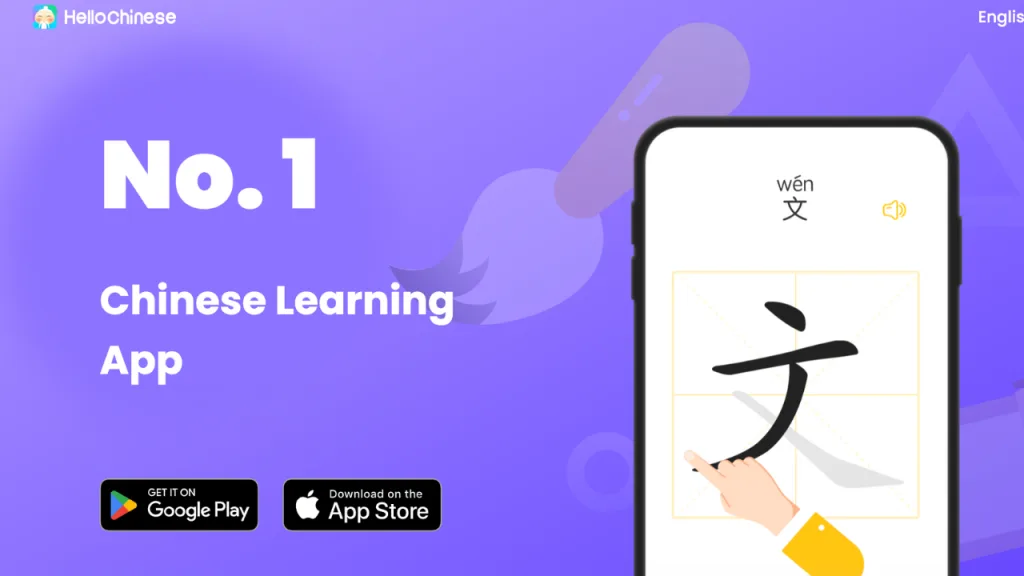
Want to know how pinyin works from the beginning? HelloChinese starts from the basics and gradually builds your language skills through story-based lessons. You’ll always know where you stand in your learning journey. Definitely one of the most motivating features for beginners.
Key features:
- Speech recognition that evaluates your pronunciation and helps you fix those tricky tones.
- Do you prefer gamification features, such as streaks and leaderboards? HelloChinese gives you just that.
- Have 10 minutes only per day? The app keeps the lessons short and digestible.
Pleco
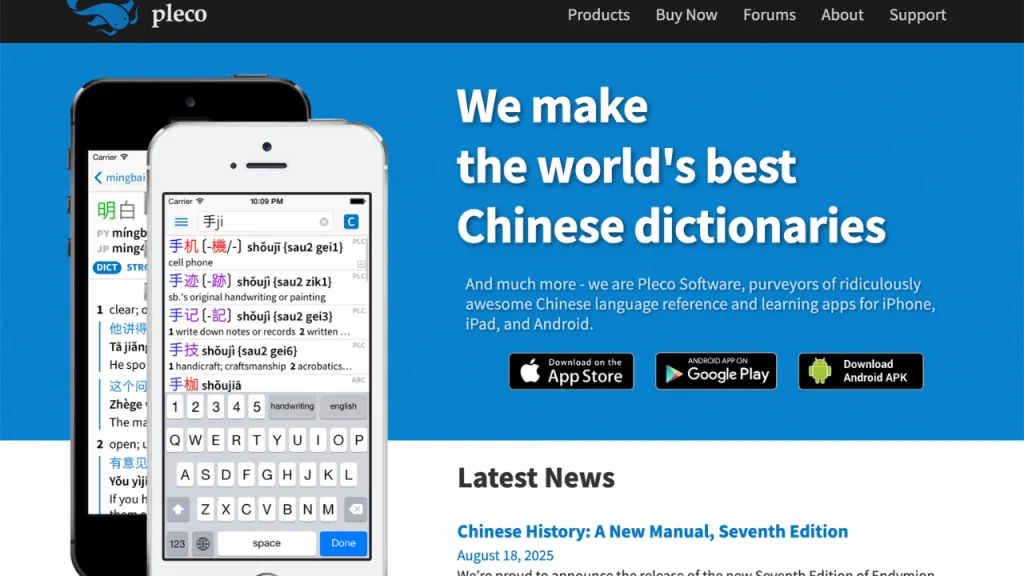
Well. Pleco isn’t exactly a “learning app” in the traditional sense, but this is a tool you absolutely need in your language learning journey. Thanks to the optical character recognition (OCR) feature, you just need to point your phone camera at Chinese text, and voilà, instant translation and definitions.
It’s like having a Chinese-speaking friend looking over your shoulder 24/7.
Key features:
- Do you prefer writing notes as you learn? Pleco instantly decodes Chinese text and helps you translate it.
- The extensive dictionary is a must-have. It comes with example sentences showing how words actually work in context.
- Struggling to understand words? The Pleco flashcard system, with spaced repetition, helps characters stick in your brain long-term.
LingoDeer

LingoDeer takes a different route by putting Chinese grammar front and center. It digs into the mechanics in a way that actually makes sense.
What’s cool about LingoDeer? It was designed by actual teachers and linguists specifically for Asian languages. They get what makes Chinese unique.
Key features:
- Native audio recordings for when you need to get your speaking practice on.
- Offline access so you can study on planes or anywhere with sketchy internet
- Do you learn better with stories? LingoDeer is home to hundreds of Chinese stories. You’ll have fun while learning interesting cultural facts.
Duolingo Chinese
Duolingo needs little introduction. It’s the app that turned language learning into a daily game millions are hooked on. For Chinese beginners, it offers a gentle and low-pressure entry point.
The app’s strength lies in making learning feel like play through its streak system, achievements, and friendly mascot, Duo. Lessons are micro-sized, usually under 5 minutes, removing the “I don’t have time” excuse.
Key features:
- Bite-sized lessons that make consistent practice feel easy.
- Gamification elements, such as streaks and leagues, tap into your competitive side.
- Multiple skill practice covering reading, writing, listening, and speaking in one place.
- A Free tier that gives you the full course without paying. Though you’ll just see some ads.
Yes, its grammar explanations are minimal, and you won’t get the deep conversation practice you need. But for building vocabulary and maintaining that daily habit? Hard to beat.
ChineseSkill

The ChineseSkill app is particularly strong for visual learners who need to see how characters are constructed.
What sets ChineseSkill apart? It’s run by real Chinese teachers, while still offering fun lessons.
Key features:
- Bite-sized lessons, which means you only need 15 minutes to practice.
- Want to structure your learning? ChineseSkill offers a detailed curriculum.
- If you’re consistent, you get recognition for your achievement.
Comparison Table: Best Apps To Learn Chinese
Still not sure which app to download first? Here’s a quick comparison to help you decide:
| App | Key Features | Best For | Pricing |
| Jolii | AI personalization and context-based learning | Real conversation practice | 7-day free trial, premium $9.99 per month |
| HelloChinese | Story-based lessons | Structured learning | Starts at $11.99 per month |
| Pleco | OCR translation | Dictionary and reference | Basic Bundle starts at $29.99 |
| LingoDeer | Grammar-focused and native audio | Grammar understanding | Starts at $14.99 per month |
| Duolingo Chinese | Gamified micro lessons | Daily habit building | Free with ads, Plus $6.99/month |
| ChineseSkill | Step-by-step guided lessons | Beginner learners | Starts at $14.99 per month |
Prices accurate as of June 2026. App pricing changes frequently — check each app’s website before subscribing.
Pro Tips: How These Apps Help Beginners Learn Chinese Fast
Want to maximize your progress with these apps? Here’s what successful Chinese learners actually do:
- Start speaking: Apps like Jolii that help you speak from day one can help you build confidence faster. Want to learn Chinese faster? You need to speak.
- Don’t skip the tones: We know they sound tricky. But they are the key to learning. Apps with speech recognition, like Jolii and HelloChinese, catch your mistakes immediately.
- Combine the apps strategically: What’s your learning goal? This is your guide to picking the best app.
- Practice daily: That 10-minute break at work or school is enough time to practice Chinese and build consistency.
Final Takeaway
The research on language learning apps is clear on one thing: consistency beats intensity. Ten minutes daily outperforms two hours once a week. Pick one app that matches your primary goal, use it every day, and add a second app once the habit is established.
To receive more personalized guidance on your Chinese language skills, you need an AI tutor like Jolii. As one of the best apps to learn Chinese, it will expose you to those tricky tones and characters.
So here’s your 2026 challenge. Commit to just 10 -20 minutes a day with Jolii.ai and see how fast you progress.
FAQs
How long does it take to learn basic Chinese using language apps?
With consistent daily practice of 20-30 minutes, most learners hit basic conversational ability in 3-6 months. This means you can handle everyday stuff like ordering food and asking for directions.
Which are the best apps to learn Chinese for free?
As a beginner, you can start with the Jolii free trial to access AI-powered pronunciation and personalized lessons.