From the first time I saw Chinese letters written in a book to my very first hello—你好 (nǐ hǎo)—the language felt weirdly unfamiliar to me. Looking back now, Chinese felt hard because the characters looked so different from languages I was fluent in. The pronunciation and tone were also unfamiliar, and the characters didn’t seem to have any structure to them.
Back then, I told myself ‘Chinese is more difficult to learn than other languages.’ This thought made me relunctant about learning the language. However, I don’t feel the same way anymore because I discovered how the language really works.
If you’re a beginner struggling to learn Chinese or a self-learner, this article will teach you how to approach Chinese grammar, tone, and writing to learn the language easier.
Why Chinese Feels Hard to Learn at First
When we approach a new language, our first instinct is often to view it through the lenses of the language we’re already fluent in. For instance, I learned English as a first language and I could identify things like alphabets, tenses, grammatical rules, and verb endings that affect word forms.
When I started learning Chinese, I looked for the same anchors, but I couldn’t find them. There were no changing verbs indicating past or future tense or the letters that indicated how things should sound.
The Chinese language doesn’t work like that, but nobody tells you this in advance. So, your expectations are different from the reality in front of you. That’s the first reason people struggle with Chinese.
So, rather than looking for grammatical markers that feel familiar, focus on understanding sentence patterns and making meaning from them. That way, you’ll understand the structure quicker.
The Random Chinese Writing System
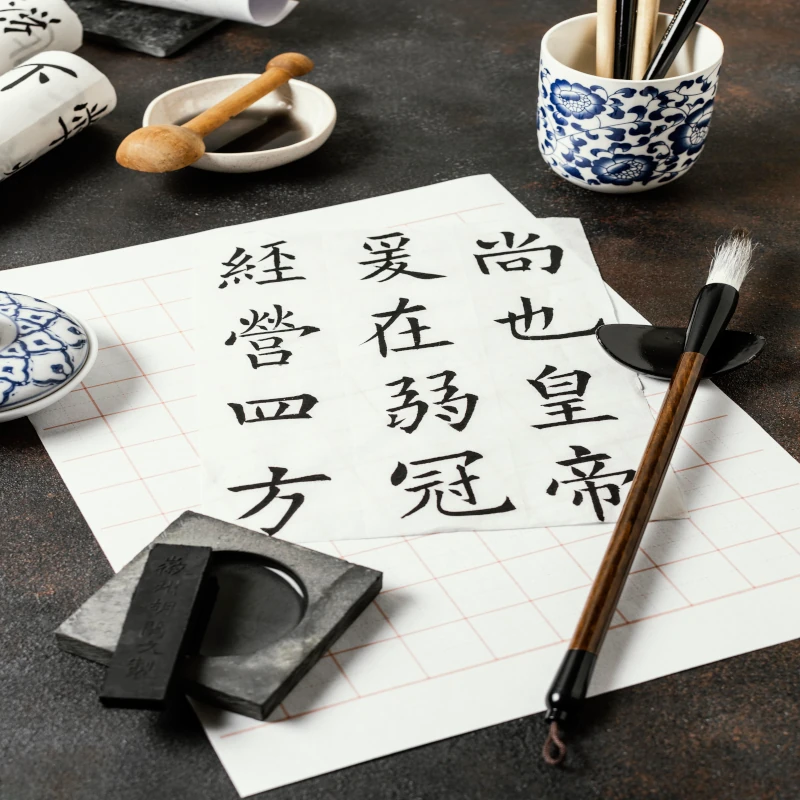
The major obstacle I faced when I started learning Chinese was Chinese characters. They were like works of art to me and I couldn’t understand them. You won’t find alphabets like A-Z, and every Chinese character seemed to stand in isolation. But as I studied, I realized that Chinese characters are formed by base units that give meaning or sound to that character.
For instance, 女 (nǚ) meaning “woman,” is used in “mother” 妈 (mā) or “older sister” 姐 (jiě). Another popular example is 人 (rén), meaning person, which appears in characters like你 (nǐ) meaning you, and 他 (tā) meaning he.
Once I found out that the artistic little characters were formed by constructing other base units, Chinese writing started making sense to me. The fear that I had to memorize thousands of characters disappeared and I could simply understand the base units of each character and take it up from there.
My Struggle to Understand Chinese Tones
Another reason why Mandarin feels difficult to learn is how much its tone determines the meaning of a word. The English language uses intonation to make meaning, but in Mandarin, tones don’t just modify meaning; they distinguish one word from another.
The first example I learned was the word “mā,” which means “mother” and is pronounced with a high, flat tone. I was surprised when I came across the word “mǎ,” meaning “horse,” pronounced with a falling-rising tone.
After seeing many Chinese words like this, I was completely overwhelmed. I couldn’t possibly imagine how I could master this. But once I started treating tone and sound as active parts of the vocabulary, my understanding and accuracy improved. I achieved it by practicing tones using short phrases. It helped me more than attempting to memorize words on paper.
Verbs, Nouns, and the Simplified Chinese Grammar
If you have tried to learn Chinese, you might have noticed that the grammar sometimes feels unchanging. In Mandarin, all nouns are invariable in number, which means that they do not change their form to distinguish between singular and plural. Rather, you use a number and a classifier (量词 liàngcí) to indicate when a noun is plural.
For instance, 书 (shū), meaning ‘book’ remains the same in plural form. You’ll instead add the numeral 三 (sān), meaning three, and the classifier 本 (běn) to the noun 书 (shū), to form the phrase 三本书 (sān běn shū), which means three books.
Verbs also remain in an unchangeable base form, whether they’re used in past, present, or future tense. A verb like 吃 (chī), meaning ‘to eat,’ remains in the same form regardless of the time you’re referring to. It took me a while to accept that Chinese grammar was simply what it was. However, I eventually understood that the language depends on context to show time, not verbs.

How to Learn Chinese Effectively as a Beginner
As a beginner, the most effective way to learn Chinese is to stop trying to memorize characters and focus on identifying common character components. Some of such components that you find in different words include 女 (nǚ), 人 (rén), and 口 (kǒu). When you recognize these components, you can identify patterns in different characters.
Also, always treat tone as a part of the word, not an isolated detail. When you listen to Chinese words and pronounce them out loud, you’ll master the tone and pronunciation better than when you read silently. You can shadow Chinese videos to get the pronunciations right.
Rather than attempting to translate grammar directly to English or another language, interpret the word in its own context. Take note of words that replace verb tenses, such as or 昨天 (zuótiān) meaning yesterday or 今天 (jīntiān) meaning today.
Finally, don’t wait to be perfect before speaking. Start shadowing, speaking, and reading early, before you are even close to being accurate. The more you practice, the more accurate you become.
Is Chinese Really as Difficult to Learn as People Say?
Despite this analysis, learning the Chinese language is a walk in the park. The Foreign Service InstituteForeign Service Institute classifies Chinese (Mandarin and Cantonese) as a Category V (exceptionally difficult) language for native English speakers to learn.
However, the key difficulty factors are the writing system, tone, and unique vocabulary. But once you approach Chinese as a language with its own unique learning formula, you will make good progress.
Once you understand that Chinese is only difficult because of an unfamiliar language system rather than a language complexity, you’ll make faster progress as a beginner.
Why Chinese Feels Hard to Learn: Final Thoughts
If you’ve always wondered why Chinese feels hard for you to learn, rest assured that it’s not because you’re not intelligent or aren’t making enough effort. The language simply has a reality that is totally different from your assumptions and expectations.
Once you stop trying to understand Chinese with the rules of any other language, everything will start to make sense. So, despite how I felt in the beginning, Chinese isn’t impossible to learn. Once you understand how the language works, you can start reading Chinese characters and recognizing speech patterns in no time.
If you’re struggling to learn Chinese alone, signing up on a digital language learning platform can help you learn faster. Jolii.ai is one of those platforms that will make your learning experience fun, easy, and productive. Learn Chinese through movies, songs, and other exciting learning methods, and you’ll make reasonable progress in no tine. Are you ready to get started?