Ever had that moment in a meeting where your brain just stalls?
Everyone’s throwing around buzzwords like “circle back,” “take it offline,” or “bandwidth check,” and you’re sitting there like, uh, loading… please wait.
Knowing a lot of words and using them in practical environments are totally different things.
It’s true that word lists build recognition. You may think that “I’ve seen that word before.” But for real-time fluency, they fail.
It’s time to stop the old-school method.
You must start using words in practical scenarios like storytelling, conversations, or games.
In this way, your brain will learn much faster when words come with context.
Table of contents
- Why Word Lists Don’t Help You Learn English Fast?
- The Theory Behind Fast Vocabulary Acquisition
- How Immersion Helps You Learn English Fast and Naturally
- Pro Insight: Focus on “Speech Acts,” Not Just Words
- Build a Daily Routine to Learn English Fast
- Avoid Common Mistakes When Trying to Learn English Fast
- FAQ’s
- Final Word:
Why Word Lists Don’t Help You Learn English Fast?
Word lists sound productive. You write, repeat, and tick boxes.
But when it comes to real-time communication, such lists fail.
Real talking skills come from using words, not memorizing them. Your brain’s good at remembering what things mean, not a random or long list of words.
Science backs this as well. Hermann Ebbinghaus proved that people forget up to 80% of what they memorize within 24 hours if it isn’t used.
Words hit harder when they come with context and emotion—like hearing “deadline” in a tense meeting sticks way better than just reading it off a boring list.
If you want speed, stop studying like it’s a spelling contest.
Learn words inside stories, shows, and conversations.
That way, they go from your notebook to your memory and stick around for when you really need them.
The Theory Behind Fast Vocabulary Acquisition
Fluency is all about brain science.
Your brain learns language through patterns, not repetition drills. When words appear in meaningful situations, they create stronger memory links.
You will only learn when you try to understand the meaning.
Krashen’s Comprehensible Input (The Smart Way to Learn)
A well-known language expert, Stephen Krashen, says that you learn faster when you understand most of what you read or hear. This phenomenon is known as Comprehensible Input.
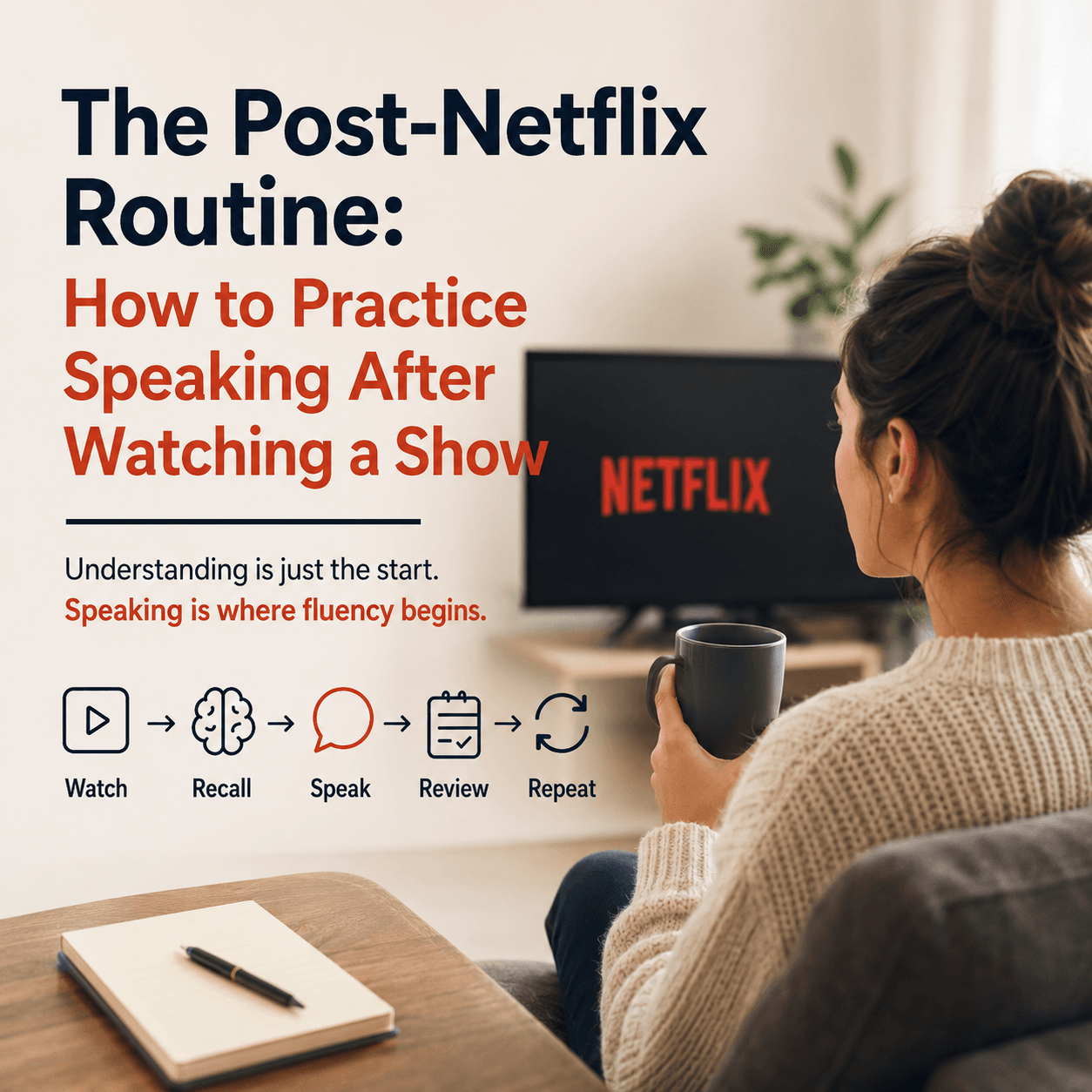
This is exactly why you pick up phrases from Netflix faster than from textbooks.
Your brain naturally fills the gaps, thereby building strong grammar and vocabulary without any effort.

The Power of Collocations
Native speakers don’t say “make a photo”—they say “take a photo.” These natural word pairings are called collocations.
Learning language in chunks (e.g., “make a decision,” “catch a cold,” “run a business”) trains your brain to sound fluent automatically.
Memorizing a word or list alone won’t cut it.
Spaced Repetition That Uses Sentences, Not Words
Modern AI tools use spaced repetition with whole sentences, not single words. They make learning fun by using words in different stories or sentences.
Research has shown that spaced repetition boosts recall rates by up to 80%, which in turn, helps your brain store language for long-term use.
Use patterns to learn, not just words.
Combine context, spaced repetition, and time for lasting fluency.
How Immersion Helps You Learn English Fast and Naturally
Fluency means using English easily. You don’t learn it only in school. You learn it by using it every day.
The best learners surround themselves with English. They hear it, read it, and speak it often. Soon, English stops feeling foreign or strange.
Studies show that immersed learners recall words twice as fast as textbook learners. They also talk with more confidence.
Immersion helps you in rewiring your brain. Your brain will start to think in English instead of translating everything word by word.
Learn Like a Child
Think about how children learn. They don’t study grammar rules first. They listen and copy what they hear. Do the same.
Listen first, then speak later. Your brain needs input before output.
The more you hear English, the faster you’ll start using it naturally.
Use Media You Actually Enjoy
Podcasts, shows, music, YouTube — anything you already love works.
Research shows learners remember up to 40% more vocabulary when it’s tied to content they enjoy.
Emotional connection matters; your brain stores what it finds interesting.
Pro Insight: Focus on “Speech Acts,” Not Just Words
Fluency in a professional context is important. It means mastering language for actions. Its way better than just memorizing nouns and verbs.
In high-stakes situations, like meetings, you must use language well. You need to deploy language for specific “Speech Acts”.
| Speech Act (Function) | Strategic Professional Phrases |
| Interrupting Politely | “May I jump in here?” “Just to clarify one point…” |
| Disagreeing Softly | “I hear you, but from my perspective…” “That’s a valid point, though I would argue…” |
| Concluding a Topic | “So, to recap the next steps…” “Just to put a pin in that…” |
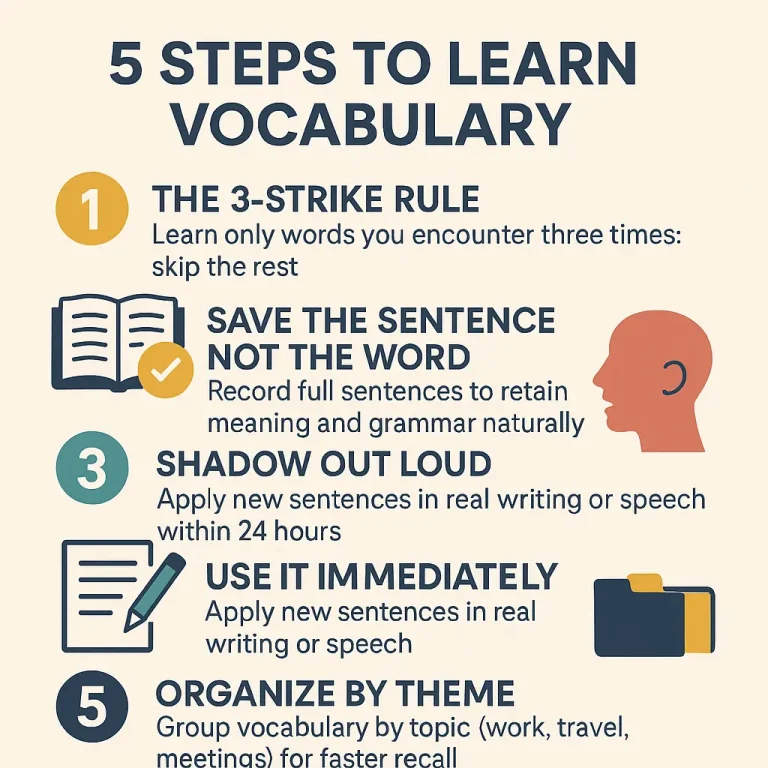
Build a Daily Routine to Learn English Fast
Ditch the chaos. A short, brilliant routine beats a long one, every time.
Implement this simple framework to effortlessly train your brain to master and use new words daily.
Avoid Common Mistakes When Trying to Learn English Fast
Most English learners don’t fail because they’re lazy. They fail because they use outdated methods.
Every common mistake here is fixable once you stop following outdated “study harder” advice.
Mistake 1: Studying Grammar Before Vocabulary
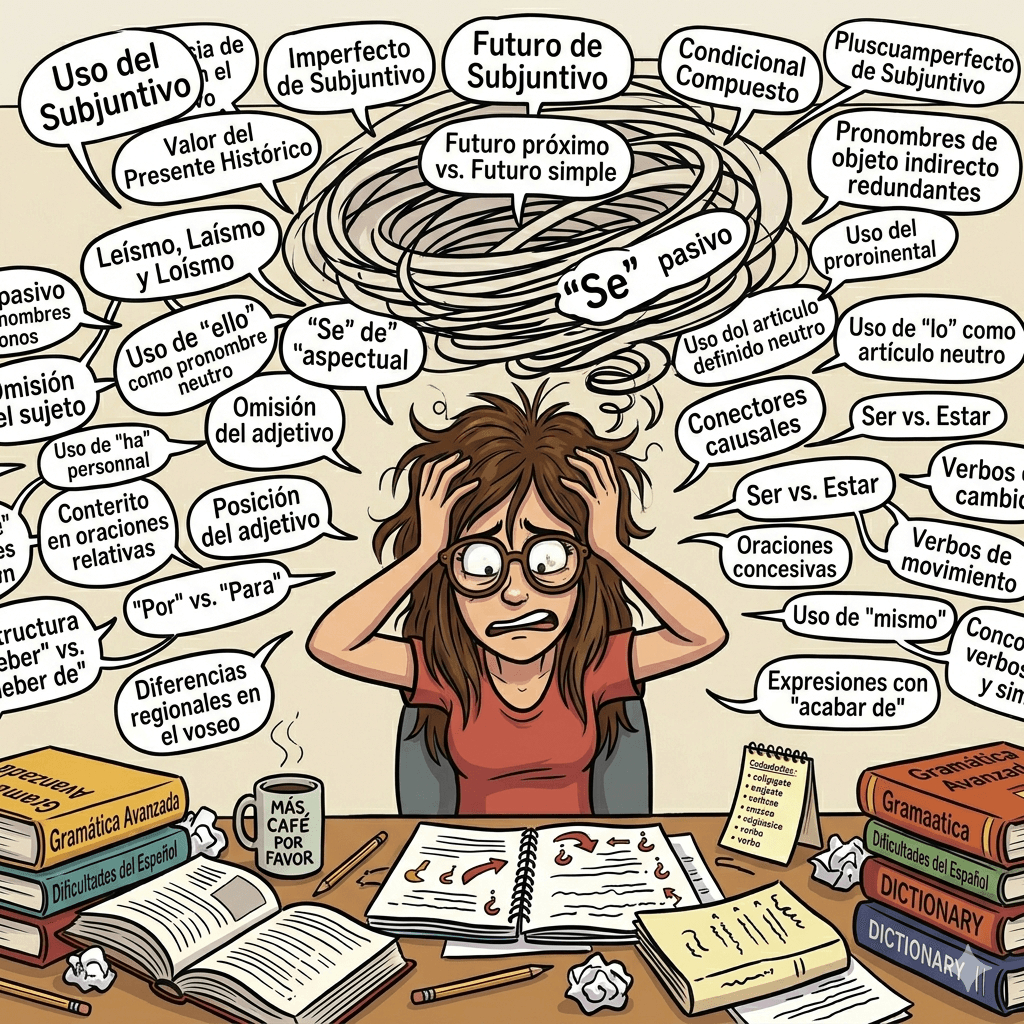
Does grammar matter? Yes! But it’s useless if you have nothing to say.
Cambridge research says balancing grammar and vocab helps you speak 45% better than just grinding grammar rules.
Prioritize words over rules for real communication.
Mistake 2: Trying to Learn Everything at Once
Multitasking kills progress.
Reading, writing, grammar, and speaking all at once overload your brain.
Focus on one skill at a time. Prioritize listening and speaking first. It boosts retention by 20–25%.
Mistake 3: Skipping Speaking Practice
Fluency grows through sound, not silence.
Around 70% of learners avoid speaking due to fear of mistakes. That is why, they don’t improve. Talk daily, even for five minutes.
Mistake 4: Translating Everything
Thinking in your native language slows fluency. It causes pauses while speaking.
Immersed learners who think directly in English reduce response time by 30%.
Mistake 5: Using Apps Without Context
If you just repeat words, you’ll forget them fast.
Words need a story to stick in your brain. Use language learning apps, but also watch shows, sing songs, and chat with people.
That makes your memory twice as strong.
Ignore strict rules, learn at your own pace, and don’t worry one single bit about mistakes.
Just practice.
FAQ’s
Q. Can I speak English fluently in 3 months?
15 minutes a day is enough. You will see noticeable improvements in 4–6 weeks.
Q. What is the fastest way to learn English?
Mastering core skills like Listening, Speaking, Reading, Writing, plus Grammar will help you learn English fast like a Pro.
Q. How to speak English fluently in 30 days?
You must practice workplace idioms daily for 15 minutes. Actively join small talk or meetings. Do this without worrying about making mistakes.
Q. I’m a total beginner. What should I do first?
Start with sounds, learn basic words, and watch kids’ shows.
Q. What English words should I learn first?
Focus on words for daily talk (like greetings and numbers).
Q. How can I keep wanting to learn English?
Set small monthly goals, join a group, and be proud of your wins.
Final Word:
Memorizing lists won’t make you fluent.
Learning happens when words carry real meaning reinforced by repetition within a context.
Blending context, spaced repetition, and immersion together helps a lot. Your brain will start to think in English.
Recap:
- Context is King: Ditch lists; learn words through stories and conversation.
- Immersion Over Memorization: Fluency requires using English daily, not just studying it.
- Collocations Build Fluency: Learn word chunks (“make a decision”), not single words.
- Listen, Then Speak: Follow the child’s model: input (listening) before output.
- Stop Translating: Think directly in English for natural, faster speaking.
Ditch the flashcards. Focus on fluency, not recognition.
If you want a proven system that accelerates your learning, then do try Jolii.ai.