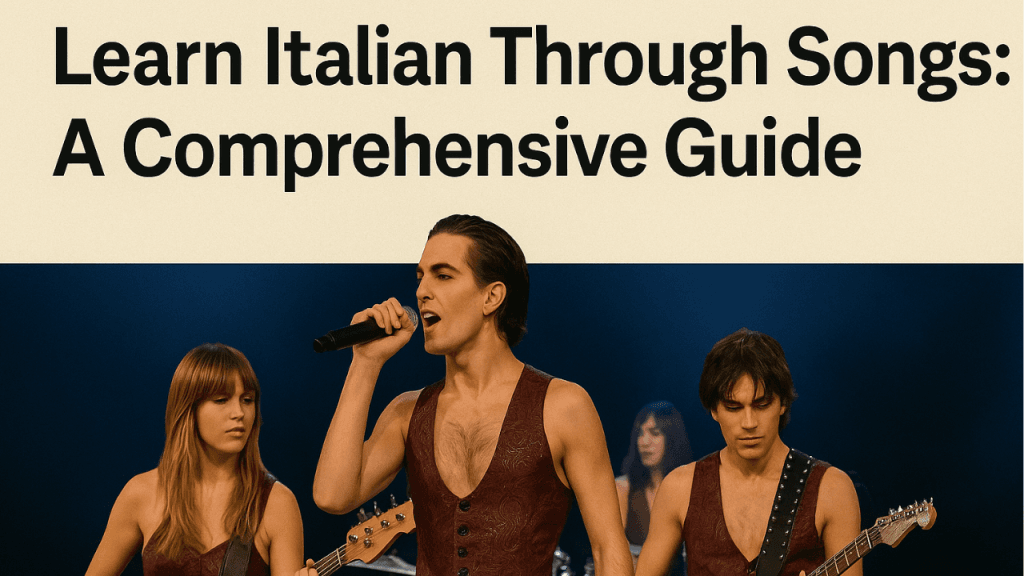
Fancy humming the tunes of your favorite Italian song, repeating known and unknown words, and —- BAM— you’ll start recognizing words, phrases, and pronunciation patterns naturally.
Sounds like magic, right?
Well, it is magic! Learning Italian through songs offers a refreshing alternative to traditional language courses.
The catchy beats of contemporary artists like Måneskin and the melodies of Andrea Bocelli are challenging to grasp hold of, but with the right techniques, studying Italian becomes easy.
Studies show that music, with its rhythm and repetition, taps into the brain’s memory centers and makes it easier for learners to absorb new words and phrases.
Forget the grammar drills and tap into a fun way to learn Italian faster.
Quick Answer:
Learning Italian through songs improves pronunciation, vocabulary retention, listening comprehension, and cultural understanding thanks to repetition and emotional engagement. Start with slow classics like Volare or Felicità, then explore modern songs like Zitti e Buoni to learn slang and natural speech.
In this article, you will get a complete guide to learning Italian with music, the process you can follow, and essential tips you can use. We will refer to the lyrical analysis of the song, ‘Zitti e buoni’ by Måneskin, to lead you straight to fluency. With it, you will also have a hang of an all-immersive app named Jolii to ensure the learning is even-paced, further.
And if you’d like a curated playlist with vocabulary insights and learning tips, check out our guide to 15 popular Italian songs for language learners.
Why Learn Italian Through Songs?
Italian is often celebrated as the language of music and opera, with its melodious sounds and expressive rhythms making it a perfect medium for lyrical artistry. From timeless classics to upbeat Sanremo pop hits like Sarà Perché Ti Amo and modern tracks such as Tutta l’Italia, Italian music offers learners a rich mix of vocabulary and cultural expression. What better language to immerse yourself in than one that resonates so deeply with art and culture?
Songs also expose learners to regional accents and dialect nuances, reflecting Italy’s diverse linguistic landscape.
How Learning Italian Using Music Creates Lasting Memory
Learning Italian through songs not only helps you improve your vocabulary and pronunciation but it also allows you to connect with the rich heritage of Italian music.
This connection between music and emotion creates a deeper impact on memory. It initiates a lasting impression because of all the connections music has with our culture and routine life.
Each note and lyric invites you to explore the nuances of the language while experiencing the beauty of its cultural traditions. So, let the music guide your journey, and discover how learning Italian can be as enjoyable as singing along to your favorite tracks!
How to Learn Italian Using Songs: Easy Steps To Follow
Listening to songs creates an immersive learning environment that makes Italian more engaging and memorable.
Here’s a simple step-by-step approach to learning Italian through songs.
Selecting the Correct Song
Select the song that is closer to your taste and is easier for beginner-level language learners. Choosing the right song can boost your learning experience.
Singing Songs Aloud To Improve Pronunciation
Sing with the beat of the music so the words that seemed difficult to pronounce at first are easy to get in sync with.
Portability Of Music
Enjoy the convenience of music and its portability to learn any language, and listen to music anywhere to keep up with your learning schedules.
Using Language Learning Apps
Language learning apps like Jolii have a strong role to play in language acquisition. Teaching the Italian language is difficult for instructors, but if they use all immersive methods, it will no longer be a task.
Playlist of Your Favorite Music
Create a playlist of your favorite music so you already have the hang of a few popular words in your mind.
The Italian Song “Zitti e Buoni” by Måneskin To Help Learn italian
When Måneskin took the Eurovision 2021 stage by storm with their rebellious anthem “Zitti e Buoni,“ they didn’t just bring Italy back into the spotlight—they ignited a global glam rock revival.
The song, which translates to “Shut up and behave,“ embodies themes of rebellion, individuality, and a rejection of societal norms. But beyond the explosive energy of the music, the lyrics are packed with meaning, Italian expressions, and a healthy dose of slang and even “parolacce” (curse words) worth exploring.
A few expressions from the song highlight how music can introduce everyday Italian vocabulary:
- Zitti → plural of zitto, meaning “quiet” or “shut up”
- Buoni → plural of buono, meaning “well-behaved”
- Fuori di testa → common expression meaning “crazy” or “out of your mind”
Even with just a few phrases, you’re already learning grammar (plurals) and natural expressions used in spoken Italian.
This short example shows how songs expose you to real vocabulary and expressions. For a deeper breakdown of slang, translation, and cultural meaning, read our complete Zitti e Buoni lyrics meaning guide.
3 Reasons Why Learning Language Is Easier Through Listening To Songs
Common phrases that create repetition
Songs repeat high-frequency vocabulary, helping you remember words naturally without rote memorization.
Knowing how verb conjugations work
Listening to songs exposes you to real verb forms in context, making grammar patterns easier to recognize.
Everyday use of new vocabulary
Lyrics often reflect spoken Italian, so the vocabulary you learn is immediately usable in conversation.
List Of Other Popular Songs To Learn Italian Language
Choosing songs based on your level helps you focus on pronunciation, vocabulary, and listening skills more effectively.
Beginner-friendly songs
- “Fai Rumore” – Diodato: The winner of Sanremo 2020, this heartfelt ballad uses simple yet powerful language, perfect for beginners.
- “Ti Muovi” – Diodato: This song showcases emotional depth and is filled with relatable themes, making it an excellent choice for language learners.
- “L’Italiano” – Toto Cutugno: A culturally rich song, L’Italiano is probably the best song to learn iconic Italian expressions (like Spaghetti Al Dente) and identity-related vocabulary.
- “Volare” – Domenico Modugno: A timeless classic with slow tempo and repetitive lyrics, perfect for mastering vowel sounds.
- “Bella Ciao” – Traditional: Simple grammar and repetition make the folk song “Bella Ciao” great for listening and pronunciation practice.
- “Sarà Perché Ti Amo – Ricchi e Poveri”: A catchy chorus and repetitive structure make this classic perfect for pronunciation practice and memorizing everyday Italian phrases.
Intermediate modern songs
- “Mille” – Fedez, Achille Lauro & Orietta Berti: This catchy pop song blends different musical styles and features playful lyrics that are great for practicing conversational Italian.
- “Dove e Quando” – Benji & Fede: A romantic track with a contemporary vocabulary, perfect for understanding modern expressions and slang.
- “Spazio Tempo” – Francesco Gabbani: Known for his upbeat style, Gabbani’s lyrics often incorporate clever wordplay, which is ideal for expanding your vocabulary.
- “Italodisco” – The Kolors: A fun and energetic song that captures the essence of modern Italian pop culture while being easy to sing and dance along to.
- “Non mi basta più” – Baby K & Chiara Ferragni: This collaboration features a mix of pop and dance elements, making it a fun way to explore modern Italian music.
- “Tutta l’Italia” – Gabry Ponte: This energetic track introduces national identity vocabulary and modern pop phrasing while reflecting contemporary Italian culture.
Tips To Learn Italian Easily
- Sing the song along with the singer: Singing helps internalize rhythm and stress patterns, improving pronunciation naturally.
- Increase active listening
- Read your lyrics from the subtitles
- See the translation and understand the contextual meaning
- Analyze which grammar is used
- Listening exercise to improve Italian comprehension
- Make a playlist of songs related to the theme of ‘Zitti e buoni’ or n any song you enjoy
- Check out various songs by different singers.
- Use Jolii to maximize your learning efficiently.
Conclusion
Whether you’re casually humming along or carefully studying lyrics, music can become one of the most enjoyable and effective tools in your Italian learning journey. Songs help you absorb pronunciation, remember vocabulary, and connect with Italian culture in a way that traditional study methods often can’t replicate.
So build your playlist, sing along without fear, and let music guide your progress. With consistency, curiosity, and the right tools, learning Italian can feel less like studying, and more like living the language.
Use Of Apps To Learn the Italian Language
To take your language skills even further, try Jolii. With Jolii, you can turn your favorite songs into personalized language lessons, helping you boost your vocabulary and pronunciation while enjoying the music you love. Start your journey toward fluency today!
FAQs
Music holds a special place in Italian culture, serving as a vital form of expression and connection. It reflects the rich history and diverse regional identities of Italy, often intertwining with local traditions and celebrations. From the grandeur of opera, which is a cornerstone of Italian heritage, to contemporary pop, music is a way for Italians to convey emotions, tell stories, and celebrate life. The significance of music is highlighted during events like the Sanremo Music Festival, which takes place every February, when the entire country pauses to gather in front of the TV for five nights of music and fully engage in this cultural phenomenon. It fosters community and brings people together, whether through festivals, family gatherings, or casual social settings.
Sure! Listening to Italian music is an effective way to learn the language. Songs expose learners to various grammatical structures, vocabulary, and pronunciation in a fun and engaging manner. The melodies help with memorization, making it easier to recall words and phrases. Additionally, music often reflects everyday language use and cultural references, providing context that enhances comprehension and retention of the language.
For artists, learning Italian can open doors to a rich cultural heritage that influences art, fashion, design, and music. Understanding the language allows for deeper connections with Italian artists and audiences, fostering collaboration and creativity. For business owners, especially those in industries like fashion, culinary arts, and tourism, proficiency in Italian can enhance communication with clients and partners in Italy—a key market known for its high-quality products and services.
Jolii makes learning Italian through songs interactive and fun. You can import tracks like “Zitti e Buoni” and use the app to break down the lyrics, understand key phrases, and practice pronunciation. It’s an engaging way to learn language in context while enjoying your favorite music.
For a mix of classic and modern Italian, try “Volare” by Domenico Modugno or tracks by contemporary artists like Tiziano Ferro. Jolii can help you dive deeper into these songs, offering personalized lessons and vocabulary practice to improve your fluency.