TL;DR
If I had to learn a language from scratch today, I would embrace hybrid learning, start engaging with real language content from day 1, have short daily practice sessions, and achieve understanding before speaking. I would measure progress based on understanding, recall, and output, not by streaks or app completions.
Why Am I Struggling to Learn a Language?
Many adults learning a language struggle because they use beginner-level methods when they have outgrown them.
If you can:
- Understand the language but cannot speak it.
- Follow movie scenes on Netflix without subtitles.
- Recognize and write words but cannot speak.
Then you’re stuck at the point where you have taken in a lot of the language without structured understanding or output.
I would approach this differently if I started learning a language from scratch again.
How Would I Approach Learning a New Language?
I would focus on making meaning and understanding patterns, not memorizing words.
Instead of memorization drills and creating long vocabulary lists, I would focus on understanding how the language is used in real-life contexts and situations.
My learning activities would be centered around:
- Watching real language videos (keep them short to avoid overwhelm)
- Watching language podcasts at a slow pace.
- Following simple language conversations
What Would My First 30 Days of Learning a New Language Look Like?
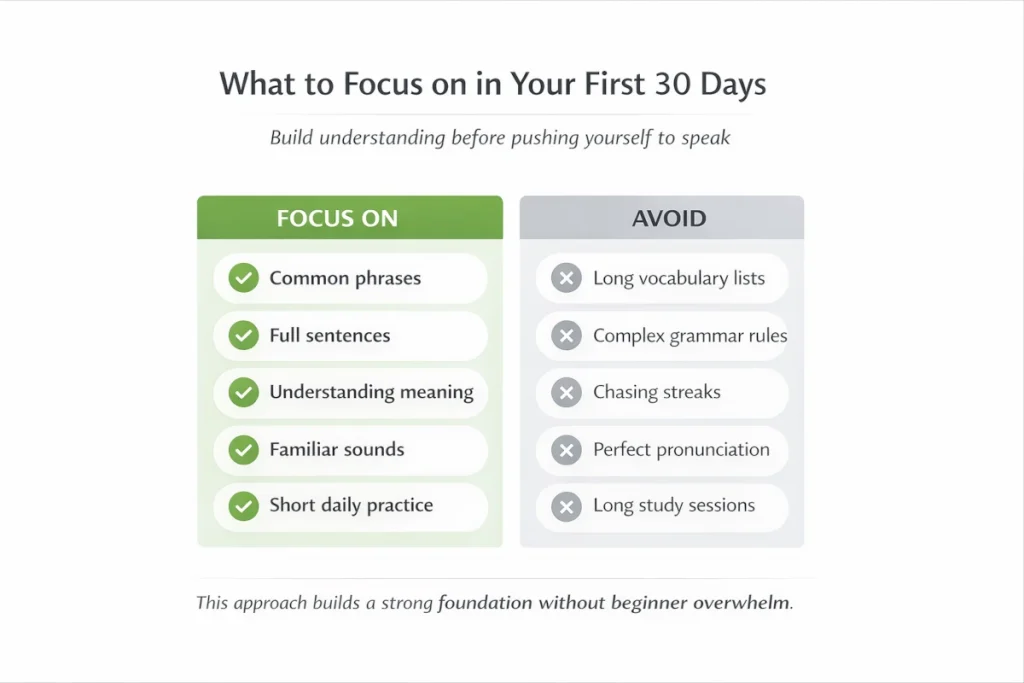
In my first 30 days, I would focus on recognizing phrases, sentences, and sounds. I will prioritize recognition, rather than hurrying to speak.
Learning priorities for the first 30 days
How Much Time Would I Spend to Learn a Language Each Day?
I would spend 30 to 45 minutes every day in the beginning.
However, I wouldn’t study for those times at a stretch. I would break it into micro-sessions.
The daily learning structure I would follow:
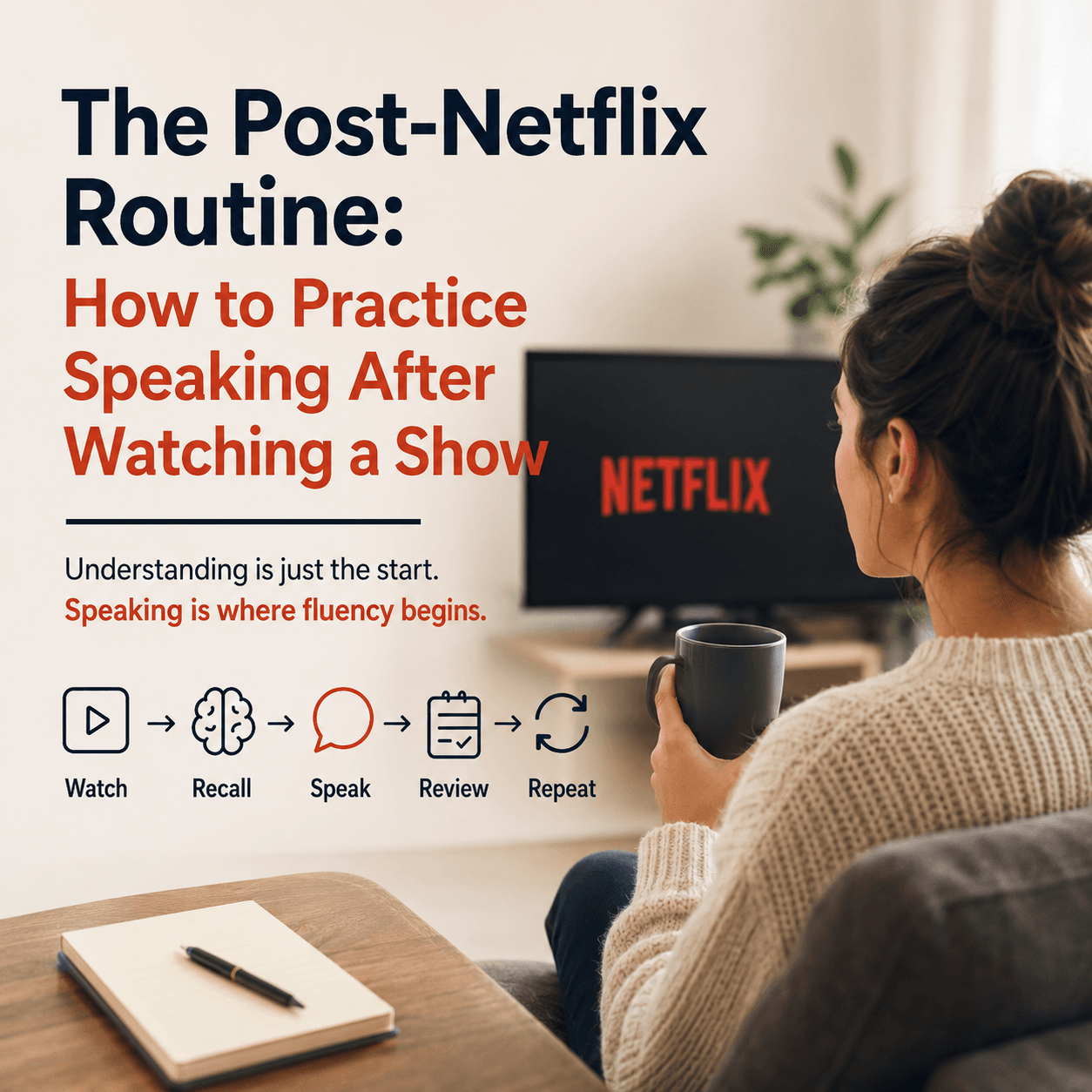
- 10-15 minutes of active language immersion via YouTube, podcasts, or Netflix.
- 10 minutes of reading and re-reading the same material.
- 5-10 minutes of noting repeated phrases from videos, audio contents, and books.
- 5-10 minutes of shadowing or repeating words aloud.
Consistently practicing the language daily is the key to real progress.
When is the Right Time to Start Speaking a New Language?
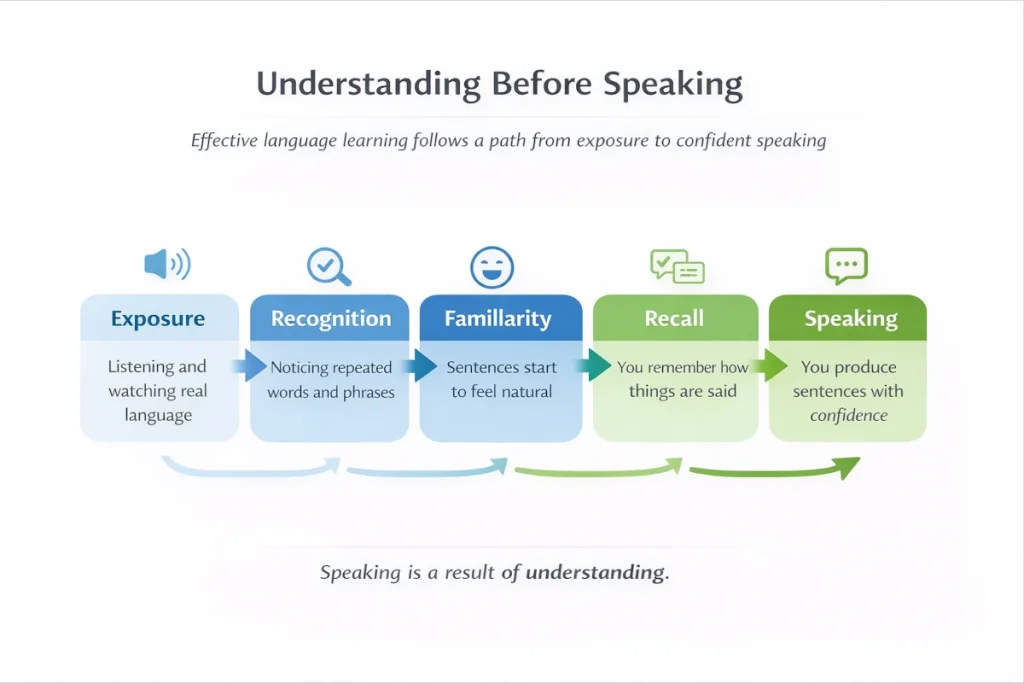
Start speaking once the language and sentences start feeling familiar to you.
Don’t expect to start speaking from day one, but you also shouldn’t wait many months, or until you feel ready before speaking.
Here’s how to know when you should start speaking.
- When you can recognize sentence structure.
- When you can complete a half-written or spoken sentence.
- When you are familiar with the pronunciation almost every word in a sentence.
- When you have heard some phrases so many times that you. remember how they’re said and what they mean.
A Real-Life Example
You’re watching a movie or a short video in the language you’re learning, and someone says ‘I waited all day for you, where were you?’
In the beginning, you might only catch:
- You
- Day
- Where
But as time goes on, you would:
- Understand nearly the entire sentence
- Identify the emphasis,
- Repeat the sentence almost perfectly.
That is the perfect time to start speaking. You understand structure, context, emphasis, and can identify phrases and their meanings– you’re good to start.
Do I Need to Learn Grammar When I Learn a New Language?
Yes, but selectively, and much later -not at the beginning of your learning.
Learning grammar is beneficial because it helps to understand structure and can speed up your understanding.
However, you don’t need to learn every grammar rule there is. The simple rules work, but do away with the complex grammar rules.
| Grammar I’d Ignore as a Beginner | Grammar I’d Learn as a Beginner |
| Names of tenses | Common connectors |
| Verb conjugation tables | Sentence order |
| Exceptions | Verb patterns in sentences |
This table shows the most productive way to approach grammar as a beginner.
Studying grammar after you have gotten a bit familiar with a language while give explanations to the patterns you already recognize and confirm what you already know.
Getting tied up in grammar rules before getting familiar with a language can create, rather than reduce confusion for a beginner.
What are the Best Language Learning Resources in 2026?
If I were starting my language learning in 2026 as a beginner, I would focus on tools that prioritize:
- Real immersive language learning.
- Audio and video language learning with replays and slow listening
- Understanding and familiarity before expecting output.
- Shadowing and speaking practices.
- Making language learning fun
Old vs new learning methods: a comparison table
| Old Language Learning Methods | New Language Learning Methods |
| Uniform approach to learning | Adaptive approach to learning |
| Grammar-first approach | Meaning-first approach |
| Linear lessons | Circular exposure to learning |
| Isolated vocabulary learning | Contextual learning and understanding |
| Heavy focus on streaks and completion | Comprehension is priority |
This table shows the needed shift towards new language learning methods for better comprehension, rather than learning without results.
Some language learning resources I recommend in 2026 include:
- Coffee Break Languages podcast (for multi-language learning)
- Easy Languages YouTube channel (for real-world interviews with natives across a few languages).
- Jolii.ai app, (for its video-based learning, dual subtitles, AI tutor, and gamified learning)
How Can I Measure My Progress When Learning a Language?
I would set ‘understanding’ as the evidence of progress.
I would measure my progress by tracking:
- How easy it is for me to recognize phrases immediately I spot them.
- How much content I understand without subtitles.
- How easily I can understand ideas.
- How well I can paraphrase statements.
I would avoid misleading measurements like:
- Streaks
- App levels
- Total learning hours
- Total words learned
- Total grammar completed
The real measure of progress is understanding, which then translates to speaking.
How Do I Go from Understanding to Speaking?
This is where platforms like Jolii.ai thrive, with their learning philosophy that focuses on helping language learners turn passive understanding into active speaking.
Jolii emphasizes the following learning approaches that support speaking:
- Repeated exposure to real, meaningful content.
- Active engagement with transcripts and chatbots for real learning.
- Language pattern recognition
- Pronunciation feedback to improve confidence.
- Multi-lingual support for all levels of learners.
If you already understand a language but you struggle to speak it, this approach helps you become a comfortable speaker quickly.
Frequently Asked Questions About Language Learning
How long does it take to learn a new language?
Most learners say they begin to feel comfortable with a new language within 4 to 8 weeks of consistent learning.
The timeline for full understanding varies by language, learning strategy, and learner.
What is the best way to learn a new language?
A combination of listening, watching, speaking, and reading, delivers the best results when learning a new language.
How can I overcome the fear of speaking?
Speak to yourself, start when sentences feel familiar, and engage with chatbots or learning partners.
Final Thoughts
If I had to learn a new language from scratch today, I would chase understanding and familiarity, because they hold the key to achieving confidence and fluency.