First published: November 2025. Last updates: May 2026

In 1999 Juan Luis Guerra checked into a Dominican public hospital and found broken equipment, overwhelmed staff, and no power for basic diagnostics. He left and wrote a merengue about it.
“El Niágara en Bicicleta” is that song — a three-minute medical nightmare delivered with such warmth and wit that it became one of the most beloved tracks in Dominican music history. The title is the punchline: crossing Niagara Falls on a bicycle. An impossible task, described with complete calm.
For Spanish learners it’s also one of the richest teaching texts available. Every verse introduces new vocabulary, grammar patterns, and cultural insight — Dominican slang, expressions of uncertainty, gradual change constructions, negative commands, and a final chorus that shifts from comedy to something considerably darker without changing its musical register.
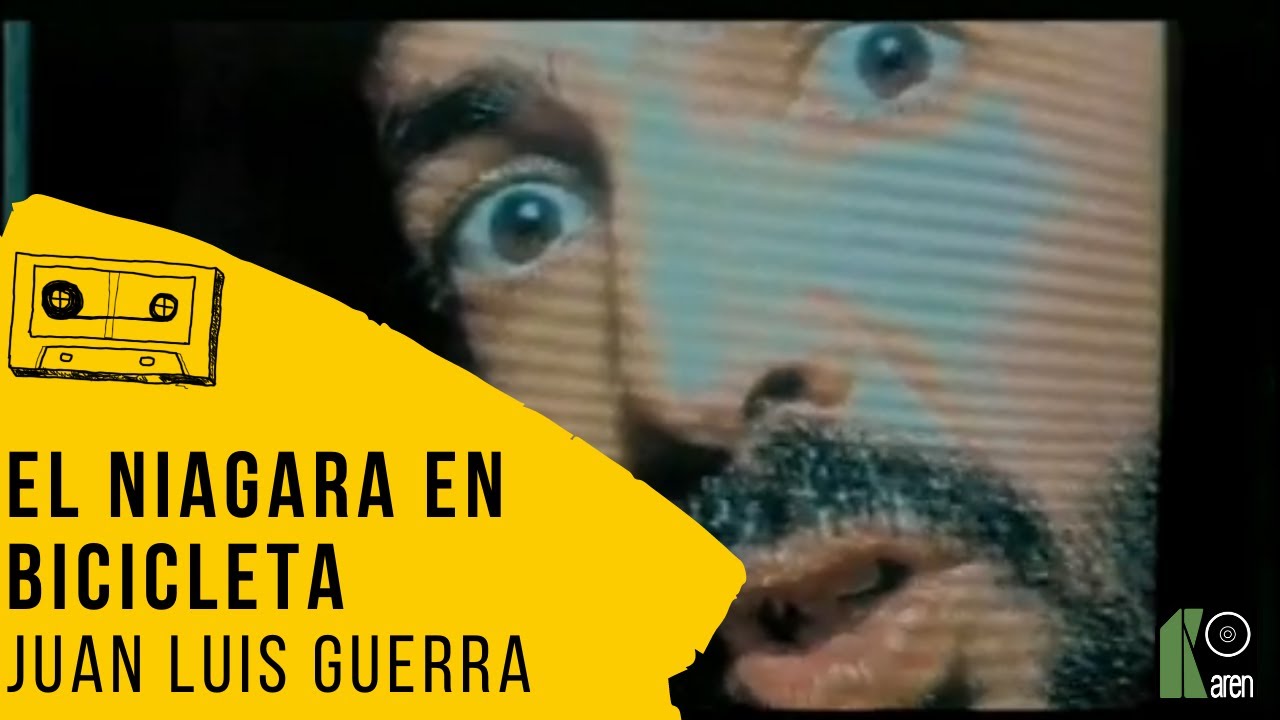
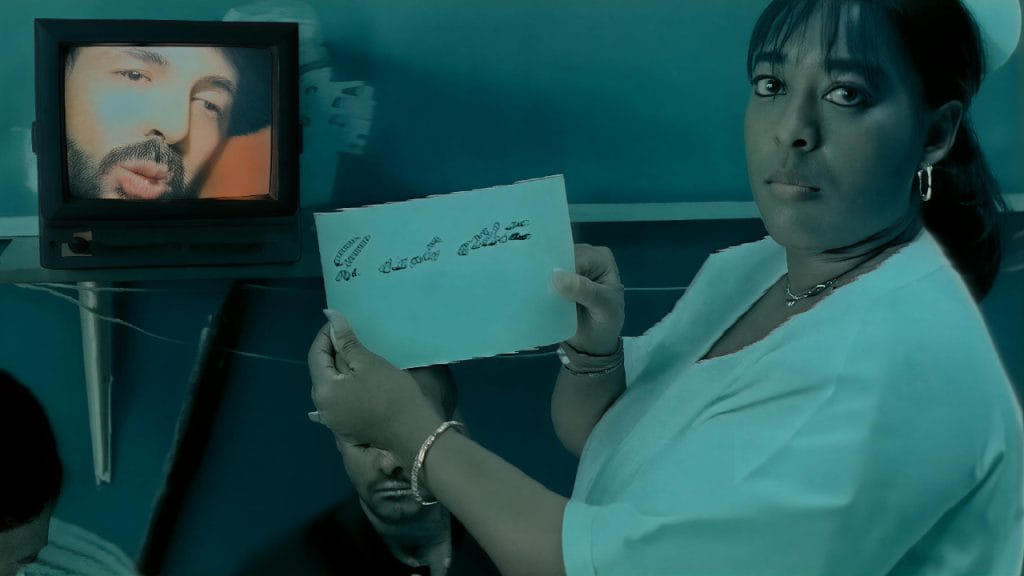
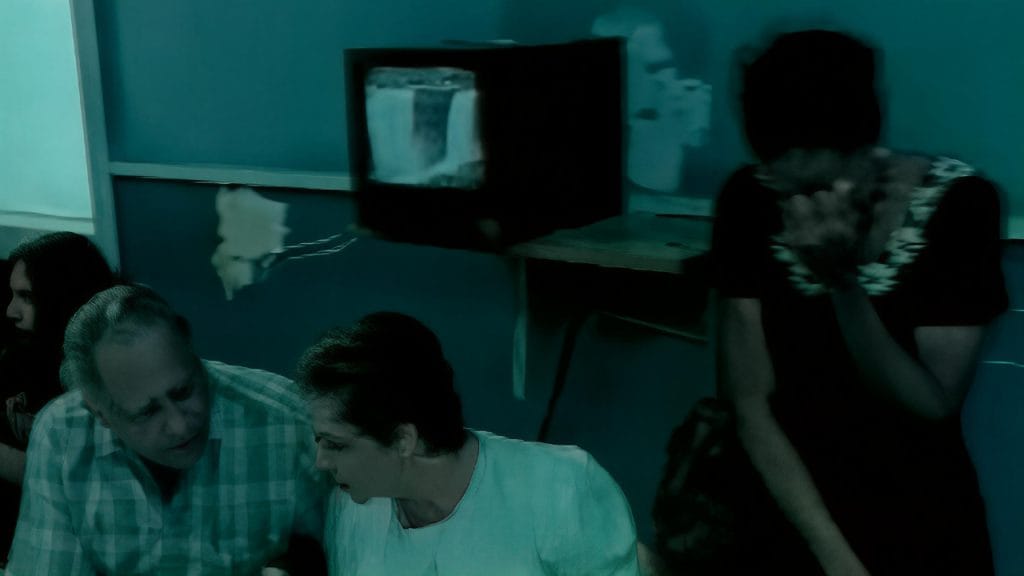
Watch the video before reading the analysis. The visual storytelling adds a layer the lyrics alone can’t carry.
Verse 1: Humor, Shock, and the Everyday Struggle
The opening verse establishes the scene immediately — the narrator is struck by a sudden dizzy spell on a Sunday morning, collapses onto a sewer drain, and begins listing his symptoms with comic precision. Guerra grounds the emergency in tropical Dominican imagery, comparing his fall to a ripe fruit dropping and his pallor to a mothball. The medical vocabulary arrives early: blood pressure, bilirubin, fever — serious conditions delivered with the rhythm of a joke.
One line captures the tone perfectly: “caí redondo, como una guanábana” — I fell flat, like a soursop fruit. The simile is absurd enough to be funny and specific enough to be Dominican.
Language notes:
| Expression | Meaning | Notes |
|---|---|---|
| Sirimba | Fainting spell | Dominican slang — not standard Spanish |
| Caí redondo | I dropped flat | Colloquial expression for collapsing completely |
| ¿Será la presión? | Could it be my blood pressure? | “Será” expresses uncertainty — a useful construction |
| Me fui poniendo | I started turning/becoming | Gradual change — ir + gerund is a common pattern |
Cultural note: The bilirubin reference connects to an earlier Guerra song, showing how he weaves personal medical history into public storytelling. The guanábana — soursop — is a fruit immediately recognisable across the Caribbean, grounding the scene in a specifically Dominican sensory world.
Verse 2: The Reception Scene
The narrator arrives at the emergency room to find the receptionist listening to the lottery draw rather than attending to patients. In desperation he cries out — and a nurse appears at his ear with the same phrase that will bookend the entire song: “Tranquilo, Bobby, tranquilo.”
One line captures the absurdity perfectly: “el recepcionista escuchaba a la lotería” — the receptionist was listening to the lottery.
Language notes:
| Expression | Meaning | Example |
|---|---|---|
| Supuestamente | Supposedly | Es, supuestamente, el mejor hospital. — It’s supposedly the best hospital. |
| Alguien se apiade de mí | Someone take pity on me | Fixed expression of desperation — appears in literature and everyday speech |
| Perdiendo el sentido | Losing consciousness | Me fui perdiendo el sentido poco a poco. — I gradually lost consciousness. |
| Se acercó a mi oreja | Came close to my ear | Se acercó y me susurró algo. — She came close and whispered something. |
| Tranquilo | Take it easy | Tranquilo, todo va a salir bien. — Take it easy, everything will be fine. |
Cultural note: The receptionist listening to the lottery while patients suffer is one of the sharpest details in the song — a single image that says everything about institutional indifference. The lottery is a significant cultural touchstone across the Dominican Republic and Latin America generally, which makes the detail immediately recognisable to a regional audience. A foreigner might miss it; a Dominican wouldn’t.
Verse 3: The Hospital Reality Check
The narrator arrives at the hospital and meets a nurse whose hands smell of Ben Gay — a detail that sets the tone for everything that follows. She greets him with a term of casual affection, listens to his story, and delivers the first in a series of impossible announcements: there’s no power for an electrocardiogram. The narrator’s reaction — eyes wide, head in hands — is described with a simile that becomes the song’s title.
The line that gives the song its name arrives here: “es muy duro pasar el Niágara en bicicleta” — it’s very hard to cross Niagara Falls on a bicycle. An impossible task, described with complete calm.
Language notes:
| Expression | Meaning | Notes |
|---|---|---|
| Hay que + infinitive | One must / You need to | Expresses general obligation — extremely common |
| No hay luz | There’s no power/light | Survival phrase — useful well beyond this song |
| Con lujo de detalles | In great detail | Fixed expression — appears in everyday Spanish |
| Como luna llena | Like a full moon | Simile for wide, shocked eyes |
Cultural note: Guerra has spoken in interviews about the personal experience that inspired this song — arriving at a Dominican public hospital to find broken equipment. Rather than writing a protest song, he wrote a merengue. That choice is itself a cultural statement about how humour functions as a coping mechanism in Dominican life.
The Chorus: A Litany of Absurdities
The chorus is structured as a list of increasingly impossible complaints — each one beginning with the same phrase, building in absurdity until the situation tips from frustrating into farcical. The doctors have left. There’s no anaesthesia. The rubbing alcohol has been drunk. The surgical thread was used to embroider a tablecloth.
The repeated opener is the key language pattern: “no me digan que…” — don’t tell me that… Each repetition adds another layer of chaos while the grammar stays identical throughout.
Language notes:
| Expression | Meaning | Notes |
|---|---|---|
| No me digan que… | Don’t tell me that… | Negative command + subordinate clause — highly reusable |
| Se lo bebieron | They drank it | Third person plural past — note the indirect object pronoun |
| Fue bordado | Was embroidered | Passive construction — less common in spoken Spanish but worth recognising |
Cultural note: The escalation from plausible (no doctors, no anaesthesia) to absurd (drinking the rubbing alcohol, embroidering with surgical thread) is deliberate. Guerra has said the song is a composite of real complaints he heard — which makes the absurdity more unsettling than funny on reflection.
Verse 4: The Bitter End
The final verse resolves the story with quiet resignation. The narrator leans on the nurse for support, asks what he should do, and receives his answer on a prescription slip — not a diagnosis or a treatment plan, but an apology. Two words: “Lo siento, atleta.” I’m sorry, athlete. She moves on to the next patient with the same gentle reassurance, and the narrator is left exactly where he started.
The key line is the apology itself: “Lo siento, atleta” — seven words that carry the entire critique of the song without raising their voice.
Language notes:
| Expression | Meaning | Notes |
|---|---|---|
| Me apoyé de sus hombros | I leaned on her shoulders | Reflexive construction for physical support |
| Como un cojo a su muleta | Like a cripple on his crutch | Simile expressing complete dependence |
| Siguió su destino | Went on her way | Idiomatic — literally “followed her destiny” |
| Tranquilo | Take it easy / Calm down | One of the most versatile words in Spanish |
Cultural note: The ending is the most powerful moment in the song precisely because of what it doesn’t say. The nurse is kind, competent, and completely powerless. Her prescription is an apology. Guerra doesn’t blame her — he blames the system that put her in that position. That distinction is what elevates the song from complaint to social commentary.
Final Chorus Variation — The Darkest Moment
The song’s final section drops the humour entirely. The absurdities give way to something more urgent — someone falling from pain, aspirins changing colour, someone giving birth without love, a heart that may not be beating. The no me digan que structure continues but the content shifts from comic inventory to desperate plea.
The line that marks the shift: “no me digan que no está latiendo” — don’t tell me it’s not beating.
Language notes:
| Expression | Meaning | Example |
|---|---|---|
| Va cayendo | Is falling / deteriorating | El enfermo va cayendo poco a poco. — The patient is slowly deteriorating. |
| De tanto dolor | From so much pain | No podía dormir de tanto dolor. — He couldn’t sleep from so much pain. |
| Cambian de color | Change colour | Las hojas cambian de color en otoño. — Leaves change colour in autumn. |
| Va pariendo | Is giving birth | Alguien va pariendo sin ayuda. — Someone is giving birth without help. |
| No está latiendo | It’s not beating | El corazón no está latiendo. — The heart isn’t beating. |
| Le falta amor | It lacks love / needs love | Este lugar le falta amor. — This place needs love. |
Cultural note: This is where the song reveals its full weight. Guerra has moved from personal inconvenience to collective tragedy — someone is dying, someone is giving birth alone, a heart may be stopping. The comic distance of the earlier verses disappears entirely. The same hospital that couldn’t provide an electrocardiogram for the narrator is now failing someone far more critically. That shift — from funny to devastating without changing the musical structure or the grammatical pattern — is what makes the song genuinely great rather than just clever. The no me digan que format holds everything together, which makes the final lines land with far more force than if Guerra had changed register entirely.
Complementary Learning Activities
Vocabulary map — Dominican slang in context: Create a chart with the Dominican slang expressions from the song — sirimba, caí redondo, con lujo de detalles — and add the standard Spanish equivalent next to each one. Then find the equivalent expression in your own regional variety of Spanish or your native language. This comparison builds awareness of how Spanish varies across regions and helps you remember which expressions are Dominican-specific versus universally understood.
Storytelling task — exaggerated imagery: Write five sentences describing a minor inconvenience — a delayed bus, a cold coffee, a long queue — using the same exaggerated imagery Guerra uses. Compare yourself to an object, describe your reaction with a simile, stack the complaints in a list. The goal is to practise the hay que construction, the gradual change pattern (me fui poniendo), and the no me digan que structure — all in a context you invent yourself.
Grammar drill — no me digan que: Write five new sentences using the no me digan que structure, each one escalating in absurdity the way the chorus does. Start with something plausible and end with something completely impossible. This drills the negative command plus subordinate clause pattern until it feels automatic.
Cultural dive — healthcare as social commentary: Research the Dominican public healthcare system and the context of public services in the Dominican Republic. Then find one other Latin American song or piece of creative work that addresses a social issue through humour rather than protest. How does the tone compare to Guerra’s? What does the choice of humour rather than anger say about the culture it comes from?.
FAQs
Who is Juan Luis Guerra and why is he worth studying for Spanish learners? Juan Luis Guerra is a Dominican singer, songwriter, and producer widely considered one of the most important figures in Latin American music. His work blends merengue, bachata, salsa, and pop with lyrics that range from romantic to politically sharp. For Spanish learners he’s particularly valuable because his songwriting is dense with Dominican idioms, vivid imagery, and everyday speech patterns that textbooks never cover. “El Niágara en Bicicleta” is one of his most linguistically rich tracks but almost any song in his catalogue repays close analysis.
Is Dominican Spanish very different from standard Spanish? Yes — meaningfully so. Dominican Spanish has some of the most distinctive phonological features of any Caribbean variety: consonants are frequently softened or dropped, vowels shift in fast speech, and the vocabulary includes expressions found nowhere else in the Spanish-speaking world. “Sirimba” — the fainting spell in this song — is a perfect example: immediately understood by Dominicans, completely unknown in most other varieties. For learners, Dominican Spanish is challenging but valuable exposure — it prepares you for the kind of regional variation you’ll encounter in real conversations across the Caribbean.
What grammar structures from this song are most useful for everyday Spanish? Three stand out. The hay que + infinitive construction for expressing general obligation appears constantly across all Spanish varieties. The me fui poniendo pattern — ir + gerund for gradual change — is elegant and highly transferable. And the no me digan que structure for expressing disbelief or exasperation is immediately usable in everyday conversation. All three appear in the song in emotionally memorable contexts, which makes them easier to retain than grammar drilled in isolation.
What does “el Niágara en bicicleta” actually mean? It’s the song’s central metaphor — crossing Niagara Falls on a bicycle. An impossible task attempted anyway, without complaint. Guerra uses it to describe the experience of navigating a broken healthcare system with dignity and resignation rather than anger. The phrase has since entered Dominican popular culture as shorthand for any situation that’s absurdly difficult but must be endured regardless.
Music has an incredible power to bring language to life. Songs like “El Niágara en Bicicleta” work so well for language learning because the grammar, humor, and emotion become inseparable. You stop memorizing isolated vocabulary and start remembering scenes, reactions, rhythms, and structures together — which is much closer to how real acquisition actually happens. Ready to take your Spanish learning to the next level? With Jolii.AI, you can dive into songs, practice translations, and engage with authentic Spanish content in an interactive way. Start turning your favorite music into a dynamic classroom today!