Introduction
French past tense is often where learners hit their first major wall. Among all the verb forms, le passé composé stands out because it does not rely on a single auxiliary verb. Instead, it alternates between être passé composé and avoir, and choosing the wrong one can subtly change the meaning or simply make a sentence grammatically incorrect.
Two phrases dominate discussions around this topic: “être passé composé” and “avoir passé composé.” These expressions are used by teachers and grammar books to classify verbs depending on which auxiliary they take (what wonderfully terrifying memories). Understanding the difference is essential, because it affects agreement, sentence flow, and even how native speakers interpret the action.
At first glance, the rule seems simple:
But the reality is more nuanced. Some verbs change auxiliary depending on whether they are used transitively or intransitively. Others require agreement with the subject when conjugated with être, while avoir only agrees under specific conditions. Cultural usage also plays a role: French speakers often prefer certain constructions in spoken language, while written French follows stricter rules.
Être or Avoir? – Quick Answer
Use être for movement or change of state (DR MRS VANDERTRAMP + reflexive verbs).
Use avoir for all other verbs, especially when there is a direct object.
Agreement: être → always agrees, avoir → only agrees when the direct object comes before the verb.
The Auxiliary “Être” in the Passé Composé
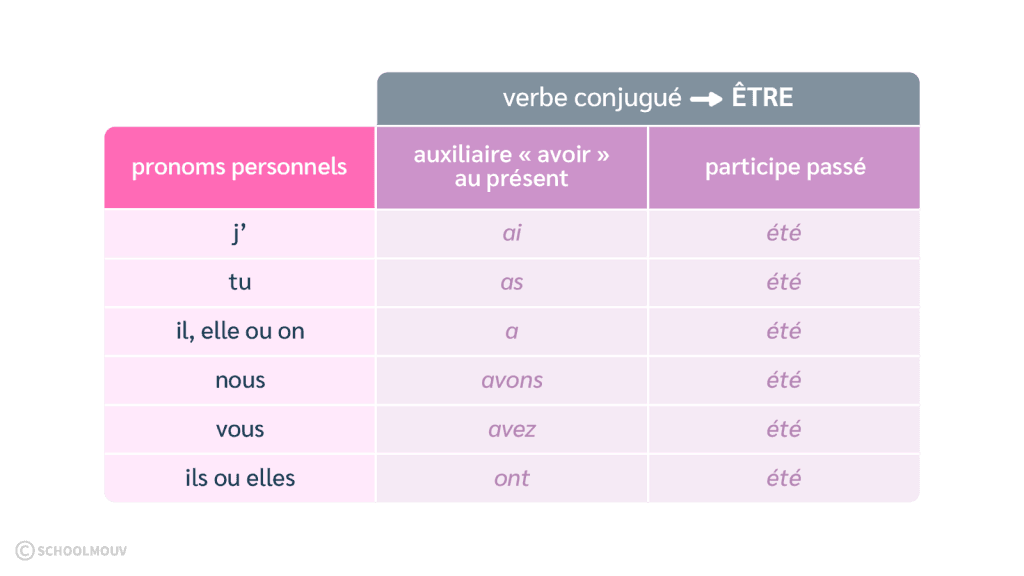
When learners hear the phrase “être passé composé,” they usually think of movement or change. And they are partly right, but not entirely. In French, a specific set of verbs uses être as the auxiliary in the passé composé, and these verbs share a common characteristic: they describe a change of state or a change of position involving the subject itself.
Traditionally, teachers introduce these verbs through the mnemonic DR MRS VANDERTRAMP, a classic tool in French classrooms. Each letter represents a verb that conjugates with être:
- Devenir
- Revenir
- Monter
- Rentrer
- Sortir
- Venir
- Arriver
- Naître
- Descendre
- Entrer
- Retourner
- Tomber
- Rester
- Aller
- Mourir
- Partir
What ties all these verbs together is that the subject moves or transforms, rather than an external object being affected.
Example Sentences (Être Passé Composé)
- Elle est arrivée à l’heure.
She arrived on time. - Nous sommes descendus au rez-de-chaussée.
We went down to the ground floor. - Ils sont devenus amis.
They became friends.
In all of these sentences, the subject undergoes the action; no direct object receives it.
Why “Être” Is Used Here
The auxiliary être highlights that the subject is the focus of the change, not the object. In linguistic terms, these verbs are intransitive, meaning they do not take a direct object.
Culturally, these verbs also represent states of being or physical movement, which is why they appear so frequently in everyday French phrases, think about social interactions, travel stories, or news reports.
For example, French news headlines often use verbs like “arriver,” “partir,” “revenir,” all conjugated with être, because they describe movements of people or entities.
Agreement Rules with Être
A key feature of être passé composé is agreement:
The past participle agrees in gender and number with the subject.
Examples:
- Elle est arrivée. (feminine singular)
- Ils sont arrivés. (masculine plural)
- Elles sont arrivées. (feminine plural)
This agreement is mandatory, and one of the most common pitfalls for learners.
Summary of This Section
- Verbs expressing movement or change of state use être.
- Past participle agrees with the subject.
- No direct object is involved.
- These verbs often appear in narrative and conversational French.
The Auxiliary “Avoir” in the Passé Composé
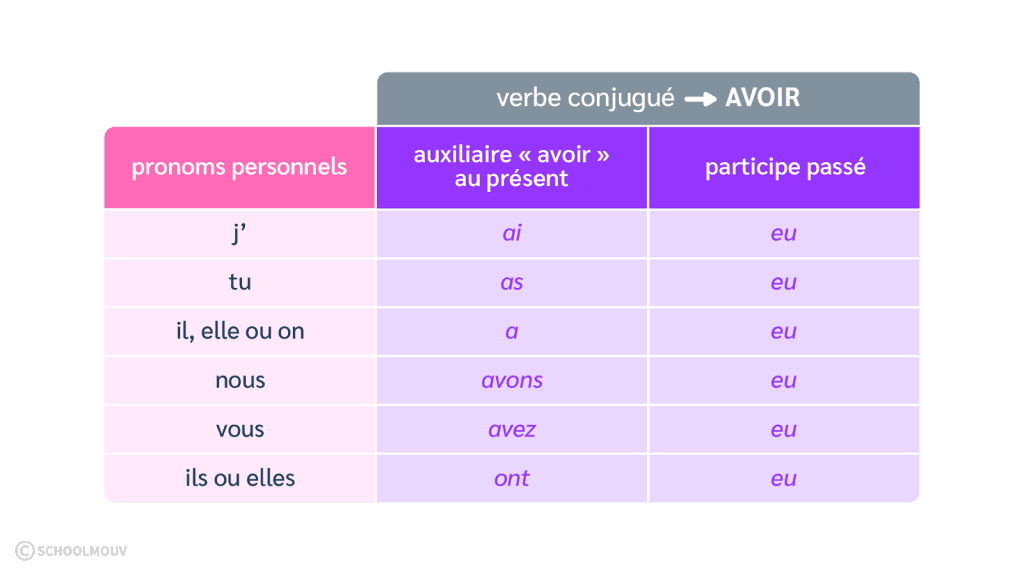
While être is reserved for a special group of verbs, the auxiliary avoir is far more common. In fact, the majority of French verbs use avoir in the passé composé, which is why learners encounter it constantly in both spoken and written French.
When you hear the expression “avoir passé composé,” it refers to verbs that take avoir as their auxiliary, usually because they are transitive verbs, meaning they act upon a direct object.
Examples of Avoir Passé Composé
- J’ai mangé une pomme.
I ate an apple. - Elle a regardé le film.
She watched the movie. - Nous avons terminé le travail.
We finished the work.
In all cases, the verb acts on a direct object (une pomme, le film, le travail), which is why avoir is used.
Why “Avoir” Is Used So Frequently
The auxiliary avoir is linguistically more neutral than être. It does not imply movement or change of state; instead, it simply signals that an action has been completed.
Because most verbs in French describe actions affecting something or someone else, eating, reading, building, photographing, etc, avoir becomes the default auxiliary.
Culturally, this mirrors how French speakers describe everyday actions. For instance, when someone recounts their day, phrases like “j’ai travaillé,” “j’ai vu,” “j’ai acheté” appear constantly.
Agreement Rules with Avoir, The Exception That Confuses Learners
Unlike être, the past participle with avoir does not agree with the subject.
All three remain mangé, regardless of gender or number.
But there is ONE exception, agreement with the direct object when it precedes the verb.
Example:
- La pomme que j’ai mangée.
Here, la pomme (feminine singular) is the direct object before the verb, so the past participle agrees → mangée.
Another example:
- Les lettres que nous avons écrites.
“Les lettres” (feminine plural) → écrites
This rule is often tested in formal writing and exams, and it remains one of the most subtle points of French grammar.
Common Mistakes Learners Make
- Agreeing the participle with the subject instead of the object
❌ Elle a mangée.
✅ Elle a mangé. - Forgetting agreement when the object precedes the verb
❌ Les lettres que nous avons écrit.
✅ Les lettres que nous avons écrites. - Confusing avoir with être for movement verbs
Example: Elle a venue → ❌
Correct: Elle est venue ✅
Summary of This Section
- Avoir is the default auxiliary for most verbs.
- No agreement with the subject.
- Agreement only when the direct object precedes the verb.
- Essential for narrative, conversations, and everyday descriptions.
How to Choose Between Être and Avoir
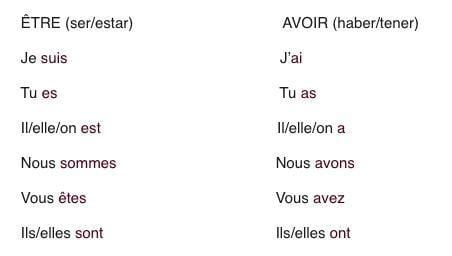
Choosing the correct auxiliary in the passé composé often feels intimidating, but once you understand the underlying logic, the process becomes much more intuitive. The key question you should ask yourself is:
Does the verb express a change of state or movement involving the subject, or does it act on an object?
The answer usually reveals whether you need être or avoir.
Être vs Avoir in the Passé Composé – Comparison Table
| Être | Avoir |
|---|---|
| Used for movement or change of state | Used for most verbs (default auxiliary) |
| Verbs describe what happens to the subject | Verbs describe an action performed on an object |
| Includes DR MRS VANDERTRAMP verbs | Applies to transitive verbs (with a direct object) |
| Includes all reflexive verbs | Used when the verb has a direct object |
| Past participle agrees with the subject | Past participle never agrees with the subject |
| Examples: Elle est arrivée, Nous sommes partis | Examples: J’ai mangé, Elle a trouvé les clés |
1. If the verb expresses movement or change of state → use Être
These verbs often describe:
- going somewhere
- coming back
- being born or dying
- entering or leaving
- transforming or becoming
Examples:
Because the subject itself undergoes the action, the auxiliary être is required, and the past participle must agree with the subject.
2. If the verb has a direct object → use Avoir
Most French verbs fall into this category. If the action affects something or someone else, the auxiliary is avoir.
Examples:
In each case, the verb has a direct object (une lettre, la voiture, les clés), so avoir is the correct auxiliary.
3. Reflexive verbs → always use Être
Every reflexive verb (verbs with se) uses être, even if the underlying verb normally uses avoir.
Examples:
The reflexive pronoun acts as the object, but grammatically the construction still follows the être system, including agreement.
4. Some verbs switch auxiliaries depending on usage
A few verbs can use être or avoir, depending on whether they are used transitively or intransitively.
Example: monter
- Elle est montée. (intransitive – movement → être)
- Elle a monté les valises. (transitive → avoir)
Same for descendre, sortir, rentrer, passer, etc.
5. “Basically”
If the subject moves or changes → être.
If something is acted upon → avoir.
- Movement + change → être
- Action on an object → avoir
- Reflexives → être
- Some verbs depend on context
- Agreement rules differ (être = agreement, avoir = usually none)
Summary: Être or Avoir?

French learners often describe the passé composé as a maze of exceptions, auxiliary verbs, and agreement rules. Yet once you understand the logic behind être passé composé and avoir passé composé, the system becomes predictable, consistent, and even elegant (even funny, at least it was for me).
French speakers naturally use these patterns without conscious thought. Movement verbs with être appear frequently in stories, travel narratives, and everyday conversations. Meanwhile, most descriptions of actions, eating, working, studying, rely on avoir.
This reflects a deeper linguistic philosophy:
- être highlights a state or transformation
- avoir highlights an action performed on something
Understanding this distinction gives learners a more “native-like” intuition rather than memorization-heavy grammar.
Another struggle learners often face is whether to use passé composé or imperfect, so once you have mastered passé composé, it will be time to also learn imperfect, another form to describe past actions in French.
Takeaways
- Être is used for movement and change of state.
Verbs like arriver, partir, tomber, devenir, naître always take être, and the past participle agrees with the subject. - Avoir is the default auxiliary.
Most verbs, especially those with a direct object, use avoir. - Agreement with avoir is rare.
Only when the direct object comes before the verb does agreement apply. - Reflexive verbs always take être.
Even if the main verb would normally take avoir. - Context matters.
Verbs like monter, descendre, sortir, rentrer switch auxiliaries depending on whether they are transitive. - Think in terms of the subject vs. the object.
- Subject changes → être
- Object is acted upon → avoir
- Subject changes → être
If you want interactive practice, personalized feedback, and smart exercises tailored to your weak spots, Jolii AI is here. This excellent companion for learners helps you train auxiliary choice, agreement rules, and real-life usage through adaptive learning.
FAQ: Être or Avoir in the Passé Composé
1. Does passer take être or avoir in the passé composé?
It depends on the meaning:
– Être → when it expresses movement (to pass by): Je suis passé devant la banque.
– Avoir → when used transitively (to spend time): J’ai passé une belle journée.
2. Which auxiliary do reflexive verbs use in the passé composé?
All reflexive verbs use être.
Examples: Je me suis levé, Elle s’est réveillée.
3. What is DR MRS VANDERTRAMP?
It’s a classic mnemonic to remember the verbs that always take être in the passé composé.
They include: Devenir, Revenir, Monter, Rentrer, Sortir, Venir, Arriver, Naître, Descendre, Entrer, Retourner, Tomber, Rester, Aller, Mourir, Partir.
4. How do I know if a verb takes être or avoir?
Ask:
– Does the subject move or change state? → Être
– Does the verb have a direct object? → Avoir
5. Does the past participle always agree with the subject when using être?
Yes. With être, the participle agrees with gender and number:
Elle est entrée, Ils sont arrivés, Elles sont devenues amies.