“Buongiorno, Principessa!” (“Good morning, Princess!”) is one of the most famous lines in Italian cinema. Roberto Benigni’s character Guido said it when greeting his love interest, Dora (played by his real-life wife Nicoletta Braschi) in La vita è bella (Life Is Beautiful) and it became an internationally quoted line. But “buongiorno” is just one way to say “good morning” in Italian. Let’s take a look at some more.
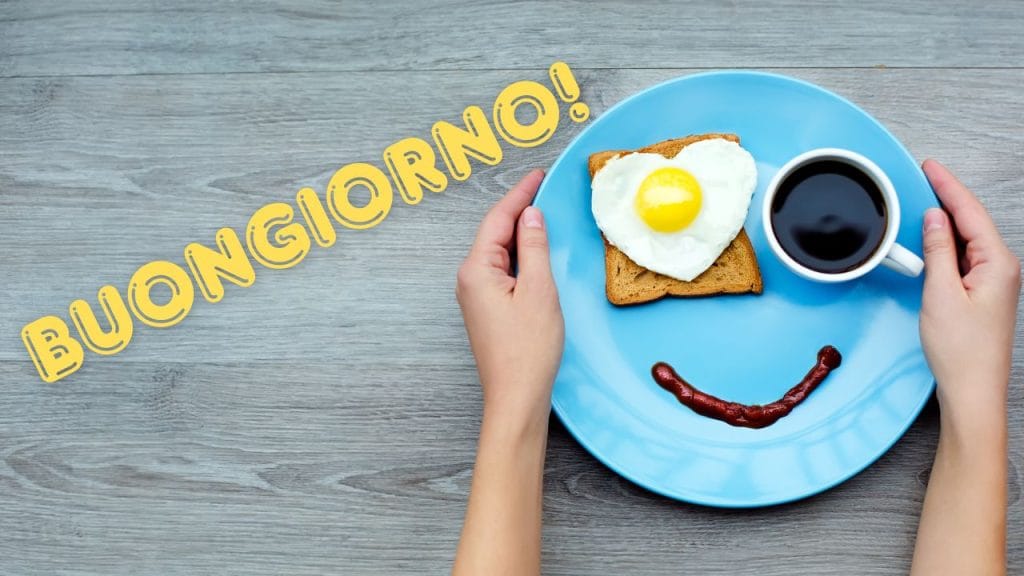
How to Say “Good Morning” in Italian
Depending on the thought and feeling you want to put behind it, there are many ways to say “good morning” in Italian. Here are five of the most popular and simplest ways to say it.
1. Buongiorno
“Buongiorno” is the simplest way to say “good morning” in Italian. It literally translates to “good day,” but no one says “buona mattina,” which would be the word-for-word translation of “good morning.” Buongiorno is usually the best choice for saying “good morning” because you can use it with anyone, regardless of how well you know them and how formal or informal the situation is.
2. Buona giornata
“Buona giornata” literally means “have a good day.” Unlike buongiorno, which is used to greet someone at the start of the day, “buona giornata” is typically used when saying goodbye, especially in polite or service interactions.
You might hear it when leaving a café, shop, or office, as a friendly way to wish someone well for the rest of the day.
Because of this, “buona giornata” feels warm and polite, but it doesn’t replace “buongiorno” as a greeting. Instead, it complements it.
3. Giorno
“Giorno” literally means “day,” but in this case it is equivalent to the English “Mornin’.” It is a shortened, casual way to say “good morning” and should only be used with people you are close to, not in formal situations (so you can say it to your mom, but not the clerk at the bank).
4. Buondì
“Buondì” is another informal way to say either “good morning” or “hello” in Italian. It is a friendly Italian slang word and is usually used with people you know well, like friends, family, and colleagues at work (but maybe not your boss).
5. Ciao
“Ciao” isn’t technically the same as “good morning,” but many Italians greet each other with this phrase first thing in the morning. It is more equivalent to “hi” or “hello.” While it is not as informal as “buondi” or “giorno,” it should still be used with people you already know, not people you are meeting for the first time.
6. Salve
“Salve” also means “hi” or “hello,” but is used with people you don’t know well or people you need to be formal with. A professor at the university, for instance, or that clerk at the bank we mentioned earlier.
Extended Good Morning Phrases in Italian
If you want to say “good morning” in Italian, one of the five words listed above will work perfectly well on its own. If you want to expand a bit, though, you can personalize the phrase by adding a subject or a specific comment. Here are a few examples:
| Italian Phrase | English Translation |
| Buongiorno, come sta? (formal), Buongiorno, come stai? (informal) | Good morning, how are you? |
| Buongiorno, Signora. Buongiorno, Signore. | Good morning, ma’am. Good morning, sir. |
| Buongiorno a tutti. | Good morning, everyone. |
| Buongiorno, amore. | Good morning, love (or “my love). |
| Buongiorno. Piacere di conoscerla.(formal) Buongiorno. Piacere di conoscerti.(informal) | Good morning, nice to meet you. |
Real Example Sentences – When and How to Use Each Italian Greeting
Knowing the words is only the first step! What really matters is knowing when to use each greeting correctly. Here are natural Italian example sentences showing how these expressions are used in everyday situations, with notes on whether each form is formal or informal.
| Italian Phrase | Example Sentence (Italian) | English | When to Use |
|---|---|---|---|
| Buongiorno | Buongiorno, professore! Come sta? | Good morning, professor! How are you? | Universal and safe in all situations, both formal and informal. It is usually about 2PM, afterwards you should switch to buonasera. |
| Buona giornata! | Grazie, arrivederci! Buona giornata! | Thank you, goodbye! Have a nice day! | When saying goodbye, both formal and informal. |
| Giorno | Giorno, mamma! Hai già fatto colazione? | Morning, Mom! | Very informal, with family and close friends |
| Buondì | Buondì ragazzi, pronti per lavorare? | Morning guys, ready to work? | Informal and friendly, you can use it with colleagues or friends. It always sounds positive and energetic. |
| Ciao | Ciao, come va stamattina? | Hi, how’s it going this morning? | Informal and casual greeting for people you already know. |
| Salve | Salve, avrei un appuntamento alle dieci. | Hello, I have an appointment at ten. | Polite and formal greeting for strangers (especially if they are older than you) and professional settings, such as at the bank, or the doctor. |
Formal vs. Informal in Italian
One thing that may be tricky for Italian learners (especially the ones that live in Italy) is that Italian has different words and expressions for formal situations versus informal ones. As we saw above, even something as simple as saying “good morning” to someone can change based on who you are talking to. Here are some examples of when things may change.
Ciao vs. Salve vs. Buongiorno
When you are saying “hello” to someone in Italian, the word you use changes based on whether you are speaking to someone you know well or someone you either just met or want to show respect to. So, if you are speaking to a friend, loved one, neighbor, or colleague, you can say “ciao.” If you are speaking to someone authoritative or someone you don’t know, you should use “salve.”
“Buongiorno,” though, is a safe word to use for anyone when you want to say “hi” or “good morning,” so when in doubt, just go with that!
Informal vs. Formal “You”
As you also read in a previous section, the pronoun “you” changes based on whether a situation is formal or informal. “Tu” is the informal version of the subject pronoun “you” while “Lei” is the formal “you” form.
When it comes to object pronouns, “ti” is informal “you” and “la” is formal “you,” which is why we see the phrases “Piacere di conoscerti” and “Piacere di conoscerla,” the first of which is used when meeting friends of a friend, for example, and the latter of which is used when meeting someone in a more formal setting.

FAQs
What is the best way to say “good morning” in Italian?
“Buongiorno” is the simplest and most universal way of saying “good morning” in Italian because it doesn’t change based on how formal or informal a situation is or how well you know the person you are greeting.
What does “buongiorno” mean in Italian?
“Buongiorno” literally means “good day,” but is used to mean “good morning” or even just “hello” or “hi.”
How should I say “good morning” to my professor in Italian?
A professor is considered a more formal figure, so you could greet them by saying either “Buongiorno” or “Salve,” which is the more formal form of the greeting “hello.”
How should I say “good morning” to my spouse in Italian?
Since your spouse is someone you know well, you can say “buongiorno,” “ciao,” or even something more intimate like “Buongiorno, amore” (“Good morning, my love”).
Final Takeaway
“Buongiorno” isn’t the only way to say “good morning” in Italian! Greetings are often one of the easiest and most rewarding parts of starting Italian. There are many ways to greet people at the start of the day, but always make sure to use the correct formal or informal form of the expression. To see those expressions in action, check out Jolii.ai’s resource library today.